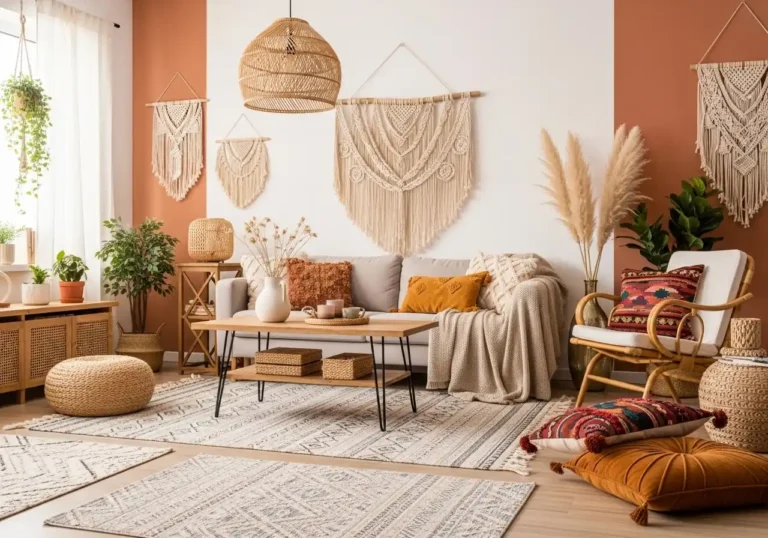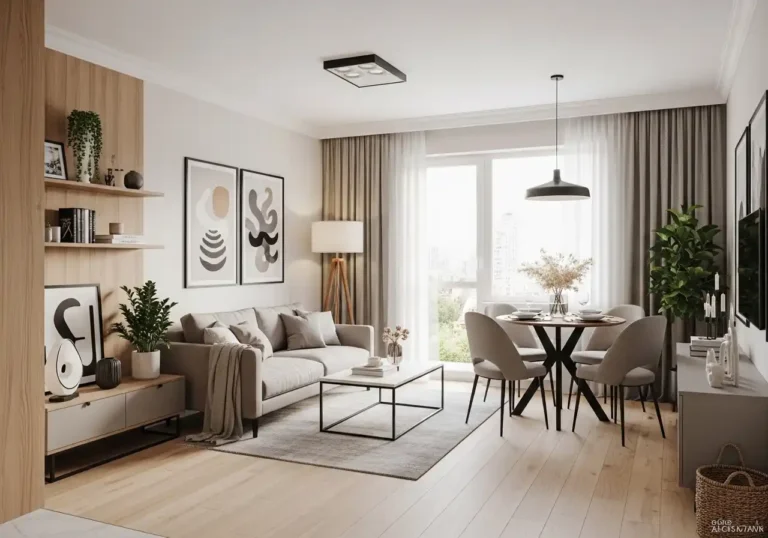
1. The Classic Back-of-Sofa Divider Layout
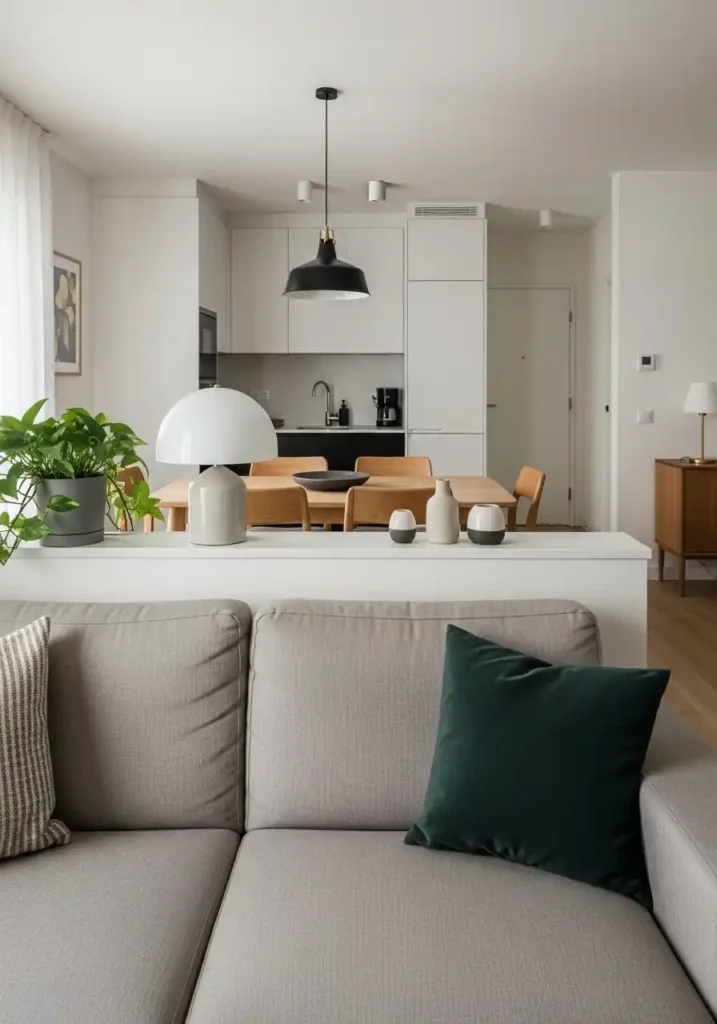
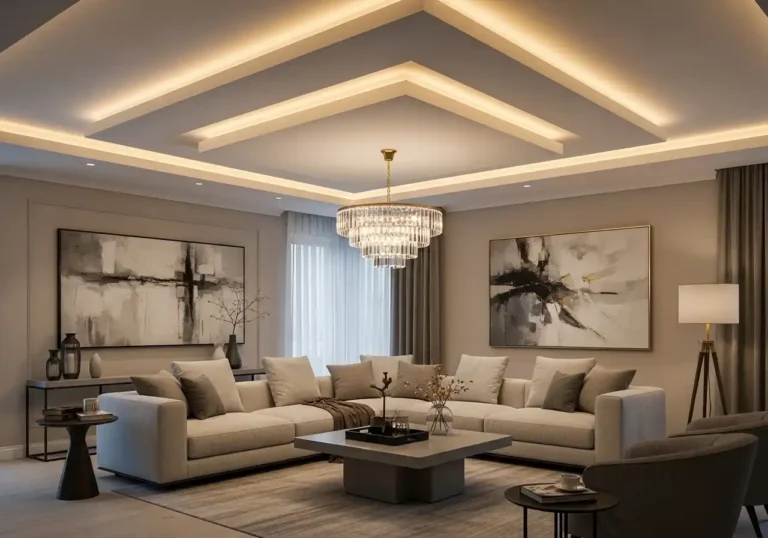
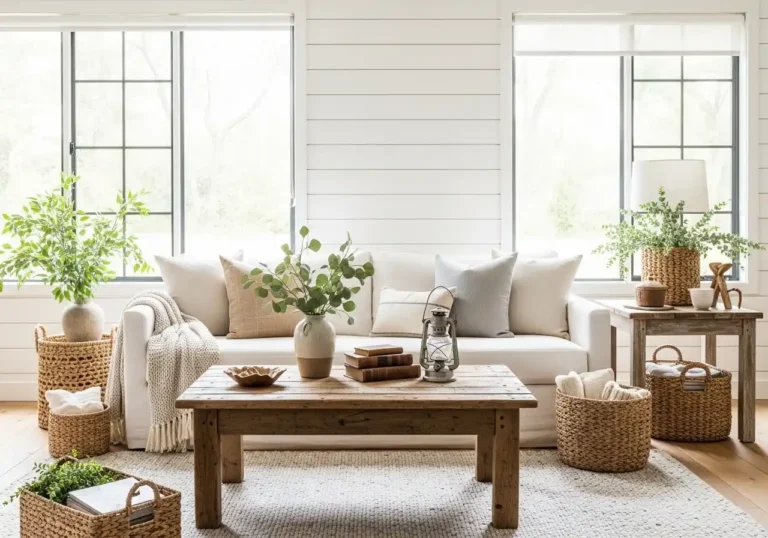
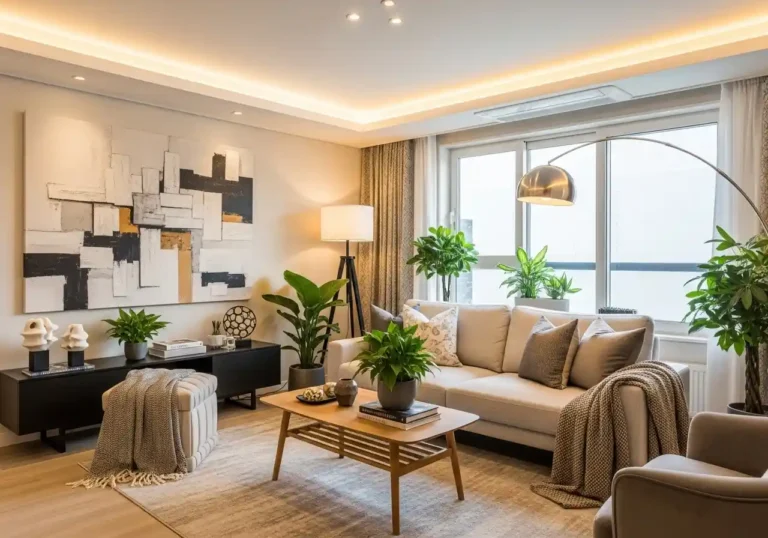
The back-of-sofa layout is the most classic, most universally applicable, and most consistently successful approach to dividing a Small Living Room with Dining Area combination — and the reason it works so reliably across so many different room shapes, sizes, and aesthetic styles is that it uses furniture that the room already needs to perform two functions simultaneously. The sofa provides comfortable living room seating on its front face and creates a natural visual boundary between the living and dining zones on its back face, defining both spaces clearly without requiring any additional partition, any construction work, or any furniture beyond what the room would contain regardless of the layout approach chosen.
The slim console table running along the back of the sofa is the detail that elevates this layout from merely functional to genuinely designed and genuinely beautiful — because the console’s surface, positioned at the sofa back height, creates a visual ledge that reinforces the zone boundary while providing a display and lighting surface of real practical and aesthetic value. A table lamp on the console casts warm light that serves both the living zone from the front and the dining zone from the back. A trailing plant softens the boundary between the zones with organic warmth. Two carefully chosen ceramic objects complete a vignette of deliberate, confident styling. This layout is simple, brilliant, and beautiful in equal measure.
2. The L-Shaped Sofa Layout That Defines Both Zones
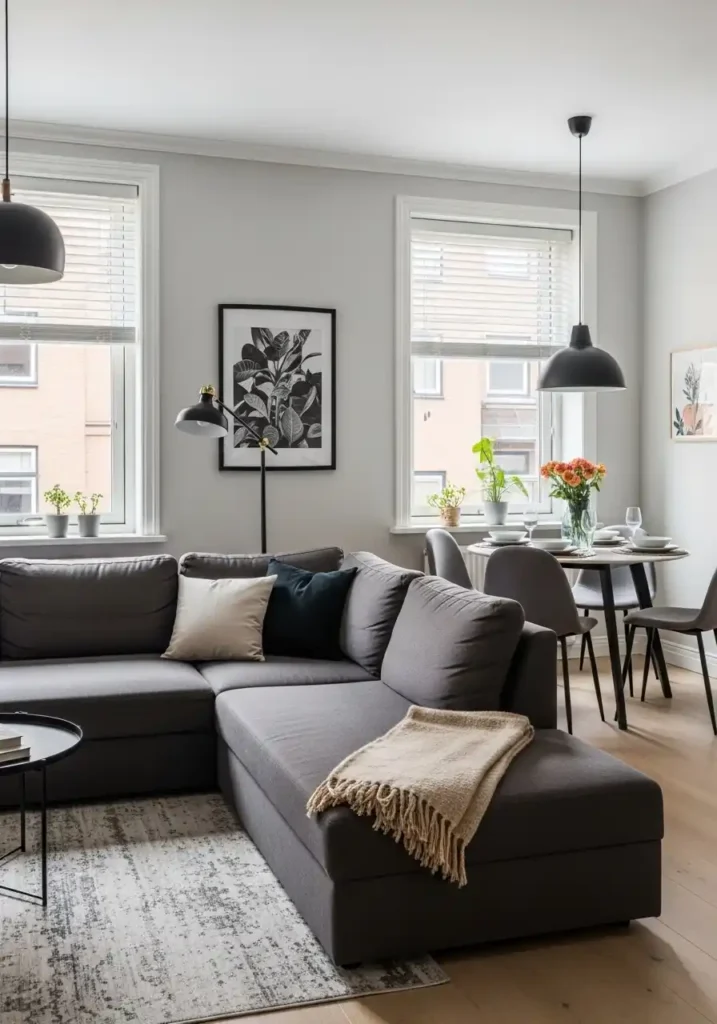
An L-shaped sofa in a small living room with dining area is the single furniture piece that most completely and most efficiently defines the living zone within the combined space — because the two arms of the L create a natural enclosure on two sides of the living area that communicates unambiguously where the living zone begins and ends, making the dining area on the other side of the L’s boundary arm feel equally defined by implication. The L-sofa essentially draws the living zone’s boundary with furniture rather than with walls, and the result is two clearly distinct functional areas that feel purposeful and considered rather than arbitrarily positioned within a single undivided room.
The key to making an L-shaped sofa work most effectively as a zone divider in a small combined room is the specific orientation of the L — positioning the sofa so that the longer arm runs parallel to the dining area and faces the living room’s primary focal point, whether that’s a television, a fireplace, or a feature wall, while the shorter arm runs perpendicular to create the enclosed, three-sided living zone. This orientation means that both the L-sofa’s living zone enclosure function and its zone boundary function are working simultaneously and in complete alignment. The round dining table positioned beyond the L’s boundary arm completes the layout with a furniture form whose circular, flowing lines complement the angular boundary of the L-sofa with gentle, spatial counterpoint.
3. The Rug-Defined Dual Zone Layout
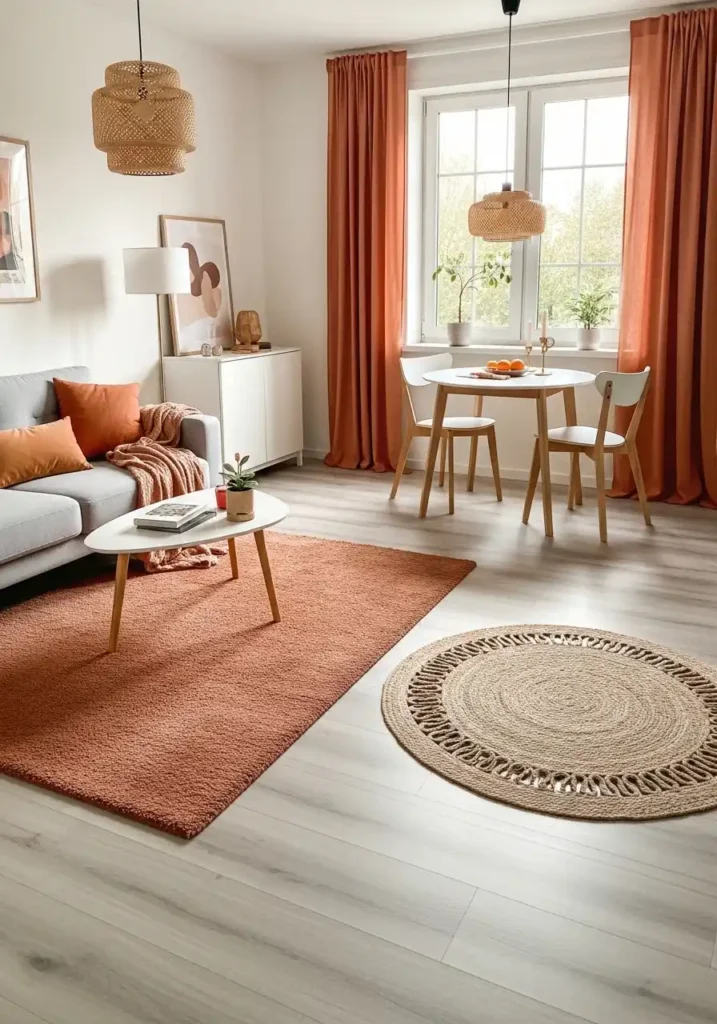
Two rugs in a small living room with dining area are the zone-definition tools that work most elegantly, most affordably, and most reversibly of any approach in this guide — because they require no furniture rearrangement, no construction work, and no permanent commitment of any kind, while delivering zone boundaries that are visually clear, aesthetically beautiful, and immediately legible to anyone who enters the combined space. Each rug creates a visual floor plane that belongs specifically and exclusively to one zone, and the space between the two rugs — whether a few inches of bare floor or a slightly larger transitional gap — creates the visual and psychological boundary between the living area and the dining area.
The specific rug choices for a dual-zone small living and dining room benefit from being related in palette while distinct in material, scale, and character — so that the two rugs communicate their common membership of the same room’s design story while also clearly differentiating the two zones they respectively occupy and define. A large, plush, softly textured rug in a warm tone beneath the sofa communicates the living zone’s comfort and relaxation function with material directness. A smaller, harder-wearing, more practically resilient rug beneath the dining table communicates the dining zone’s active, food-related function with equal material honesty. Related colors, distinct characters — the rug combination that makes a small combined room feel both unified and properly organized.
4. The Open Shelving Divider Layout for Style and Storage
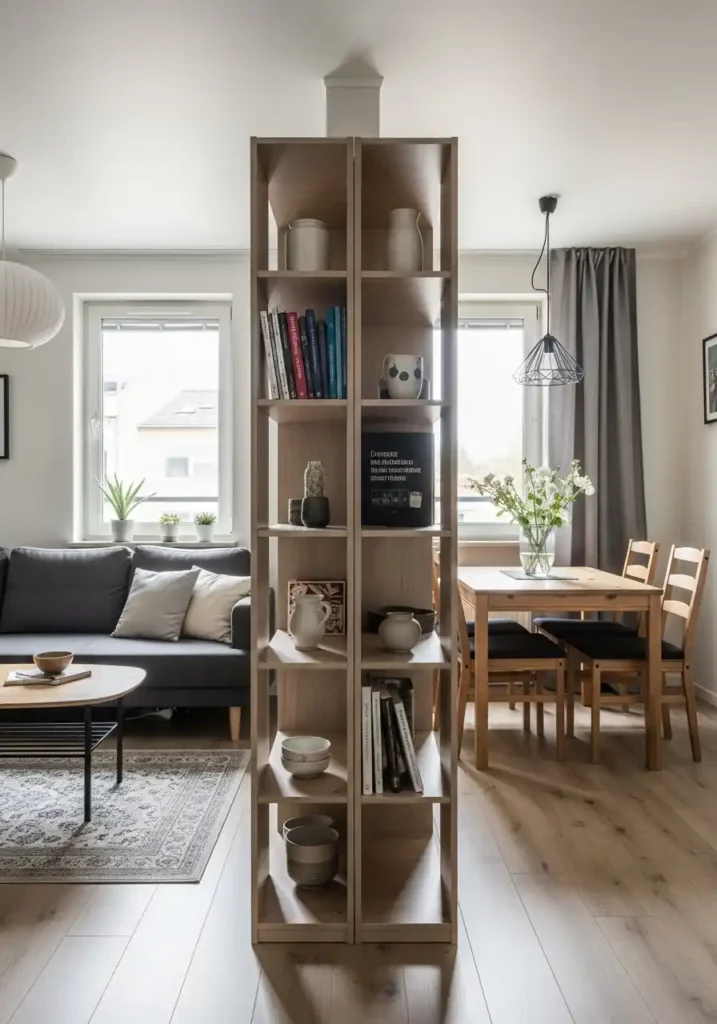
A freestanding open bookshelf positioned perpendicular to the wall between the living and dining zones is the room divider that provides the most complete combination of spatial definition, practical storage, and visual beauty of any zone-separation approach in a small combined room — because it creates a partial physical boundary that defines both zones clearly while remaining completely open in its structure, allowing light, visual connection, and a sense of spatial continuity to flow freely between the living and dining areas in a way that a solid wall, a curtain, or any opaque partition would prevent. The openness of the shelves means both zones feel connected to each other and to the larger room even while being clearly distinct in their function and their identity.
The practical storage value of a dividing bookshelf in a small combined living and dining room is as significant as its spatial organization benefit — because a full-height or three-quarter-height shelf unit positioned as a room divider provides storage capacity that neither the living zone nor the dining zone would be able to accommodate within its individual furniture arrangement. Books, ceramics, plants, dining accessories, and decorative objects can all be stored and displayed on the dividing shelf, accessible from both sides and contributing their visual richness to both zones simultaneously. Style the shelves as a curated display — alternating books with objects, varying heights, leaving breathing space — and the dividing bookshelf becomes the room’s most characterful and most design-forward element.
5. The Pendant Light Dual-Zone Layout
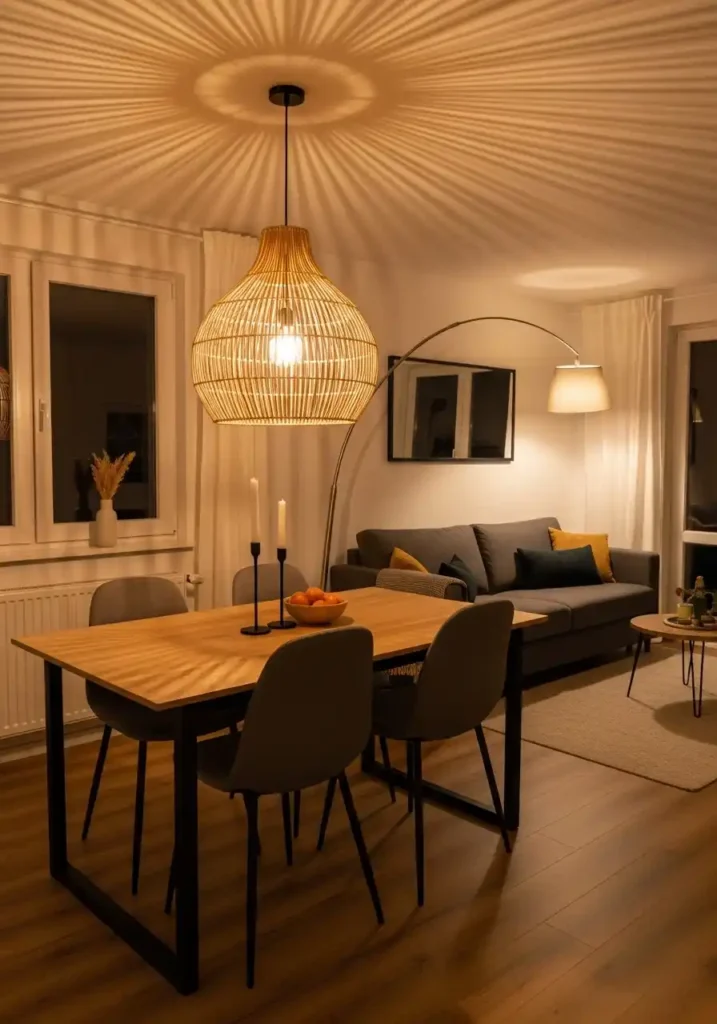
Using two distinct but complementary light sources — one above each zone — to define the living and dining areas of a small combined room is the zone-definition approach that works most atmospherically, most beautifully, and most completely without requiring any additional furniture, any floor space, or any visual obstruction between the two areas. Light defines space in the most fundamental and the most human way — we instinctively understand a warm pool of light as a gathering place, a zone of purpose, a defined territory within the larger room — and two pools of warm light in a small combined room create two clearly defined zones that feel distinct and purposeful without any physical separation whatsoever.
The specific light sources chosen for each zone should be different in form and character while complementary in color temperature and aesthetic language — so that each zone has its own lighting identity while both zones clearly belong to the same room’s coherent design story. An oversized woven rattan pendant above the dining table announces the dining zone with warm, organic authority. A large arc floor lamp leaning over the living sofa creates the living zone’s signature lighting moment with equal presence and warmth. Both sources in the same warm amber color temperature ensure that the two zones glow with a unified warmth that makes the small combined room feel cohesive and complete rather than divided into competing lighting environments.
6. The Dining Bench Against the Wall Layout for Space Efficiency
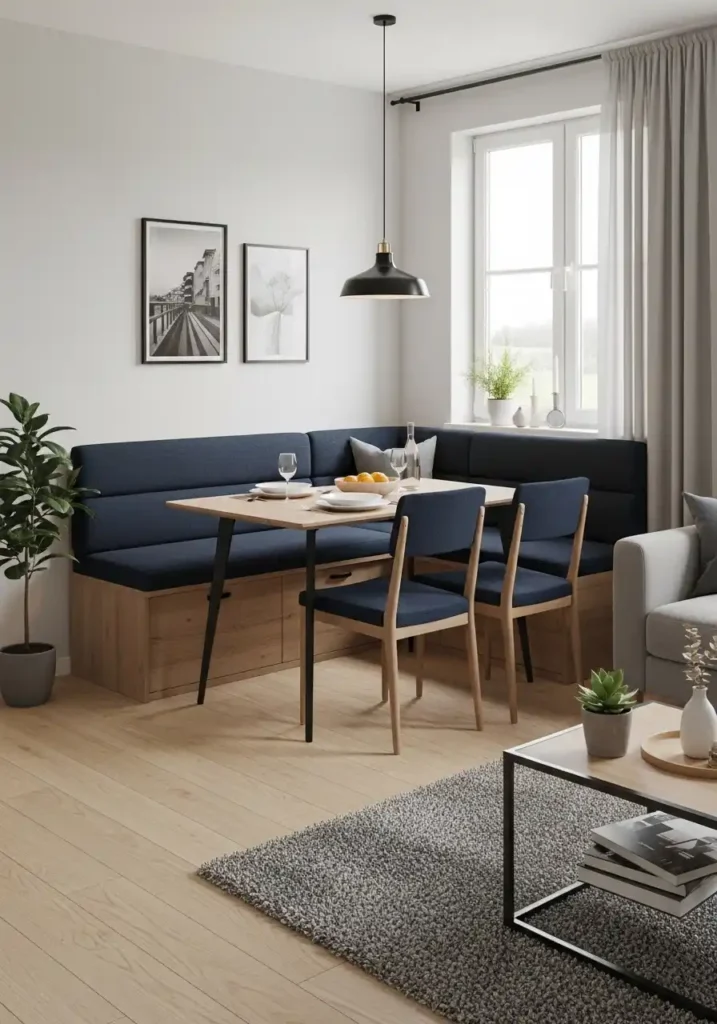
Positioning a dining bench against the wall on one side of the dining table in a small combined living and dining room is the single furniture decision that most dramatically improves the spatial relationship between the dining zone and the living zone — because the bench eliminates chair-pullout clearance requirements on the entire wall side of the dining table, reclaiming eighteen to twenty-four inches of floor depth that conventional dining chairs would demand and making that floor area available to the combined room’s overall circulation and to the living zone’s spatial generosity. In a small combined room where every inch of floor area serves multiple competing demands, this reclaimed clearance space is genuinely, measurably significant.
The storage beneath the dining bench cushion is the practical bonus that makes this layout decision doubly intelligent in a small combined room — because the storage compartments in the bench base provide a concealed home for items that small combined living and dining rooms chronically need to store somewhere and never have quite enough dedicated space for. Extra cushions, throws, table linens, children’s games, and seasonal accessories can all disappear beneath the navy bench cushion, keeping the combined room’s limited surface areas and floor areas uncluttered and feeling as open and as generously spacious as their actual dimensions allow. The living zone benefits from this storage as directly as the dining zone that contains the bench.
7. The Color-Zoned Layout Using Paint to Define Each Area
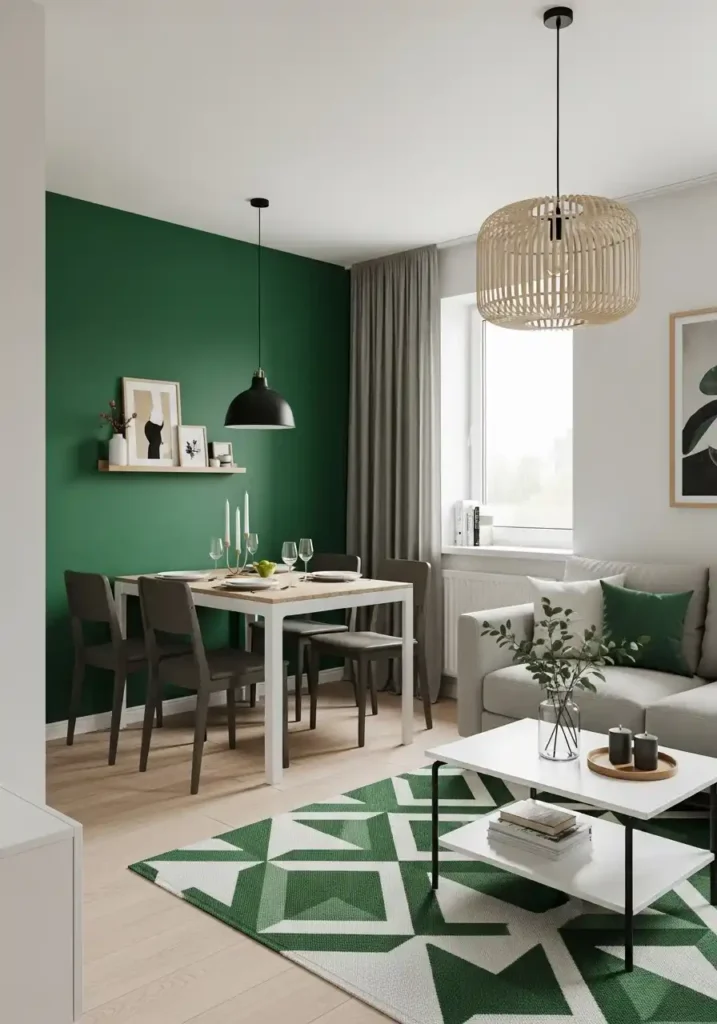
Using paint color to define the living and dining zones of a small combined room is the zone-definition technique that creates the most architectural, the most permanent, and the most visually dramatic separation between the two areas without any furniture, any partition, or any physical obstruction between them — because paint applied to a specific wall or a specific section of the combined room creates a color boundary that is visible from across the entire space, clearly communicates the transition between the living and dining functions, and gives each zone its own distinct visual identity and atmospheric character in a way that rugs, furniture arrangements, and lighting alone cannot achieve with the same clarity and the same architectural conviction.
The most effective paint zoning approach for a small combined living and dining room is applying the bold accent color to the wall that the dining table most directly faces — the wall that serves as the dining zone’s primary backdrop — while keeping the living zone walls in the room’s main, calmer tone. This approach concentrates the bold color in the dining zone where it creates the most atmospheric impact while maintaining the visual calm of the living zone where relaxation and comfort are the primary qualities required. A rug in a color or pattern that incorporates elements of both the green dining zone and the white living zone bridges the color transition beautifully, tying the two painted zones into a single, cohesive, beautifully resolved room story.
8. The Floating Dining Table Layout Against a Feature Wall
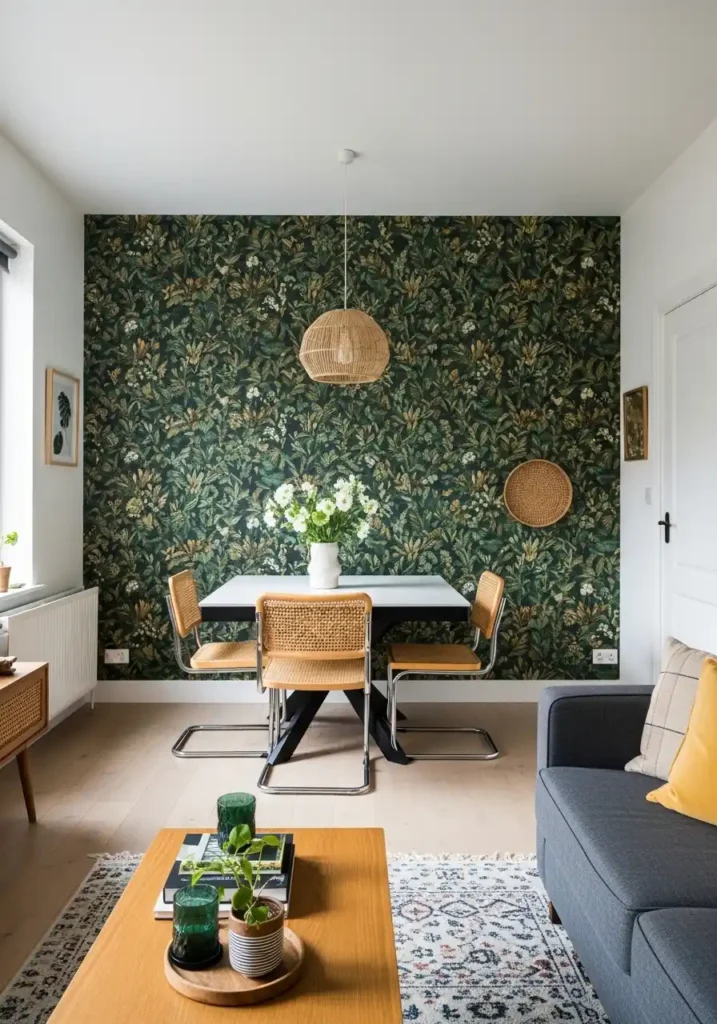
Positioning the dining table against a bold feature wall in a small combined living and dining room is the layout approach that gives the dining zone the strongest possible visual identity and the most clearly defined sense of being a purposeful, designed destination within the larger shared space — because a dramatic feature wall behind the dining table creates a visual anchor of such presence and such authority that the dining area becomes the room’s primary focal point, visible from the living zone across the entire combined room and drawing the eye toward it with a magnetism and a beauty that makes the room’s two-zone organization immediately, unambiguously clear to every person who enters.
From the living zone, the dining feature wall serves as the room’s primary visual terminus — the beautiful, pattern-rich surface that the sofa faces and that provides the living area with a stunning view rather than the blank, uninspiring wall that the opposite end of many combined rooms tends to offer. This visual relationship between the sofa and the dining feature wall across the combined room is one of the most elegant and most underexplored spatial qualities of the small combined living and dining layout — the understanding that each zone can serve as the other’s view, and that designing each zone with awareness of how it looks from the other creates a combined room of genuinely exceptional spatial quality and visual richness.
9. The Compact Sofa Plus Round Table Layout for Small Square Rooms
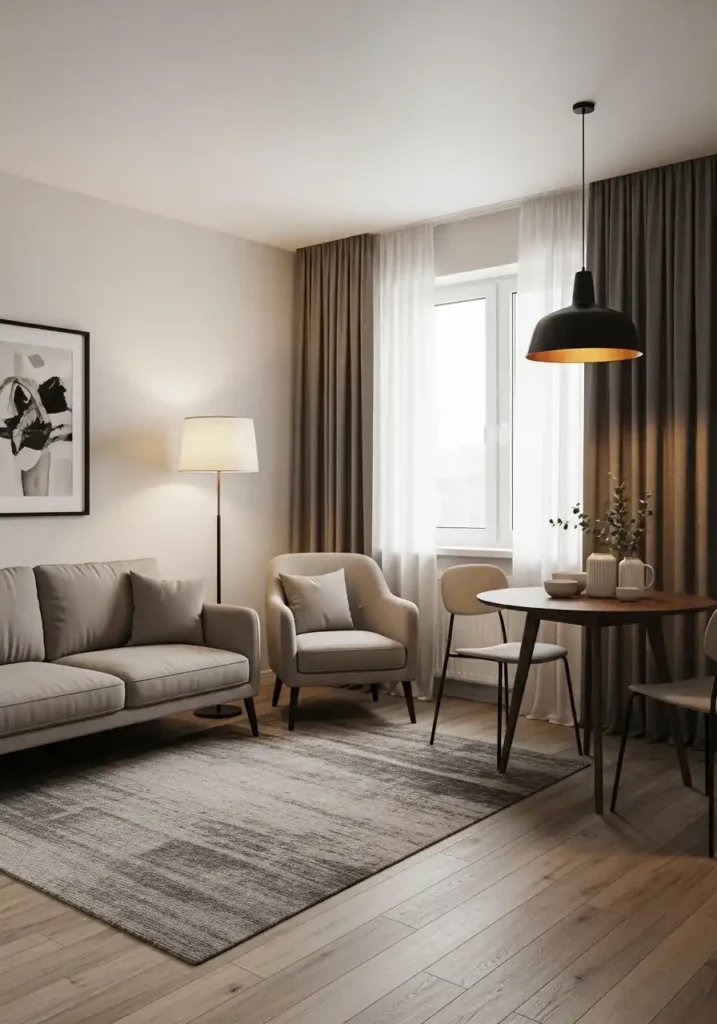
A small square combined room presents a specific layout challenge that its rectangular counterpart does not — because the equal proportions of a square room resist the natural long-axis division into two distinct zones that rectangular rooms accommodate so readily, and a layout approach specifically tailored to the square room’s geometry is needed to create zones that feel properly defined and properly proportioned within the equal dimensions available. The most successful layout for a small square combined room is the opposite-corner approach — placing the living zone furniture arrangement in one corner of the square and the dining arrangement in the diagonally opposite corner, with a clear central circulation path running between them.
The round dining table is the furniture choice that makes the opposite-corner layout work most elegantly in a small square room — because the round table’s circular form fits into the corner without the sharp edges and the awkward clearance requirements that a rectangular table would create when positioned in a corner, and its lack of corners means chairs can be positioned freely around its full circumference to make the most of the corner’s available angles. A small round table for three or four in a corner of a small square room, with a compact two-seat sofa and armchair in the diagonal opposite corner, creates a combined living and dining layout of remarkable spatial efficiency that makes excellent use of the square room’s equal dimensions from corner to corner.
10. The Window-Facing Dining Layout with Living Behind
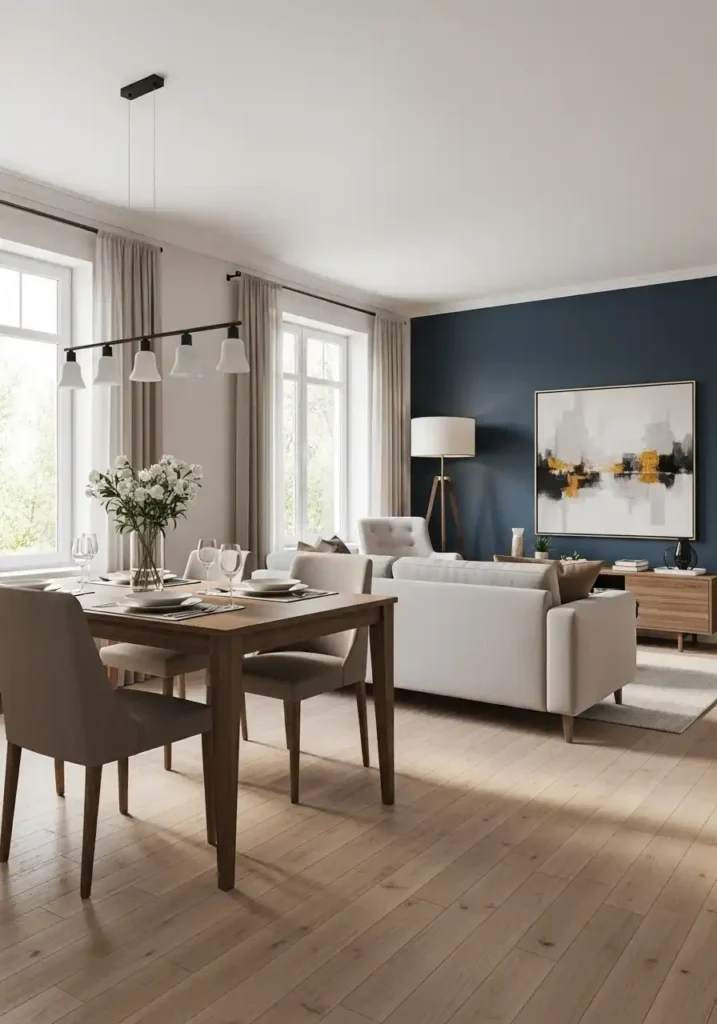
Orienting the dining zone toward the window in a small combined room and the living zone toward the room’s interior is the layout logic that aligns each function with its most appropriate visual and atmospheric environment — because dining benefits most from natural light, from connection to the world outside, and from the sense of openness that a window view creates during a meal, while the living zone benefits most from facing the room’s primary focal point, whether that’s a fireplace, a feature wall, a television, or a piece of artwork, and from the sense of interior enclosure and comfort that the room’s depth provides. Each zone gets its ideal orientation when the dining area claims the window and the living area claims the room’s interior.
The low credenza or console table that sits between the window-facing dining zone and the interior-facing living zone is the transitional element that creates a gentle, subtle boundary between the two functions without any hard visual or physical separation. At dining table height on the dining zone side and at console height on the living zone side, a low piece of furniture creates a sense of level change and visual distinction between the two areas that communicates their different functions clearly while maintaining the visual continuity and the spatial flow that a small combined room needs to feel cohesive and generous rather than cramped and compartmentalized. A beautiful lamp on the credenza serves both zones with its warm light.
11. The Narrow Room Linear Layout — Living at One End, Dining at the Other
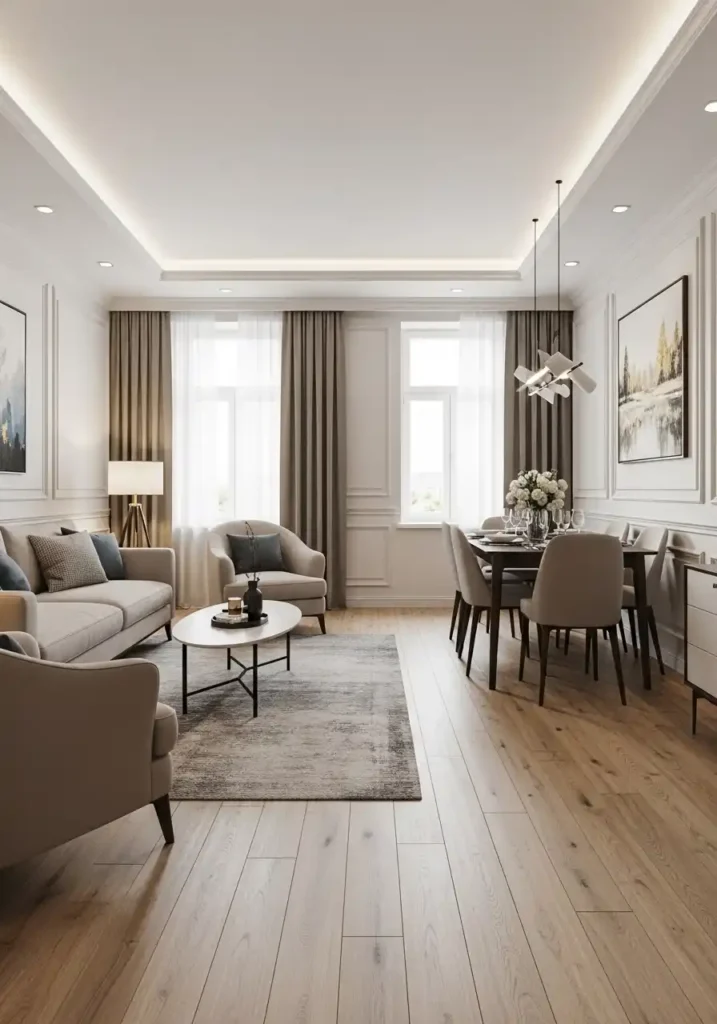
The linear layout — living zone at one end, dining zone at the other, with a central corridor connecting them — is the most natural, most spatially logical, and most consistently successful approach for narrow combined rooms where the room’s length is significantly greater than its width. In a narrow room, attempting to place both zones side by side across the room’s width creates two zones that are each too narrow to be comfortable and too constrained to be properly furnished, while the linear end-to-end arrangement allows each zone to use the room’s full width for its furniture arrangement, providing each function with the maximum possible space within the room’s available dimensions.
The central corridor that runs the length of a linearly arranged narrow combined room is the spatial element that most directly determines the layout’s success — because this corridor must be wide enough for comfortable circulation between the two zones while being narrow enough that it doesn’t consume floor area that either zone genuinely needs for its furniture. A corridor of approximately 90 centimeters provides comfortable single-person circulation without excessive waste of the narrow room’s precious width. Keeping this corridor completely clear of furniture — no side tables, no floor lamps, no decorative objects positioned in the path — maintains the visual clarity and the physical flow that makes the linear layout feel organized and spacious rather than congested and confusing.
12. The Apartment Living Room Plus Dining in One Wall Layout
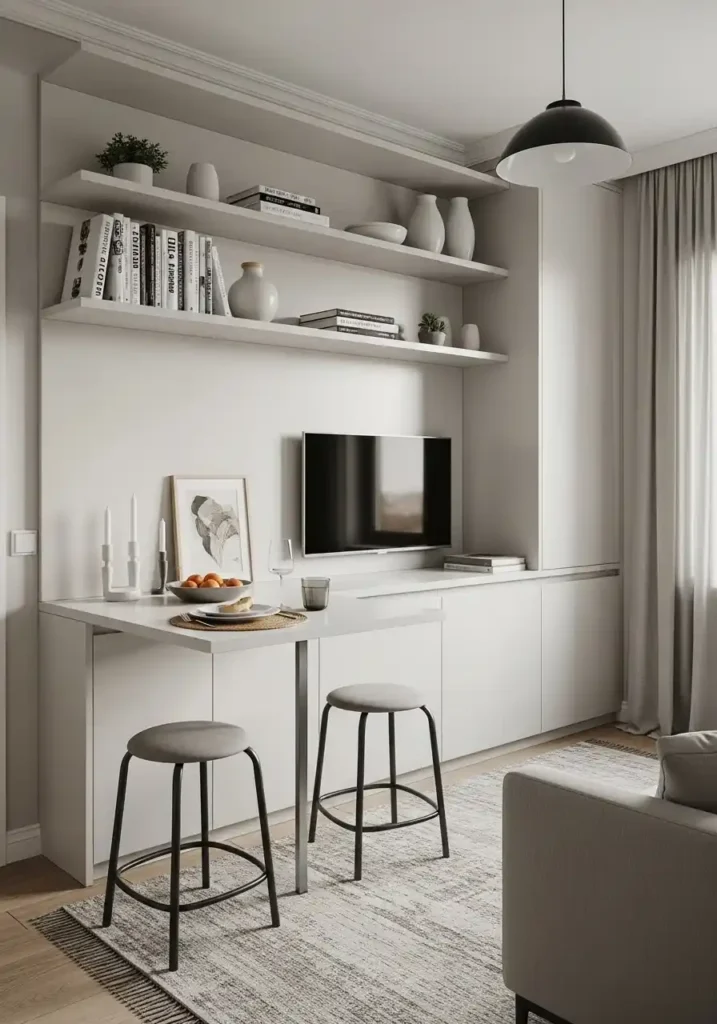
The one-wall living and dining solution — a built-in wall unit that integrates both living room storage and a fold-down dining table into a single, designed wall installation — is the compact apartment approach that most completely and most intelligently resolves the combined living and dining challenge by treating it as a single, integrated design problem rather than as two separate furniture problems competing for the same limited floor area. A wall unit that houses the television, the living room storage, the dining table, and the dining seating all within one designed, floor-to-ceiling installation creates a combined living and dining room of extraordinary spatial efficiency while maintaining a visual coherence and a design quality that scattered individual furniture pieces can never achieve.
The fold-down dining table integrated into the center section of a one-wall living unit is the element that makes the entire concept both practically viable and genuinely brilliant — because it provides a proper dining surface for two to four people that folds completely flush with the wall unit’s face panel when not in use, adding zero depth to the wall unit’s footprint and returning the full floor space of the combined room to the living function the moment the meal is over. Two stools that tuck completely beneath the fold-down table when deployed and hang on hooks within the wall unit when stored complete the dining arrangement without any additional floor furniture required. The sofa facing this one-wall installation is the only other piece of furniture the compact apartment needs.
13. The Small Living and Dining Room with Zone-Defining Ceiling Colors
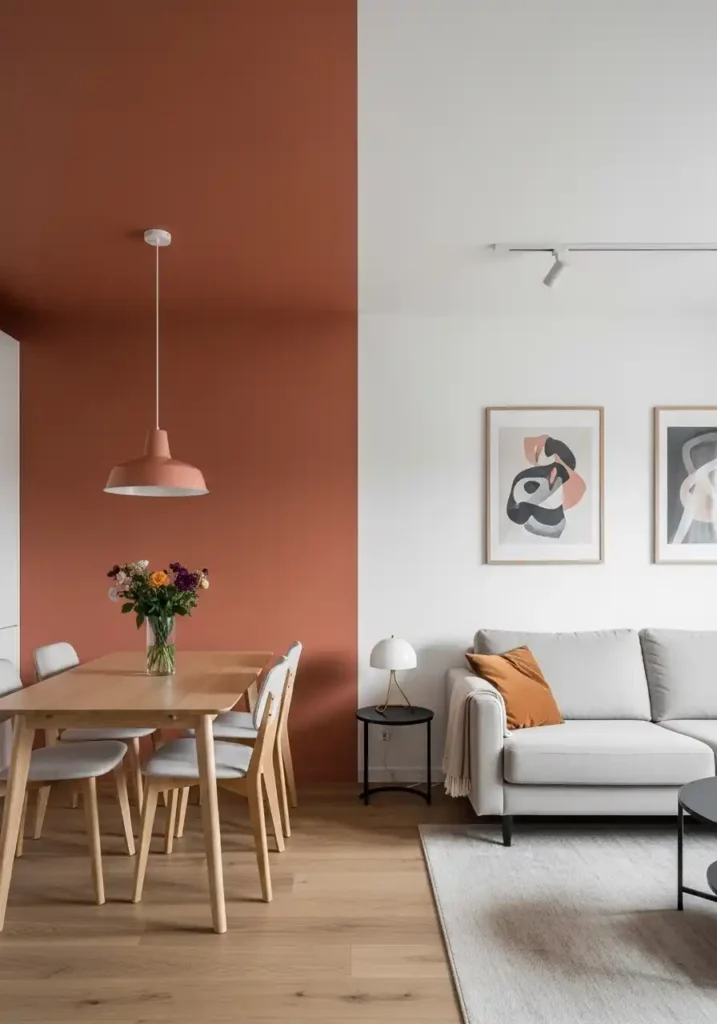
Ceiling color zoning in a small combined living and dining room is the zone-definition technique that works from above rather than from the floor or the walls, creating zone boundaries at the overhead plane that are visible from every position in the room and that define each zone’s atmospheric character with a completeness and a subtlety that floor-level and wall-level zone definition alone cannot achieve. A warm, rich ceiling color above the dining zone creates the jewel-box intimacy and the atmospheric enclosure that makes the dining area feel like a proper, dedicated room rather than simply a corner of a larger space, while a lighter, calmer ceiling color above the living zone maintains the openness and the visual spaciousness that comfortable living room seating requires.
The transition between two ceiling colors in a small combined room requires no architrave, no cornice, and no special treatment at the boundary — the colors can simply meet at a straight line that corresponds to the natural zone boundary established by the furniture arrangement below. This clean, geometric ceiling color transition becomes a strong architectural line that reinforces the zone definition with elegant simplicity. The pendant light hung from the center of the terracotta dining ceiling and the track light or floor lamp serving the white living ceiling each contribute the specific lighting quality their zone requires, and together they create a combined room of such complete, beautifully resolved spatial organization that its limited square footage feels like a carefully chosen quality rather than an unavoidable constraint.
14. The Multifunctional Coffee Table Plus Dining Table Layout
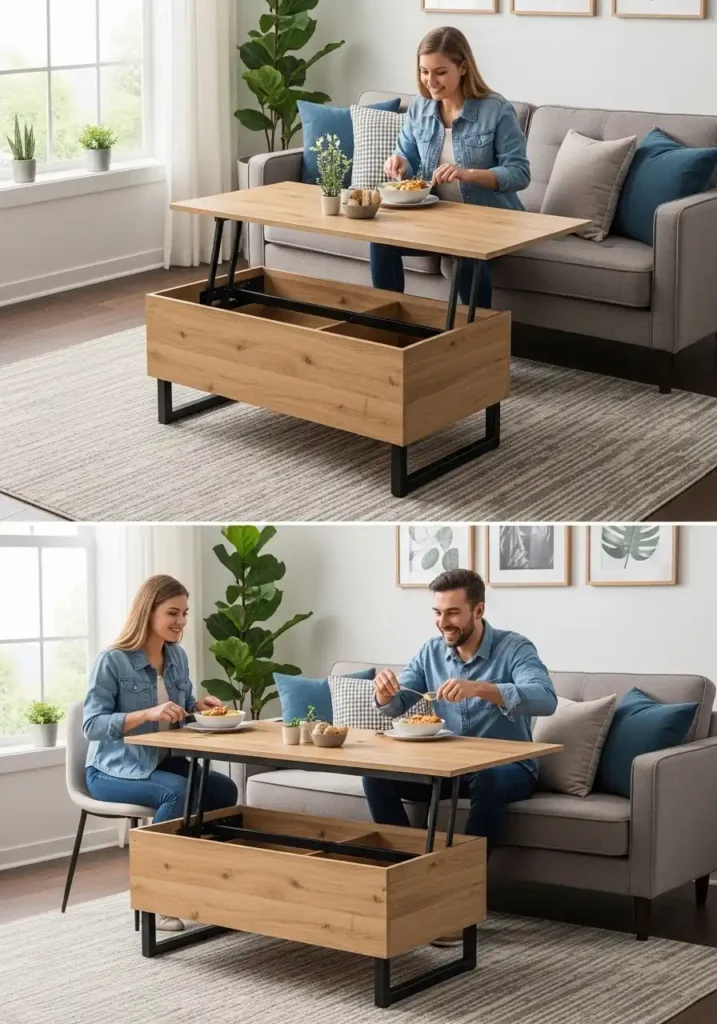
A lift-top coffee table in a combined living space is the multifunctional furniture piece that eliminates the need for a separate dining table entirely in the most compact living situations — where the floor area is so limited that having both a proper coffee table for daily living use and a separate dining table and chairs for mealtimes is a spatial impossibility rather than merely a spatial challenge. A good lift-top coffee table provides a proper, flat, stable surface at coffee table height for everyday living room use — books, drinks, remote controls, decoration — and raises in a single smooth motion to a comfortable dining height at which the sofa occupants can eat a proper meal without stooping, reaching, or compromising on comfort.
The design quality of a lift-top coffee table matters enormously in a combined living space where it is always the room’s most prominent furniture piece — because unlike a dining table that can be pushed against a wall when not in use, the coffee table is always positioned at the room’s center, always fully visible, and always contributing to the living room’s overall aesthetic. A lift-top table in warm oak with black steel legs that has genuinely beautiful proportions and a properly engineered lifting mechanism that operates smoothly and locks securely at dining height is simultaneously a good coffee table, a good dining table, and a genuinely beautiful piece of living room furniture. Choose quality and the piece will serve every function with equal elegance.
15. The Sofa and Dining Table Sharing a Central Rug Layout
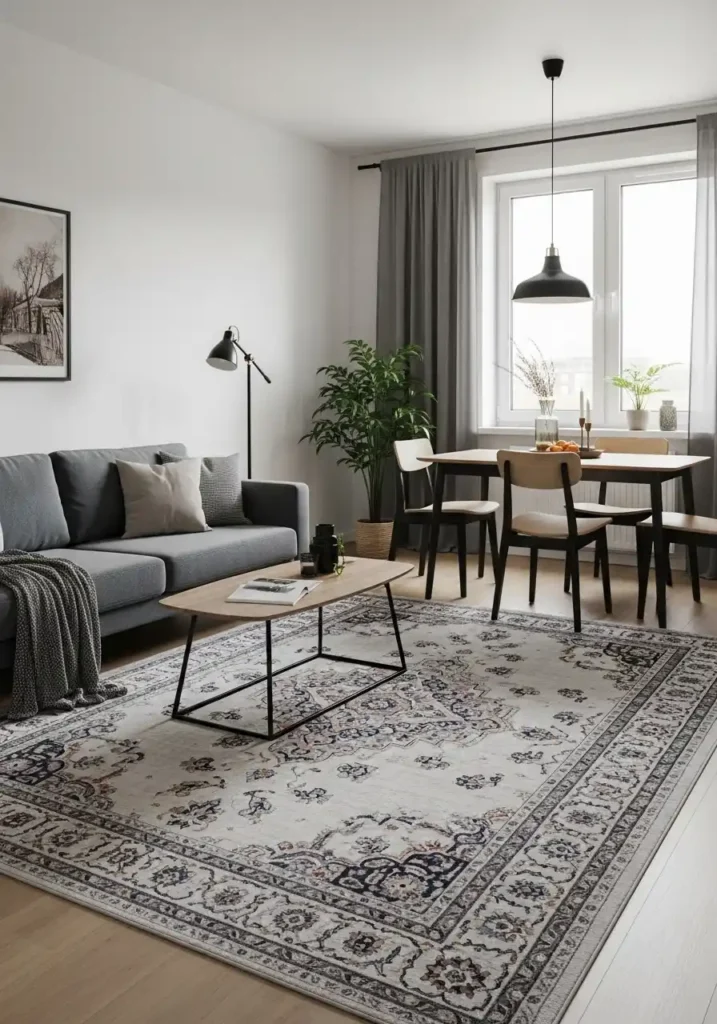
A single large rug that is generous enough to anchor both the living zone furniture and the dining zone furniture simultaneously is the layout approach that creates the most cohesive, the most visually unified, and the most spatially generous combined living and dining room — because instead of using two separate rugs to define two distinct zones, the one large shared rug treats the combined room as a single, unified space with one continuous floor plane that connects both functions rather than separating them. This approach is particularly powerful in combined rooms where the living and dining zones are not clearly separated but flow naturally into each other in an arrangement that is more integrated than zoned.
The size of the shared rug is the critical design decision in this layout — and the most common mistake is choosing a rug that is too small, which floats inadequately beneath the furniture it is meant to anchor and fails to create the sense of spacious, generous floor coverage that makes a small combined room feel properly proportioned. A shared rug should be large enough that all four legs of the sofa sit on it, all four legs of the dining table sit on it, and there is still several inches of rug extending beyond the outermost furniture legs on all sides. This generous sizing creates the visual impression of a single, continuous floor zone that makes the small combined room feel significantly more spacious and more cohesive than two separate, adequately sized rugs would achieve.
16. The Kitchen Table as Dining Table Plus Living Room Layout
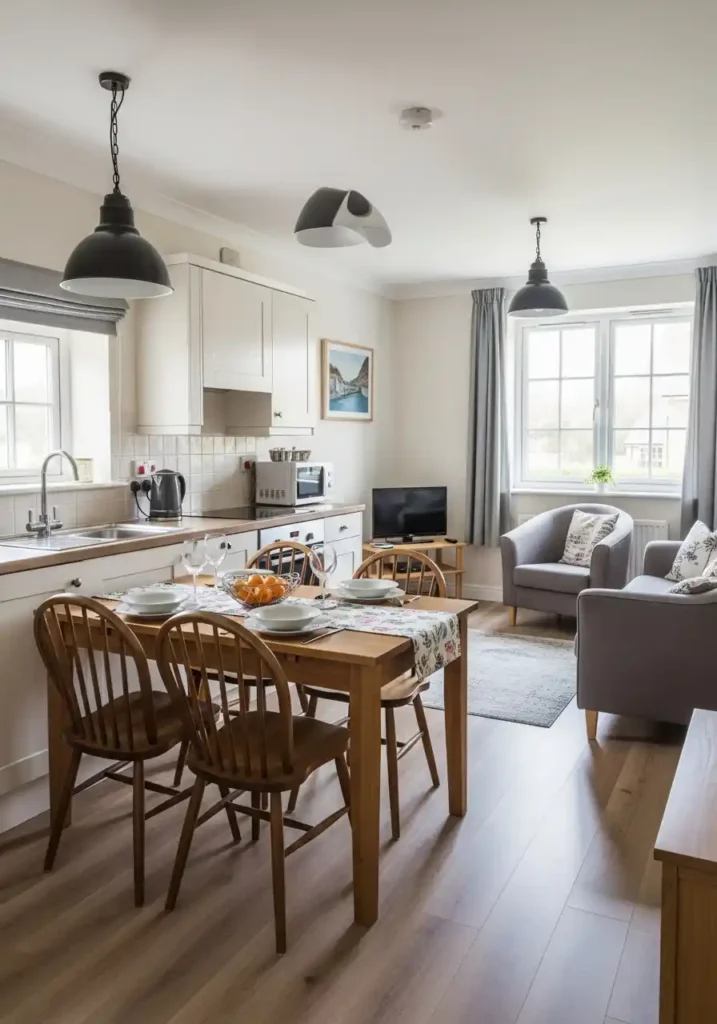
In a compact open-plan home where the kitchen, living, and dining functions share a single continuous space, positioning the dining table immediately adjacent to the kitchen counter creates a kitchen-dining combination of such natural, practical logic that it transforms the act of preparing and serving meals from a series of back-and-forth journeys across the open-plan space into the most effortless, most sociable, and most genuinely pleasurable culinary experience compact living can offer. The cook at the kitchen counter is separated from the dining table by a step rather than a room, making service immediate, conversation continuous, and the boundary between preparing and sharing food beautifully, naturally dissolved.
The visual relationship between the kitchen table dining zone and the living sofa zone in a compact open-plan space determines the overall success and the overall spatial quality of the combined arrangement — and the most successful layouts are those where the sofa faces into the kitchen-dining area with a clear, open line of sight between the two functions, creating a sense of visual connection and social continuity that makes the entire open-plan space feel like a single, generously proportioned environment rather than three cramped rooms sharing one floor plan. A rug beneath the living sofa defines the living zone with enough clarity that both zones feel distinct and purposeful while remaining visually connected across the open-plan space.
17. The Slim Side-by-Side Layout for Wider Rooms
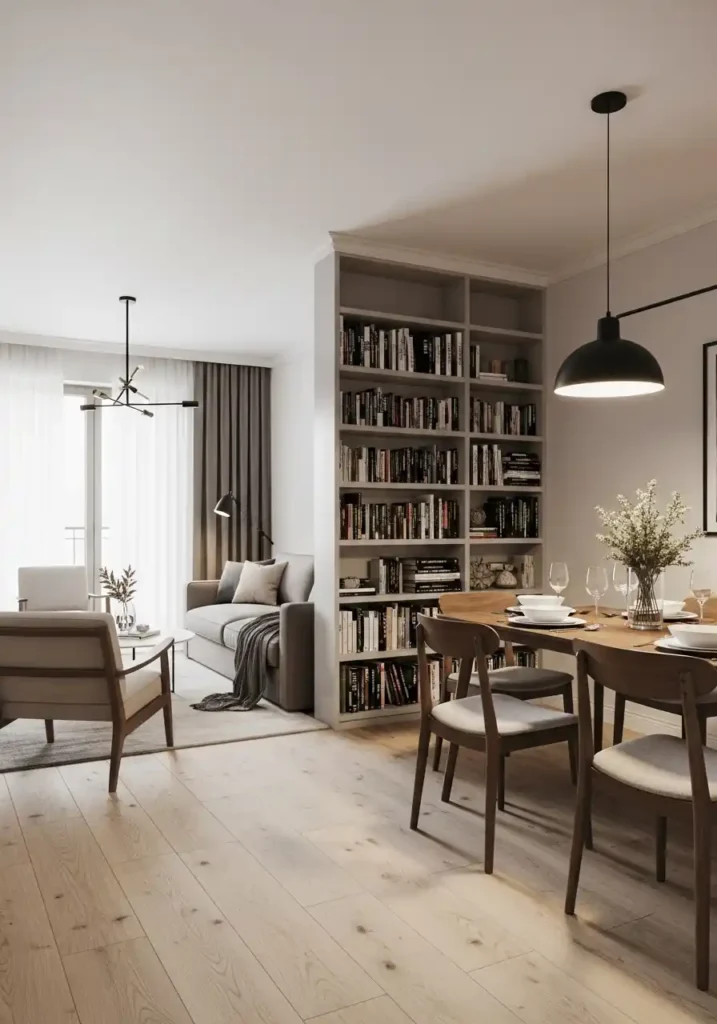
The side-by-side layout — living zone on one side of the room’s width and dining zone on the other, with some form of partial boundary between them — is the approach that works most naturally and most successfully in combined rooms that are wider than they are long, where the room’s proportions favor a lateral zone division rather than the end-to-end linear arrangement that suits narrow rooms. In a wider combined room, placing both zones side by side allows each to have proper depth within the room’s length dimension while the room’s generous width provides each zone with adequate space for its furniture arrangement without creating the narrow, constrained feeling that side-by-side zoning produces in rooms with insufficient width.
The partial boundary between the side-by-side living and dining zones is the design element that most determines the quality of the zone separation — and the most beautiful and most practically successful boundary is one that is high enough to create genuine zone distinction without being so tall that it blocks light and visual connection between the two areas. A floor-to-ceiling open bookshelf placed perpendicular to the walls between the two zones provides excellent visual separation while maintaining complete light flow and visual connection through its open shelves. An architectural half-wall with a plant trough on top creates a permanent boundary of genuine architectural quality. A row of three matching floor plants creates an organic, soft boundary of living green.
18. The Bench Seating Layout That Bridges Living and Dining
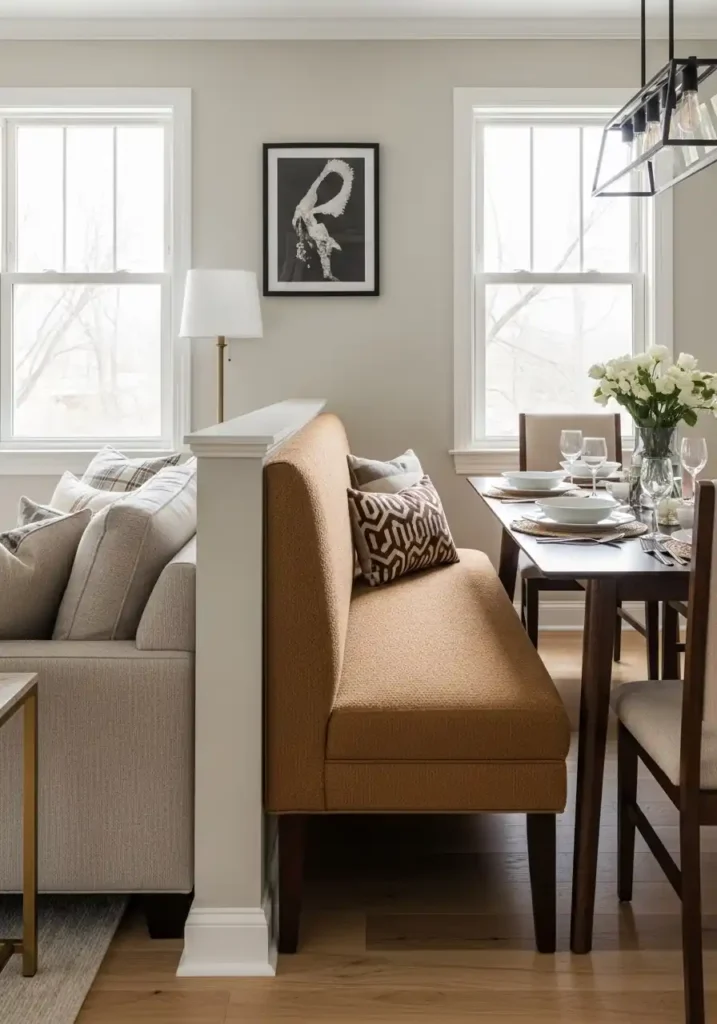
A long upholstered bench positioned at the boundary between the living and dining zones of a small combined room is the transitional furniture piece that performs the elegant design trick of serving both zones simultaneously — providing additional seating for the living zone when oriented toward the sofa, and providing dining seating at the dining table when oriented toward the table, all within the same fixed, beautiful piece that occupies the zone boundary with the naturalness of a piece that was always meant to belong to both areas equally. The bench is the room’s most democratic furniture piece — owned by neither zone exclusively and shared generously between them.
The design quality of the boundary bench in a small combined room is particularly consequential because it is always positioned at the most visible, most central point of the combined space — seen clearly from both zones, always prominent from the room’s entrance, always contributing to the room’s overall aesthetic from every angle. A bench of genuinely beautiful material quality — a deep camel boucle, a rich navy velvet, a warm terracotta performance fabric — makes this pivotal transitional piece a genuine design asset rather than merely a practical solution, adding warmth, color, and tactile richness to the combined room’s most spatially significant point. Keep the bench legs slim and beautiful and the piece will define the zone boundary with quiet, confident elegance.
19. The Mirrored Dining Wall Layout That Expands Both Zones
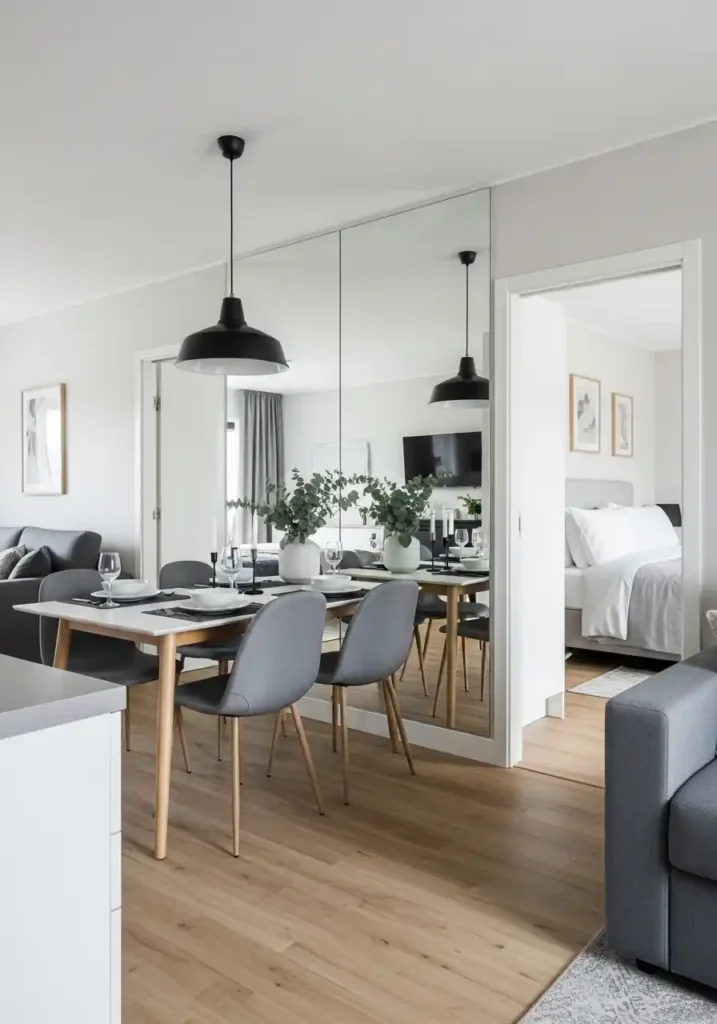
A floor-to-ceiling mirror on the back wall of the dining zone in a small combined living and dining room is the spatial transformation that improves both zones simultaneously and equally — because the reflected image in the mirror shows not just the dining table but the entire combined room behind it, including the living sofa, the rug, the floor lamp, and the window at the opposite end, creating the convincing impression of a combined room of twice the actual depth that makes both the dining area and the living area feel dramatically more generous, more open, and more spatially liberating than the room’s actual wall-to-wall dimensions would suggest.
From the living zone sofa, the dining zone’s mirrored wall creates an extraordinary visual effect — the sofa appears to face into a second, reflected living zone beyond the dining table, with the reflected sofa visible in the mirror behind the dining table, creating a combined room of apparent depth that seems to extend far beyond the physical walls of the space. This visual depth makes the combined room feel significantly larger from the sofa’s vantage point than it actually is, improving the living zone’s sense of spatial quality as directly and as significantly as it improves the dining zone’s. The mirrored dining wall is the combined room’s most spatially generous single design decision.
20. The Folding Dining Table Layout for Maximum Living Room Space
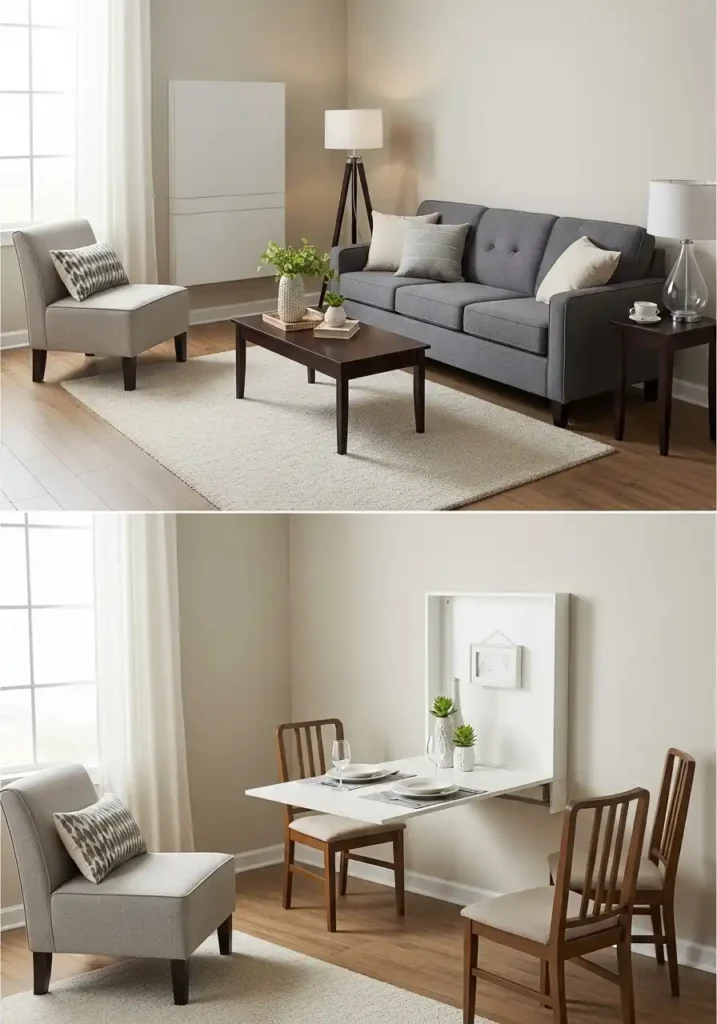
A wall-mounted fold-down dining table in a small combined living room is the layout solution that most completely prioritizes the living room function during the overwhelming majority of the time that the combined room is in use — because with the table folded flush against the wall, the combined room is entirely, properly, completely a living room with full floor space available for the sofa, the armchair, the coffee table, and all the living room’s circulation and relaxation requirements. The dining function appears on demand when the table is folded down and chairs are deployed, and disappears with equal speed and equal completeness when the meal is finished.
The specific wall chosen for the fold-down dining table installation in a small combined living room is the layout decision with the greatest consequence for the room’s overall daily livability — because the fold-down table will always be visible on its chosen wall even in its closed, flush position, and its placement must create a deployed dining arrangement that can be comfortably used without requiring the living room furniture to be completely rearranged every time a meal is needed. A wall adjacent to or opposite the kitchen counter, with adequate floor space in front of it for a deployed table and three or four chairs without significantly encroaching on the living sofa arrangement, is the ideal installation position. The table closed is a wall feature; the table open is a dining room.
21. The Gallery Wall at the Dining End Layout
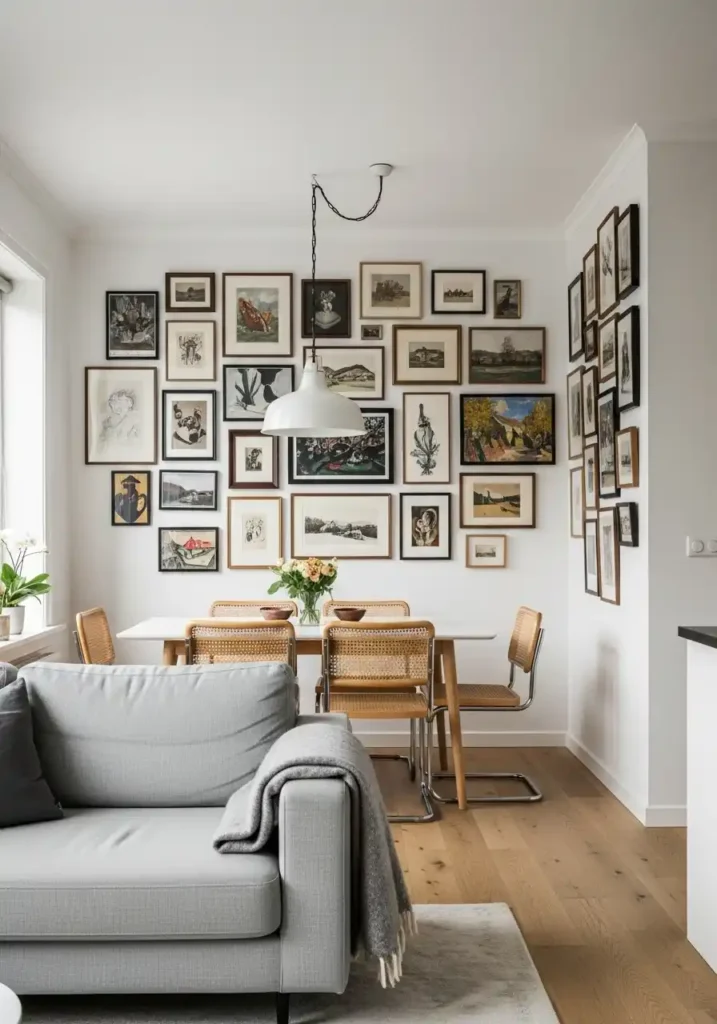
A gallery wall at the dining end of a small combined living and dining room is the design decision that simultaneously gives the dining zone its own strong, clear visual identity within the shared space and gives the living zone a beautiful, interesting view to face across the room — because from the sofa, the gallery wall at the dining end creates a visually rich, artistically engaging focal point that makes the combined room feel both more spatially interesting and more intentionally designed than a plain dining zone wall of equal dimensions would provide. Both zones benefit from the gallery wall’s presence: the dining zone gains its identity and the living zone gains its view.
The gallery wall composition in a small combined room should be designed with the awareness that it is always seen from a greater viewing distance than the wall’s immediate vicinity — because the sofa across the combined room is viewing the gallery wall from a distance of several meters, and the composition must read with clarity, coherence, and visual impact at that distance rather than only at close range. This means choosing larger, bolder, more graphically distinct artwork than you might for a gallery wall in a dedicated room where close-up viewing is the primary mode of engagement. Larger prints, more significant frames, and a more dramatic overall composition ensure that the gallery wall reads with full force and full beauty from the sofa at the opposite end of the combined room.
22. The Curtain Divider Layout for Flexible Privacy
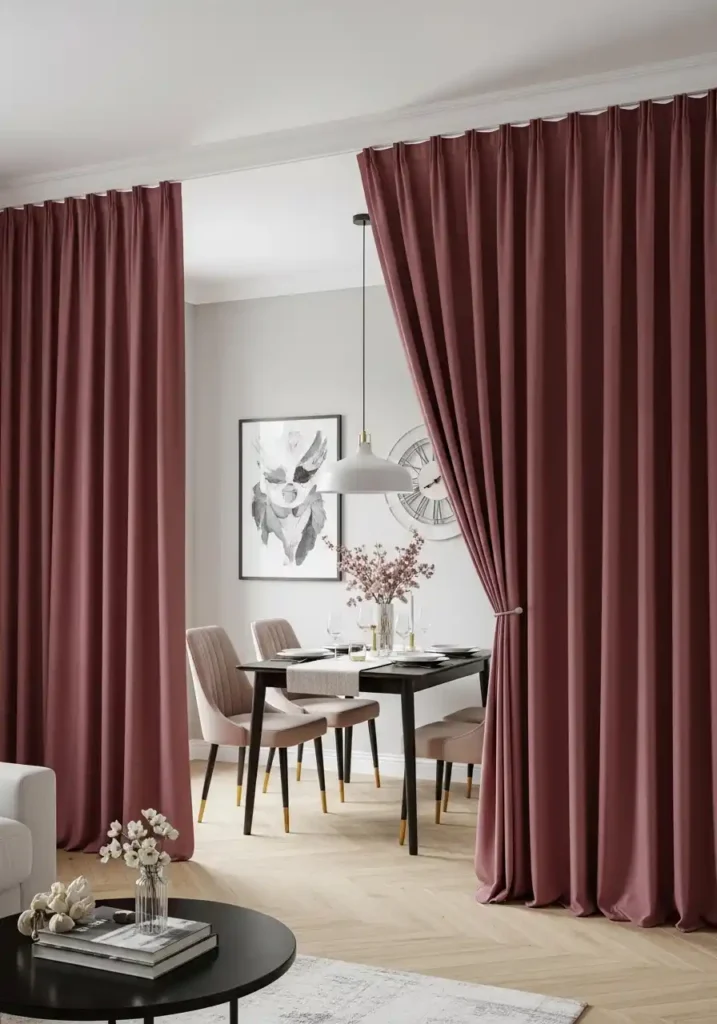
A ceiling-mounted curtain divider between the living and dining zones of a small combined room is the most flexible, the most reversible, and the most atmospherically beautiful zone-separation approach in this guide — because it allows the combined room to function as a single, unified, open-plan space for everyday living and as two distinct, properly separated rooms for the specific occasions when dining privacy, dining atmosphere, or simply the desire for a more formally enclosed dining experience is desired. The curtain opening creates a complete connection between the zones. The curtain drawn creates complete separation. And the transition between these two states takes under ten seconds and requires no furniture moving whatsoever.
The fabric chosen for a dividing curtain in a small combined room carries significant aesthetic weight because the curtain is always present in the room — even when fully open and stacked against the wall, it is a visible design element contributing to the combined room’s character and palette. A beautiful, substantial fabric — a deep velvet in dusty rose, a warm linen in natural oatmeal, or a rich jacquard in a pattern that bridges the two zones’ color palettes — makes the dividing curtain a genuine design asset rather than a practical feature that must be tolerated aesthetically. When drawn, the curtain creates a complete, beautiful wall of fabric that transforms the dining zone into a room of genuine atmospheric enclosure and genuine dining occasion.
23. The Small Combined Room with Built-In Everything Layout
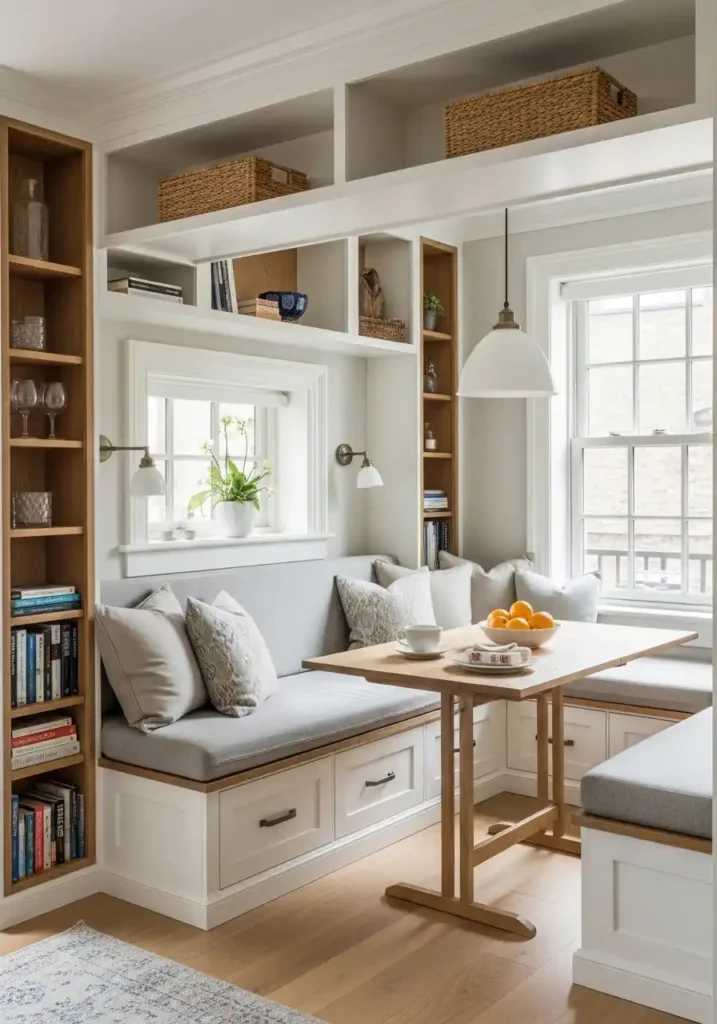
A small combined living and dining room where custom built-in furniture addresses every function is the most expensive but also the most spatially complete, the most aesthetically resolved, and the most genuinely livable layout approach available — because custom-built furniture, designed specifically for the exact dimensions, the exact proportions, and the exact functional requirements of the individual combined room, achieves a spatial efficiency and a visual integration that freestanding furniture can never approach regardless of how carefully it is selected and how thoughtfully it is arranged. Every inch of the built-in combined room is purposeful, every surface is beautiful, and nothing feels like it is in the wrong place or the wrong size.
The specific built-in elements that make the most significant combined room improvement are those that address the functions most poorly served by freestanding furniture in compact combined spaces. A built-in sofa with storage beneath eliminates the need for a separate storage unit in the living zone while providing the room’s primary seating. A built-in fold-down dining table eliminates the need for a permanently positioned dining table while providing a proper dining surface on demand. Built-in overhead shelving connecting the living and dining zones above head height provides storage and display that unifies both zones into a single, architecturally cohesive room. Together, these built-in elements create a combined room of extraordinary spatial intelligence.
24. The Low Furniture Layout That Maximizes Visual Space
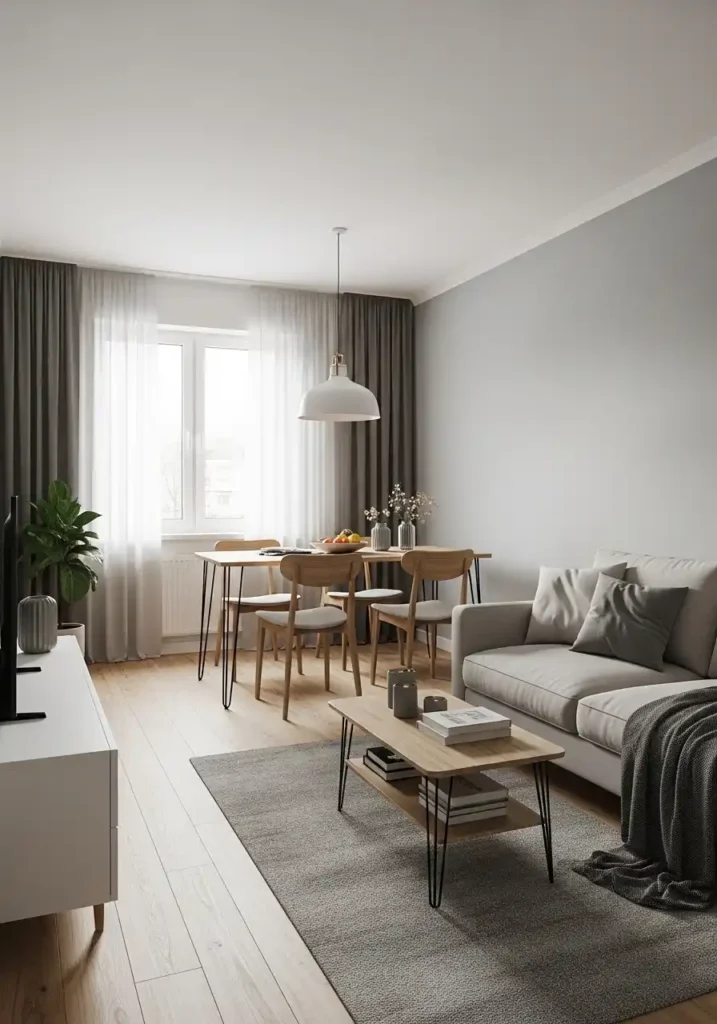
Low-profile furniture throughout a small combined living and dining room is the layout approach that creates the most dramatic improvement in apparent ceiling height and apparent spatial generosity of any furniture selection strategy available — because furniture that sits lower than the standard sofa and table heights reduces the proportion of the room’s vertical dimension that is occupied by furniture mass and increases the proportion that is open, clear, and visually available to contribute to the perception of spaciousness. In a small combined room where every visual cue that the brain uses to assess spatial generosity is important, low furniture consistently and significantly improves the perceived dimensions of the space.
A low-slung sofa with a seat height of thirty-five centimeters rather than the standard forty-five makes the room’s walls appear taller by comparison with the sofa’s reduced height, creating a greater visual relationship between the furniture and the ceiling that reads as more spacious and more architecturally generous. A dining table on slim hairpin legs with the minimum tabletop thickness that practicality allows creates the most visually light dining piece possible — almost transparent in its spatial contribution, allowing the floor to be read as continuous beneath and around it. Together, a low sofa and slim dining table furnish the combined room with all the seating and dining function required while consuming the minimum possible visual space, and the result is a room that feels genuinely, surprisingly, beautifully open.
25. The Complete Small Living Room with Dining Area — Perfect Harmony
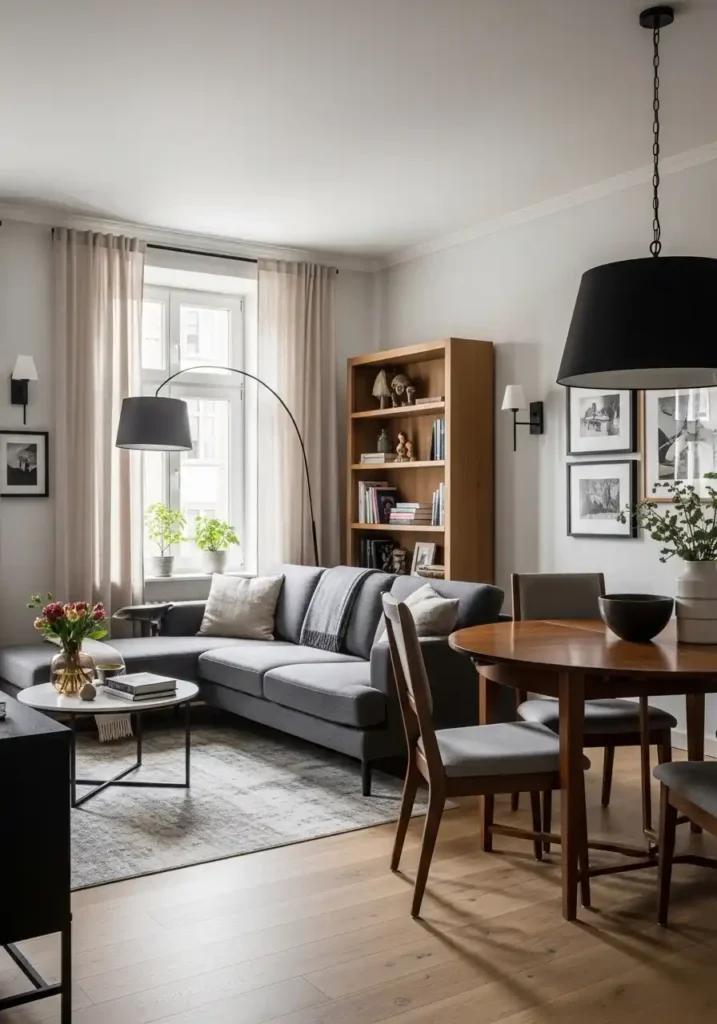
The perfect small living room with dining area — the combined space that makes every person who lives within it genuinely glad, every single day, that they chose this layout, this furniture, and this approach to the beautiful challenge of two functions sharing one room — is always the result of multiple complementary decisions working together in a state of mutual reinforcement and complete spatial harmony. The L-sofa that defines the living zone. The round extending table that manages daily compactness and entertaining generosity. The oversized pendant that anchors the dining zone from above. The shared rug that unifies the two zones into a single, cohesive room. The dividing bookshelf that defines without dividing. Each decision supports every other.
The most important and most liberating understanding this guide offers is that the perfect small combined living and dining room layout does not require every principle applied simultaneously — it requires the two, three, or four principles that address your specific room’s specific challenges most directly and most completely, implemented with genuine care, genuine confidence, and genuine commitment to the beautiful potential of compact combined living. Your small combined room is not a problem to be solved — it is a design opportunity to be embraced, celebrated, and realized with every ounce of the creative intelligence and the genuine love for beautiful, livable spaces that these twenty-five layouts have been assembled to inspire and support.
Conclusion:
Incorporating a dining area into a small living room may seem challenging, but the right layout can transform even the most compact space into a stylish and highly functional hub of the home. The 25 small living room with dining area layouts featured above show how smart furniture placement, multifunctional pieces, and thoughtful zoning can maximize every square foot without sacrificing comfort or style. From cozy corner dining setups to open-concept arrangements, each idea proves that limited space doesn’t have to limit creativity.
By using space-saving furniture, light color palettes, vertical storage, and flexible layouts, you can create a balanced environment where relaxing, dining, and entertaining all coexist seamlessly. Whether you prefer a modern, minimalist look or a warm and inviting aesthetic, these small living room dining combos offer inspiration for designing a space that feels open, organized, and welcoming.
Ultimately, the key to a successful small living room and dining area layout is intentional design. With a little planning and the right decor choices, even the smallest homes or apartments can enjoy a beautiful, practical living and dining space that feels much larger than it actually is.