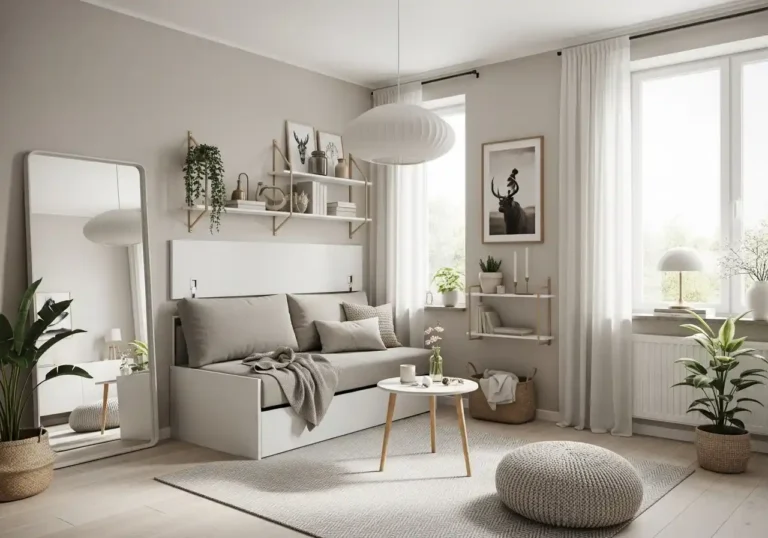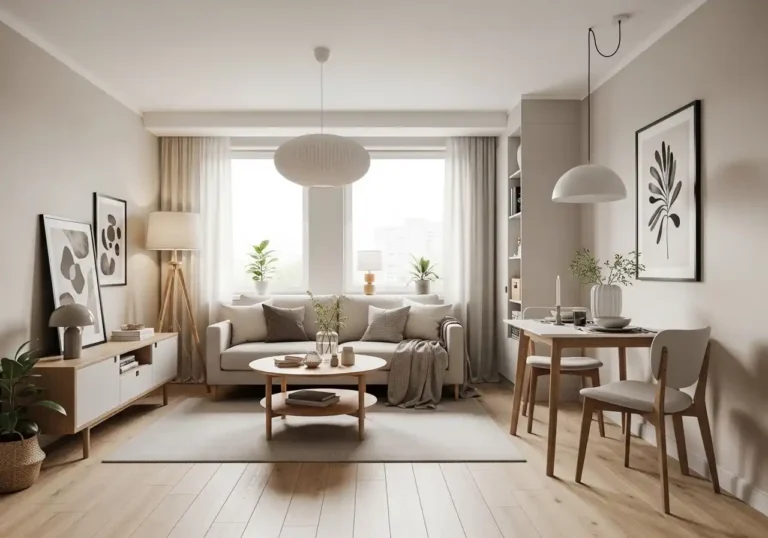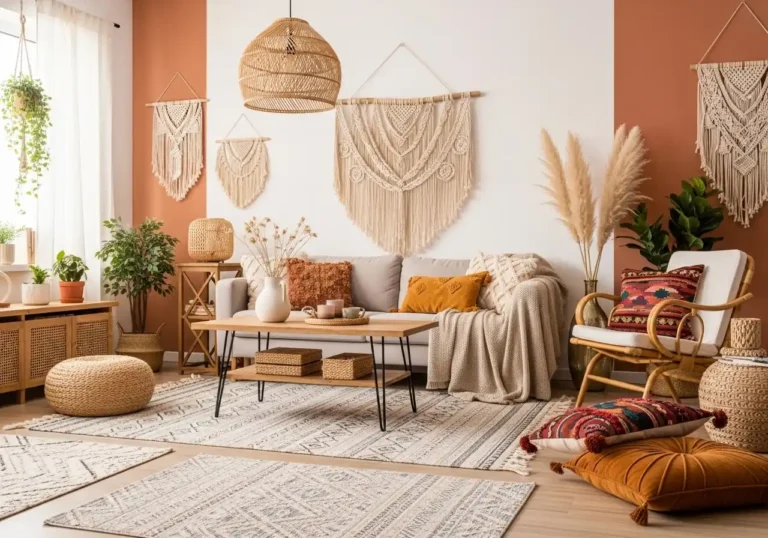
1. The Classic Sofa-Back Divider Layout
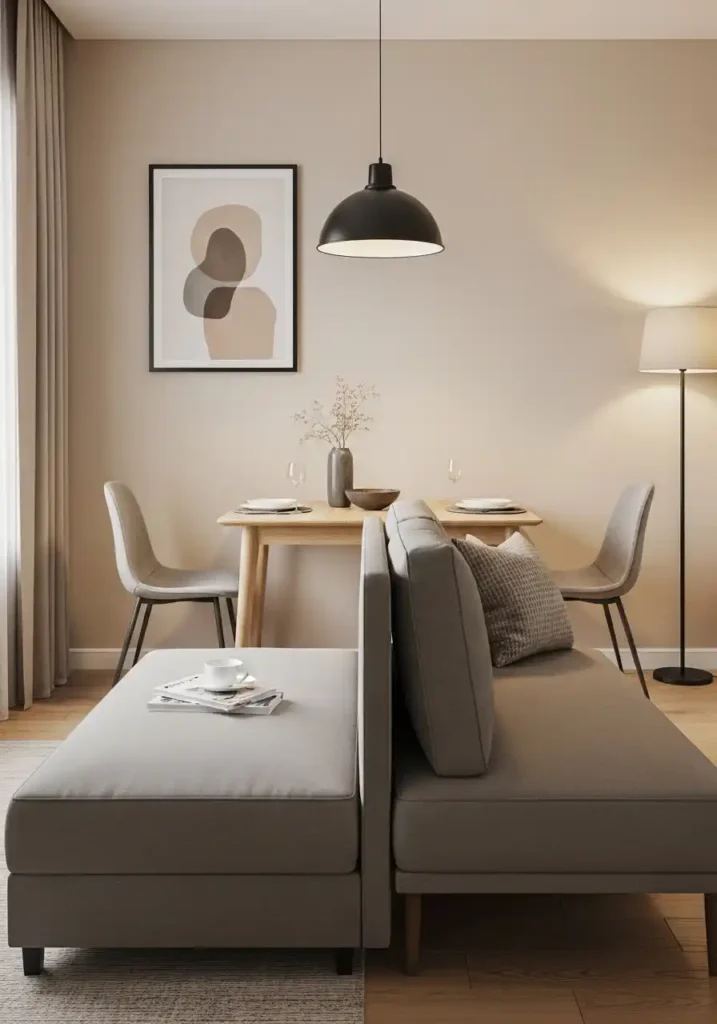
If you’ve been staring at your combined Small Living Room Dining space wondering how on earth to make both zones feel intentional, defined, and genuinely beautiful without building a wall between them, the sofa-back divider layout is the elegant, effortless answer you’ve been searching for all along. Simply positioning your sofa with its back facing the dining table — rather than pushing it against the wall — creates an immediate, completely natural boundary between your two living zones that costs nothing, requires no construction, and can be changed the moment you want to try something different. It is spatial design intelligence at its most accessible and its most immediately satisfying.
What makes this layout so consistently successful in small combined spaces is its ability to make each zone feel like its own distinct room while keeping the overall space feeling open, connected, and visually cohesive. The sofa back becomes a low, furniture-height partition that defines the living area without blocking light or sightlines across the room. Choose a sofa with a clean, attractive back — one that looks as intentional and as finished from the dining side as it does from the living room side — and style a slim console table behind it if you want to add a surface for lamps and display objects that serves both zones simultaneously. This layout makes small spaces feel designed by someone who truly understands space planning.
2. Bench Seating Along the Wall to Save Space
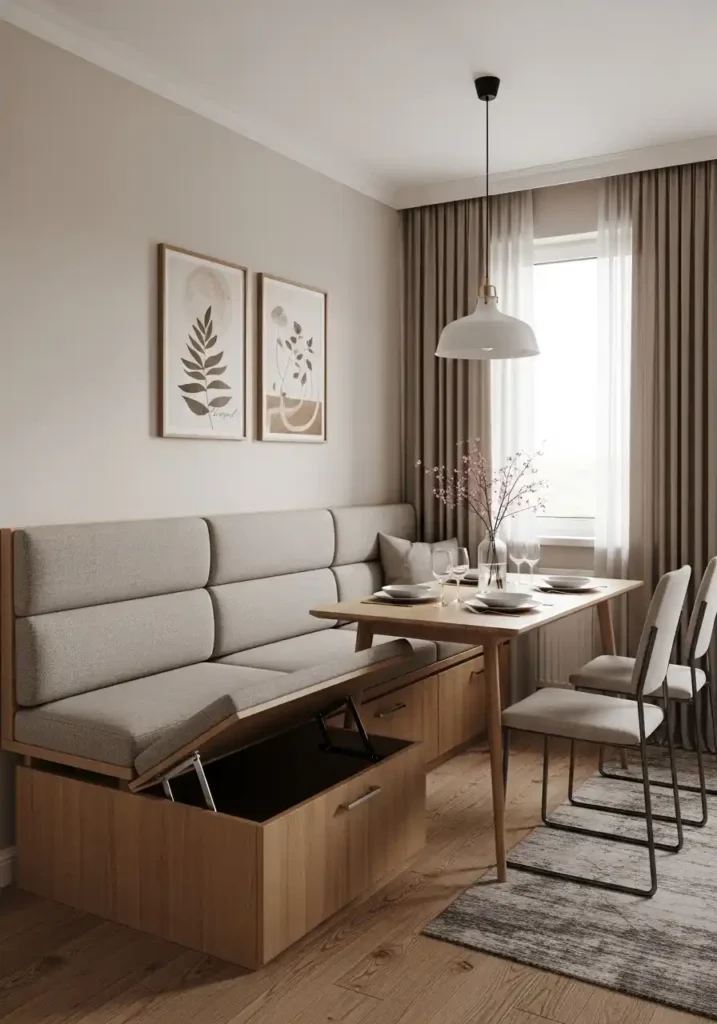
Bench seating along the wall is the small living-dining combo solution that interior designers and space planning specialists reach for consistently when they need to fit a comfortable, attractive dining arrangement into a space that genuinely does not have room for chairs on every side of the table — because a bench against a wall requires zero circulation space behind it, saving the six to twelve inches of chair-pullout clearance on that side of the table that, in a small combined room, can make the difference between a layout that works and one that perpetually feels cramped and compromised. That saved space is genuinely significant in a small room.
The additional benefit that transforms bench seating from a purely practical compromise into a genuinely desirable design feature is the storage opportunity it creates beneath the seat. A built-in or custom upholstered bench with a lift-up lid and storage cavity below turns the dining seating into one of the most cleverly disguised storage solutions in the entire home — perfect for extra table linens, seasonal items, children’s games, or any of the many things that small combined living and dining spaces need to store but have precious little dedicated space to house. Upholster the bench in a durable, beautiful fabric that bridges the aesthetic gap between your living and dining zones and the whole arrangement looks like it was always meant to be exactly this way.
3. Round Dining Table for Better Flow in Tight Spaces
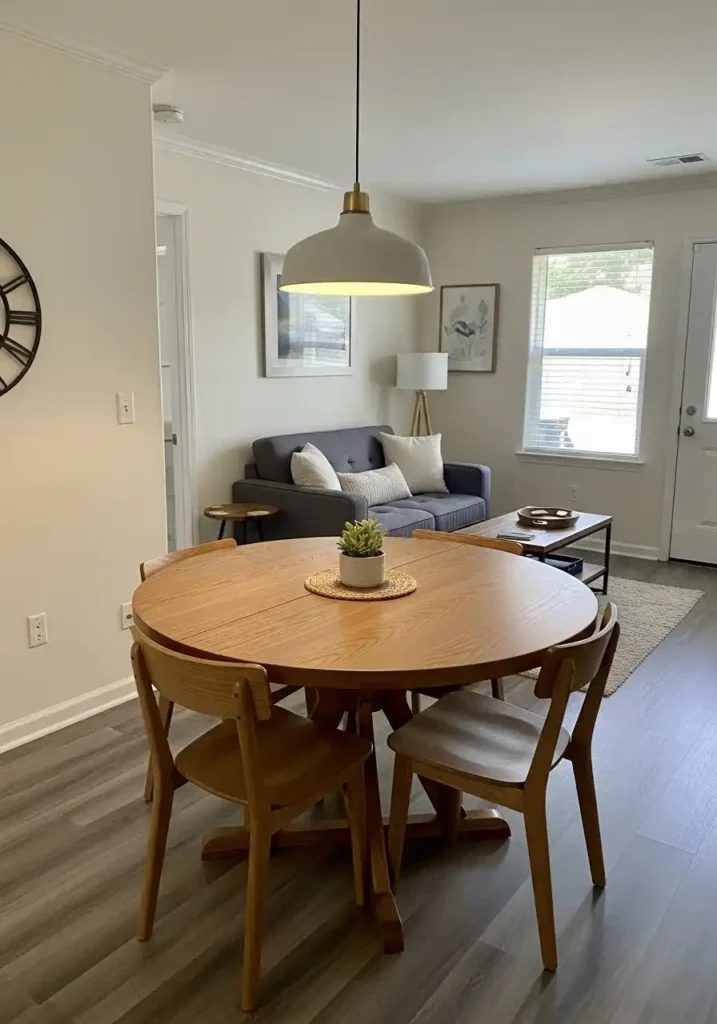
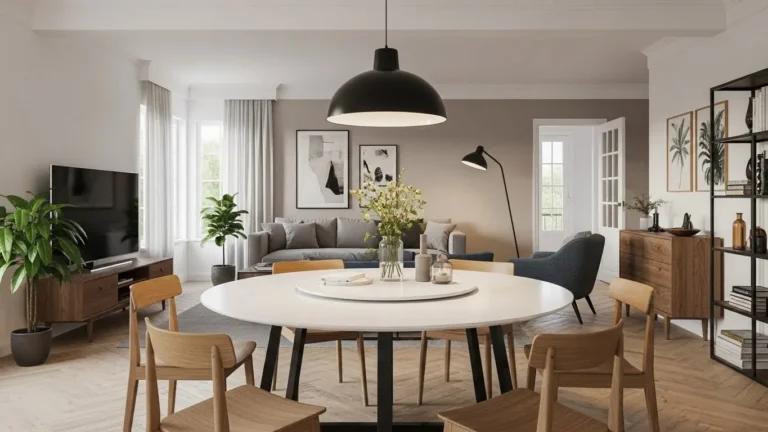
The round dining table is the single most intelligent furniture choice available for a small living-dining combo — and if you’re currently working with a rectangular table that makes navigating your combined space feel like an obstacle course, switching to a round pedestal table might be the most immediately impactful spatial improvement you can make without changing anything else in the room. Round tables have no corners — which means no corners to catch your hips as you pass, no corners to reduce usable floor space in a way that rectangular tables inevitably do in tight configurations, and no corners to make the transition between your living and dining zones feel unnecessarily awkward and constricted.
The pedestal base is the specific round table design that works best in small combined spaces — a central pedestal rather than four legs at the corners means that chairs can be pulled in from any direction and positioned at any point around the circumference of the table without a leg getting in the way, allowing you to seat one more person than the table’s diameter would suggest by simply adding a chair wherever space permits. When the meal is over and the chairs are pushed fully back under the table, a round pedestal table has the smallest possible footprint relative to its seating capacity of any dining table design that exists. In a small living-dining combo, that compact footprint is worth more than almost any other single design consideration.
4. Folding Dining Table Against the Wall
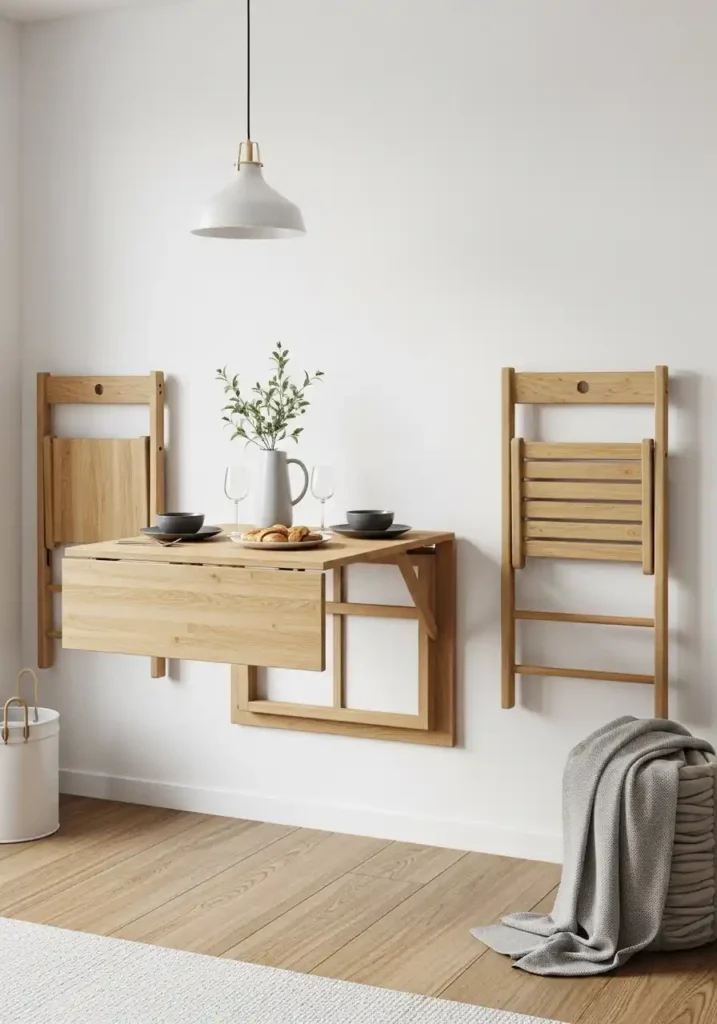
The wall-mounted folding dining table is the small living-dining combo solution for spaces that genuinely cannot permanently accommodate both a full sofa arrangement and a proper dining table at the same time — and in rooms of truly limited square footage, it is not a compromise but a revelation. When the table is folded up flush against the wall, the entire room belongs to the living zone, feeling open, spacious, and completely unencumbered. When it’s time to eat, the table drops down in seconds and the dining zone appears fully formed and properly functional, with a real table surface of genuine size and two or more chairs ready to receive their occupants.
The design quality of your folding dining table matters enormously in a combined living space where the table — whether open or closed — is always visible and always contributing to or detracting from the room’s overall aesthetic. Avoid cheap, utilitarian folding tables with thin legs and hollow tops that look and feel like they belong in a community center rather than a beautifully designed home. Instead, invest in a wall-mounted drop-leaf table in solid oak, walnut, or painted wood with proper joinery and a surface that looks genuinely beautiful both as a dining table when open and as a decorative wall element when folded closed. Style the closed table with a small plant, a candle, and a framed print above it so it reads as an intentional design feature rather than a practical concession.
5. Bar Cart as a Zone Separator Between Living and Dining
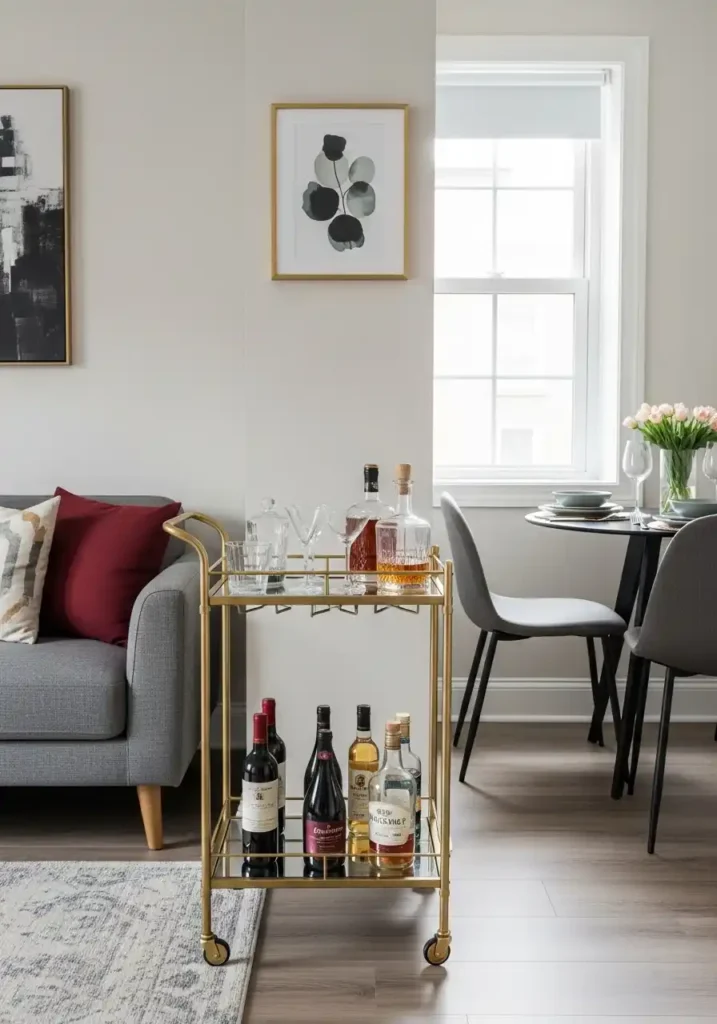
A beautifully styled bar cart positioned between your living and dining zones is the most glamorous, most functional, and most effortlessly cool zone-dividing solution available in small combined space design — and it’s a solution that does three jobs simultaneously with complete style and zero effort. It divides the zones visually, creating a clear sense of where living ends and dining begins. It provides a genuinely useful surface for drinks, glassware, and entertaining essentials that both zones can share without either zone needing to house a dedicated drinks storage area. And it adds a decorative focal point to the middle of the room that makes the whole combined space look intentionally styled and beautifully considered.
The styling of your zone-dividing bar cart is an exercise in both aesthetics and practicality — and getting both right simultaneously is enormously satisfying. Choose a cart in a metal finish that works with both the living and dining furniture on either side of it: warm brass suits wooden furniture and velvet upholstery; matte black works beautifully with industrial and contemporary aesthetics; chrome or polished stainless suits sleek, minimalist rooms. Stock the upper shelf with your most beautiful glassware and a decanter or two of something amber and gorgeous. Keep the lower shelf for practical storage. Style the cart so it looks impeccable even on ordinary Wednesday evenings when no guests are expected, because in a small combined space, every element is always on display.
6. Matching Furniture Sets for Visual Cohesion
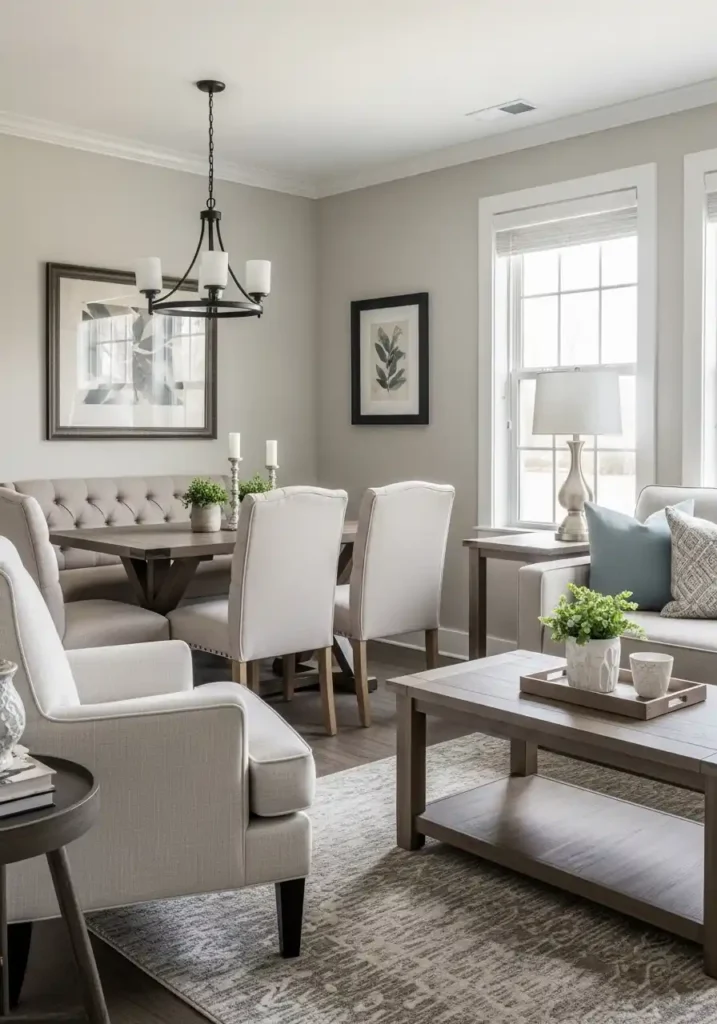
In a small living-dining combo where both zones share the same visual field simultaneously, the single most powerful tool for making the combined space feel designed rather than compromised is the deliberate, intelligent use of matching or closely coordinated furniture across both zones. When your dining chairs and your living room accent chairs share the same fabric, when your coffee table and your dining table share the same wood tone and finish, when your sofa and your dining bench share the same upholstery color — the eye reads the combined space as a single, unified, intentionally designed room rather than two separate rooms that happen to have been forced into the same square footage.
The psychological effect of visual cohesion in a small combined space is genuinely significant and consistently underestimated. Variety of furniture styles, colors, and materials in a small room creates visual noise — a sense of busyness and conflict that makes the space feel smaller, more crowded, and more difficult to navigate visually and physically. Cohesion quiets that noise completely, allowing the eye to move smoothly from zone to zone without encountering visual resistance or conflicting design languages. Choose your anchor element first — usually the sofa, as the room’s largest and most dominant piece — and build every other furniture choice in both the living and dining zones outward from that single starting point in terms of color, material, and style family.
7. Use a Rug to Define Each Zone Clearly
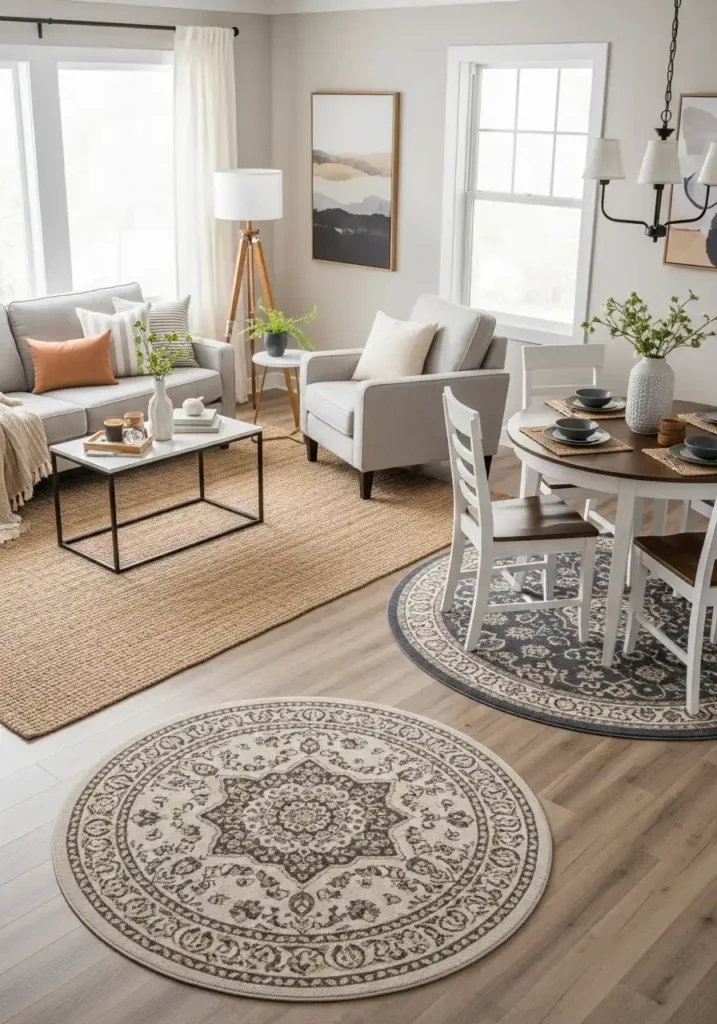
Two rugs — one for the living zone and one for the dining zone — is the most visually effective, most immediately clear, and most completely reversible zone-definition strategy available in a small living-dining combo, and it’s a strategy that works in virtually every combined space configuration regardless of the room’s specific proportions or furniture arrangement. The rug defines the zone with complete clarity to the eye: wherever the rug is, that’s where that zone lives. The transition between rugs — even when they’re closely positioned in a small room — creates a visual boundary that separates the two areas as effectively as a low wall without blocking any light, sight, or physical movement between them.
The key to making dual rugs work beautifully in a small combined space — rather than creating a busy, conflicting patchwork of competing patterns on the floor — is choosing two rugs that are clearly from the same design family while being distinguishable from each other. The simplest and most consistently beautiful approach is to choose one plain, natural fiber rug for one zone and one patterned rug in coordinated colors for the other — a plain jute or sisal in the living area and a geometric or abstract patterned rug in warm complementary tones in the dining area creates a pairing that feels both deliberate and visually harmonious. Size each rug correctly for its zone: large enough that the anchor furniture of each area sits with at least its front legs on the rug.
8. Floating Shelves as a Subtle Room Divider
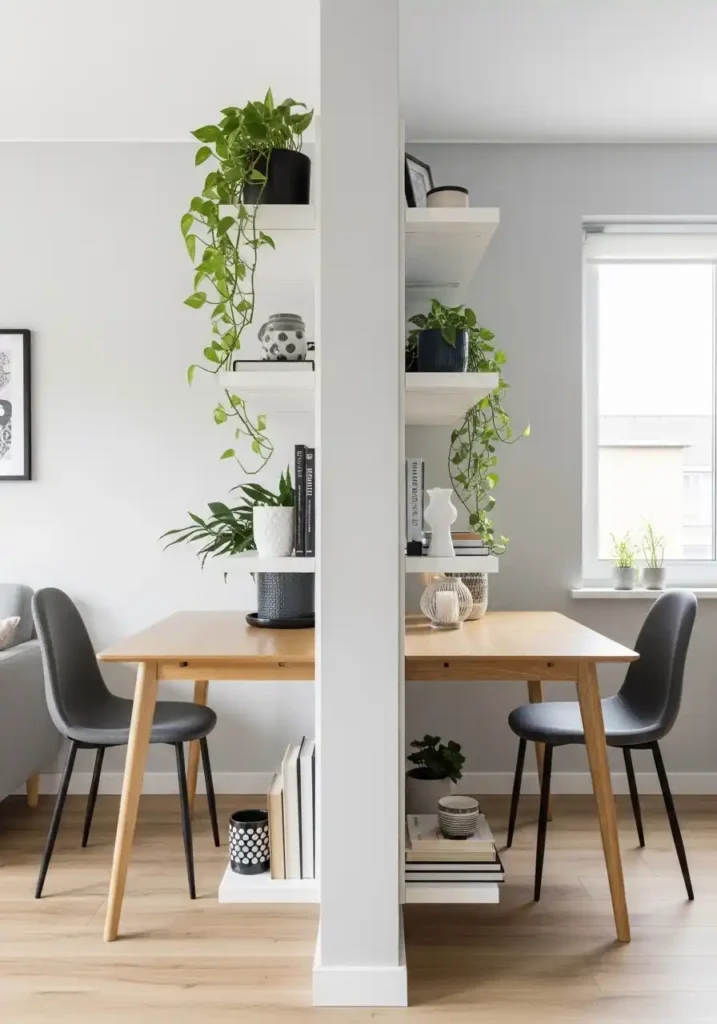
Open floating shelves used as a room divider between the living and dining zones of a small combined space are the zone-separation solution that manages to be simultaneously functional, beautiful, and completely spatially intelligent — because open shelves, unlike solid partitions or tall furniture pieces, divide a space visually without dividing it physically or blocking the light and sightlines that keep a small room feeling open and connected. The shelf unit creates a permeable boundary between zones — one that the eye reads as a clear transition point but that the body and the light can pass through freely, maintaining the openness that small spaces depend on for their sense of spaciousness.
Styling open dividing shelves in a combined living-dining space is an exercise in creating a display that looks beautiful and intentional from both sides of the shelf simultaneously — which is a genuinely different challenge from styling shelves that are only ever viewed from one direction. Choose objects that look as interesting from behind as from the front: a potted plant whose foliage can be enjoyed from multiple angles, a glass vase or decanter that is beautiful in silhouette from the dining side, a stack of books whose spines can be read from the living room. Leave generous empty space between groupings on every shelf so light passes through freely and the shelves never feel like a solid visual barrier, regardless of how many beautiful objects they hold.
9. Pendant Light to Mark the Dining Zone
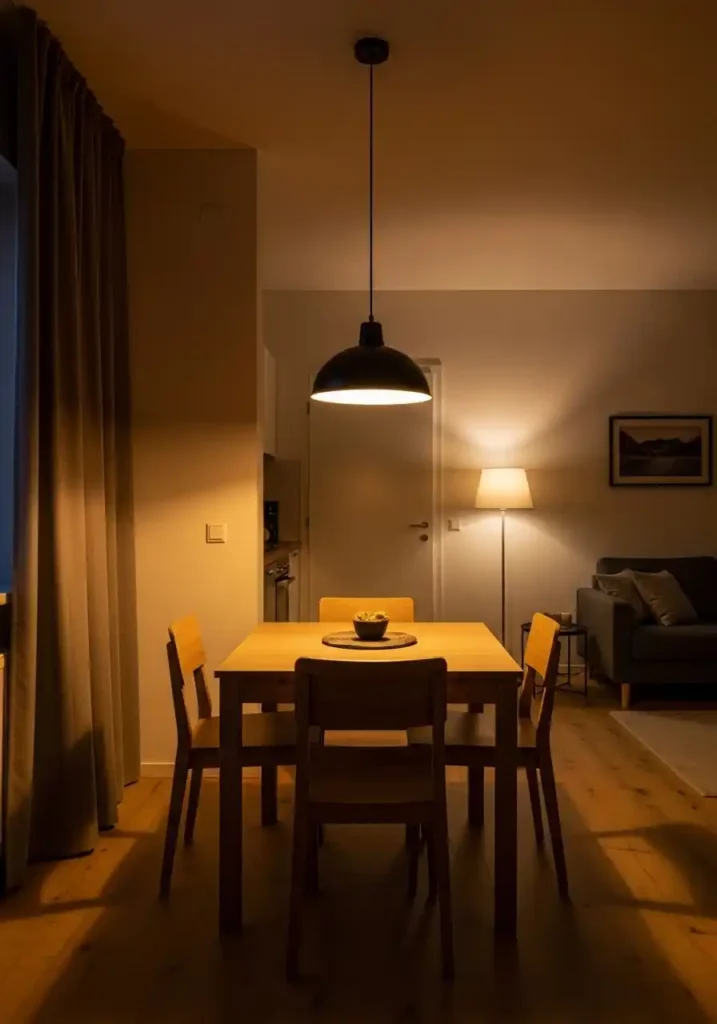
In a small living-dining combo where floor space is too precious for physical zone dividers and the room’s proportions make furniture-based zone definition challenging, strategic lighting design is the most elegant and most architecturally sophisticated zone-definition tool available — and a pendant light positioned directly above the dining table with complete confidence and deliberate intentionality is the most powerful single lighting choice you can make. The pendant light does something that no rug, no furniture arrangement, and no shelf can do: it claims the vertical space above the dining area and creates a defined column of warm, focused light that makes the dining zone feel like a room within the room, an intimate, purpose-lit circle of warmth and welcome.
Choosing the right pendant light for a small combined living-dining space requires balancing the light’s visual presence — its size, its shade form, its material — against the scale of the dining zone it will occupy and the aesthetic of the combined room as a whole. In a small space, resist the temptation to choose a pendant that is cautiously small for fear of overwhelming the room: a pendant that is slightly too large for its position reads as confidently designed, while one that is slightly too small floats awkwardly above the table without creating the warm, embracing pool of light that is the entire point of the exercise. Choose a shade form that directs light downward onto the table — a dome, a cone, or an opaque drum shade — so the light remains focused on the dining zone rather than spreading indiscriminately throughout the combined space.
10. Extendable Dining Table for Flexible Entertaining
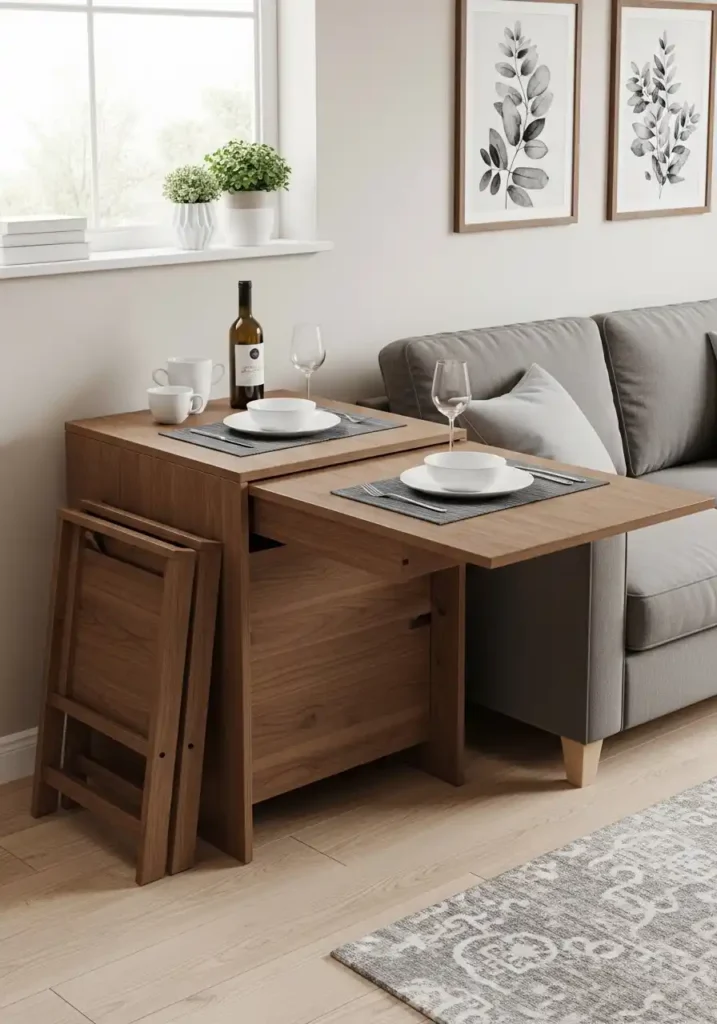
The extendable dining table is the small living-dining combo furniture choice that solves the most common and most frustrating space planning dilemma in combined spaces: the need to accommodate comfortable daily dining for one or two people without permanently sacrificing the living zone floor space that a larger table would require, while retaining the ability to seat four, six, or even eight people when the occasion demands it. An extendable table in its smallest configuration is compact enough to feel proportionally appropriate for daily use in a tight combined space; extended to its full width, it transforms the dining zone into a proper, generous entertaining surface that makes guests feel genuinely, warmly welcomed.
The design quality and the extension mechanism of your extendable dining table are both worth genuine investment — because in a small living-dining combo where the table is always visible from the living zone and is one of the most prominently positioned furniture pieces in the entire room, it needs to look as beautiful in its compact everyday configuration as it does when fully extended for a dinner party. Butterfly leaf extension mechanisms that store the additional leaf within the table frame and deploy with a single, smooth sliding motion are the most elegant and most space-efficient option, as they require no external leaf storage and no interruption of the table’s appearance when in its smallest form. Choose a table in a solid wood or high-quality veneer that is genuinely beautiful from every angle.
11. Color Zoning Without Physical Dividers
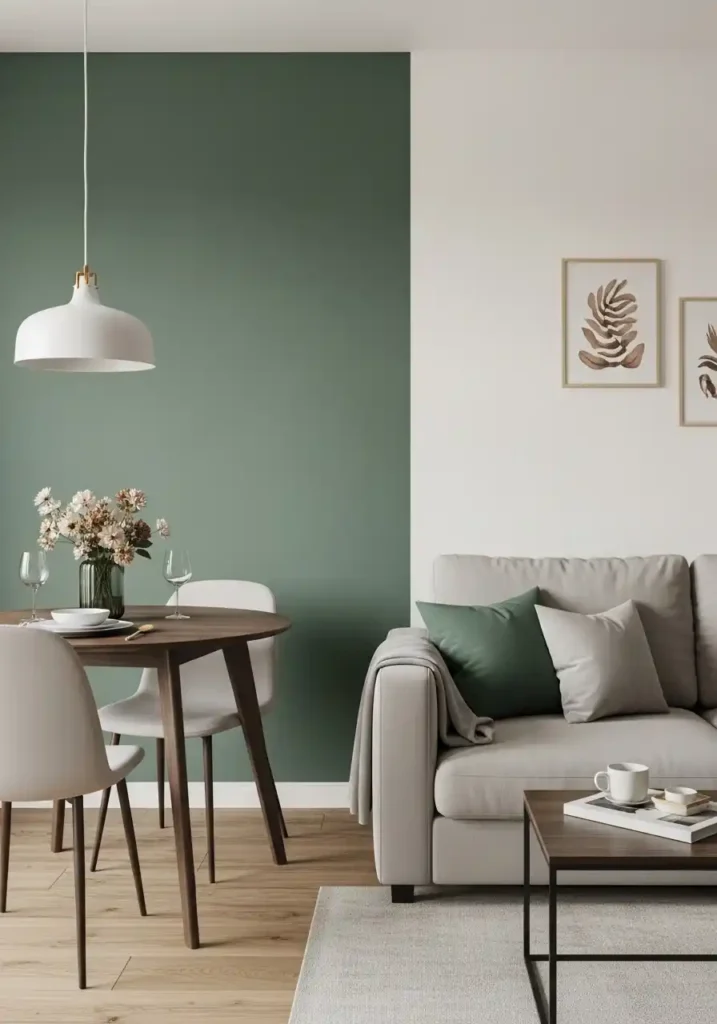
Color zoning — using different wall colors in the living and dining zones of a combined space to create visual distinction between them without any physical separation — is one of the most intelligent, most beautiful, and most cost-effective zone-definition strategies available in small combined space design. When the wall behind the dining table is painted in a deeper, richer, more intimate tone than the walls of the living zone, the dining area immediately takes on a distinct character and atmosphere of its own — it feels like a separate room, a defined dining destination, without a single piece of additional furniture, a single partition, or a single structural change to the room.
The color relationships that work most beautifully in a color-zoned living-dining combo are those where the two colors are clearly from the same tonal family while creating a meaningful distinction in depth and character. A warm white living zone paired with a deep sage green dining zone shares the same warm undertone and the same general temperature but creates a clear and beautiful distinction between the open, expansive feel of the lighter zone and the intimate, enveloping feel of the deeper one. Navy and pale blue, terracotta and warm cream, charcoal and soft gray — all of these pairings create the same effect: two zones that feel distinctly different in atmosphere and purpose while remaining visually and tonally harmonious within the same room.
12. Murphy Bed Living-Dining Combo for Studio Apartments
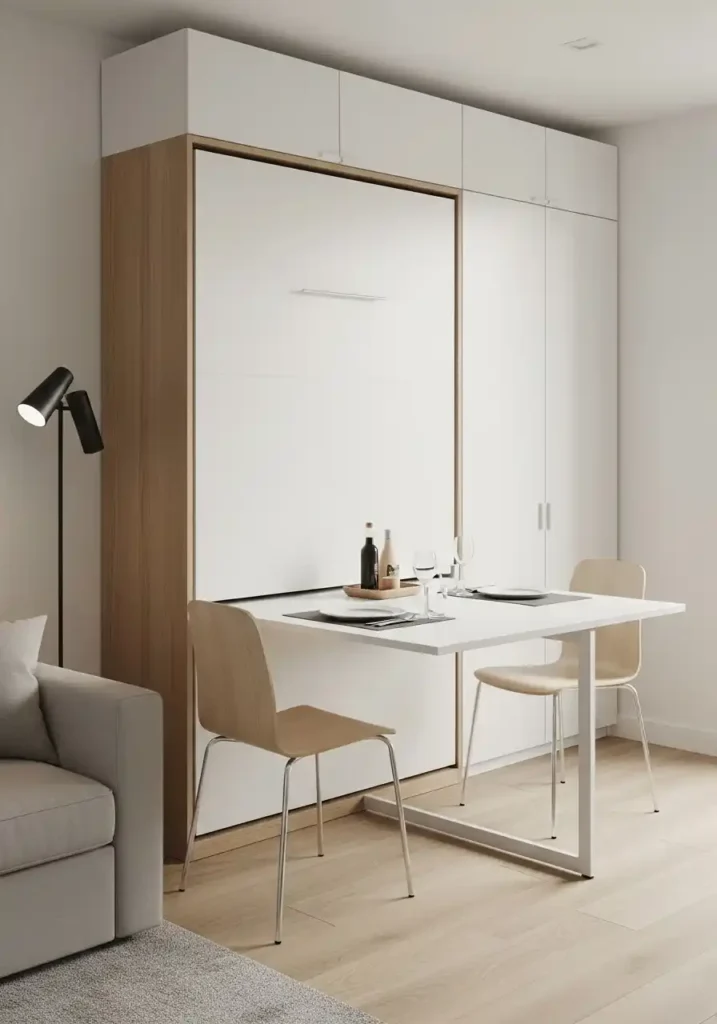
The living-dining combo in a true studio apartment operates under a completely different set of spatial and functional constraints than even the smallest separate bedroom home — and the Murphy bed wall system that integrates a fold-down dining table into its overall design is the most spatially intelligent, most completely resolved solution for the genuine multi-zone studio challenge. When the bed is closed and stored vertically within the wall unit, the entire floor area of the apartment belongs to the living and dining functions. The integrated dining table deploys from within the same wall unit in seconds, creating a proper dining surface without requiring any dedicated floor space beyond the chairs that surround it.
The best Murphy bed wall systems available today are designed with an aesthetic sophistication and a material quality that would be genuinely impressive even without the remarkable engineering concealed within them — they look like beautiful floor-to-ceiling cabinetry rather than like practical storage solutions, and the folding and deploying of their various components is smooth, silent, and satisfying rather than awkward and mechanical. Choose a system in a finish — natural oak, painted white, warm walnut lacquer — that serves as the primary design statement of the combined space and build your furniture choices for both the living and dining zones around the visual language of the wall unit. This is a small space design at its most resolved and its most beautifully complete.
13. Narrow Console Table as Dining Table
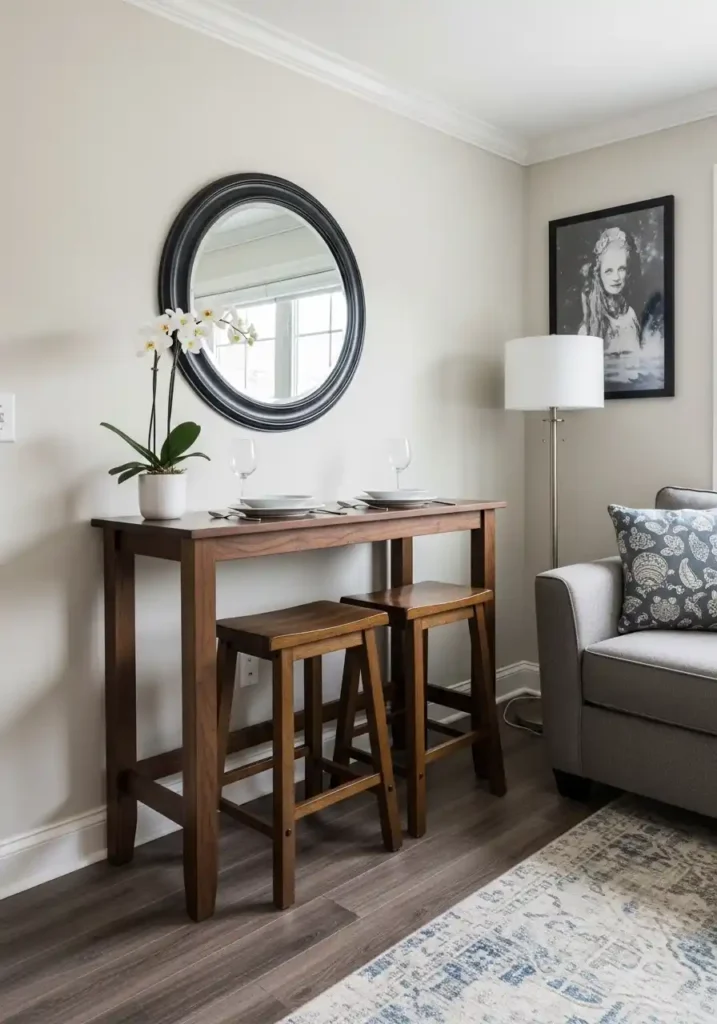
A narrow console table repurposed as a dining surface for one or two people is the small living-dining combo solution that completely rethinks what a dining table needs to look like — and for solo dwellers and couples in genuinely compact combined spaces, it is a revelation that frees up enormous floor area while providing a dining surface that is perfectly functional for everyday meals and surprisingly stylish in its unconventional simplicity. A standard console table at approximately 30 inches in depth positions the diner against the wall in a configuration that requires zero floor space behind the dining zone for chair pullout clearance, since both diners face the same direction in a counter arrangement.
Counter-height stools that tuck completely under the console table when not in use are the essential companion piece that makes this solution truly work in a small combined space — because stools that disappear beneath the table surface leave the floor plane completely unobstructed, maintaining the visual openness of the room even when the dining arrangement is technically in place. Choose stools with footrests at the right height for comfortable extended sitting, upholstered in a fabric that coordinates with your living zone furniture so the dining arrangement reads as part of the same cohesive design story rather than a utilitarian addition that was never properly integrated into the room’s aesthetic. A simple pendant light or wall-mounted swing-arm lamp above the console completes the intimate dining zone beautifully.
14. Velvet Bench as Transition Piece Between Zones
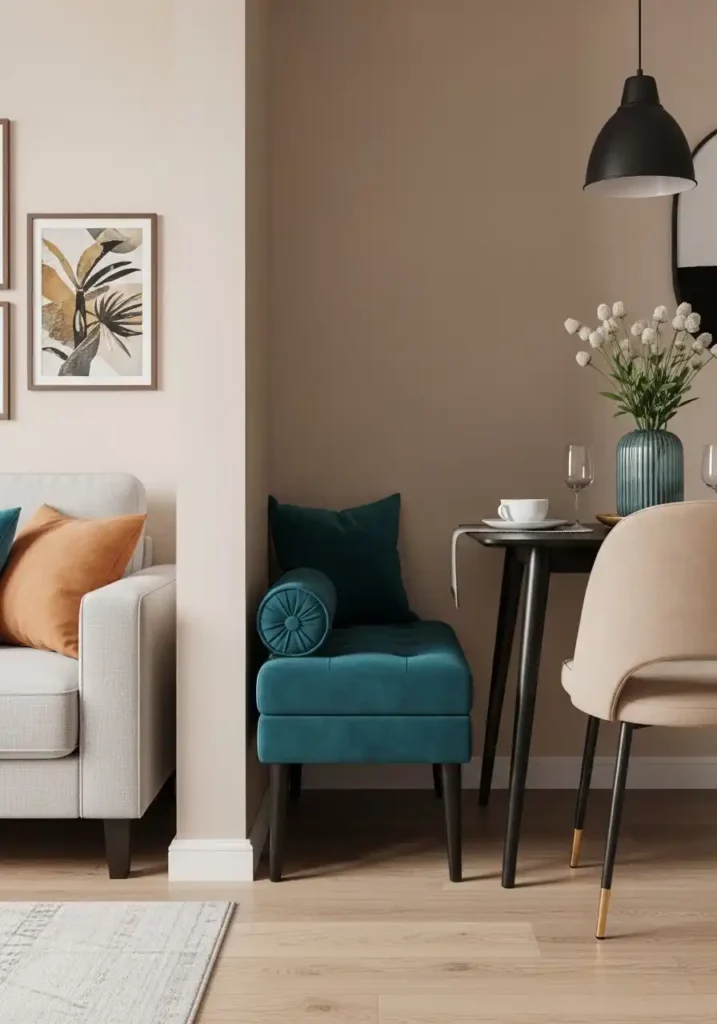
A velvet bench positioned at the exact transition point between your living and dining zones is one of the most elegantly practical and most visually beautiful multifunctional furniture solutions in small combined space design — a piece that simultaneously serves as a zone marker, a seating supplement for the dining table when extra guests arrive, additional seating for the living area, a decorative focal point at the room’s natural midpoint, and a surface for throws and cushions that adds warmth and softness to both zones at once. A bench that does this many jobs this beautifully and this effortlessly deserves a very prominent place in your combined space planning.
The color and material of your transition bench is the design decision that has the most impact on how successfully it bridges the aesthetic gap between your living and dining zones — and choosing it thoughtfully, with both zones in mind simultaneously, is the key to making it work as a genuine design bridge rather than simply an additional piece of furniture placed between two areas. A deep teal or emerald velvet bench bridges warm neutrals and deeper tones beautifully. A camel or cognac leather bench brings warmth that works in virtually any combined palette. A natural linen bench in the same fabric as your dining chair seats creates a material continuity between the bench and the dining zone that ties both areas together with quiet sophistication. Choose boldly and the bench becomes a design hero.
15. Floating TV Wall Unit to Free Up Floor Space
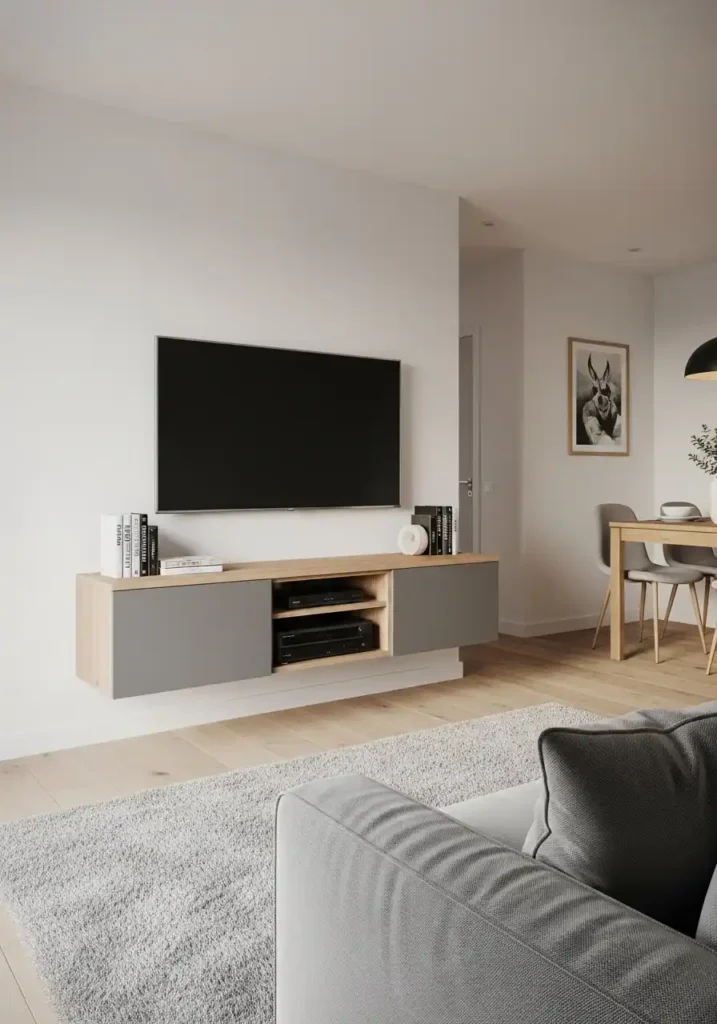
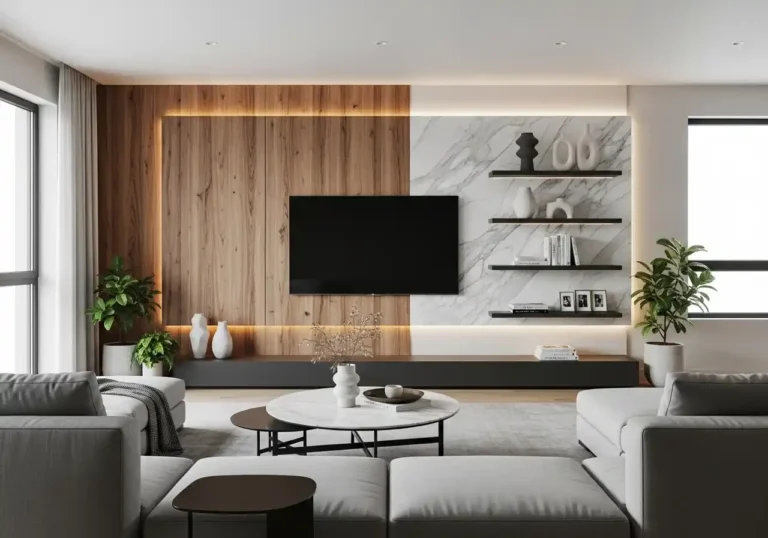
In a small living-dining combo where the living zone needs to accommodate a television without the TV stand or media console consuming precious floor space, the wall-mounted floating TV unit is the smart, clean, contemporary solution that resolves this challenge with complete spatial efficiency and genuine aesthetic elegance. A floating unit mounted at the right height, with the TV positioned above it on the same wall, contains all the necessary media equipment and storage behind closed cabinet doors while keeping the entire floor area beneath it completely clear — and that cleared floor area, in a small combined room, makes a genuinely measurable difference to how open and spacious the living zone feels.
The design of your floating TV unit should be treated as seriously as any other primary furniture decision in the combined space, because it occupies a prominent position on the living zone’s most important wall and contributes significantly to the room’s overall aesthetic character. Choose a unit with a clean, simple profile — no ornate hardware, no complex molding, no elaborate detailing that would add visual busyness to a zone already managing the complexity of two functional areas within a single room. A handle-free design in warm oak, matte white, or dark walnut with push-to-open doors gives the unit a calm, seamless quality that allows it to recede visually while performing its practical function with complete competence and considerable quiet style.
16. Nesting Side Tables That Work for Both Zones
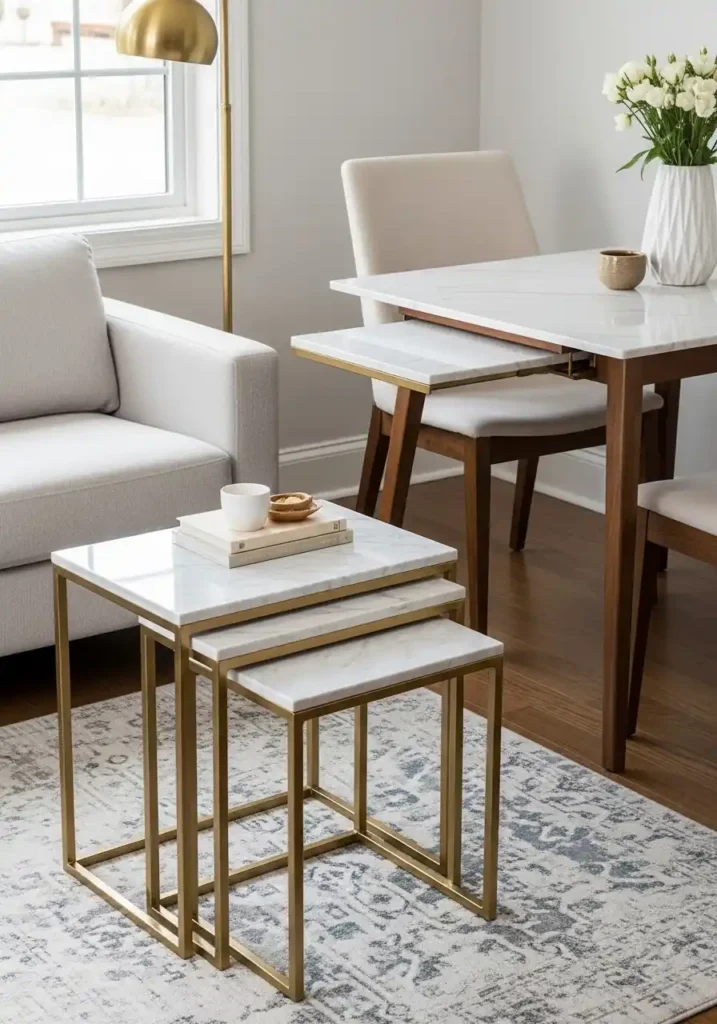
Nesting side tables are the small living-dining combo furniture investment that keeps giving back in flexibility and unexpected usefulness long after the initial purchase — because a well-chosen set of nesting tables in a material and finish that works across both zones can migrate between living and dining functions with complete ease, serving as a coffee table arrangement in the living zone during the day and providing additional surface space in the dining zone when an extended meal requires more room for serving dishes, drinks, and the various elements of a properly set table. They are furniture that truly earns its place in a small combined space by refusing to be limited to a single function or a single zone.
The key to choosing nesting tables that work effectively across both zones of a combined living-dining space is selecting a material combination that is simultaneously elegant enough for the living room coffee table role and durable enough for the dining-adjacent surface role. Marble tops with brass or gold legs bring the kind of material richness and genuine decorative presence that looks intentional and beautiful in both zones without looking out of place in either. Natural oak or walnut wood tops on slim steel legs are equally versatile and add warmth that works across virtually every combined space aesthetic. Choose tables whose largest piece is genuinely large enough to function as a proper coffee table for your sofa arrangement, and the smaller pieces will find their own perfect uses naturally and organically as you live with them.
17. Open Shelving Between Zones for Storage and Display
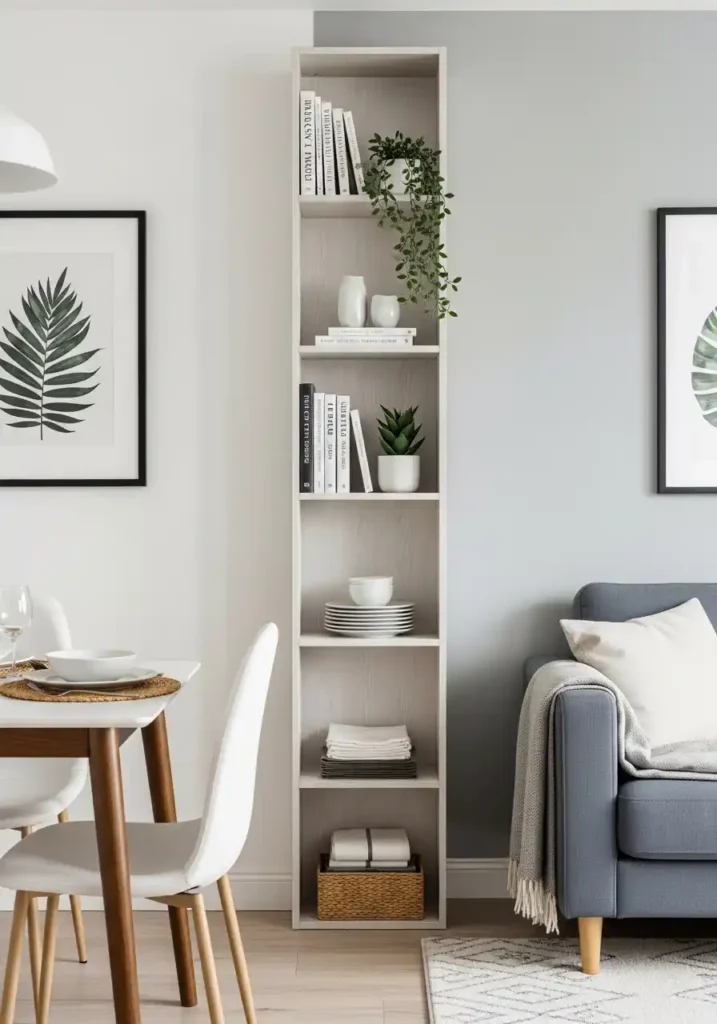
A freestanding open shelving unit positioned between the living and dining zones of a combined space is the zone-definition strategy that adds the most genuine practical value to the combined space of any dividing solution available — because unlike a sofa back, a rug edge, or a paint color change, a shelving unit provides real, usable storage that both zones can share and draw from, reducing the total amount of storage furniture required elsewhere in the combined room and contributing to the overall spatial efficiency of the layout in a way that purely decorative zone markers simply cannot. Storage that divides is always preferable to division that only divides.
The styling and organization of a zone-dividing open shelving unit in a small combined space requires thinking simultaneously about what each zone needs from the shelves and what the shelves will look like from each zone’s vantage point. Dining essentials — extra napkins, a few carefully chosen bottles of wine or olive oil, a small collection of beautiful ceramics — belong on the shelves that face or are most accessible from the dining zone. Books, plants, and decorative objects that contribute to the living room’s atmosphere and visual interest belong on the shelves most visible from the sofa. The unit should be styled so that the transition from dining-relevant to living-relevant objects on its shelves mirrors and reinforces the transition between zones that the unit itself is physically creating.
18. Mirrored Wall to Expand Both Zones Visually
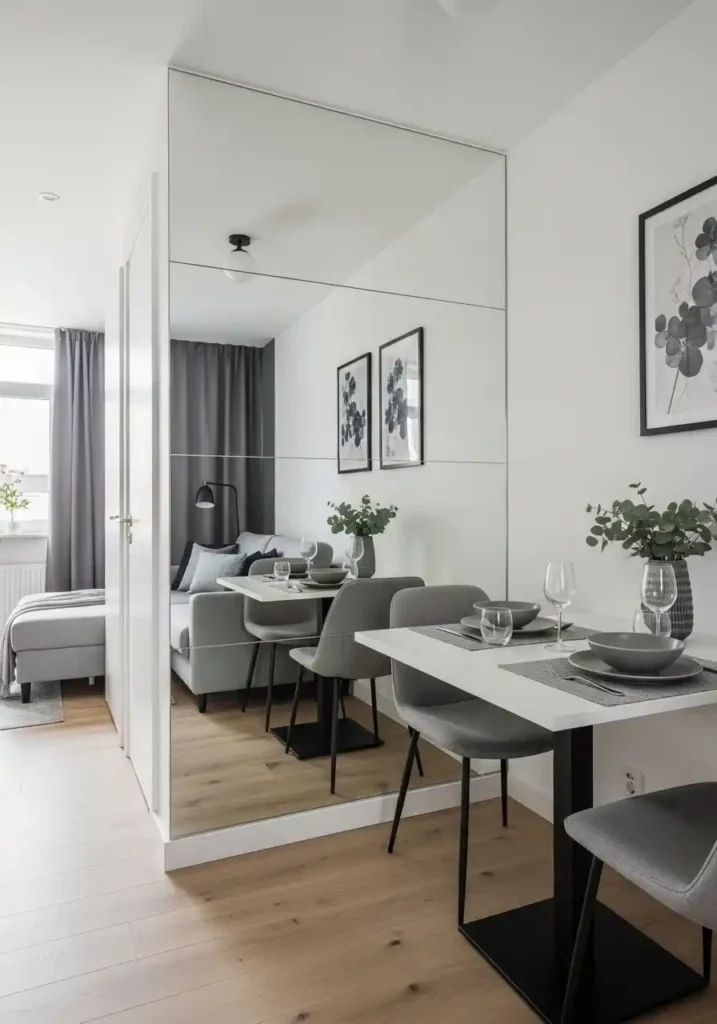
A large mirror on the wall that both zones of your living-dining combo face simultaneously is perhaps the single most impactful visual expansion tool available in a small combined space — because it doubles the apparent size of the entire room in a single, decisive intervention, creating the illusion that the space extends equally far in the opposite direction and making both the living and dining zones feel more open, more generous, and more graciously proportioned than their actual dimensions allow. In a small combined space where every perception of spaciousness is precious and every visual trick that increases the sense of openness is worth deploying, a large mirror is not a luxury — it is an essential.
The positioning of a large mirror in a small living-dining combo requires careful thought about what the mirror will reflect and how that reflection will contribute to or complicate the room’s visual experience. Position the mirror so that it reflects your best light source — ideally a window — to maximize the light-amplifying effect that makes mirrored walls so transformative in small spaces. Avoid positioning the mirror so that it reflects directly into the eyes of diners seated at the table, which creates a visual distraction that undermines the convivial dining atmosphere you’re working to create. A floor-to-ceiling mirror leaning against the wall rather than mounted on it creates a more casual, contemporary effect that suits modern combined spaces particularly beautifully.
19. Plants as Natural Zone Dividers
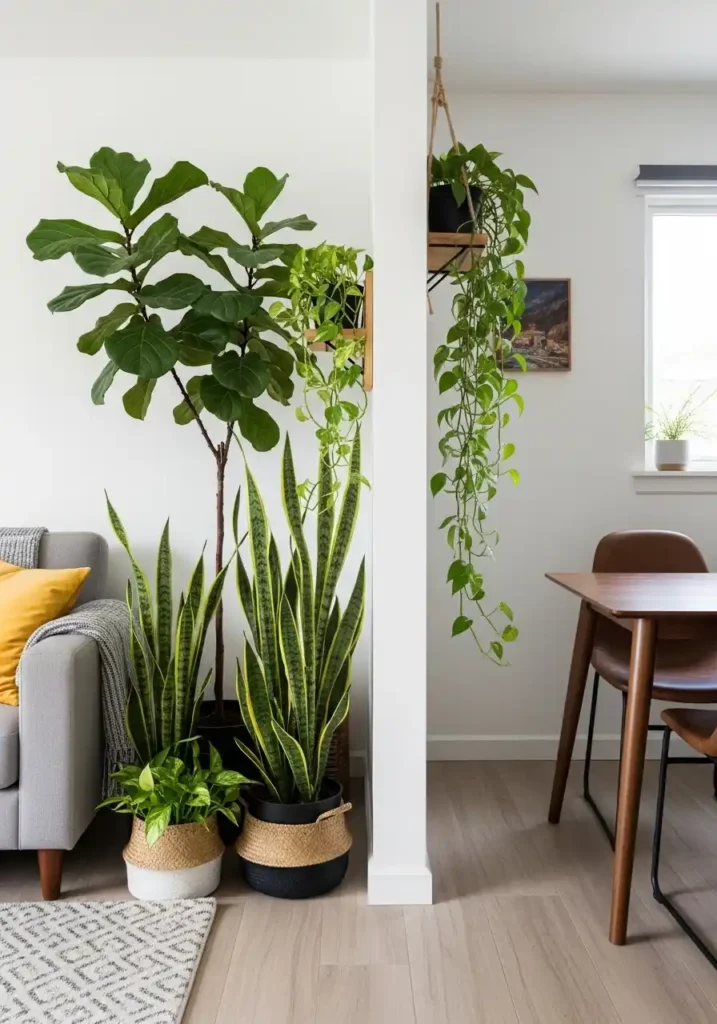
Plants as zone dividers in a small living-dining combo represent the most organic, most visually beautiful, and most genuinely life-enhancing approach to zone definition available — because unlike every other zone-separation strategy, a cluster of plants at the transition point between your living and dining zones doesn’t just define the space, it actively improves it, adding fresh oxygen to the air, adding the calming, restorative presence of living green to the visual environment, and creating a zone transition that feels less like a boundary and more like a gentle threshold through a garden from one beautiful outdoor room to another. Plants make the combined space feel healthier, happier, and more genuinely alive.
The plant cluster that works best as a zone divider in a small combined space is one that creates sufficient visual presence to be clearly read as a zone marker while remaining completely open and unobstructing in terms of light and physical passage between zones. Combine plants of genuinely different heights — a tall fiddle leaf fig or bird of paradise that reaches toward the ceiling, a medium-height architectural snake plant or rubber tree, and a low or trailing variety on a plant stand that cascades toward the floor — to create a green composition that spans the full vertical range from floor to ceiling and reads as a genuinely substantial zone boundary from both directions. Group them in a cluster of odd numbers — three or five plants — for the most visually natural and most compositionally balanced arrangement.
20. Multifunctional Island as Both Kitchen Divider and Dining Table
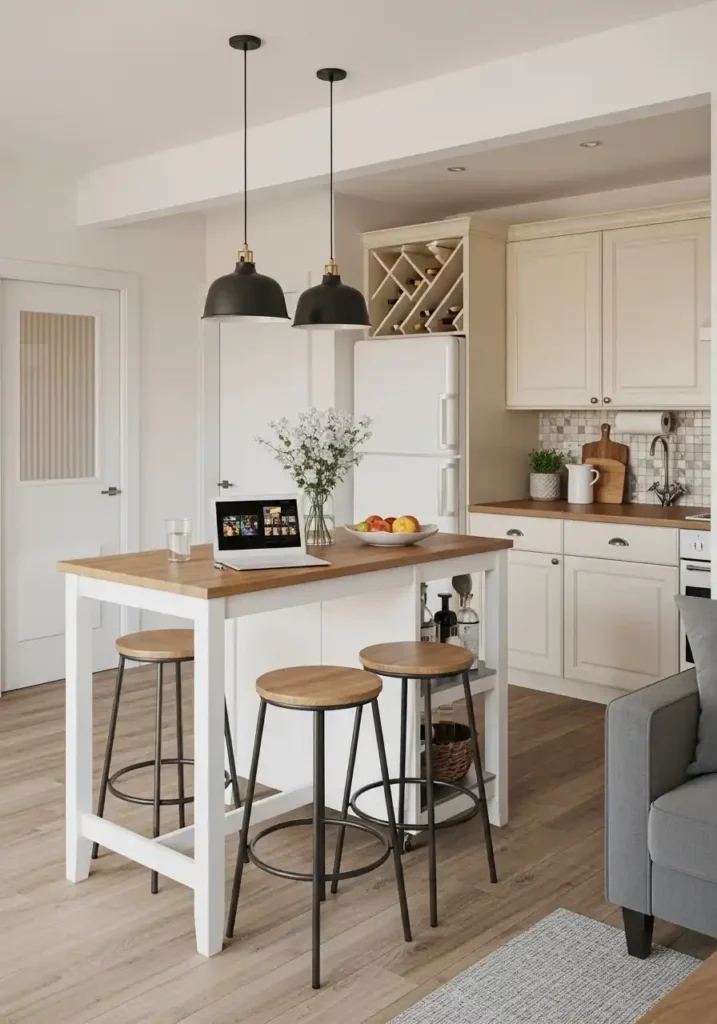
In open-plan apartments and small homes where the kitchen, dining, and living zones share a single continuous space, a compact kitchen island with bar stool seating on the living room side is the multifunctional design solution that resolves the combined space’s three most significant challenges simultaneously — it provides the dining surface that the combined space needs without dedicating any additional floor area to a separate dining table, it creates a visual and functional division between the kitchen and the living zones without closing off the open-plan connection between them, and it provides additional kitchen workspace that small apartment kitchens almost universally need and almost universally lack. Three challenges, one beautiful solution.
The dining function of a kitchen island in a small combined open-plan space depends entirely on the correct design of the island’s overhang — the extension of the countertop beyond the cabinet below that creates the knee space necessary for bar stools to tuck under and for seated diners to sit comfortably without their legs being blocked by the island’s structure. A minimum overhang of twelve inches is required for comfortable bar stool seating, and fourteen to sixteen inches is preferable for truly comfortable extended sitting at a meal. Choose bar stools without backs for the most compact, most visually lightweight configuration — backless stools tuck completely under the island overhang and virtually disappear when not in use, maintaining the clean, open feel of the combined space at all times.
21. Gallery Wall Spanning Both Zones to Unify the Space
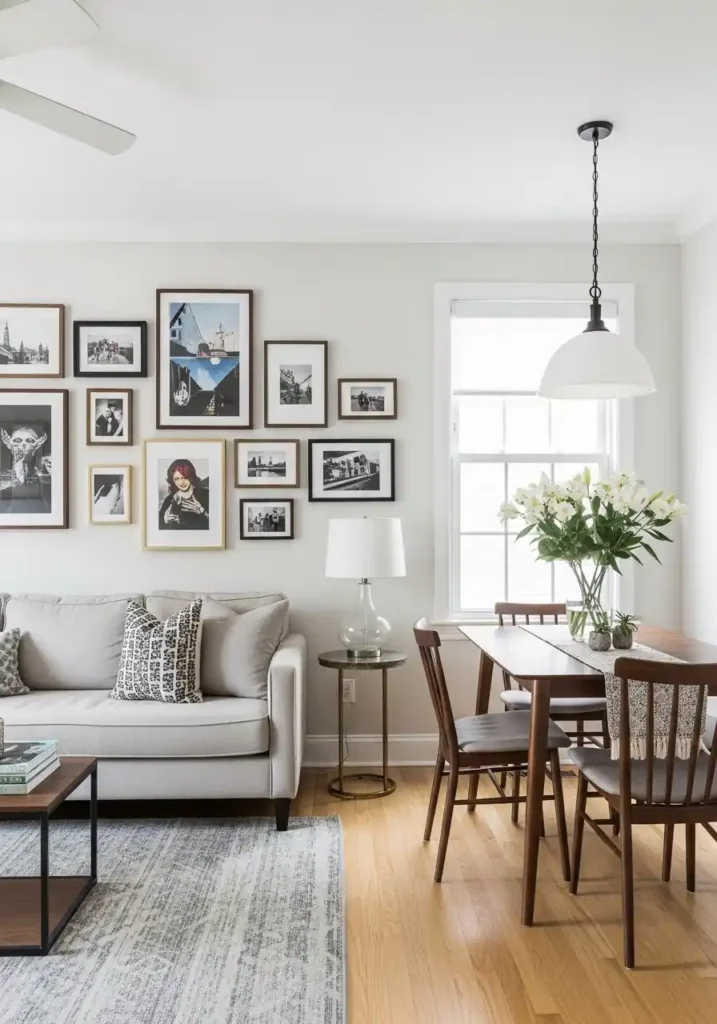
A gallery wall that runs continuously and uninterrupted across both the living and dining zones of a combined space is the design strategy that does more to make a small combined room feel like a single, cohesive, intentionally designed environment than almost any other single decorating decision available. Where zone-specific decoration — a gallery wall in the living zone, a different wall treatment in the dining zone — emphasizes the division between areas and makes the combined space feel like two rooms competing for the same floor area, a continuous gallery wall that spans the full width of both zones creates a shared visual narrative that unites them into one room with one story and one clearly expressed aesthetic identity.
Curating a gallery wall that spans both zones requires choosing artwork and images that work harmoniously at the overall composition level while allowing for subtle zone-specific character within the broader arrangement — perhaps slightly more personal, more domestic images near the dining table and more abstract or landscape pieces above the sofa, but all framed consistently and all arranged within a single compositional logic that makes the wall read as one installation. Maintain consistent frame spacing throughout the entire wall, regardless of where one zone ends and the other begins, to reinforce the visual continuity that is the gallery wall’s primary contribution to the combined space. The result is a room where the question of where living ends and dining begins is beautifully, intentionally irrelevant.
22. Smart Storage Ottomans for Dual-Zone Living
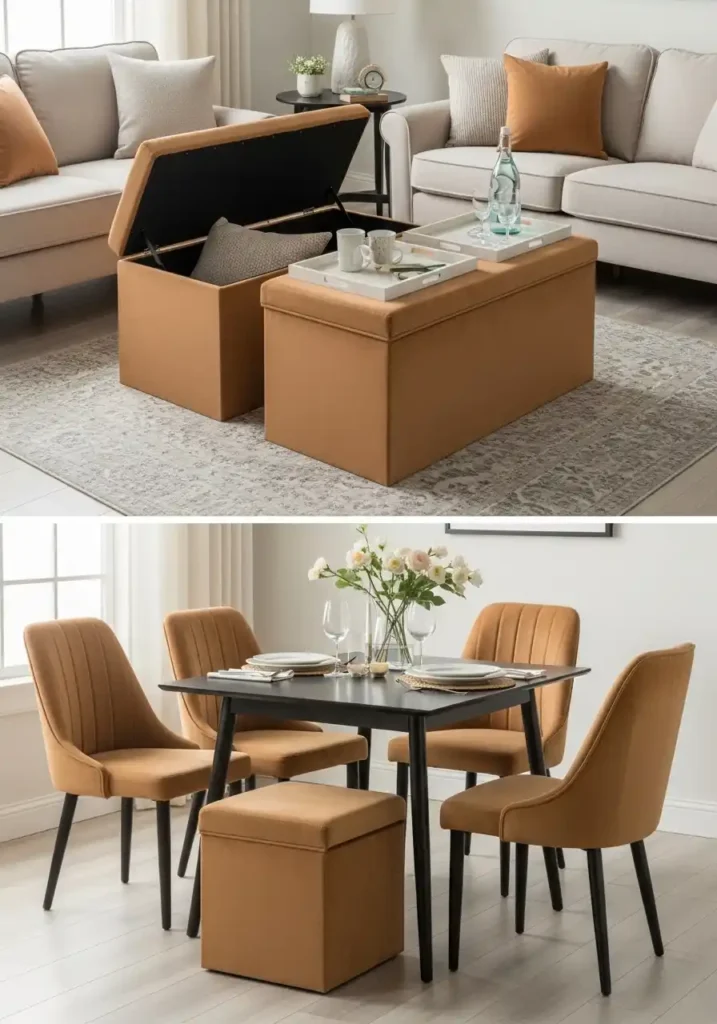
Storage ottomans are the small living-dining combo furniture hero that most people under-invest in and under-utilize — deploying them as simple footrests or single-purpose coffee table alternatives when they are capable of so much more in a combined space that needs every piece of furniture to work at maximum efficiency across multiple functions and multiple zones. Two large storage ottomans in the living zone, topped with trays that turn them into proper coffee table surfaces, provide hidden storage for the blankets, games, books, and everyday living room clutter that combined spaces need to manage invisibly — and when dinner guests arrive and extra seating is required at the dining table, those same ottomans migrate from the living zone to the dining zone in thirty seconds and provide comfortable additional seating without any additional furniture being required.
The material and finish of your storage ottomans is the design decision that determines whether they read as genuine, beautiful pieces of furniture in both zones or as obviously utilitarian objects that look out of place the moment they leave the living area rug. Choose an upholstery fabric that is beautiful enough for the living room, durable enough for dining zone seating, and neutral enough to coordinate with the furniture palette of both zones simultaneously — warm camel velvet, deep charcoal boucle, natural oatmeal linen, or cognac leather all meet this standard beautifully and look genuinely elegant wherever in the combined space they happen to be positioned on any given evening.
23. The Perfect Small Living-Dining Combo — Bringing It All Together
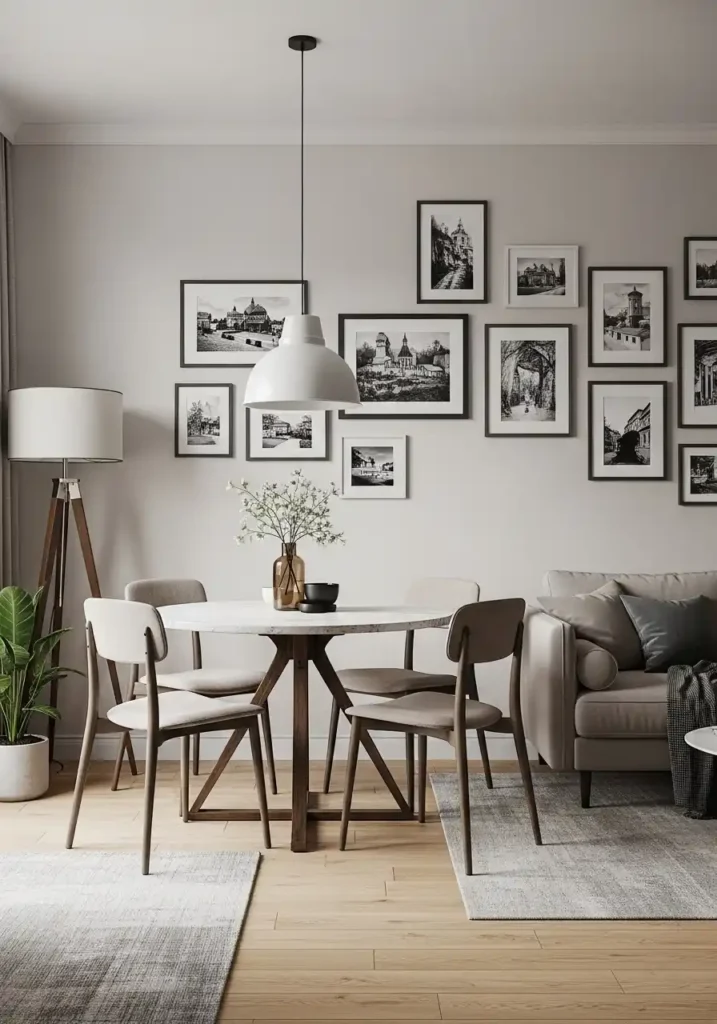
The perfect small living-dining combo is never the result of one brilliant layout idea or one clever furniture choice — it is the result of multiple smart decisions working together in harmony, each one solving a specific challenge of the combined space while contributing to a cohesive overall design vision that makes the room feel genuinely spacious, genuinely beautiful, and genuinely livable in all the ways that matter most in daily life. The round dining table that improves flow, the sofa back that defines zones, the pendant light that claims the dining area, the continuous gallery wall that unifies both zones — together, these decisions create something greater and more satisfying than any of them could achieve independently.
The invitation this guide leaves you with is both practical and deeply exciting: choose three or four of the ideas that resonate most powerfully with your specific space, your specific furniture, and your specific aesthetic sensibility, and begin implementing them one considered decision at a time. Small spaces don’t need to be approached with anxiety or a sense of limitation — they need to be approached with intelligence, creativity, and genuine confidence in the principle that great design is not about having more square footage but about using every inch of the square footage you have with the maximum possible intention, clarity, and beauty. Your small living-dining combo is not a compromise. It is a design opportunity waiting to be beautifully realized.
Conclusion:
Designing a functional and stylish small living room dining combo may seem challenging, but with the right layout ideas, even the most compact spaces can feel open, organized, and inviting. From space-saving furniture and smart zoning techniques to multifunctional pieces and creative décor solutions, these 23 small living room dining combo layout ideas prove that limited square footage doesn’t have to limit your style.
By carefully planning your layout, choosing furniture that serves multiple purposes, and maximizing natural light, you can create a seamless flow between your living and dining areas. Whether you prefer a modern, minimalist look or a cozy, traditional feel, the key is to prioritize comfort, functionality, and visual balance.
Ultimately, a well-designed small living room dining combo can transform your home into a practical yet beautiful space for relaxing, dining, and entertaining. Use these ideas as inspiration to make the most of your space and create a layout that perfectly fits your lifestyle.