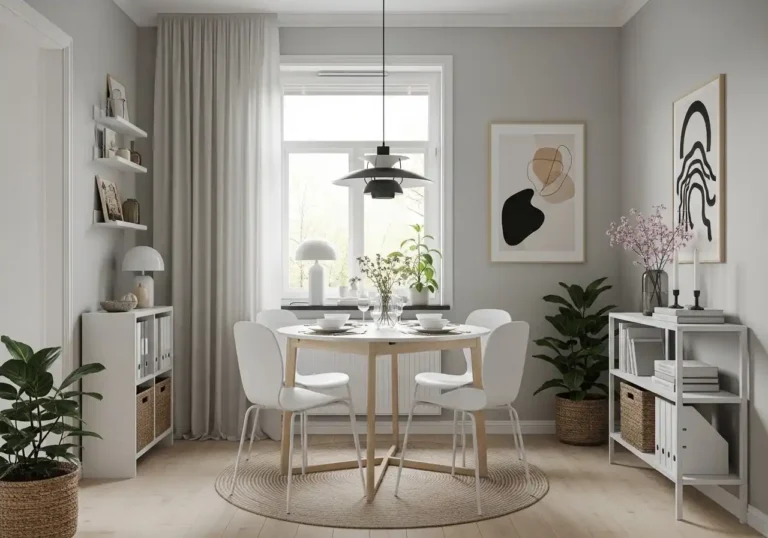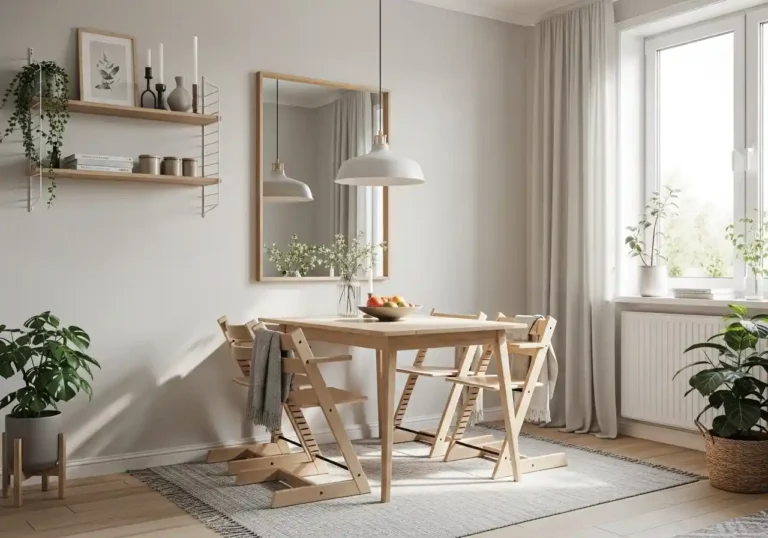
The walls of your dining room are not passive architectural surfaces waiting to be covered with something decorative — they are the backdrop against which every gathering, every celebration, every intimate dinner conversation, and every shared meal plays out. They set the emotional tone of the room before anyone sits down, communicate something specific and meaningful about the people who chose them, and determine whether the dining experience feels generic and forgettable or distinctive and genuinely alive with personal character. Statement wall decor in a dining room is not about following trends or selecting the most expensive option — it is about choosing the specific visual element that makes the room undeniably yours and makes every person who enters it understand immediately and instinctively that something genuinely considered and genuinely beautiful is happening here. These twenty-three dining room wall decor ideas are real, original, and specifically chosen to give you the complete, inspiring range of what a statement dining room wall can be.
1. Oversized Abstract Canvas Painting as Dining Room Anchor
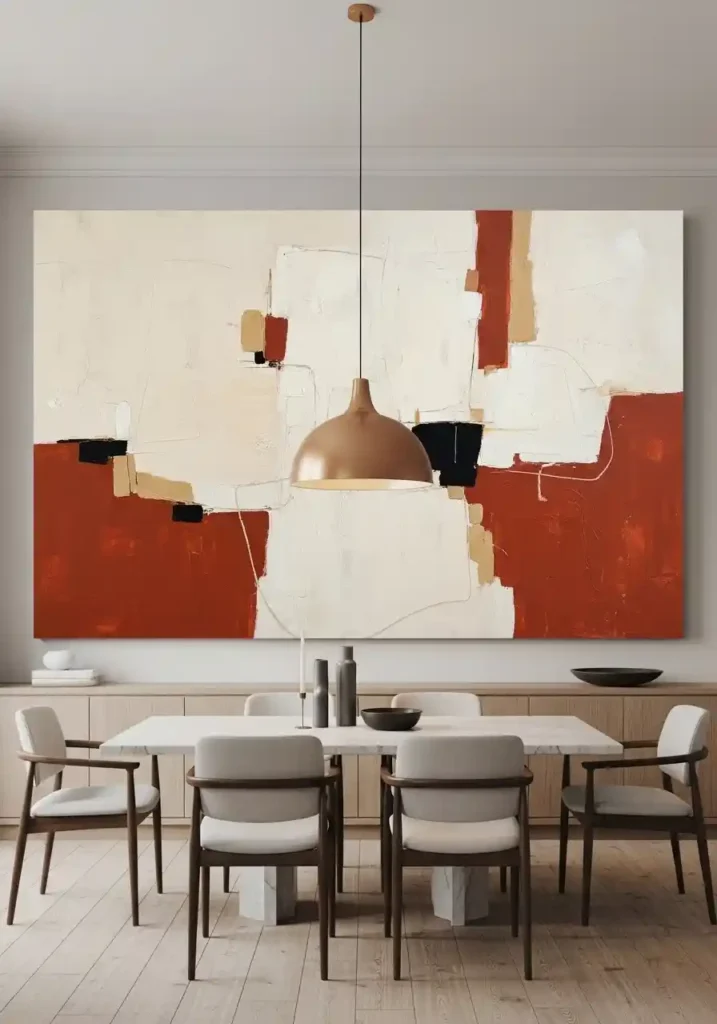
An oversized abstract canvas painting hung behind the dining table creates the most immediately impactful and most psychologically powerful dining room wall statement available — because a truly large painting, one that commands the wall with genuine scale and genuine visual presence, creates a room that feels curated, culturally engaged, and genuinely inhabited by someone with real aesthetic conviction. The scale is everything here. A painting that spans nearly the full width of the wall behind the dining table cannot be ignored, cannot be peripheral, and cannot fail to define the room’s entire character from the moment of entry.
The abstract quality of the painting is specifically valuable in a dining room context because abstraction invites interpretation and conversation in a way that representational art does not — two people sitting across the table from an abstract painting will likely see different things in it, which creates a natural, ongoing conversational possibility that makes the dining room feel alive with potential discussion. Choose warm-toned abstracts in cream, terracotta, amber, or gold for dining rooms that prioritize warmth and intimacy. Choose cooler, more graphic abstracts in black, white, and deep tones for dining rooms that prioritize drama and sophistication.
2. Full-Height Bookshelf Wall for Literary Character
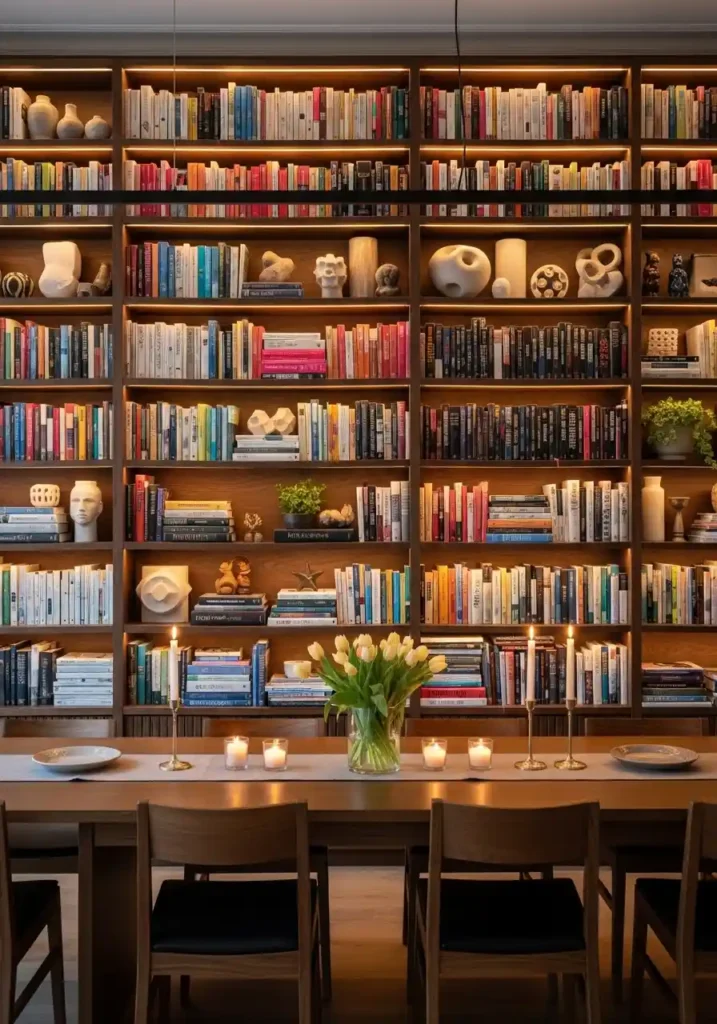
A full floor-to-ceiling bookshelf wall behind the dining table is the wall treatment that most completely and most specifically communicates the intellectual life and personal passions of the people who live there — because books are the most directly personal objects in any home, carrying the specific history of what someone has read, thought about, been moved by, and returned to over years of living. A wall of books behind the dining table creates a dining backdrop that is simultaneously a biography, an autobiography, and an invitation to conversation that no purchased wall decor can replicate.
The specific styling of the bookshelf dining room wall matters enormously to how it reads — books organized by color in warm tones create a beautifully unified visual composition that looks deliberately designed rather than simply accumulated, while small sculptural objects, plants, and personal mementos interspersed between the books create the warmth and personal depth that prevents color-organized bookshelves from looking like a curated shop display rather than a genuinely lived-with collection. Integrate warm LED lighting within the shelves to create a glowing, luminous quality in the evening that transforms the book wall into the room’s most atmospheric and most beautiful feature.
3. Dramatic Botanical Wallpaper for Immersive Atmosphere
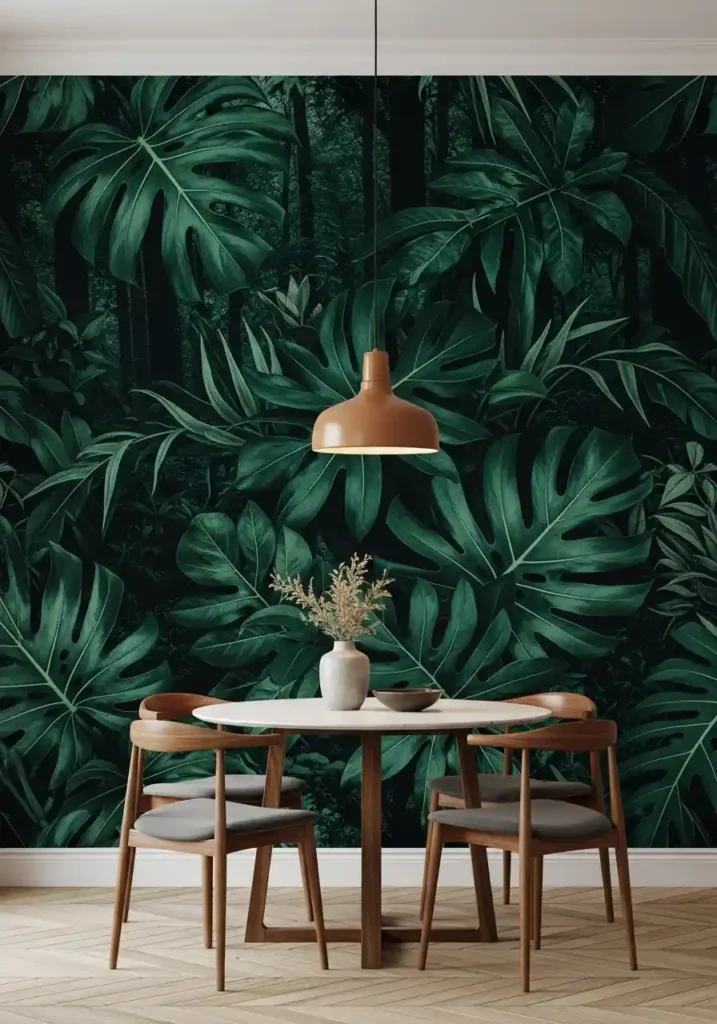
Large-scale botanical wallpaper on the dining room’s primary wall creates an immersive atmospheric quality that transforms the dining experience from eating in a room into eating within a landscape — the oversized tropical leaves, lush fern fronds, or dramatic palm silhouettes printed at a scale that fills the wall create a visual environment of genuine abundance and natural beauty that makes every dinner feel like an occasion happening somewhere genuinely extraordinary. When the botanical pattern is printed in deep, saturated tones on a dark background, the effect becomes truly spectacular — a wall of dense, richly colored tropical life that commands attention and creates wonder.
The key to making botanical wallpaper work as a genuine dining room statement rather than simply a pattern on a wall is choosing a scale that genuinely fills the wall with presence rather than repeating in small, diminutive units — the individual leaf or plant forms should be large enough to read clearly as specific, identifiable botanical subjects from across the dining table, creating a wall that rewards looking at and reveals more detail the longer it is studied. Pair the botanical wall with a completely simple dining table and chairs in neutral warm tones, allowing the wallpaper to perform as the room’s sole design statement.
4. Large Vintage Mirror with Ornate Frame for Glamour
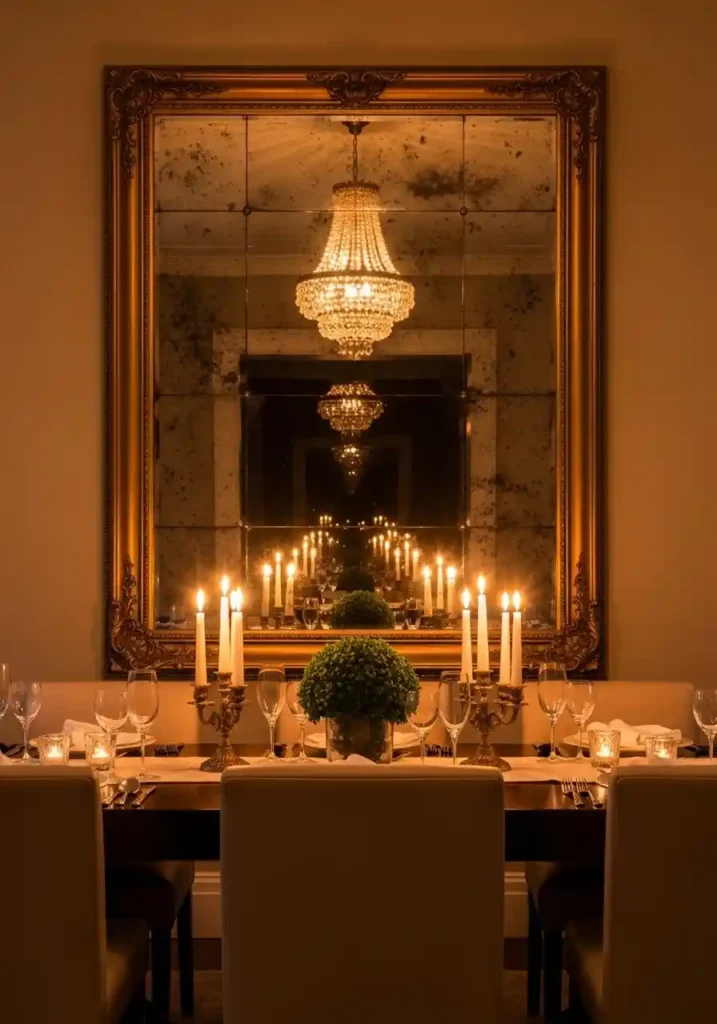
A large vintage mirror with an ornate aged gold frame hung on the dining room wall behind the table creates two simultaneous and equally valuable effects — it doubles the apparent depth and space of the dining room by reflecting the full room back into itself, and it multiplies the warm light sources (candles, chandelier, pendant) by reflecting them as glowing points of warmth that create an atmospheric depth and visual richness in the room that no static wall art can replicate. A dining room with a large mirror behind the table at candle-lit dinner parties becomes genuinely magical.
The specific quality of a vintage or antique mirror — with its slightly foxed or uneven silvering, its aged gold leaf frame with genuine patina, and its organic imperfections — is significantly more beautiful in a dining room context than a new, perfectly uniform mirror with a crisp modern frame. The vintage mirror’s slight inconsistencies in reflection and its warm, aged frame create a quality of history and depth that makes the dining room feel as though it has been beautiful for decades rather than recently designed. Hang the mirror at a slight forward tilt so it reflects the dining table and its styling directly, creating the most beautiful doubled composition.
5. Gallery of Framed Botanical Prints for Elegant Pattern
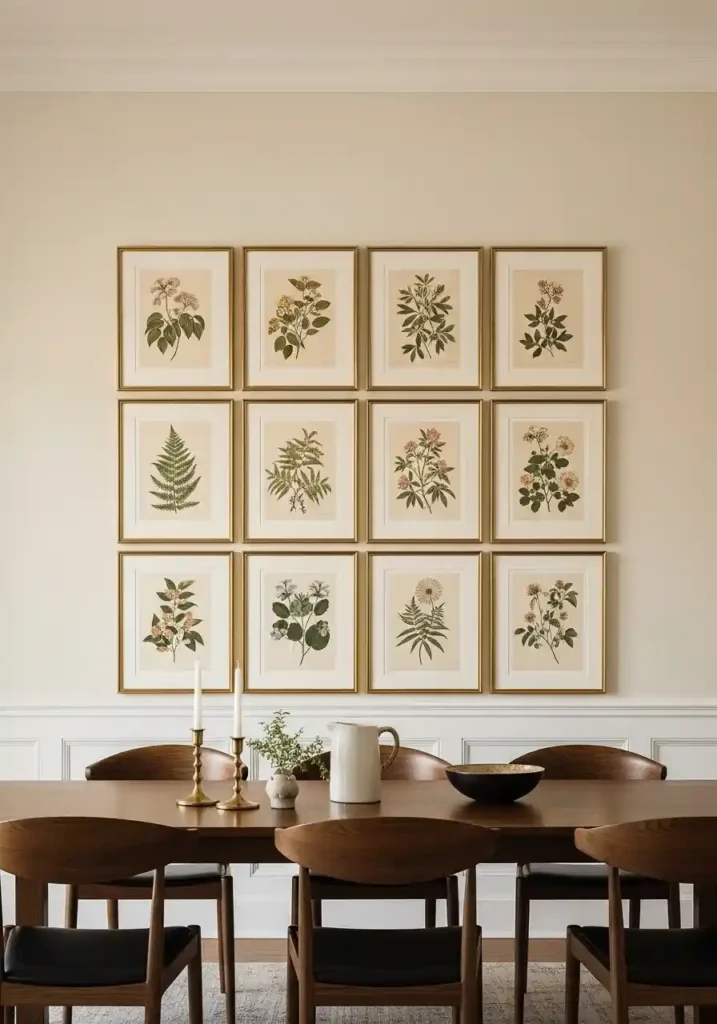
A grid-arranged gallery of botanical prints in matching frames creates the dining room wall’s most classically elegant and most formally beautiful statement — the repetition of the same format across a carefully organized number of individual prints creates a visual order and visual rhythm that reads as genuinely architectural, like a piece of design rather than simply decoration. The botanical subject matter provides the organic, natural warmth that balances the geometric precision of the grid arrangement, creating a wall of both formal structure and natural beauty simultaneously.
The specific botanical subjects chosen for the gallery determine its particular aesthetic character — antique-style copperplate engraving reproductions of eighteenth-century specimens create the most formally elegant and most historically rich botanical gallery. Watercolor botanical illustrations create a softer, more romantic quality. Pressed and framed real botanicals create the most authentically natural and most genuinely unique gallery. Whichever approach you choose, maintain absolutely consistent framing — the same slim profile, the same metal color, the same white or cream mat — throughout all the prints to create the visual unity that makes a multi-piece gallery read as one composed wall statement rather than a collection of individual pieces.
6. Woven Tapestry for Textile Richness and Cultural Depth
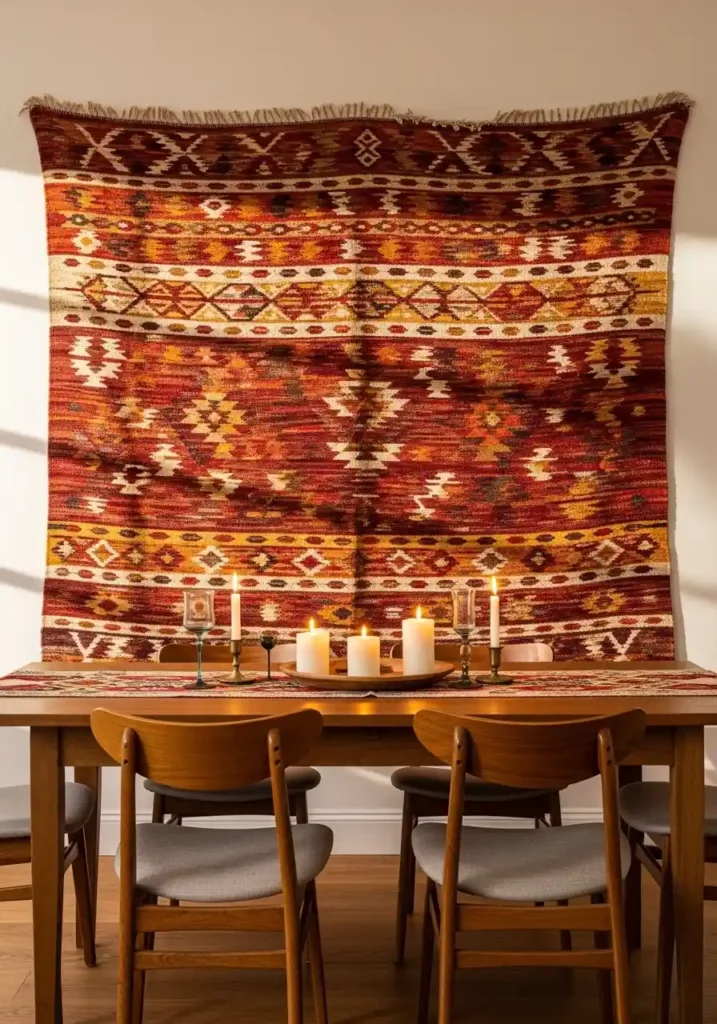
A large handwoven tapestry mounted on the dining room wall creates a statement of extraordinary textile richness and genuine cultural depth that no printed or painted wall treatment can replicate — because a woven tapestry carries the specific warmth and physical presence of actual textile fiber, creating a wall surface with genuine tactile quality that appears different in different light conditions as the woven threads catch and scatter light from varying angles. The human skill involved in weaving a complex pattern creates an object with genuine artisan depth that communicates a specific appreciation for craft and cultural tradition.
The warmth of a tapestry in a dining room extends beyond its visual qualities to include an acoustic benefit — textile surfaces absorb sound rather than reflecting it, which means a tapestry on the dining room wall genuinely improves the acoustic quality of the dining experience by reducing the echo and reverberation that hard surfaces create. This means conversation at the dining table beneath a tapestry wall feels more intimate and more personal, with voices carrying less harshly across the room. The tapestry simultaneously makes the room look more beautiful and sound more pleasant, which is a genuinely rare double benefit in interior design.
7. Statement Neon Sign for Playful Modern Edge
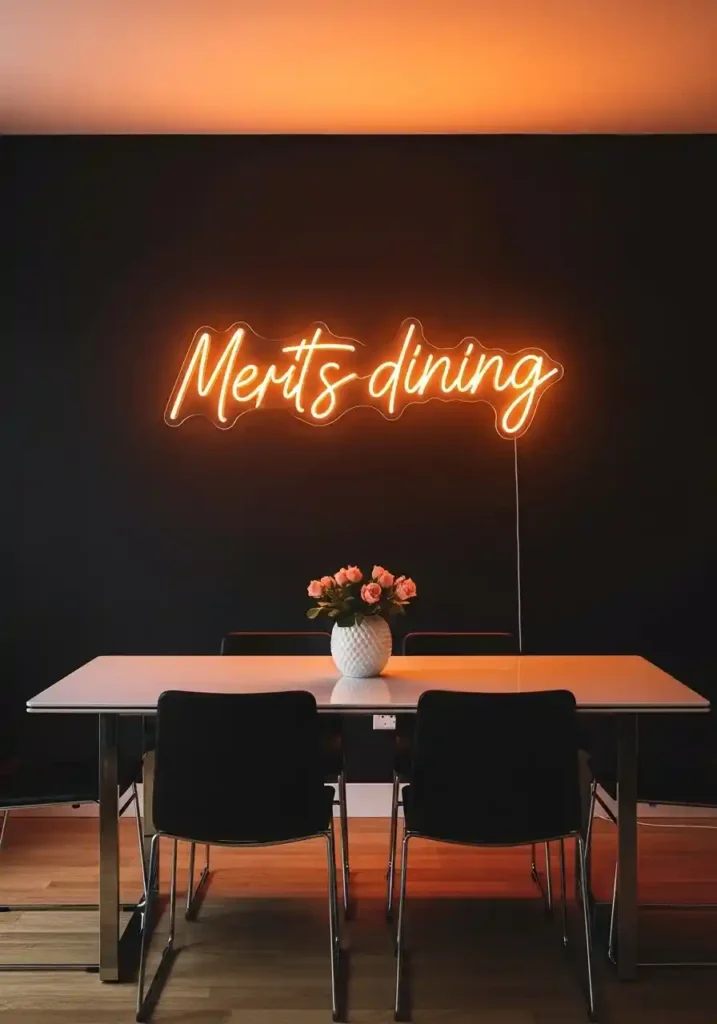
A custom neon sign mounted on the dining room wall creates the most personality-forward and most genuinely original dining room wall statement available — it is the wall decor choice that most directly communicates a specific point of view, a specific sense of humor, and a specific willingness to use the dining room as an expression of genuine personal character rather than conventional interior design standards. A phrase that captures the household’s values, a single word that creates atmosphere, or a simple form that glows warmly in the dining room creates a wall feature that makes guests laugh, take photographs, and remember the meal specifically.
The light quality of a neon sign in a dining room context is particularly valuable — the warm amber, pink, or red glow of a neon tube in a darker room creates a specifically atmospheric, slightly theatrical quality of ambient light that supplements the dining table’s candles and overhead fixture with a different register of warm illumination. Unlike other wall art that is purely visual, the neon sign is also a light source, which means it participates actively in the dining room’s lighting design rather than being simply observed as a decorative object. Choose a phrase of genuine personal significance rather than a generic sentiment for maximum authenticity and maximum character.
8. Architectural Molding and Panel Detail for Classical Elegance
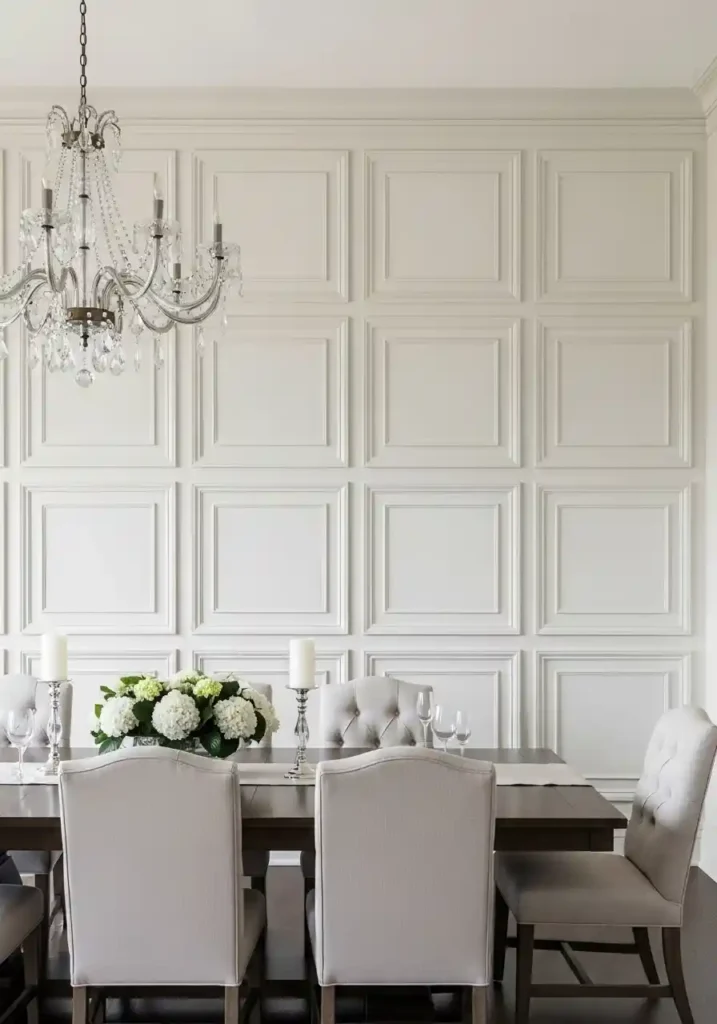
Applied architectural molding and panel detail on the dining room wall creates the most classically elegant and most permanently refined wall treatment available — a surface of genuine architectural depth and historical reference that communicates a specific appreciation for the formal traditions of great interior architecture without requiring any artwork or decorative objects to complete it. The molding creates its own visual interest through the shadow lines that form at every profile edge as light rakes across the three-dimensional relief, making the wall a continuously interesting surface that appears to change with the quality and direction of natural light throughout the day.
The specific molding profile and panel arrangement determines the historical period and level of formality the treatment references — simple flat panels with a single rectangular molding border creates a clean, contemporary version of classical paneling that reads as modern and sophisticated. More complex multi-profile molding with ovolo, cove, and bead details creates a richer, more specifically period quality that suits more traditional dining rooms. Painting the entire molded surface — both the flat wall and the applied molding pieces — in the same warm white or cream tone creates a monochromatic, tonal treatment of refined elegance that is more sophisticated and more architectural than painting the panels and molding in contrasting colors.
9. Large Photographic Print for Contemporary Personal Statement
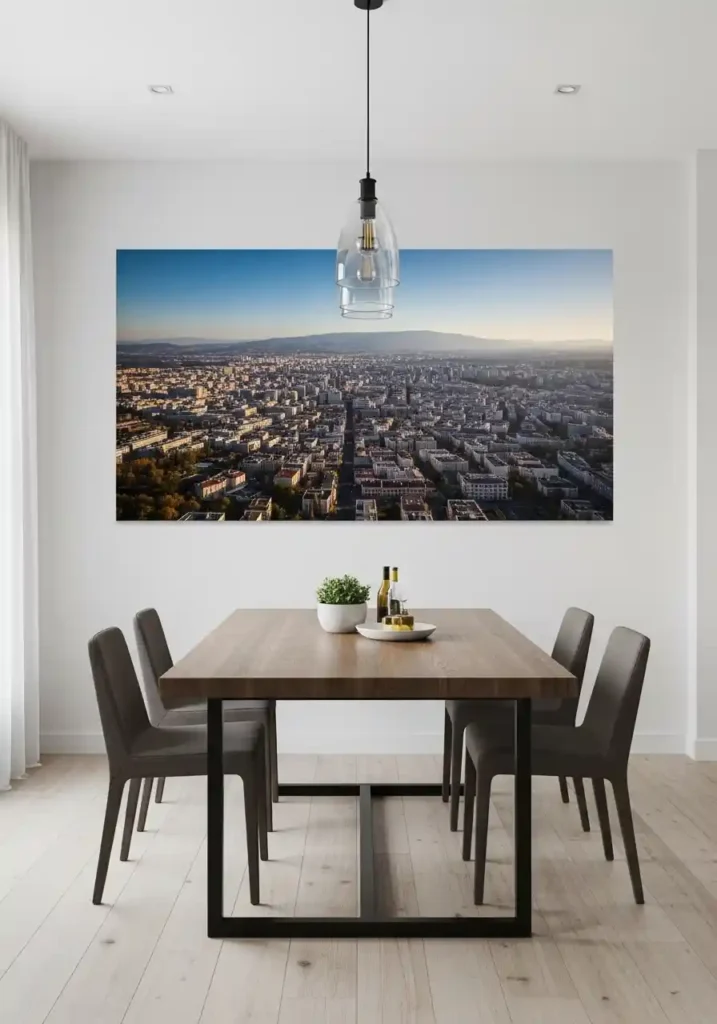
A single enormous photographic print — stretched to a scale that spans the full width of the dining room wall and hangs without a frame, flush-mounted to create a portal-like quality — creates a contemporary dining room wall statement of extraordinary personal specificity and genuine visual power. The scale of the image is what creates its impact: a photograph that might be politely admired at small size becomes genuinely immersive and genuinely transporting at full-wall scale, creating the quality of looking through a window into another landscape, another city, another moment rather than at a framed picture on a wall.
The photographic subject chosen for a full-wall dining room print is the most direct expression of personal taste and personal response available in wall decor — a photograph you took yourself of a place that holds deep personal meaning creates the most intimate and most specifically meaningful version of this statement. A commissioned fine art photograph from a photographer whose work genuinely moves you creates the most culturally engaged version. An abstract photographic image that creates atmosphere rather than depicting a specific place creates the most design-forward version. All three approaches can be printed to full-wall scale by professional large-format printing services at surprisingly accessible prices.
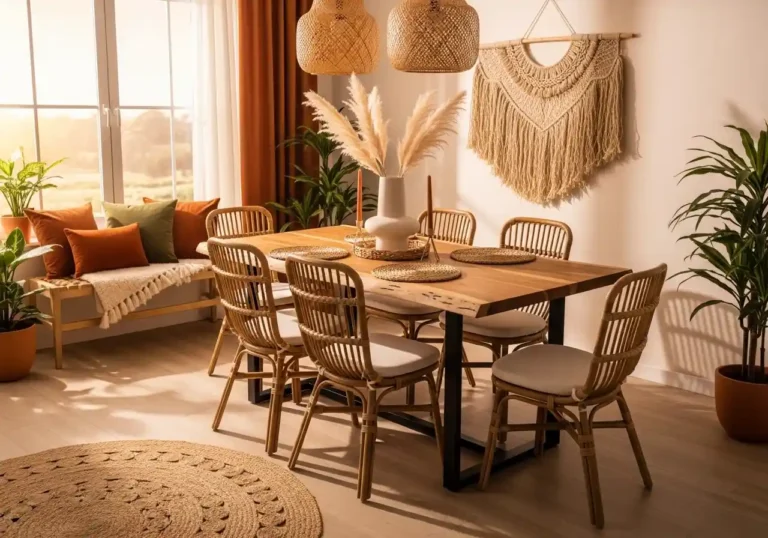
10. Macramé Wall Art at Oversized Scale
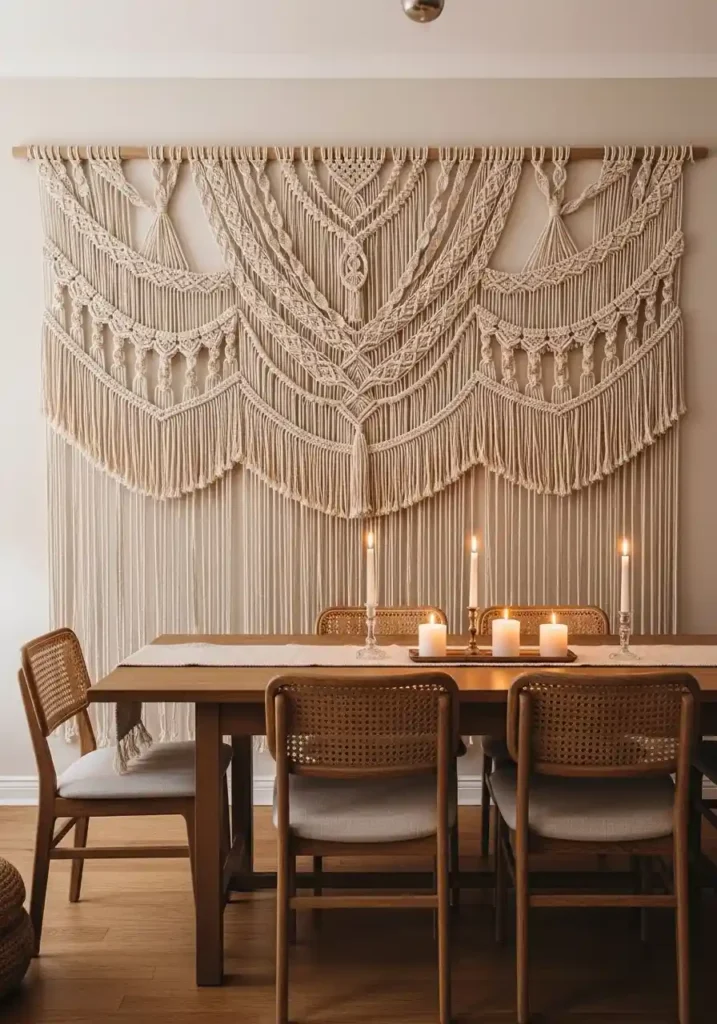
An oversized macramé wall hanging at a genuinely large scale — one that spans the majority of the dining room wall behind the table rather than occupying a modest portion of it — creates a dining room statement of extraordinary handcraft warmth, textural richness, and three-dimensional presence that flat wall art cannot approach. The handmade quality of macramé communicates a specific set of values about the appreciation for craft, the beauty of natural materials expressed through human skill, and the warmth that objects made by human hands bring to a domestic space that manufactured objects simply cannot replicate.
The three-dimensional quality of macramé wall art is specifically valuable in a dining room context — the knotted cord creates a surface that stands away from the wall slightly, casting genuine shadows that change throughout the day as natural light shifts from different angles, creating a wall that appears to breathe and move with the quality of light rather than remaining static and flat. In candlelight, the shadows within the macramé’s knotted structure become particularly deep and warm, creating an atmospheric, almost firelit quality at the dining table wall that makes evening dining genuinely extraordinary in its atmospheric richness.
11. Painted Mural for One-of-a-Kind Artistic Statement
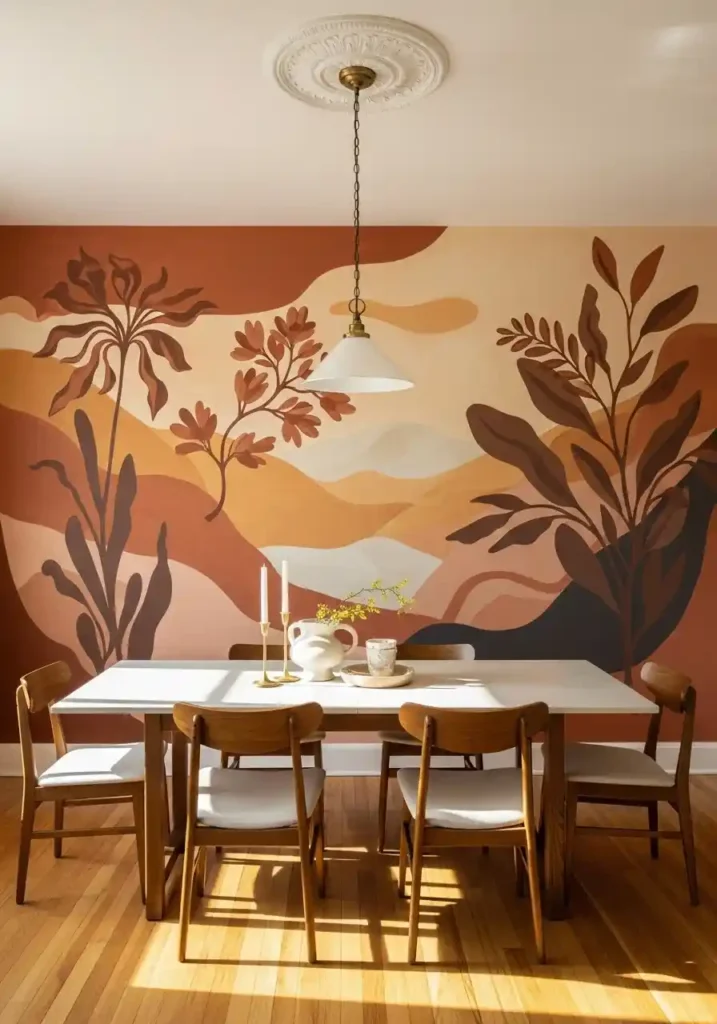
A hand-painted wall mural in the dining room is the most genuinely singular and most permanently unique wall statement possible — it creates a room that exists nowhere else in the world and that cannot be reproduced, purchased elsewhere, or replicated in any way. A mural painted by a talented muralist whose work genuinely resonates with the household transforms the dining room into a space that has the quality of inhabiting a specific artist’s imagination, creating a dining experience that is simultaneously more culturally rich and more personally meaningful than any purchased wall art can provide.
The subject and style of the mural should be chosen with the full understanding that it is a permanent or near-permanent commitment — unlike art that can be rehung or replaced, a mural lives with the room through every season, every dinner party, and every change in the household’s other design decisions. Choose a subject that is genuinely meaningful and personally resonant rather than simply beautiful by current trend standards, because a mural chosen for its timeless personal significance will remain relevant and beautiful for decades while one chosen for its contemporary trendiness may feel dated within a few years. The investment in a genuine artist’s time and skill is almost always richly rewarded.
12. Floating Shelf Display with Curated Objects
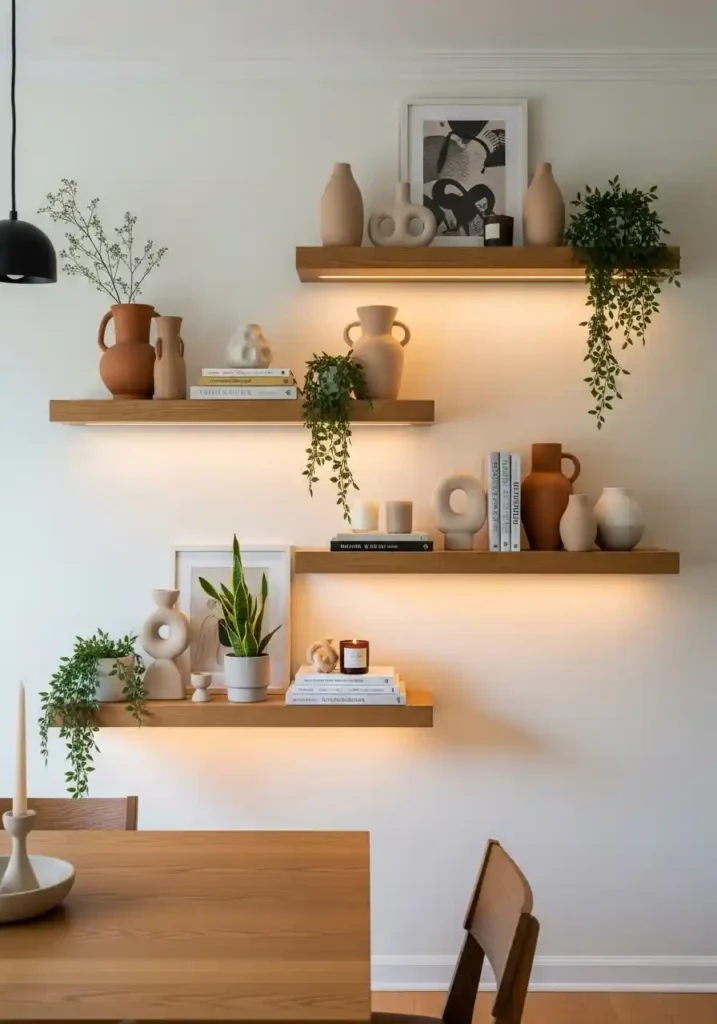
Floating shelves styled as carefully composed three-dimensional vignettes create a dining room wall display of extraordinary personal warmth and genuine visual complexity — the combination of warm ceramic vessels, small plants, meaningful books, sculptural objects, and candles arranged across multiple shelf levels creates a wall display that rewards close examination with progressively more interesting details. Unlike flat wall art, floating shelf displays are tactile, changeable, and genuinely alive with the plants and candles they include, creating a wall that participates actively in the dining room’s atmosphere rather than simply existing as a backdrop.
The staggered height arrangement of the shelves — each positioned at a slightly different height from its neighbors — creates a more organic, more visually interesting composition than shelves arranged in a perfectly uniform horizontal row. The asymmetry of staggered heights gives the overall display a rhythm and movement that uniform shelving lacks, making the wall arrangement feel composed with genuine aesthetic intention rather than simply installed for functional storage. Treat each shelf as an independent vignette with its own internal balance of height, texture, and material, then allow the three vignettes together to create the larger composition.
13. Geometric Metal Wall Art for Contemporary Edge
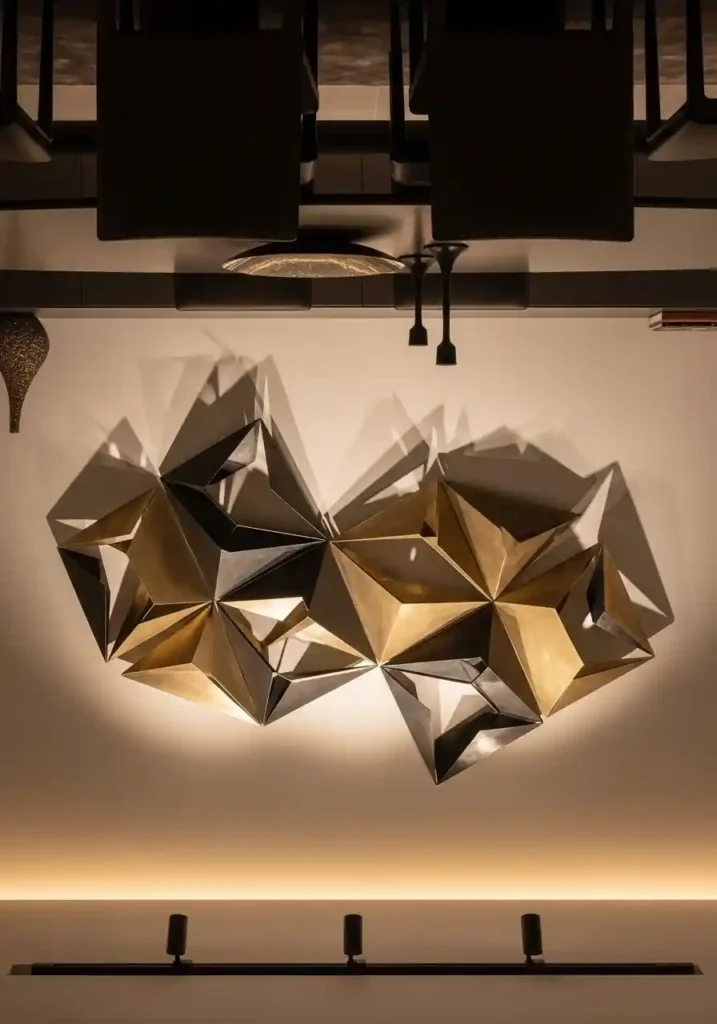
Geometric metal wall art creates a dining room wall statement that occupies the precise intersection between fine art and architectural element — it is simultaneously an artwork that communicates aesthetic sensibility and a three-dimensional form that creates genuine shadow and depth on the wall surface. The specific quality of dimensional metal wall art in a dining room is that it responds to light in a way that flat wall art cannot — directional lighting from above or to one side creates strong, precisely defined shadows that extend the artwork’s visual footprint well beyond its physical edges, making a modest-sized piece create a significantly larger visual presence on the wall.
Aged brass or warm gold metal finishes in geometric wall art create the warmest and most luxurious version of this statement — the warm metallic tones catch candlelight and warm lamp light with a specific, precious-material quality that makes even simple geometric forms appear genuinely valuable and genuinely beautiful. Matte black metal creates a more graphic, more contemporary, more architecturally aggressive version that works particularly well in dining rooms with a clean, design-forward aesthetic. Both approaches benefit from directional lighting specifically positioned to reveal the shadow play that makes dimensional metal wall art most spectacular.
14. Salvaged Architectural Elements as Wall Feature
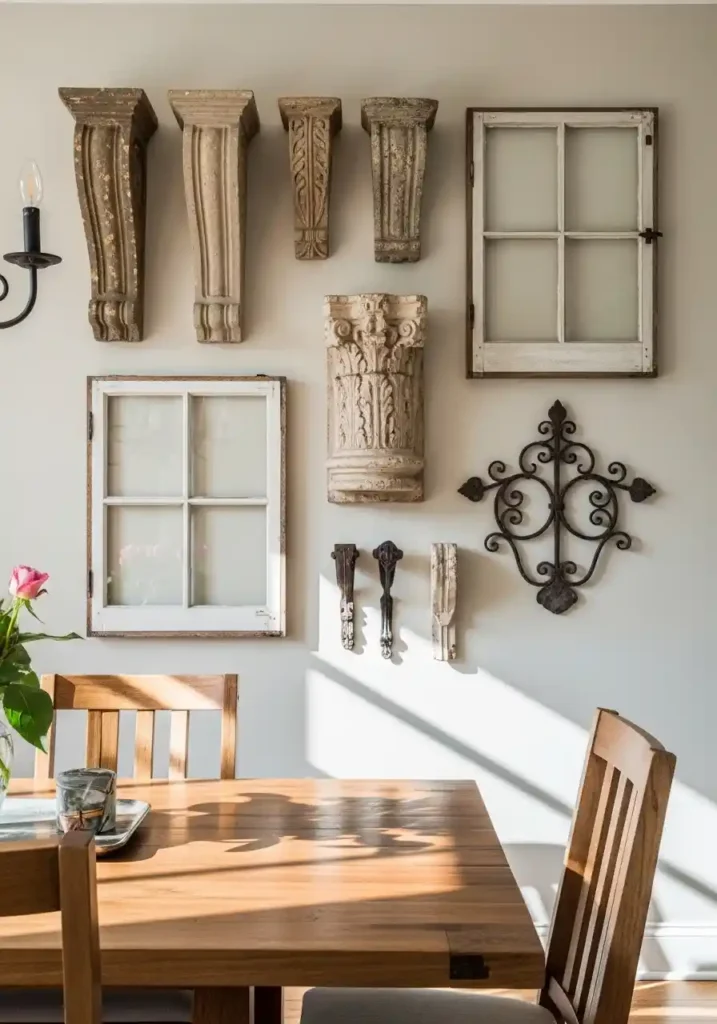
Salvaged architectural elements mounted as a composed wall installation — vintage corbels, aged window frames, antique ironwork, decorative plaster fragments, carved wooden panels — create a dining room wall of such specific historical depth and genuine material character that every other design choice in the room is elevated by their presence. These objects have survived, have been used and discarded and rediscovered, and carry within their surfaces the physical evidence of years or decades or centuries of existence. This density of material history creates a wall presence that no new object, however beautiful, can replicate.
The composition of a salvaged architectural element installation is the creative challenge that makes this wall decor approach both demanding and rewarding — the pieces must be arranged with genuine attention to their visual relationships, their relative scales, and the overall balance of the installation as it reads from across the dining table. A roughly triangular arrangement with the largest, most impressive piece as the apex and smaller, more detailed pieces filling in below and to the sides creates a compositional stability while maintaining the organic, asymmetric quality appropriate to salvaged materials. Leave spaces between pieces so each element can be appreciated individually while contributing to the larger composition.
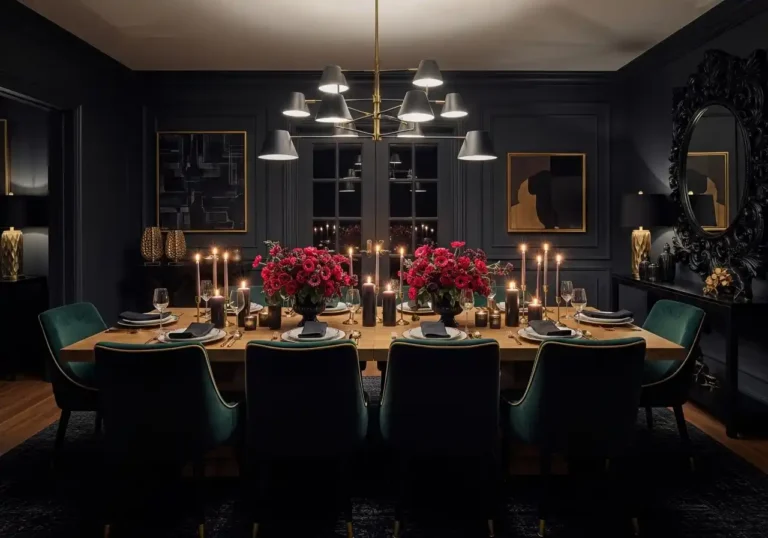
15. Dark Painted Accent Wall for Intimate Mood
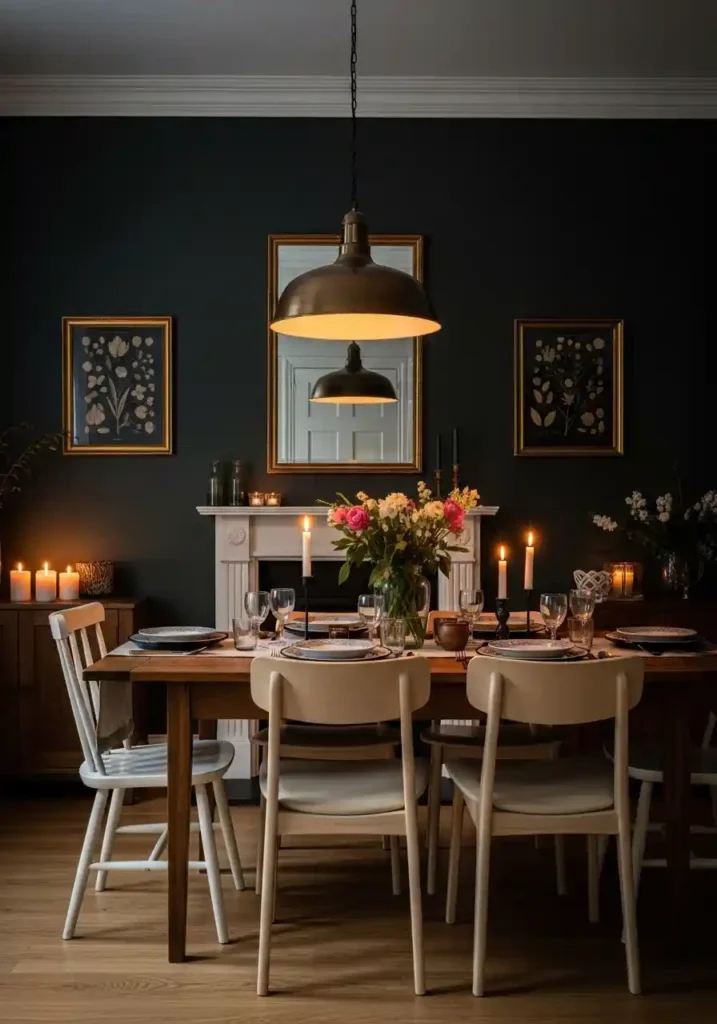
A dark painted accent wall behind the dining table — in deep forest green, charcoal, inky navy, or deep burgundy — creates the most immediately transformative and most dramatically atmospheric dining room backdrop available through the simplest possible intervention. The specific psychological effect of a dark wall behind the dining table is to make the warm light sources within the room (candles, overhead pendant, table lamp) appear dramatically brighter, more intimate, and more atmospheric by contrast with the dark surface surrounding them, creating a dining experience that feels candlelit and special regardless of the actual light levels.
The paintings, prints, and art objects that hang on a dark accent wall require different visual qualities than those on a light wall — frames and artwork that might appear understated on a white wall become significantly more visible and more dramatic against a dark background, and warm metallic frames (aged brass, warm gold, antique bronze) are particularly beautiful against deep green, charcoal, or navy tones, appearing almost luminous. The dark wall also creates a specific focusing effect — the eye, naturally drawn to lighter areas, settles on the dining table and its warm illumination when the wall behind is dark, creating a visual concentration that makes the dining experience feel curated and intentional.
16. Typography and Text Art for Personal Expression
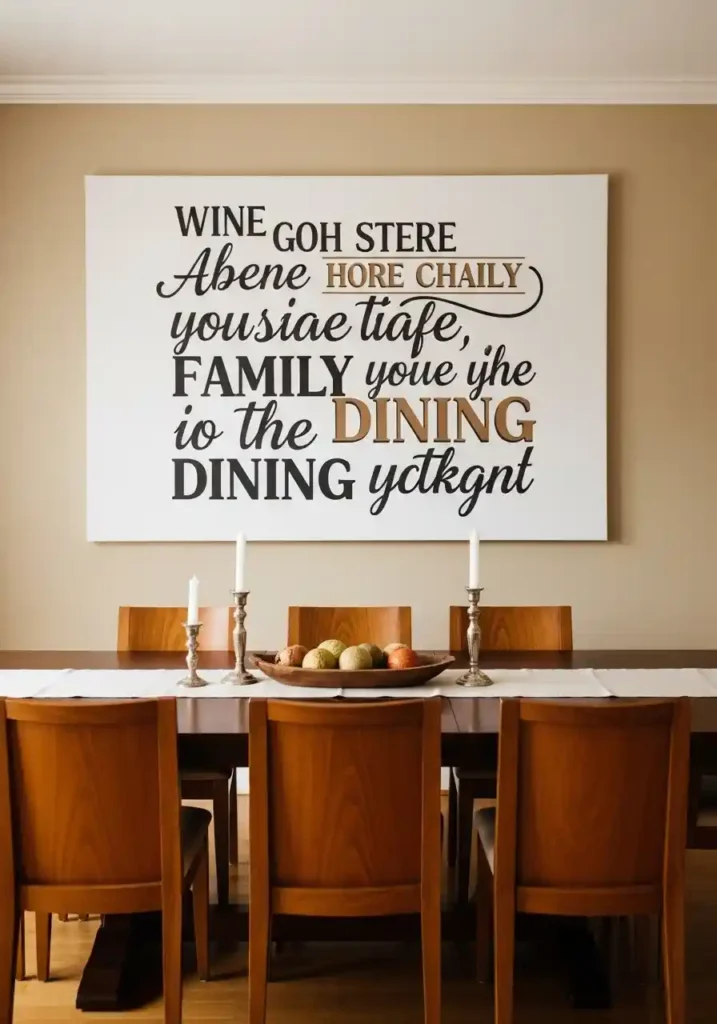
Typography wall art in the dining room creates the most directly communicative and most explicitly personal wall statement available — because words, unlike purely visual art forms, carry unambiguous semantic content that tells every visitor exactly what the household values, believes, or celebrates in language that requires no interpretation. A beautifully typeset quote about the pleasures of the table, a family motto, a single meaningful word, or a phrase from a beloved writer creates a dining room wall with genuine literary dimension that invites both reflection and conversation every time it is read.
The specific typeface, scale, and presentation of the typography determine entirely whether it reads as sophisticated and considered or generic and commonplace — beautiful typography in a well-designed, thoughtfully selected typeface printed at genuinely large scale creates wall art of genuine design quality, while poor typeface selection in a small, tentative scale creates something that reads as inadequate. Commission a graphic designer to create a custom typography piece from a personal text, or purchase from an artist whose typographic sensibility you genuinely admire, for a result that has real design intelligence and real personal meaning simultaneously.
17. Antique Map Collection for Worldly Character
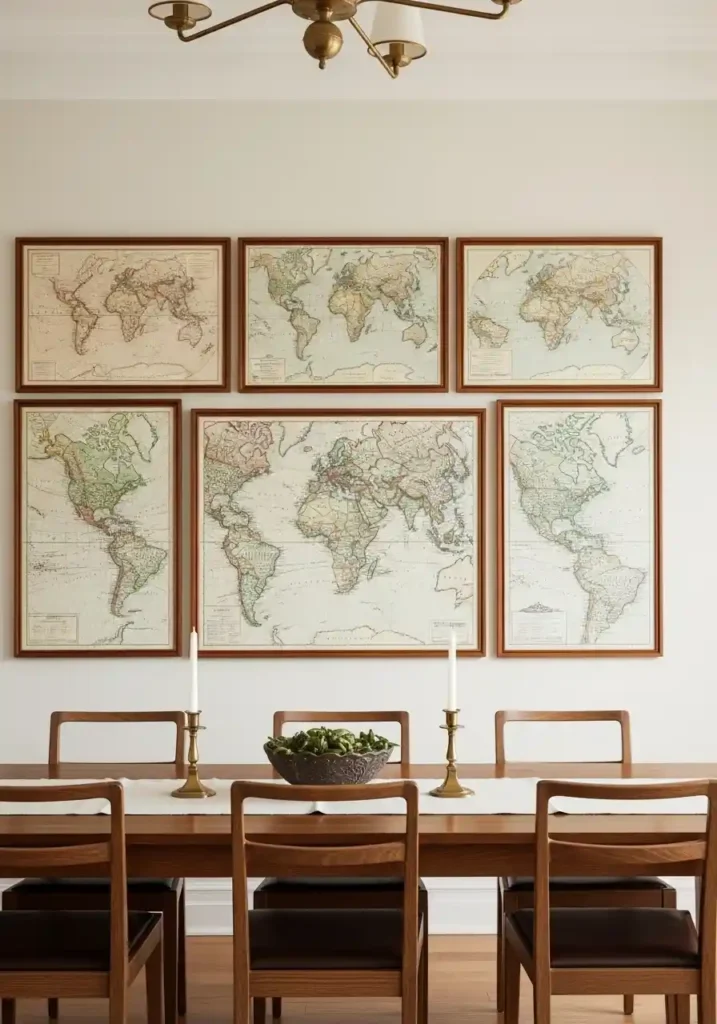
A carefully curated collection of antique maps hung in a composed arrangement on the dining room wall creates a statement of worldliness, intellectual curiosity, and genuine historical engagement that makes every dinner conversation potentially more interesting and more globally connected. Antique maps carry within their cartographic details the specific knowledge and specific misconceptions of their historical moment, creating objects that are simultaneously beautiful as visual artifacts and genuinely fascinating as historical documents. The aged paper, hand-lettered place names, and decorative cartouches of antique maps make them objects of extraordinary visual richness.
The selection of maps for a dining room collection should be guided by genuine personal significance rather than generic decorative appeal — maps of places visited, maps of regions with personal family history, maps of countries whose cultures have influenced the household, or maps that chart specific historical moments of personal resonance create a collection with genuine autobiographical depth that guests can engage with and ask questions about throughout the meal. Frame in matching warm wood or aged brass frames for visual coherence, and hang in a composed horizontal or staggered arrangement that creates a unified wall statement from the individual pieces.
18. Ceramic Plate Collection as Wall Art
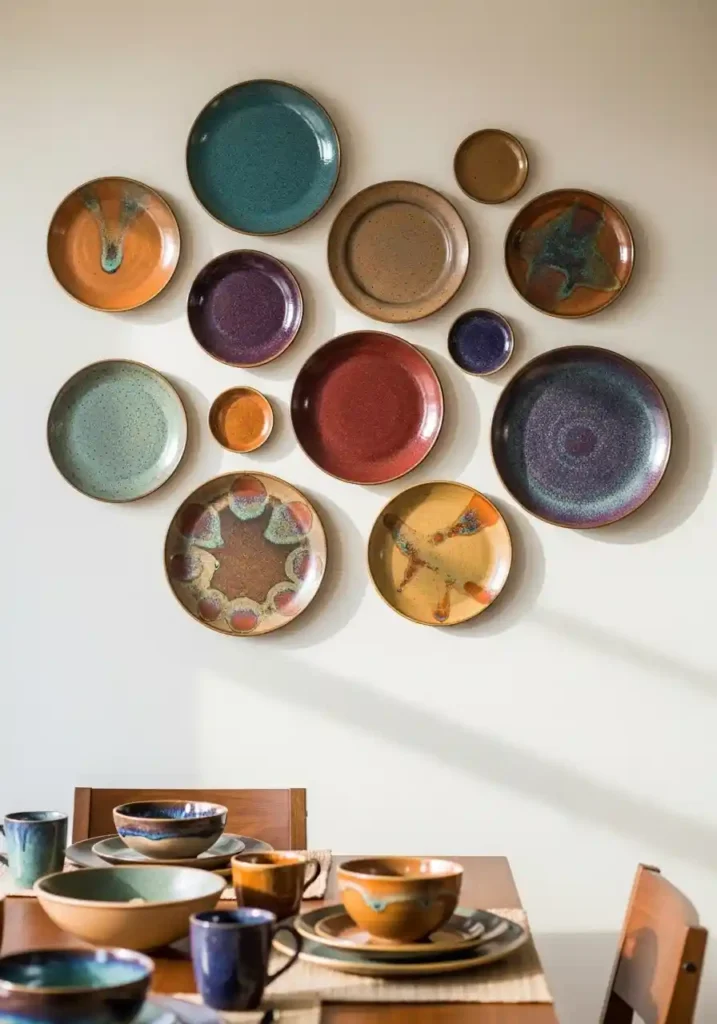
A collection of handmade ceramic plates mounted as wall art creates a dining room wall statement that is uniquely connected to the room’s fundamental purpose — here, the objects used for eating are also the objects that decorate the wall where eating happens, creating a beautiful conceptual loop between the functional and the decorative that gives the dining room a specific and deeply appropriate coherence. Handmade ceramic plates, with their individual glaze variations, slightly irregular profiles, and unique surface characters, create a collection of genuine artisan beauty that factory-produced wall art cannot approach.
The arrangement of ceramic plates on the dining room wall requires more careful compositional planning than flat wall art because the plates are three-dimensional objects with varying depths, weights, and diameters that create genuine complexity when hung together. Begin with the largest, most visually dominant plate as the compositional anchor and build the surrounding arrangement of smaller plates outward from this anchor, maintaining approximately equal visual spacing between pieces rather than mathematical equal distance (larger plates need more surrounding space than smaller ones). The color family of the glazes should be warm and cohesive without being rigidly uniform.
19. Oversized Sunburst Mirror for Sculptural Drama
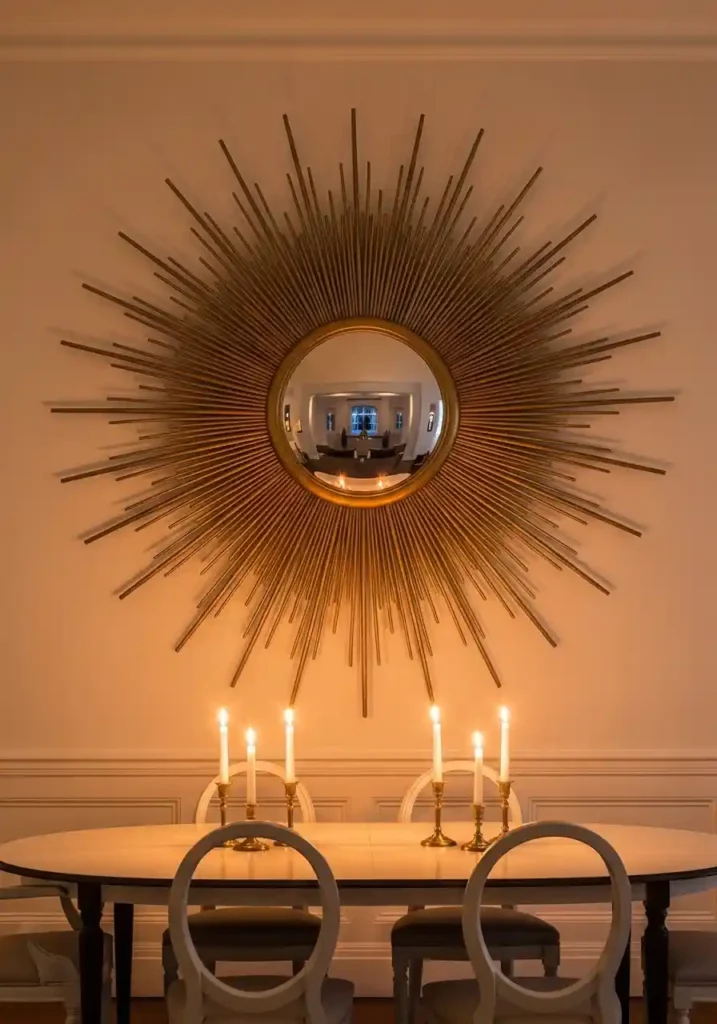
An oversized sunburst mirror mounted on the dining room wall creates a sculptural, three-dimensional wall statement that is simultaneously a mirror, a light-catching object, and a piece of decorative art — three functions that together create a dining room wall of extraordinary visual complexity and genuine glamour that no flat wall treatment can replicate. The radiating brass rays of a sunburst mirror extend the visual footprint of the piece well beyond its central reflective circle, creating a starburst of warm metallic lines that appears to animate the wall with a sense of radiating energy and movement.
The reflective quality of the sunburst mirror’s central glass is particularly spectacular in a dining room with candles on the table — the candlelight is reflected and multiplied within the mirror, creating a warm, slightly dancing light source on the wall that adds an atmospheric layer to the room’s evening lighting that is genuinely beautiful and genuinely cinematic in its warmth. The warm brass or aged gold finish of quality sunburst mirrors catches ambient light from every direction throughout the day, making the mirror a continuously interesting and continuously beautiful wall element in every lighting condition from bright morning natural light through to intimate evening candlelight.
20. Textile Wall Hanging from Global Craft Tradition
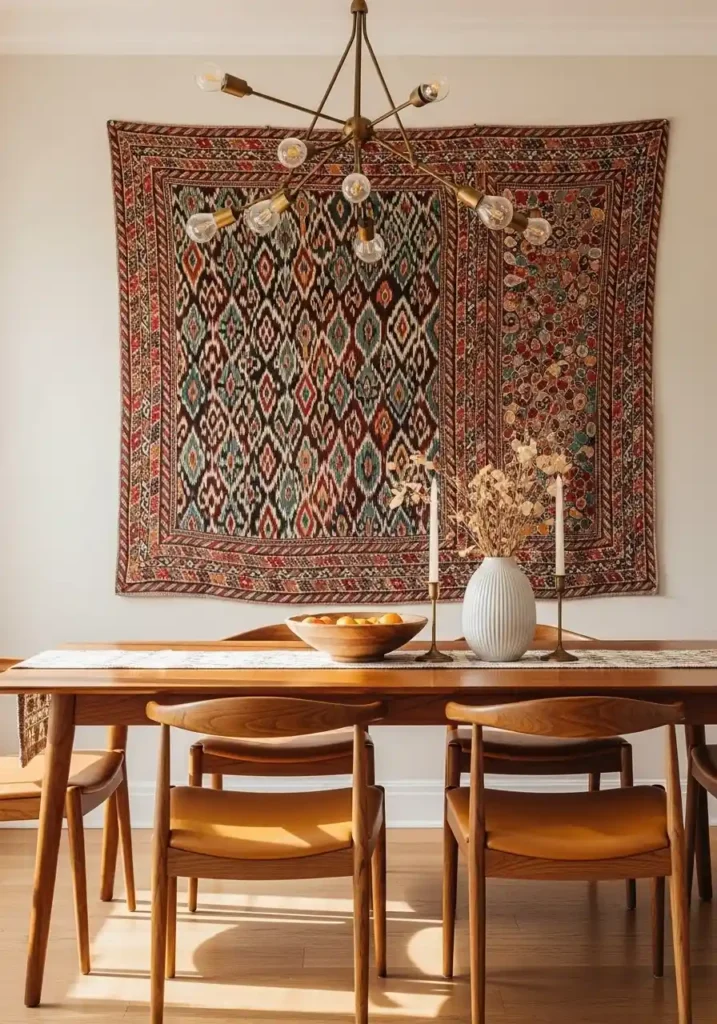
A large textile wall hanging from a specific global craft tradition — an ikat-woven panel from Central Asia, a block-printed ceremonial cloth from India, an intricate embroidered textile from Mexico, or a hand-dyed resist-print from West Africa — creates a dining room wall statement of genuine cultural depth and real worldly engagement that purely decorative wall art cannot approach. These textiles carry within their patterns, their techniques, and their materials the specific aesthetic intelligence of the craft traditions that created them, bringing centuries of developed visual culture into the dining room in a form that is both beautiful as a visual object and genuinely meaningful as a cultural artifact.
Mounting a textile appropriately requires attention to both its preservation and its visual presentation — a simple wooden dowel through a hanging loop at the top edge creates a clean, unobtrusive mounting that displays the textile without adding visual complexity that competes with the piece itself. Ensure the textile is mounted taut enough to lie flat against the wall without sagging, but not stretched so tight that it distorts the woven or printed pattern. The textile’s color palette should be considered in relation to the dining room’s existing palette — most global textiles work beautifully in warm, earthy dining rooms where their rich, saturated colors are complementary rather than contradictory.
21. Architectural Niche with Decorative Objects
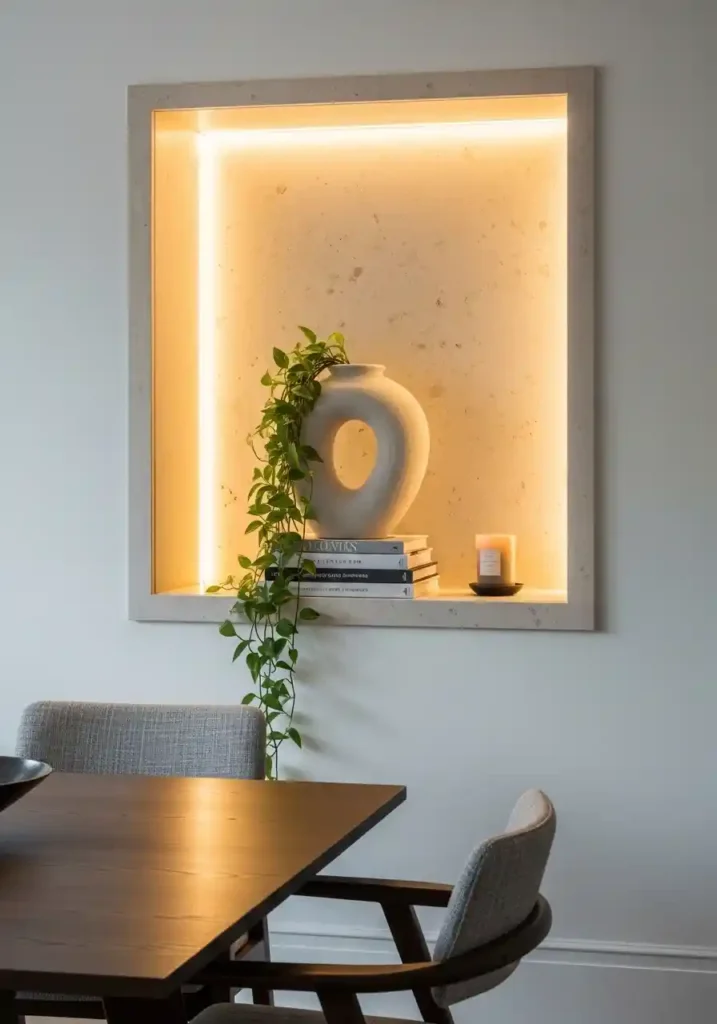
A recessed architectural niche built into the dining room wall — internally lit with warm LED lighting and styled with a carefully curated composition of beautiful objects — creates a dining room wall statement of extraordinary three-dimensional depth and genuine architectural ambition. The niche is not simply a display shelf but a genuinely architectural intervention — a void in the wall that creates real depth, real shadow, and real spatial dimension that any mounted wall art or hanging object can only visually suggest. The warm LED lighting within the niche creates a glowing quality that makes the objects within it appear genuinely precious and genuinely placed.
The curation of objects within an architectural niche requires the same compositional intelligence as a freestanding shelf vignette but with greater attention to the specific relationship between the niche’s proportions and the objects displayed within it — objects that are too small for the niche leave it looking empty and poorly considered, while objects that perfectly fill the niche’s spatial volume create a composition of genuine rightness and resolution. A single large sculptural ceramic vessel as the primary object, supplemented by a trailing plant that brings organic life into the architectural niche and one or two smaller complementary objects, creates the most naturally beautiful and most architecturally satisfying niche display.
22. Vintage Oil Painting Collection for Rich Heritage
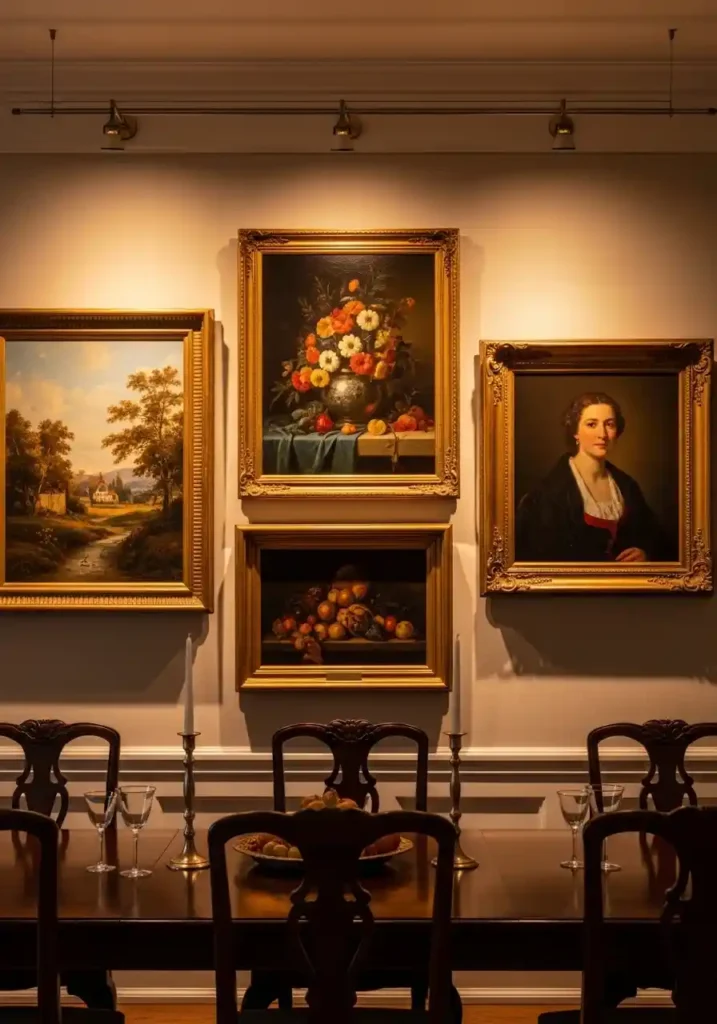
A carefully composed collection of vintage oil paintings in gilded or warm-toned frames creates the dining room wall treatment most deeply connected to the great tradition of dining rooms as spaces for cultural display and artistic engagement — this is how the most beautiful historic dining rooms have always been decorated, and the reason this tradition has endured for centuries is that genuine painting in oil, with its depth of color, its physical materiality of pigment on canvas, and its ability to create illusions of light and space within a two-dimensional surface, creates a dining room wall of extraordinary artistic richness that contemporary alternatives, however beautiful, cannot fully replicate.
Finding genuine vintage oil paintings for a collection does not require a substantial budget — estate sales, auction houses, local antique dealers, and online vintage marketplaces regularly offer small to medium oil paintings at remarkably accessible prices, particularly for unsigned or less prominently attributed works. Choose paintings that genuinely move you aesthetically rather than paintings that match the dining room’s color palette, because a collection assembled through genuine personal response will always feel more authentic and more beautiful than one assembled through decorating criteria. The frames matter enormously — heavy, ornate gilded frames create the most formal and most impressive collection.
23. Living Moss Wall Art for Biophilic Texture
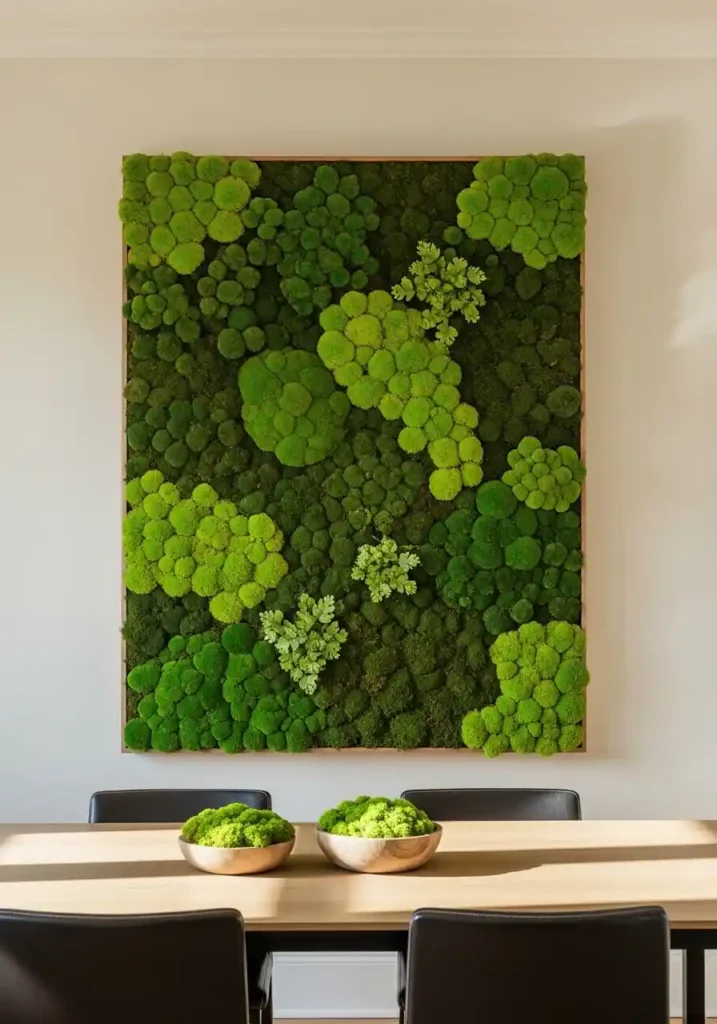
A preserved moss wall art installation — genuine moss species preserved in their natural green tones and natural three-dimensional textures, mounted in a large frame or arranged directly on the wall in a composed botanical installation — creates a dining room wall of genuinely extraordinary natural beauty and textural complexity that is completely unlike any other wall treatment available. Preserved moss retains its soft, slightly velvety texture, its deep organic green color, and its natural three-dimensional surface character indefinitely without water or maintenance, creating a permanently beautiful natural installation that requires no care whatsoever.
The different moss species available for a preserved moss installation create dramatically different textural qualities that combine beautifully in a composed mixed-species installation — flat sheet moss creates smooth, carpet-like surfaces of deep green. Reindeer moss creates a delicate, branching structure with a slightly silvery-green quality. Cushion moss creates soft, rounded mound forms that catch light with a gentle dimensionality. Combining all three species in a large installation creates a wall of natural texture so complex and so beautiful that it functions simultaneously as the dining room’s primary decorative statement and as a genuinely extraordinary connection to the natural world that makes every gathering in the room feel grounded, organic, and deeply alive.
Conclusion:
The dining room wall is the final and perhaps most important design decision in creating a dining space that genuinely makes a statement — because everything else in the room (the table, the chairs, the lighting, the textiles) serves the practical requirements of dining first and the aesthetic aspirations of the space second. The wall behind and beside the dining table exists purely for its visual and atmospheric contribution, which means it carries the full weight of the room’s design ambition without any functional requirement to constrain it. Every one of these twenty-three dining room wall decor ideas offers a real, achievable, and genuinely original approach to creating the specific visual statement that your dining room deserves — from the most dramatically scaled to the most intimately personal, from the most contemporary to the most historically rich. Save the ideas that genuinely excite you, consider them against your room’s specific architecture and your own authentic aesthetic, and invest in creating the dining room wall that makes every person who enters your room feel immediately that they have arrived somewhere genuinely considered, genuinely beautiful, and genuinely worth gathering in.