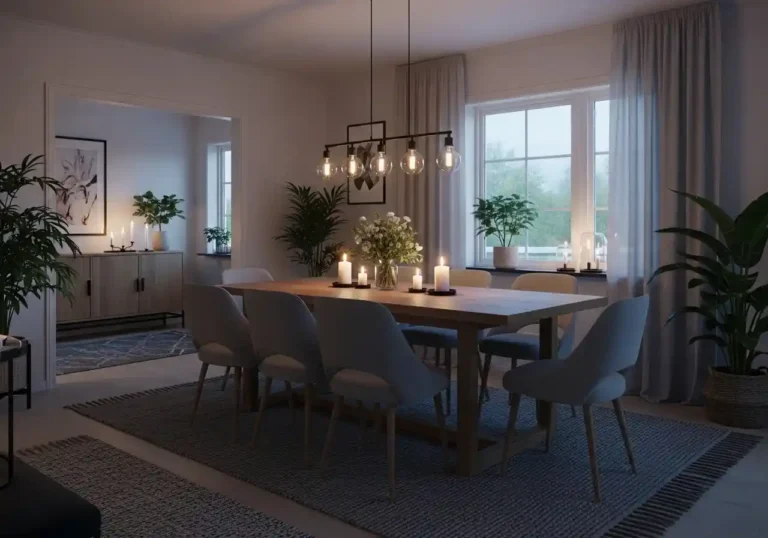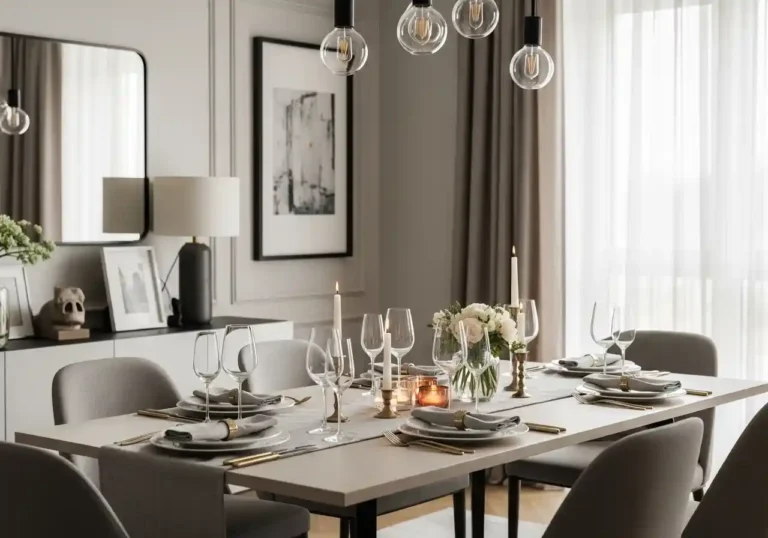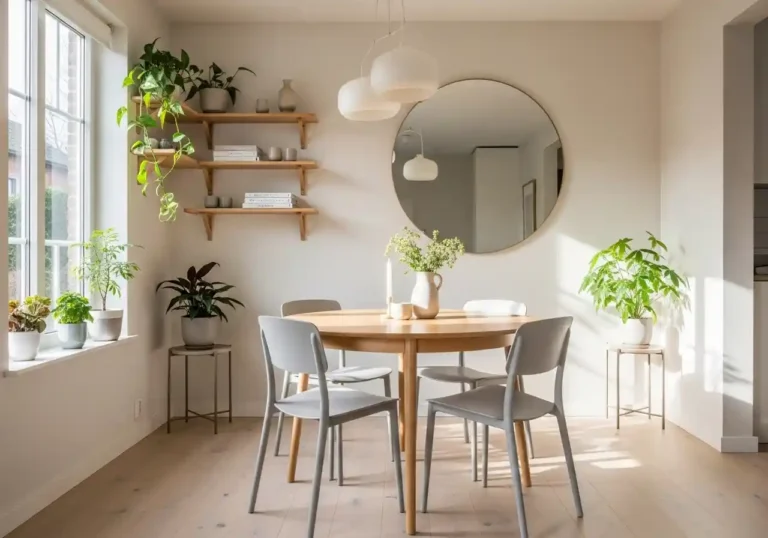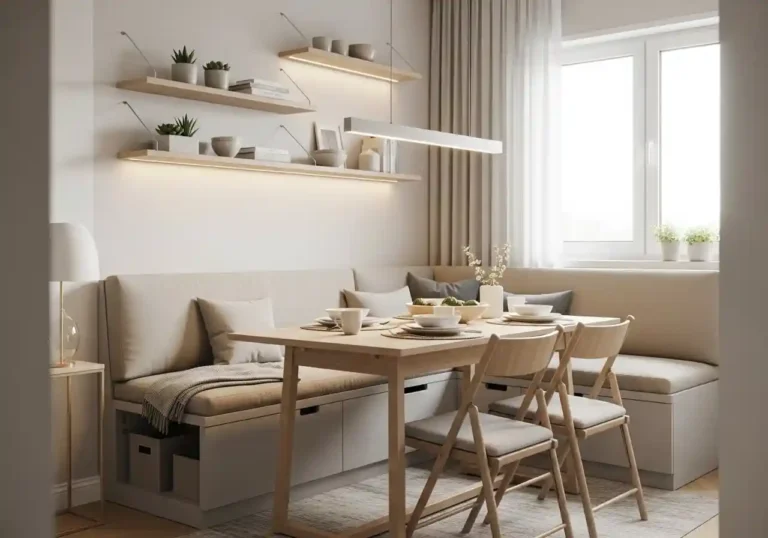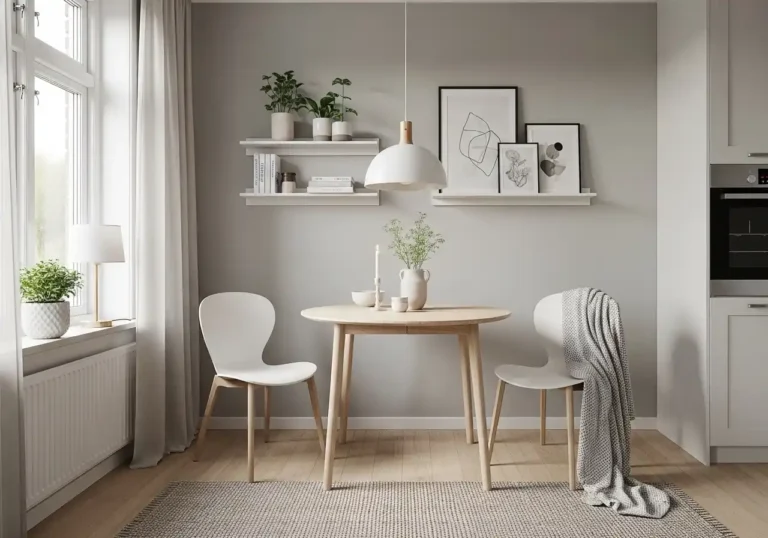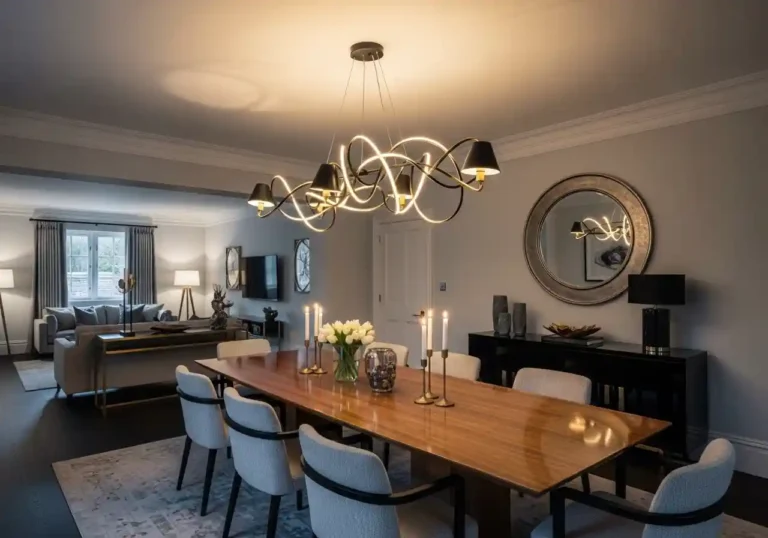
The modern dining room has evolved far beyond its traditional role as a formal space reserved for Sunday dinners and special occasions — it has become one of the most socially significant and most designerly interesting rooms in the contemporary home, a space where architecture, material, lighting, and personal expression come together around the fundamental human act of sharing food and conversation. Whether you are working with an open-plan apartment where the dining area exists as a defined zone within a larger living space, or a dedicated dining room in a family home that deserves a genuinely considered redesign, these twenty-four dining room inspiration ideas will give you real, original, and genuinely transformative direction for creating a modern dining space that you are proud to gather in every single day.
1. Dramatic Black Dining Room for Bold Modern Statement
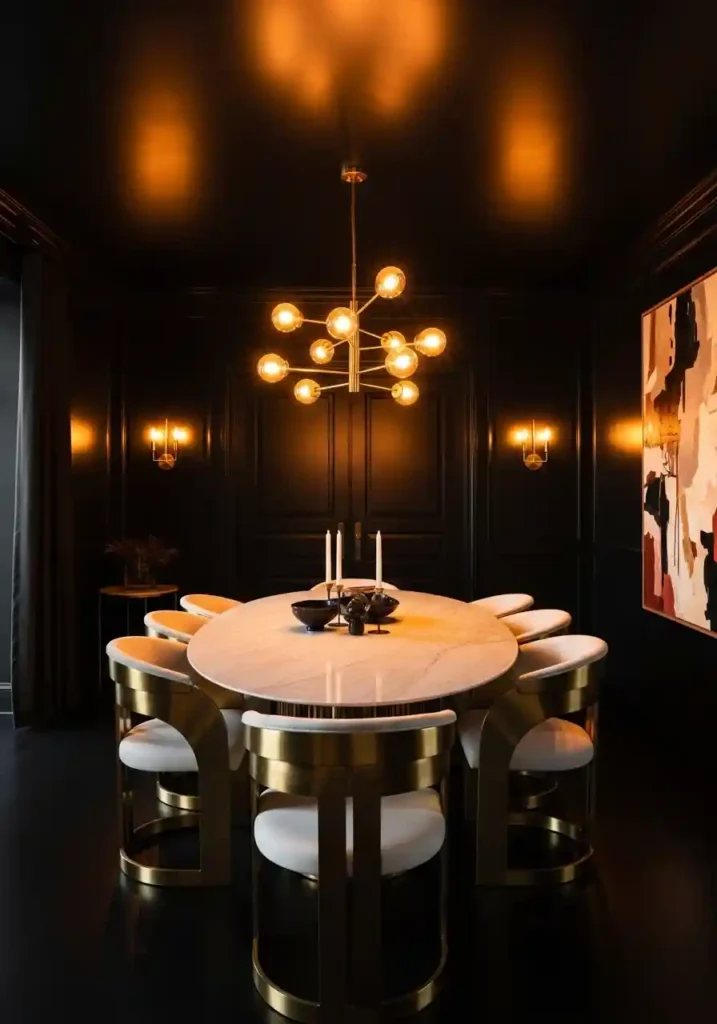
A black dining room is the design decision that most completely separates the genuinely confident and designerly adventurous from those who simply follow conventional interior wisdom about keeping dining rooms bright and neutral — and the reward for that confidence is a room of extraordinary drama, intimacy, and sophistication that no light-colored dining room can replicate. When walls, ceiling, and trim are all painted in the same deep, matte black, the room acquires a quality of enveloping warmth that feels simultaneously like a luxury restaurant and like the most private, most intimate version of your own home. The darkness makes the light sources — the chandelier, the candles, the warm lamp — appear dramatically more beautiful and more warm by contrast.
The counterintuitive truth about black dining rooms is that they feel warmer and more intimate than white or light-colored rooms rather than colder and more oppressive, because the dark surfaces absorb and reflect the warm light of candles and amber bulbs rather than competing with it. The key to making a black dining room feel stunning rather than overwhelming is the quality of the light sources within it — a statement brass chandelier with warm amber bulbs, candles on the table, and perhaps a single picture light over an artwork create pools of warm illumination that glow against the dark surfaces with extraordinary beauty. Pair with warm stone or wood flooring and a marble dining table for maximum material richness.
2. Japandi Dining Room for Calm Minimalist Beauty
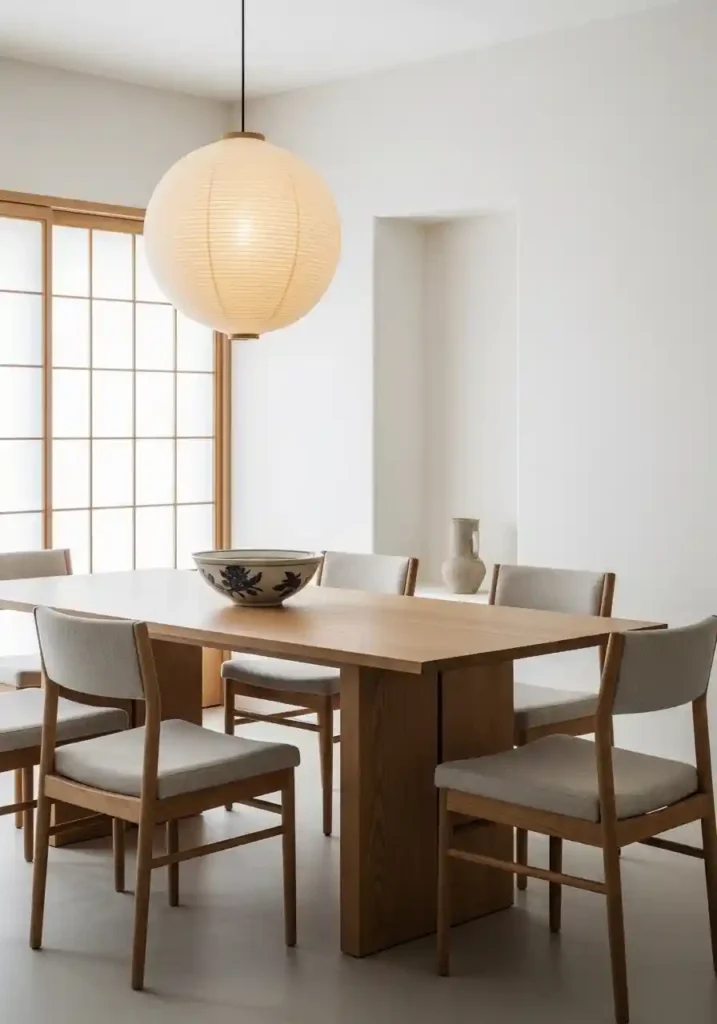
Japandi — the design philosophy that merges Japanese wabi-sabi minimalism with Scandinavian hygge warmth — creates dining rooms of extraordinary serenity and genuine beauty that feel simultaneously deeply restful and thoroughly considered. The Japandi dining room uses the fewest possible elements and makes every single one of them count — a low-profile solid oak dining table with perfectly resolved clean lines, linen-upholstered chairs with natural wood frames that are simultaneously comfortable and beautiful, a single large handmade ceramic bowl as the sole table centerpiece, and one beautifully proportioned pendant light above. Nothing superfluous, nothing arbitrary, nothing that does not earn its place completely.
The warmth that prevents Japandi from feeling cold or clinical comes from the specific materials selected and the specific way natural light interacts with them — warm white plaster walls with subtle hand-applied texture, solid oak flooring that reveals its grain clearly, linen upholstery in warm undyed natural tones, and handmade ceramics with slightly irregular glazes all carry the organic warmth of natural materials that feel genuinely connected to the natural world. A single branch of seasonal greenery on the table, changed monthly to reflect the current season, brings a living, natural element that completes the Japandi dining room’s quiet, contemplative beauty.
3. Open Plan Dining Zone Defined by Pendant Lighting
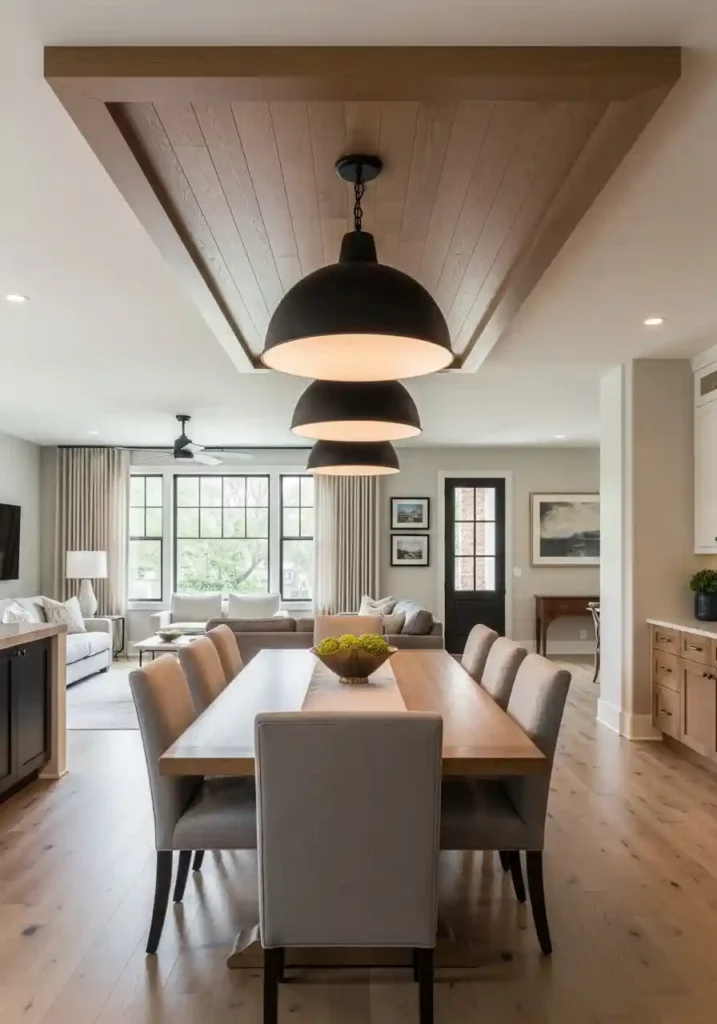
In an open plan home where the dining area exists within a continuous floor space shared with the kitchen and living room, the dining zone’s definition — its sense of being a specific, purposeful place rather than simply where the dining table happens to be positioned — depends almost entirely on the lighting design directly above it. Three oversized pendant lights hung in a row above a rectangular dining table, or a single dramatic chandelier hung precisely above a round table, create an overhead architectural element that visually claims the space below as definitively the dining zone, creating a sense of room-within-a-room without any physical partition.
The pendant lights chosen for this zone-defining function carry enormous design weight because they are the first and most visible element of the entire dining area — they must be large enough to read confidently from across the open plan space, beautiful enough to justify their prominent position, and warm enough in their light output to create the intimate, dining-appropriate atmosphere within the zone they define. Oversized globe pendants in smoked glass, sculptural ceramic shades, or large rattan forms in warm amber tones all create the necessary visual scale while delivering the warm, intimate light that modern dining requires.
4. Curved Dining Table for a Softer Modern Aesthetic
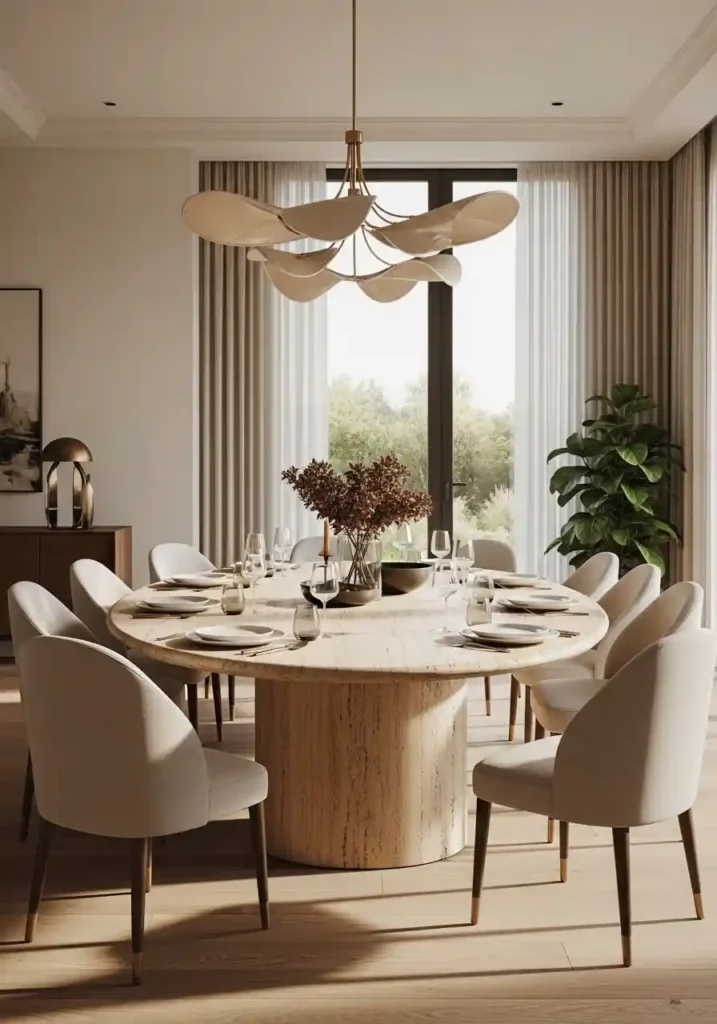
The curved dining table — oval, round, or kidney-shaped — is the dining furniture choice that most directly challenges the conventional rectangular dining table’s dominance while simultaneously creating a more democratic and more genuinely social dining arrangement. At a round or oval table, there is no head and no foot, no seat of honor and no less desirable position — every diner is equally present in the social field of vision, equally able to participate in the table’s conversation, and equally positioned in relationship to every other person at the table. This equality creates a specific quality of social warmth and genuine connection that rectangular tables, with their hierarchical long-side and short-side seating, cannot replicate.
A round or oval dining table also creates a spatial relationship with the room around it that is fundamentally different from a rectangular table — the curved form allows traffic to flow naturally around it from all angles without the angular navigation required by rectangular table corners, making the dining area feel more spacious and more fluid than the same square footage with a rectangular table. In natural stone — travertine, marble, or honed limestone — a curved dining table becomes a sculptural element of genuine beauty that elevates the entire dining room to a higher aesthetic register simply by its presence.
5. Gallery Wall Dining Room with Floor-to-Ceiling Art
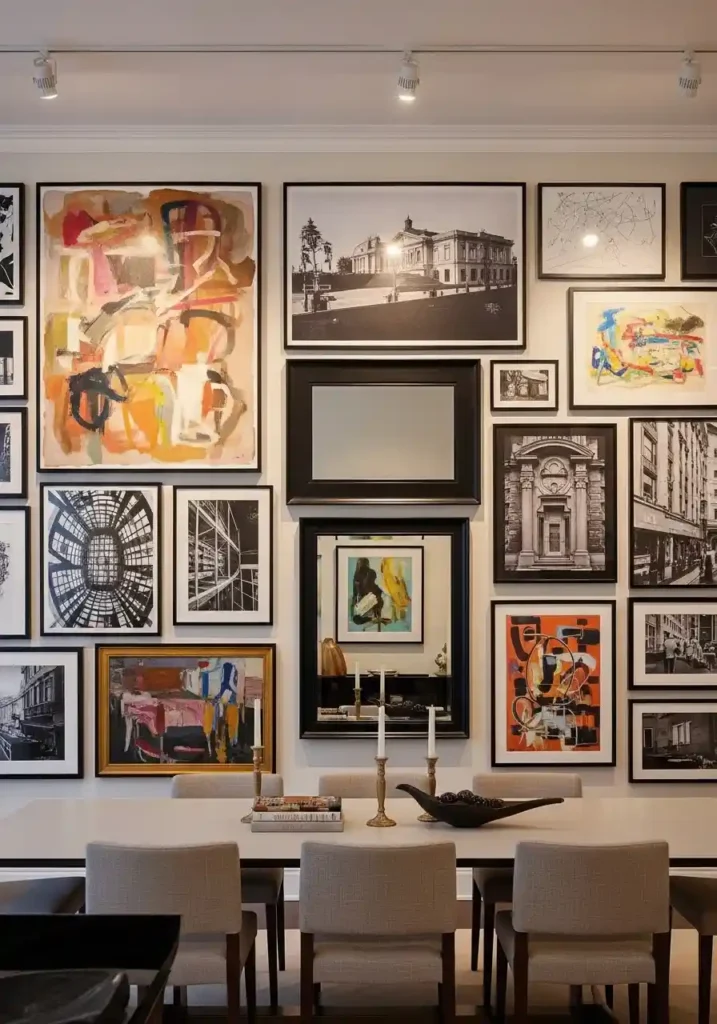
A floor-to-ceiling gallery wall that covers the entire wall behind the dining table transforms the dining room’s most important backdrop from an architectural surface into a curated expression of personal aesthetic intelligence — a collection of images, artworks, and visual references that makes every dining experience a conversation about art, beauty, and the specific sensibility of the people who chose these particular objects and arranged them in this particular way. A well-executed gallery wall says more about its creator than almost any other single design decision in the entire home.
The modern gallery wall in a contemporary dining room distinguishes itself from the more eclectic, mismatched gallery walls of other aesthetics through its consistency of frame — slim black frames throughout, or slim natural oak frames throughout, create a unified visual system that allows the art itself to be the expressive variable while the frames create order and contemporary precision. Mix deliberately in scale — large-format pieces anchoring the composition, medium pieces creating the body, and smaller pieces providing detail and rhythm — and in subject matter, combining abstract painting with architectural photography, text-based art, and botanical illustration for a gallery wall with genuine range and genuine depth.
6. Industrial Dining Room with Exposed Brick and Steel
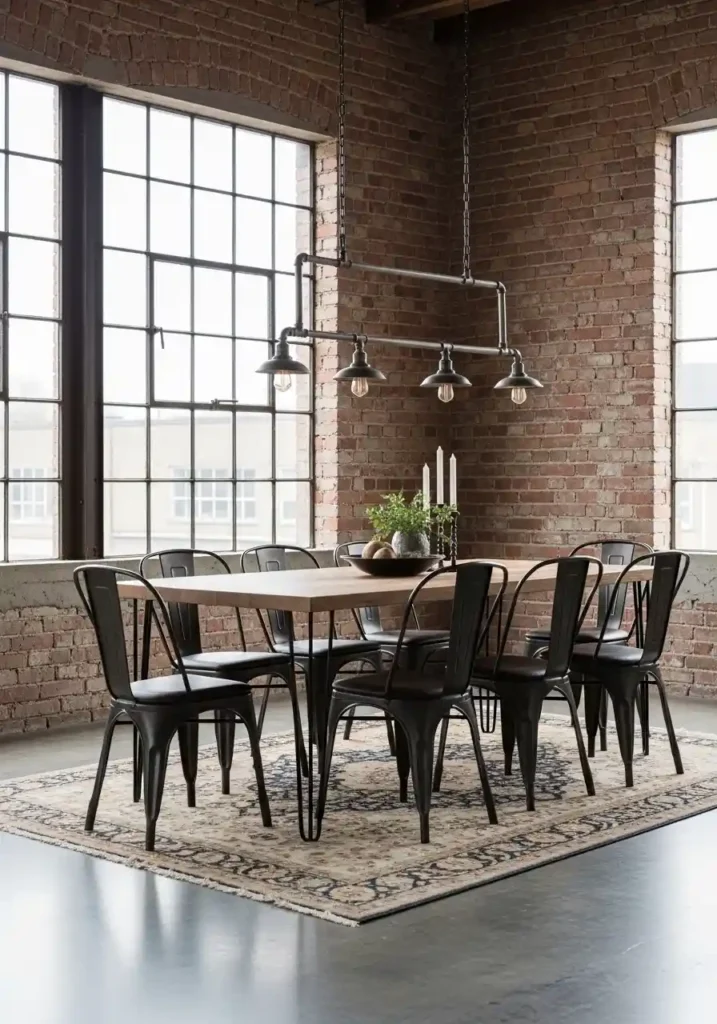
The industrial dining room aesthetic — exposed brick walls, steel window frames, concrete floors, raw wood surfaces, and black metal hardware throughout — creates a dining space with a specific urban warmth and material honesty that more refined, more decorative dining rooms cannot replicate. The industrial palette says something genuine and confident about prioritizing the intrinsic beauty of structural materials over applied decoration, finding the poetry in exposed brick and raw steel rather than covering them with plaster and paint. In a dining room context, this material confidence creates an extraordinary backdrop for the warmth of food, conversation, and gathered people.
The warmth that prevents an industrial dining room from feeling cold or uncomfortable comes from the deliberate introduction of organic, warm materials against the cool industrial palette — a solid wood dining table whose warm grain and natural texture contrasts beautifully with the cool steel of its legs, leather seat pads on metal chairs that add tactile warmth to the hard material aesthetic, a warm area rug beneath the dining set that grounds the space with textile comfort, and warm amber Edison bulbs in the industrial pendant fixtures that create intimate, flattering light within the raw material environment. The contrast between cool structure and warm organic materials creates the industrial dining room’s specific and deeply attractive tension.
7. Marble Dining Table as the Room’s Sculptural Centerpiece
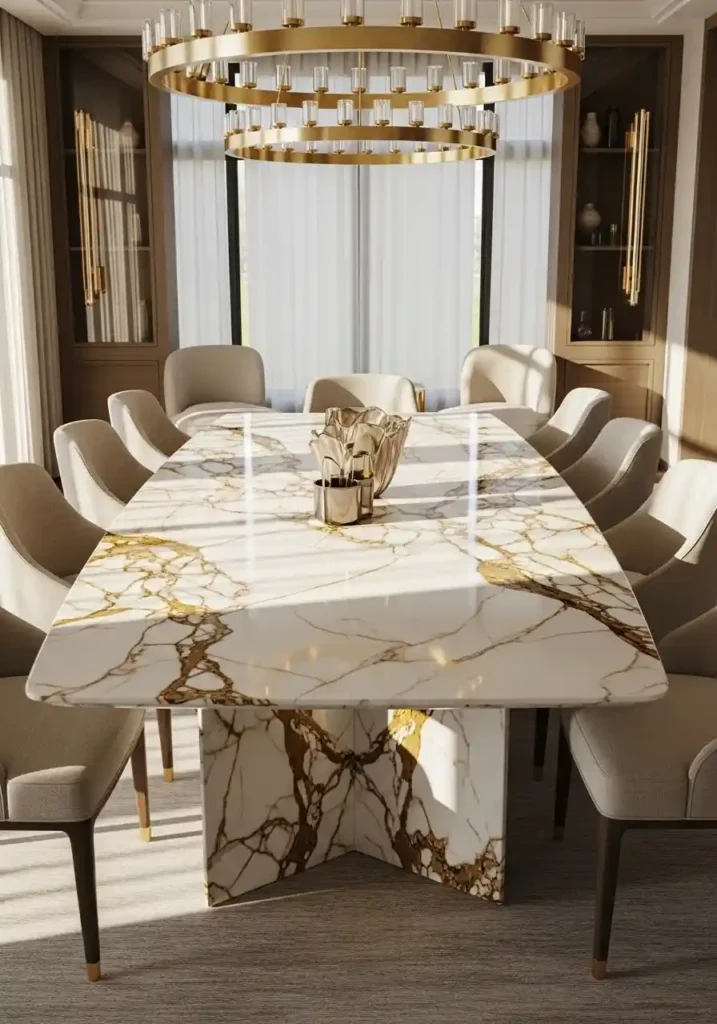
A marble dining table — particularly one cut from a slab of Calacatta, Statuario, or Nero Marquina marble with dramatic, boldly individual veining — is the dining furniture investment that most completely transforms a dining room from a functional space into a genuinely extraordinary one, because no two marble slabs are identical and no other material possesses the specific combination of geological depth, natural beauty, and tactile luxury that real marble provides. The marble table is not simply furniture but a permanent installation of natural art that the entire dining room is designed to honor and celebrate.
The specific marble selected for a dining table should be chosen with full awareness of its maintenance requirements and its relationship to everyday dining use — Calacatta marble in its polished finish is breathtakingly beautiful but requires sealing, careful maintenance, and acceptance of the natural etching and patination that develops through normal use, which many people come to regard as part of the marble’s evolving beauty. Honed marble finishes are more practical for dining use as they are more resistant to etching and easier to maintain. White marble with gold veining is most dramatic against dark cabinetry or dark walls. Black Nero Marquina with white veining creates the most graphic and most contemporary marble dining experience available.
8. Banquette Seating Integrated into the Dining Room Design
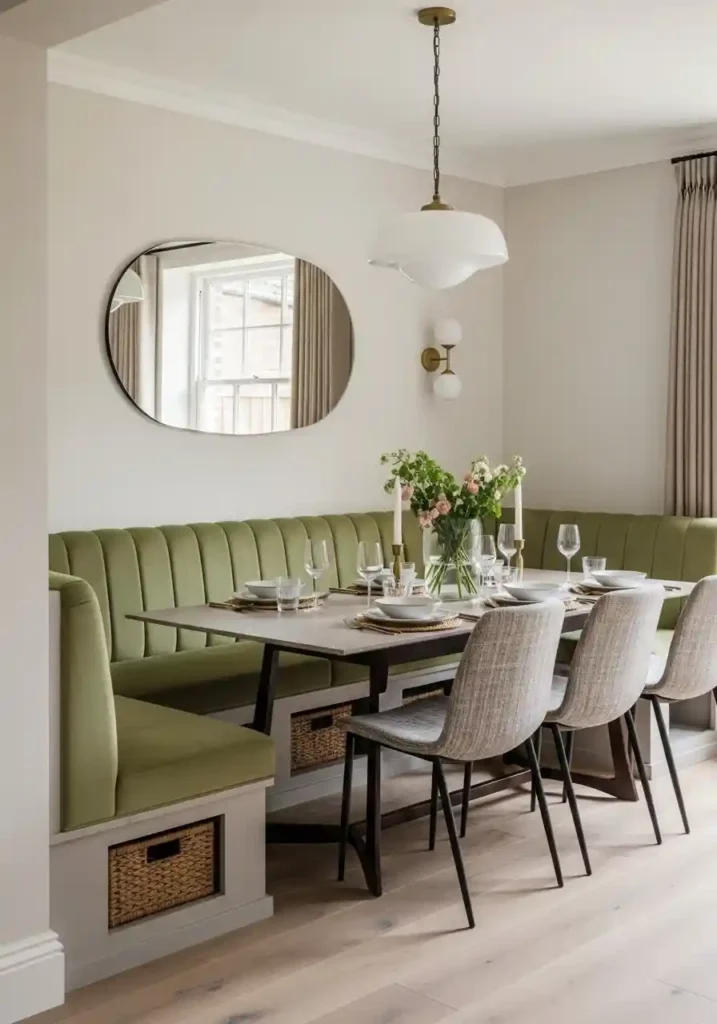
A custom built-in banquette running along one wall of the dining room — upholstered in a quality fabric with storage integrated into the base — creates a dining nook of extraordinary intimacy and spatial efficiency that freestanding furniture arrangements simply cannot replicate. The banquette creates a specific psychological quality of enclosure and belonging that makes diners feel specially contained and specially gathered, like the best corner table at your favorite restaurant that you always request and always feel lucky to get. This restaurant-nook quality within the home creates a dining experience that makes people want to linger long after the plates are cleared.
The practical intelligence of banquette seating extends well beyond its atmospheric qualities — the storage integrated into the banquette base provides substantial hidden capacity for tablecloths, napkins, serving pieces, and the various objects of dining that typically struggle to find appropriate homes in the dining room’s limited storage. The upholstered banquette is also more space-efficient than chairs because it does not require clearance for pulling back and pushing in, allowing the dining table to be positioned closer to the wall than a chair arrangement would permit. Choose a quality velvet or performance fabric in a color that anchors the room’s palette with confidence.
9. Biophilic Dining Room with Living Plant Wall
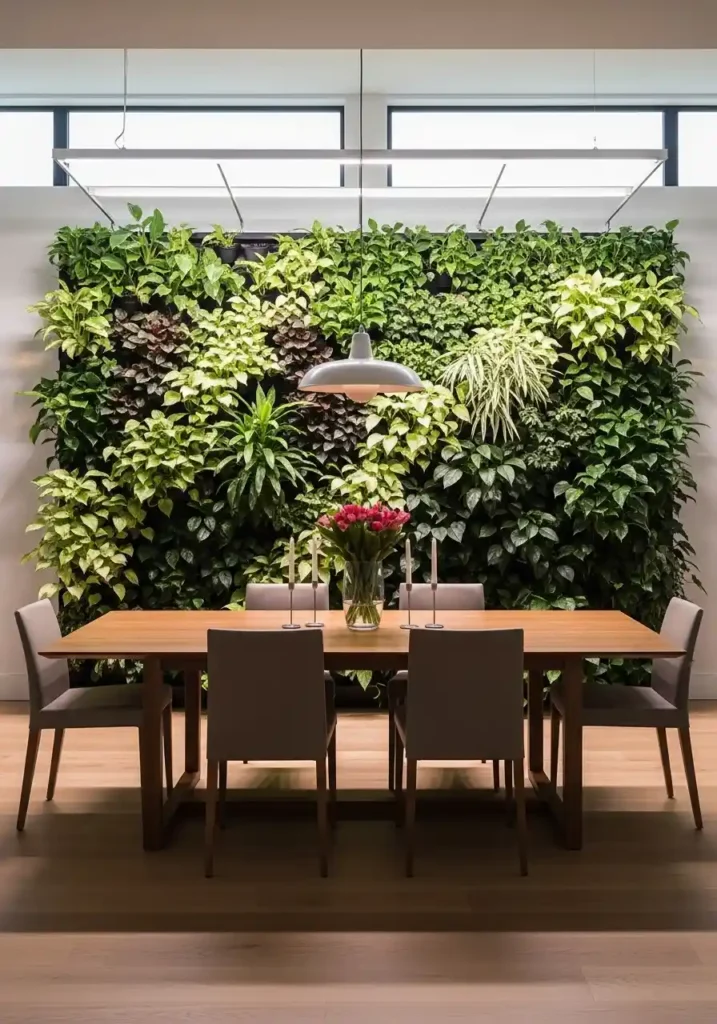
A living plant wall — a hydroponic planting system covering one full wall of the dining room with a variety of lush tropical plants — is the most genuinely extraordinary and most biologically alive dining room feature available in contemporary residential design. It transforms the dining room’s most important backdrop wall from an architectural surface into a living, growing, oxygen-producing, constantly evolving piece of living art that changes subtly every week as the plants develop and shift. Dining beneath and before a full living wall is an experience of such immediacy and such genuine connection to the natural world that it genuinely cannot be replicated by any other design intervention.
The practical execution of a living plant wall requires either a professional hydroponic installation system with its own irrigation and nutrient delivery infrastructure, or a more accessible modular system of individual planting pockets that can be installed as a considered DIY project. The choice of plant species within the wall determines both its visual character and its maintenance requirements — shade-tolerant tropical species like pothos, philodendron, peace lily, and ferns thrive in indoor wall installations with artificial grow-light supplementation and create the lush, abundant greenery that makes a living wall truly spectacular. The investment in a living plant wall returns dividends of beauty, air quality improvement, and atmospheric warmth every single day.
10. Statement Chandelier as the Dining Room’s Design Anchor
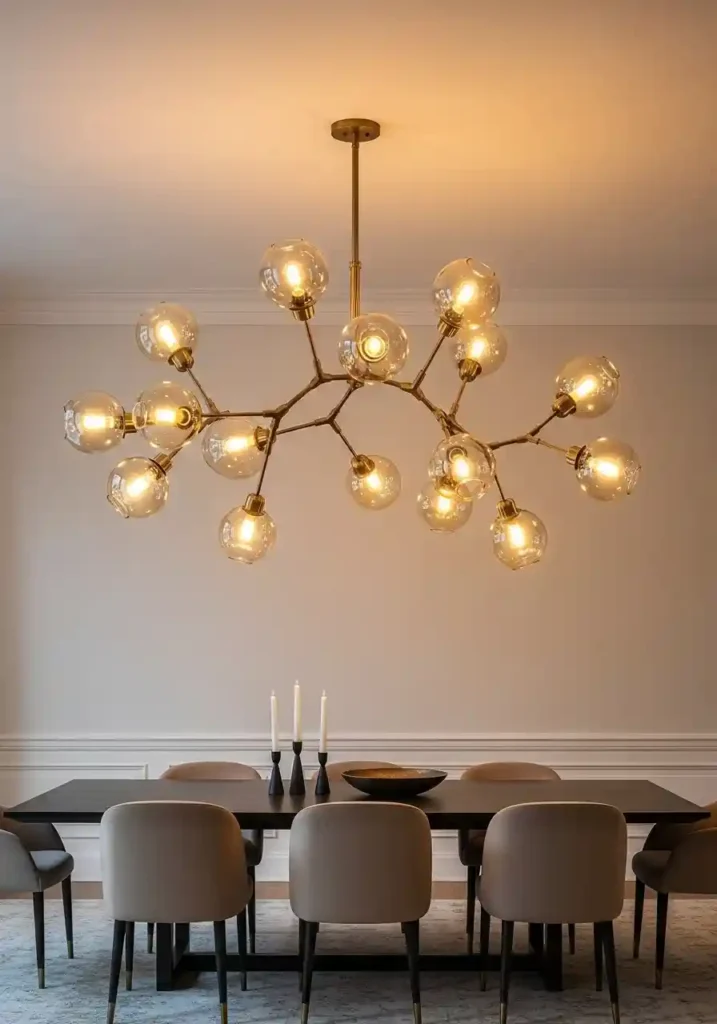
A statement chandelier positioned above the dining table is the single design element that most completely defines the dining room’s aesthetic ambition and sets the entire room’s character before any other element is registered — it is the first thing visitors see when they enter, the overhead presence that determines the quality and warmth of every dining experience beneath it, and the piece that makes the dining room feel like a specifically, intentionally designed space rather than simply a room where a table and chairs happen to be positioned. The chandelier is the dining room’s signature.
The scale of the chandelier is the decision that most dramatically affects its impact — the most common chandelier mistake in dining rooms is choosing a fixture that is too small for the space and the table beneath it, creating a tentative, apologetic overhead presence that undermines the room’s design confidence. The rule: for rectangular tables, a chandelier that spans approximately half to two-thirds of the table’s length creates the most proportionally confident and most visually impactful result. For round tables, a chandelier or pendant whose diameter is approximately half the table’s diameter creates the same effect. Go larger than your instinct suggests — in chandeliers, generosity of scale is almost always rewarded.
11. Textured Plaster Dining Room Walls for Organic Warmth
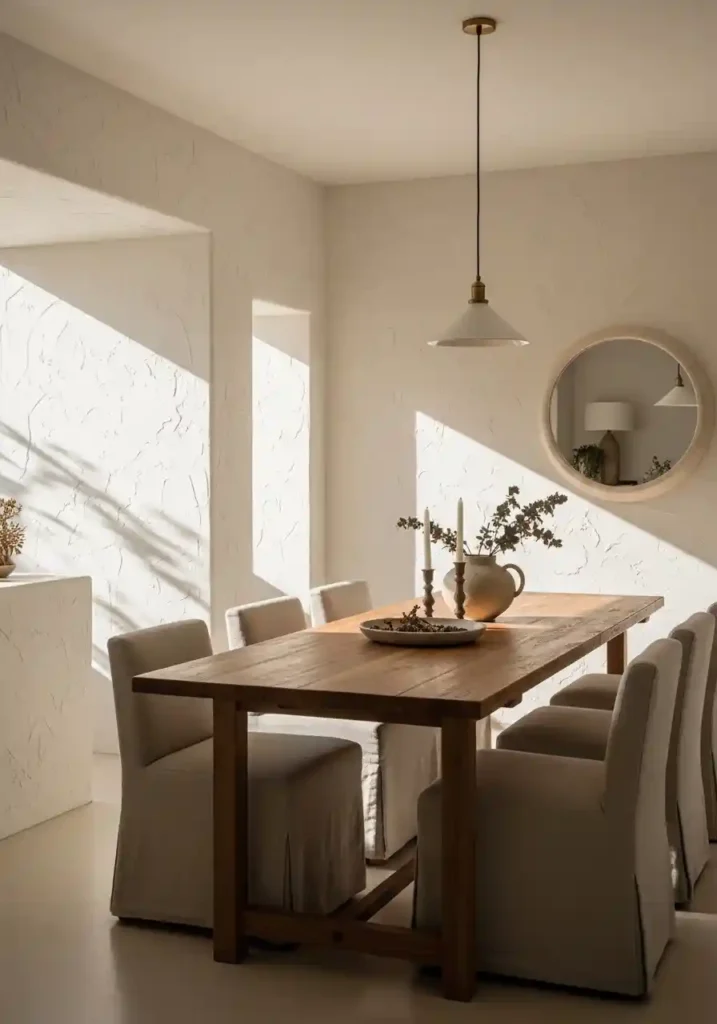
Hand-applied textured plaster walls in a warm white or cream tone create a dining room atmosphere of extraordinary organic warmth and depth that flat-painted smooth walls — regardless of color — cannot approach. The dimensional quality of textured plaster, with its subtle trowel marks and natural variation in thickness and tone across the wall surface, catches and releases light differently at every hour of the day as natural illumination shifts, creating walls that appear to breathe and glow in a way that flat surfaces never achieve. In warm candlelight or amber lamp light, textured plaster walls become genuinely luminous.
Limewash paint applied over existing smooth walls creates a remarkably convincing version of the textured plaster aesthetic at significantly lower cost and complexity — the translucent lime-pigment layers build up to create natural variation and depth that reads convincingly as genuine lime plaster from a normal viewing distance. Apply in warm white, pale ochre, or warm sand tones and use a specific limewash application brush that creates the characteristic uneven coverage. The result transforms the dining room’s walls from passive backgrounds into active participants in the room’s warmth and atmosphere, contributing genuine architectural character through their specific textural quality.
12. Dining Room with a Dramatic Fireplace Feature Wall
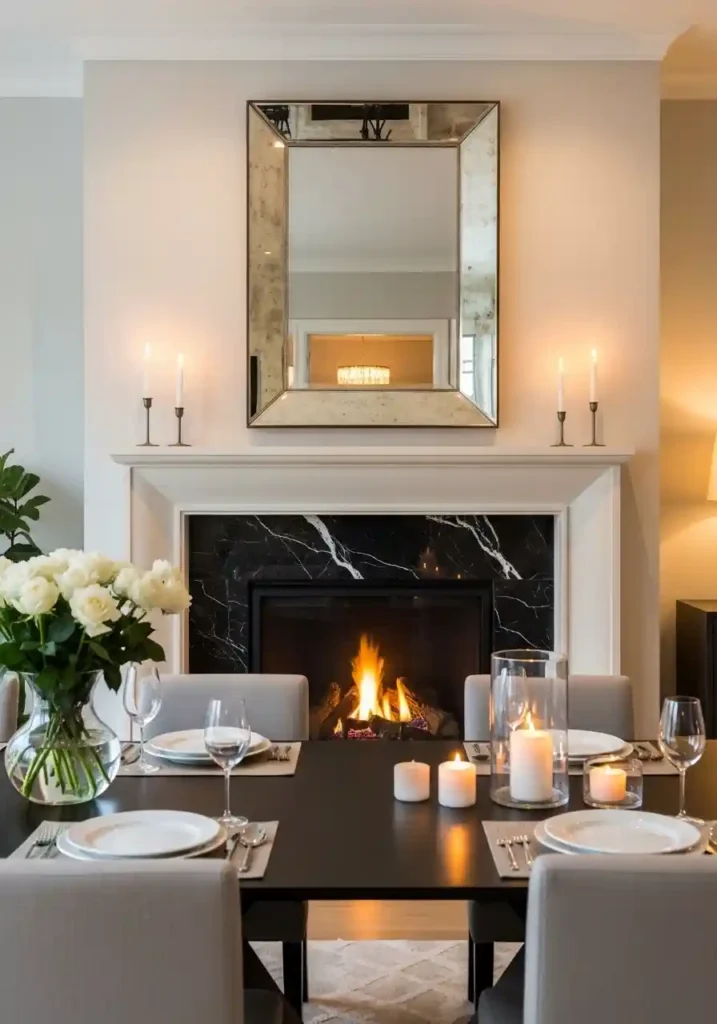
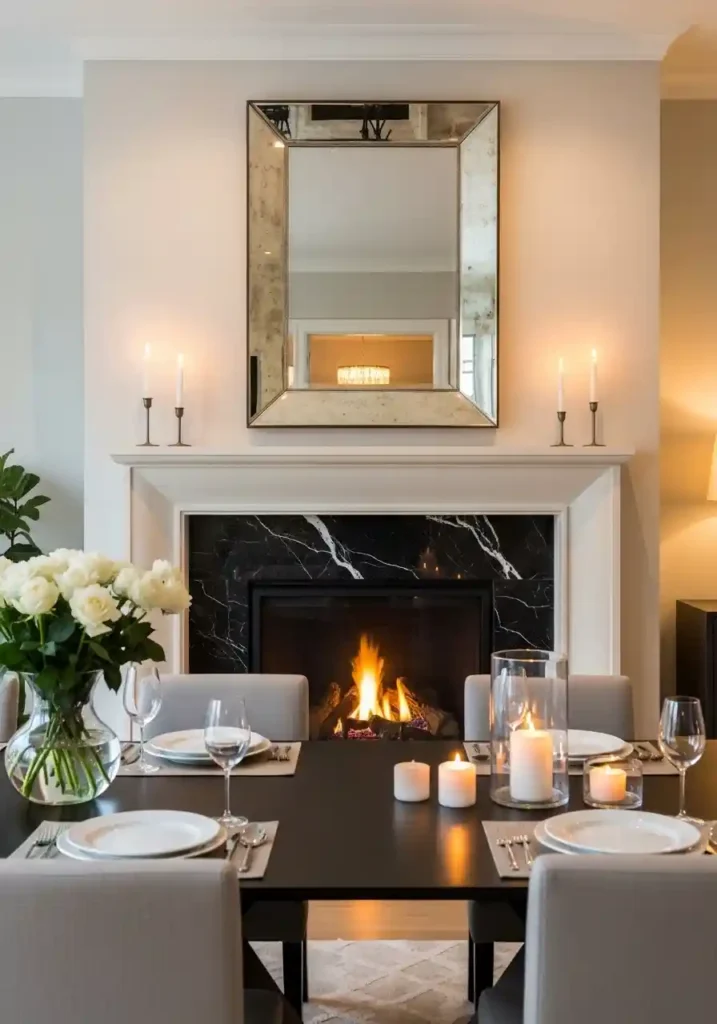
A dining room with a fireplace creates what is arguably the most extraordinarily intimate and most genuinely convivial dining experience available in residential design — because fire at the dining table references the most ancient and most fundamentally human form of communal gathering, the circle of people around a shared warmth and light that has been the foundation of human social life since the beginning. A contemporary fireplace with a sleek honed marble surround and a clean architectural mantel brings this primal warmth into a thoroughly modern design context, creating a dining room that feels both ancient and completely current.
The positioning of the dining table in relation to the fireplace is the spatial decision that determines how completely the dining experience benefits from the fire’s presence — ideally the table should be positioned so that the fireplace is visible and felt from every seat at the table rather than only from one end. A round or oval table positioned at a comfortable distance from the hearth allows all diners to equally face and feel the fire’s warmth. The mantel above the fireplace becomes the most important styling surface in the dining room — a large mirror above it reflects the fire’s warm light back into the room and doubles the apparent depth and warmth of the entire dining space.
13. Modern Dining Room with Built-In Storage Wall
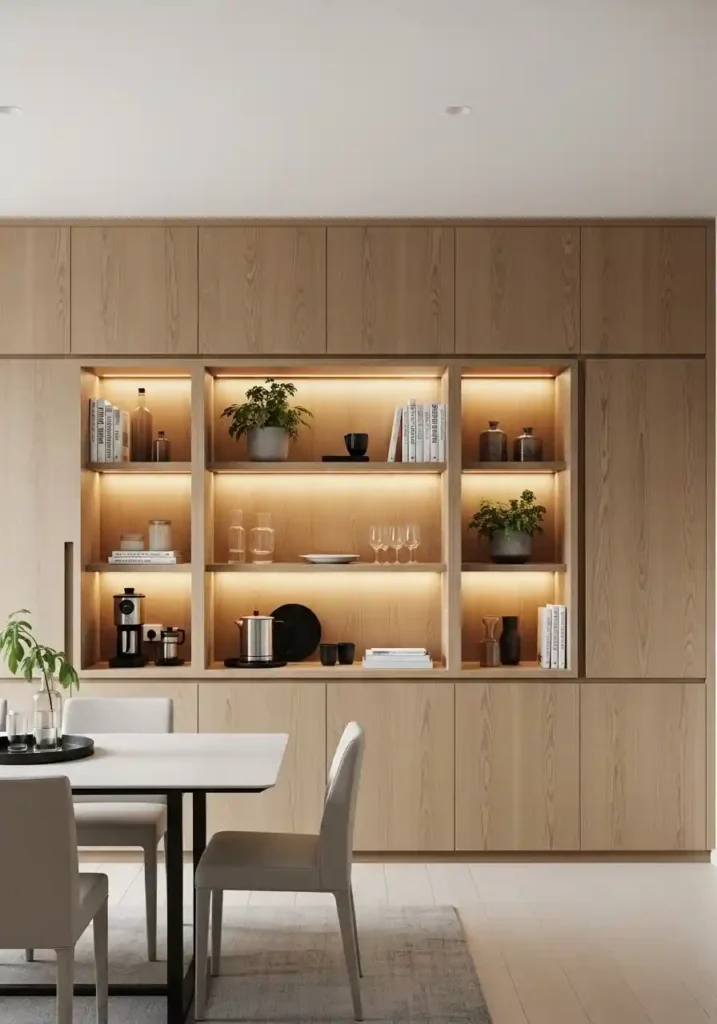
A full built-in storage wall spanning the dining room’s longest wall creates a dining space of both extraordinary practical function and genuine architectural beauty — it provides the storage for all the tableware, linens, serving pieces, and entertainment equipment that dining rooms perpetually lack sufficient space for, while simultaneously creating a beautifully resolved architectural backdrop that gives the dining room a custom, designed quality that no freestanding furniture arrangement can achieve. The built-in storage wall is the dining room upgrade that pays the highest functional return of any investment available.
The most beautiful modern built-in dining room storage walls combine closed cabinet sections (for hiding the practical reality of stored items) with open display niches (for curating the objects that deserve to be seen — beautiful books, sculptural ceramics, art objects, and living plants). Integrated LED strip lighting within the open niches creates a warm glow that makes the display sections appear luminous in the evening, transforming the storage wall from a purely functional element into an atmospheric feature that contributes meaningfully to the dining room’s evening mood. Choose the cabinet finish with the room’s overall material palette in mind — warm white oak, painted in a coordinating color, or lacquered in a bold accent tone all create completely different dining room characters.
14. Sculptural Dining Chairs as Statement Furniture
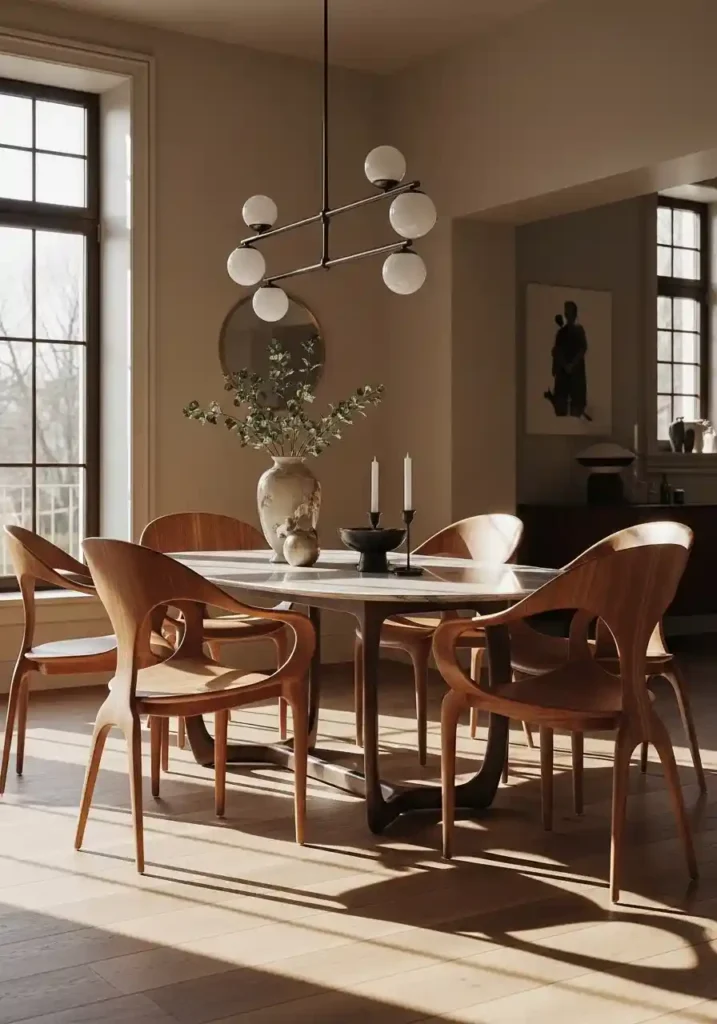
Sculptural dining chairs — chairs designed with the formal ambition of furniture as art, with organic curves, extraordinary material quality, and proportional beauty that rewards looking at from every angle — transform the dining room’s primary seating from a functional requirement into the room’s most visually impressive and most design-forward element. When the chairs are chosen for their sculptural beauty rather than simply for their functionality, the entire dining room benefits by having a set of genuinely extraordinary objects around the table that make every meal feel like it is happening within a curated environment of real aesthetic intelligence.
The most beautiful sculptural dining chairs in contemporary design combine natural materials — solid bent wood, molded plywood, formed rattan — with organic forms that follow the body’s natural curves rather than imposing geometric shapes upon it. Chairs by designers like Hans Wegner, Arne Jacobsen, and their contemporary successors create dining rooms whose furniture quality is immediately and undeniably apparent to every visitor, communicating a sophistication and designerly commitment that informs every subsequent perception of the home’s overall aesthetic intelligence. A simple table — in stone, wood, or glass — allows sculptural chairs to be fully appreciated without competition.
15. Modern Dining Room with Concrete Elements
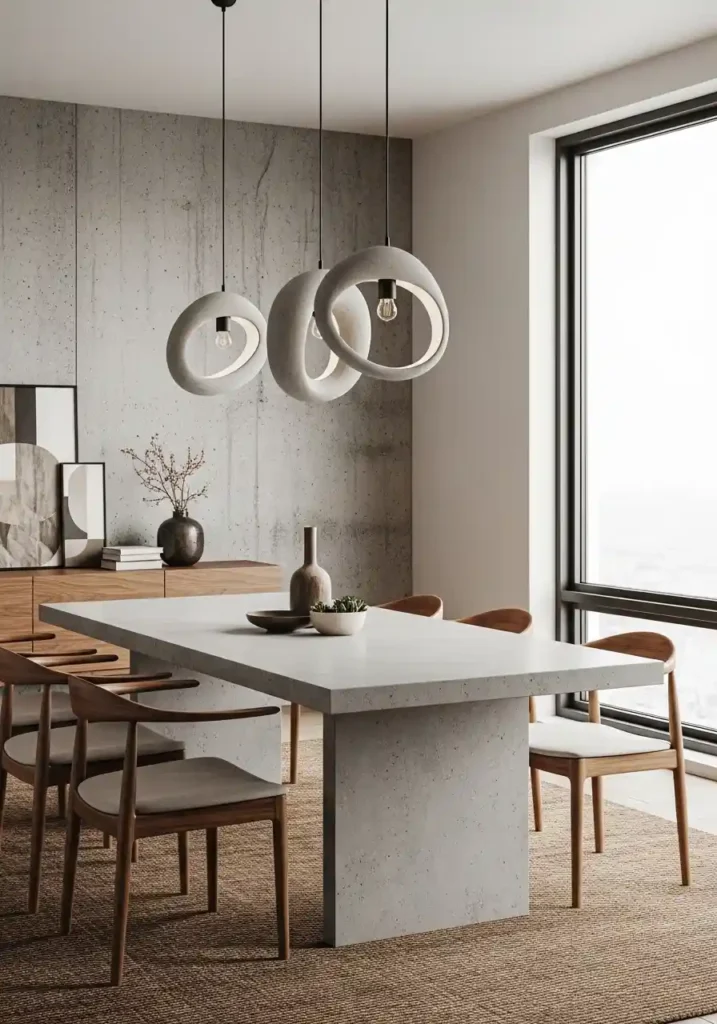
Concrete as a primary material in the modern dining room creates a space of genuine material sophistication and architectural seriousness — the specific quality of concrete (its mass, its thermal conductivity, its imperfect surface character, its absolute refusal to be anything other than completely itself) makes it the material most committed to honesty and most resistant to prettification in the entire interior design palette. A concrete dining table in its polished or raw finish creates a dining surface of extraordinary presence that immediately establishes the room’s architectural ambitions without requiring any supporting explanation.
The warmth that concrete dining rooms require to balance their cool materiality comes from deliberate and generous material contrast — warm solid wood chairs with upholstered seat pads create a soft, approachable counterpoint to the table’s cool mass. A large, warm-toned area rug beneath the dining set grounds the space with textile warmth at floor level. Warm timber pendant lights or warm brass fixtures above the table add material warmth at the ceiling. Together, these warm contrasts prevent the concrete dining room from reading as cold or institutional, instead creating a material conversation of genuine complexity that makes the room both intellectually interesting and deeply habitable.
16. Dining Room with Dramatic Floor-to-Ceiling Windows
A dining room with floor-to-ceiling windows overlooking a beautiful garden, a water view, or a dramatic urban skyline has access to the most extraordinary and most living artwork that any dining space can possess — the natural world changing continuously through every hour of the day, every season of the year, and every weather condition, creating a dining backdrop of infinite variety and infinite beauty that no purchased artwork could approach. Every meal in this dining room is framed by a different version of the same beautiful view, making the dining experience perpetually fresh and perpetually connected to the world beyond the glass.
The design intelligence in a floor-to-ceiling window dining room is knowing how little additional decoration the space requires — when the view provides the primary visual experience, the interior elements should be subordinate, understated, and of the highest quality rather than numerous or expressive. A single beautiful dining table in quality natural material, chairs of genuine design merit in a quiet color, and a lighting system that creates warmth in the evening without competing with the view’s natural light during the day constitutes the complete interior design of this room. Anything more risks competing with the view rather than complementing it.
17. Velvet Upholstered Dining Chairs for Luxurious Touch
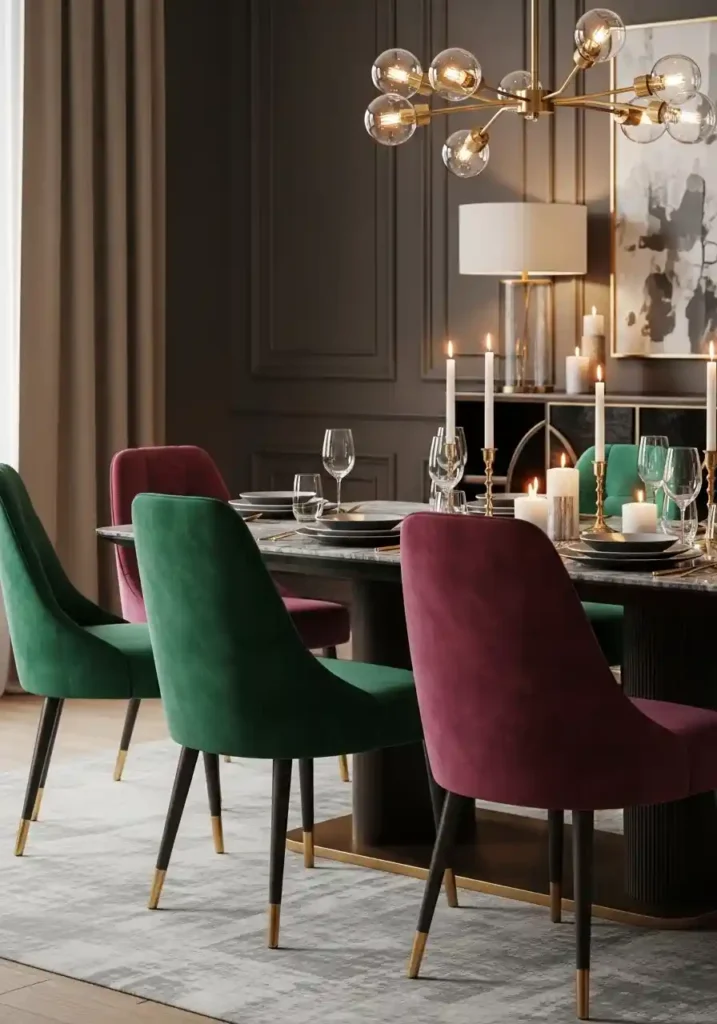
Velvet upholstered dining chairs in deep jewel tones — emerald green, sapphire blue, rich burgundy, or warm mustard — create a dining room of immediate and unambiguous luxury that communicates its design intent from the moment of entry with complete, sensory confidence. Velvet has a specific quality that no other upholstery fabric possesses — the way its pile reflects light differently depending on the direction it is brushed, creating subtle, constantly shifting variation in the perceived color across a single chair’s surface, gives velvet upholstery an almost living, dimensional quality that makes the dining chairs appear genuinely precious and genuinely worth lingering in.
The jewel tone palette available in velvet upholstery is the dining room’s boldest and most immediately impactful color statement — the depth and richness of emerald green velvet against a white marble table, or midnight blue velvet against warm walnut, creates a color dialogue of extraordinary sophistication that instantly elevates the entire room’s design register. Velvet chairs do require some care in dining contexts — regular brushing to maintain the pile’s direction, prompt attention to spills, and avoidance of excessive direct sunlight that can fade the saturated colors over time — but the daily visual and tactile luxury they provide completely justifies this relatively modest maintenance commitment.
18. Dining Room with Warm Wood Paneling Feature Wall
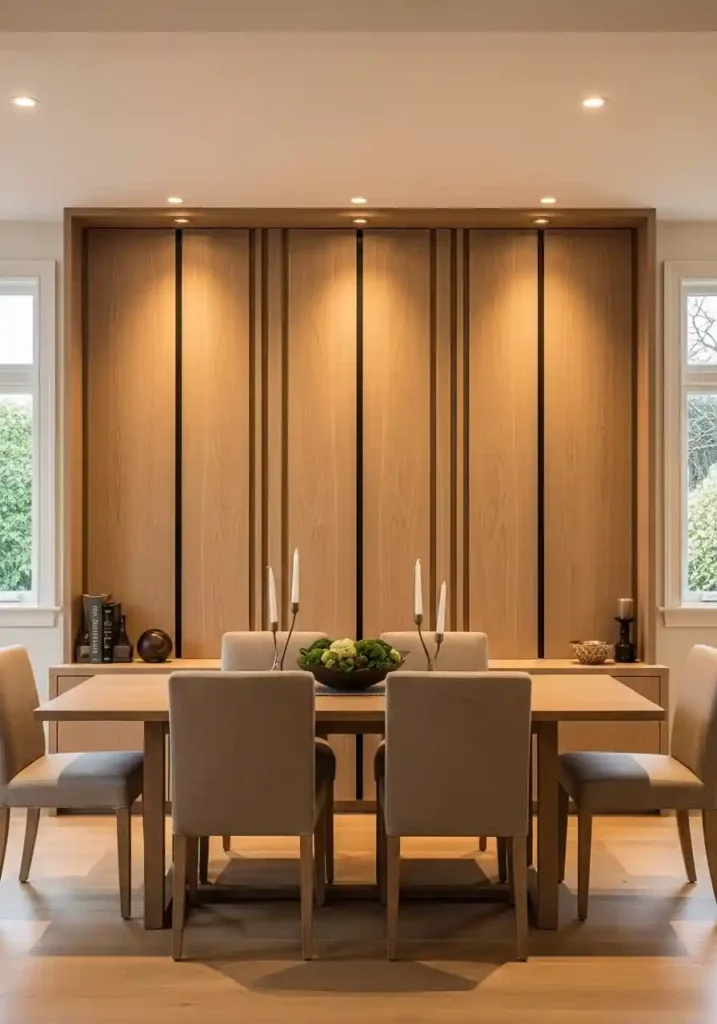
A warm wood paneling feature wall behind the dining table — vertical oak boards with clean shadow gap reveals between each panel, creating a surface of warm natural material with subtle architectural depth — delivers the most naturally warm and most architecturally sophisticated dining room backdrop available in contemporary interior design. The vertical timber panels reference traditional craftsmanship while reading as completely modern in their clean, minimal detailing, creating a feature wall that exists simultaneously in both the tradition of fine joinery and the present moment of contemporary design.
The specific warmth of a timber paneled feature wall in a dining room is its most practically valuable quality because it transforms the experience of the room in every light condition and at every time of day — in morning natural light the wood grain reveals its full beauty with extraordinary clarity, the natural variation in the oak’s figuring creating a surface that rewards looking at over long periods. In warm evening light, the timber paneling develops a richness and depth that flat painted walls cannot approach, the shadow gaps creating fine lines of shadow that give the wall genuine three-dimensional presence. Integrate picture lighting above the paneled wall to wash warm light down its surface and reveal the wood’s texture at its most beautiful.
19. Modern Dining Room with a Round Table and Sculptural Base
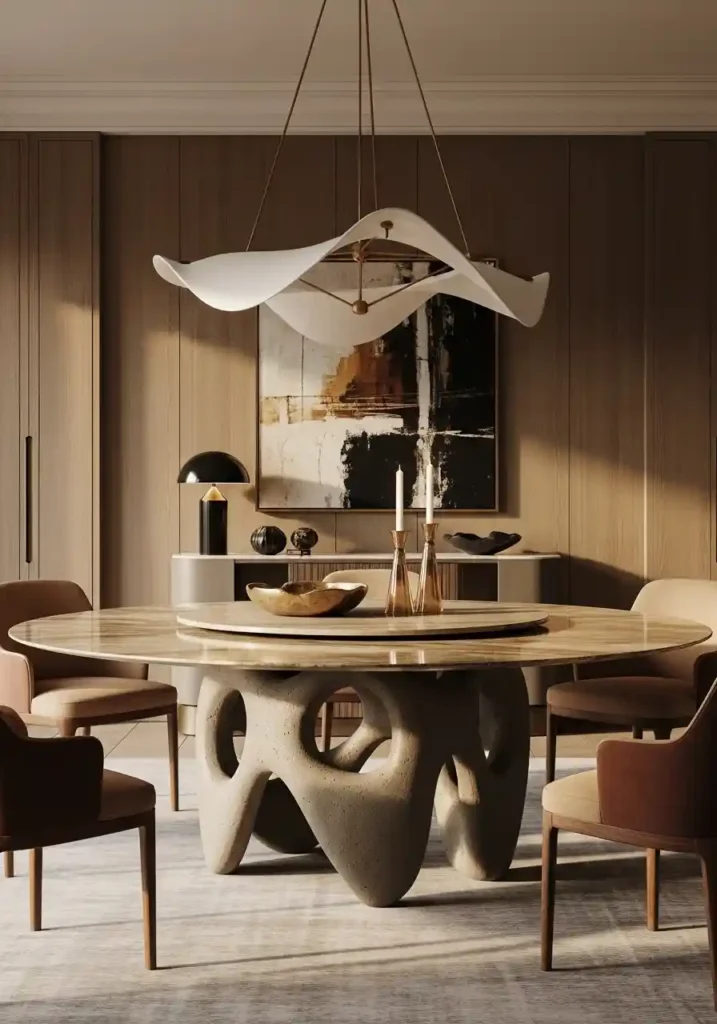
A round dining table with a genuinely sculptural base — a single organic cast concrete pedestal, a branching brass tree form, a geometric solid marble column — elevates the dining table from a horizontal surface supported by functional legs into a three-dimensional sculptural object that is beautiful from every viewing angle and in every light condition. The sculptural base transforms the dining table from furniture into art, creating a central object of genuine aesthetic ambition that makes every other design decision in the room feel more considered and more resolved by association.
The round format of this sculptural table creates the most socially generous dining arrangement available — every seat is equal, every diner is in full visual contact with every other diner, and the conversation flows naturally around the table without the head-and-foot hierarchy that rectangular tables impose. The sculptural base, by replacing four conventional legs with a single central statement form, also creates the maximum visual openness beneath the table, allowing the floor’s material to be clearly seen from all angles and preventing the dining area from feeling visually heavy or cluttered at floor level.
20. Dining Room with Moody Blue-Green Color Story
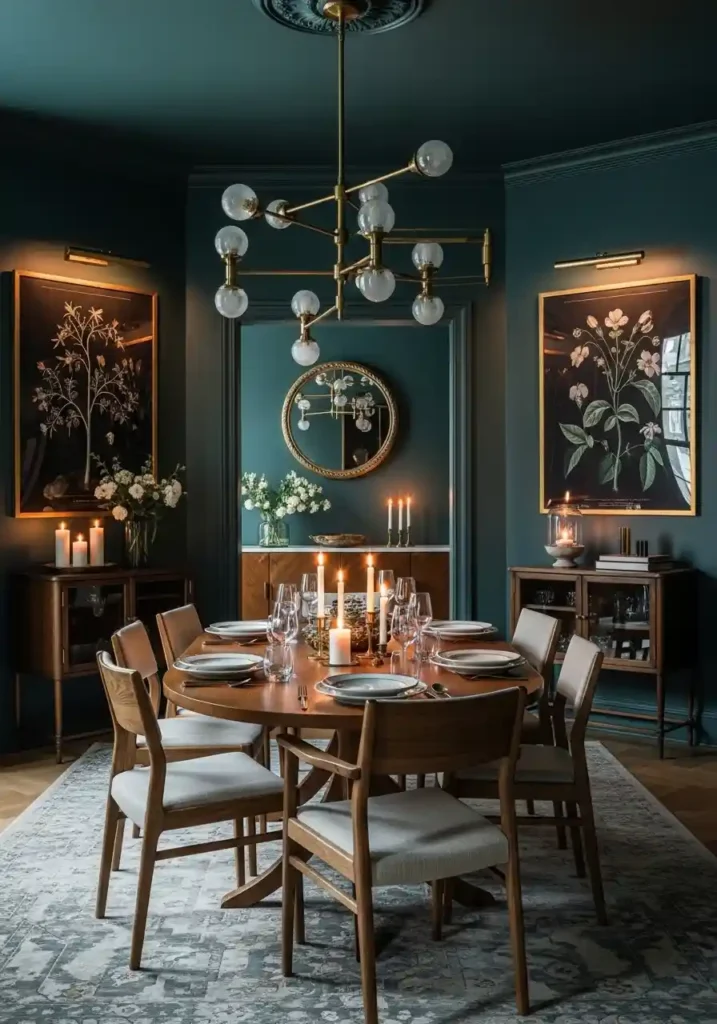
A moody blue-green dining room — walls in deep teal, forest green, or dark peacock blue — creates a dining atmosphere of extraordinary sophistication and psychological depth that lighter colors cannot approach. The specific quality of these deep, jewel-like wall tones is their ability to create a sense of intimate enclosure that makes the dining room feel like a private sanctuary separated from the rest of the home by color alone, without any physical partition. Dinners in a moody colored dining room feel slightly more special, slightly more memorable, and slightly more atmospheric than the same meal in a neutral room.
The warmth that balances the cool depth of blue-green dining room walls comes from the specific materials chosen for every other element — warm brass chandelier and hardware, warm wood dining table, natural linen upholstery, and warm candlelight all create an opposition of warm materiality against cool wall depth that generates genuine visual tension and genuine atmospheric richness. Botanical prints or nature-inspired artwork in warm brass frames on the deep-colored walls connect the color story to the natural world — blue-green as the color of forest canopies, of deep water, of the specific quality of light in late afternoon before the golden hour begins.
21. Dining Room with Mixed Metal Finishes Throughout
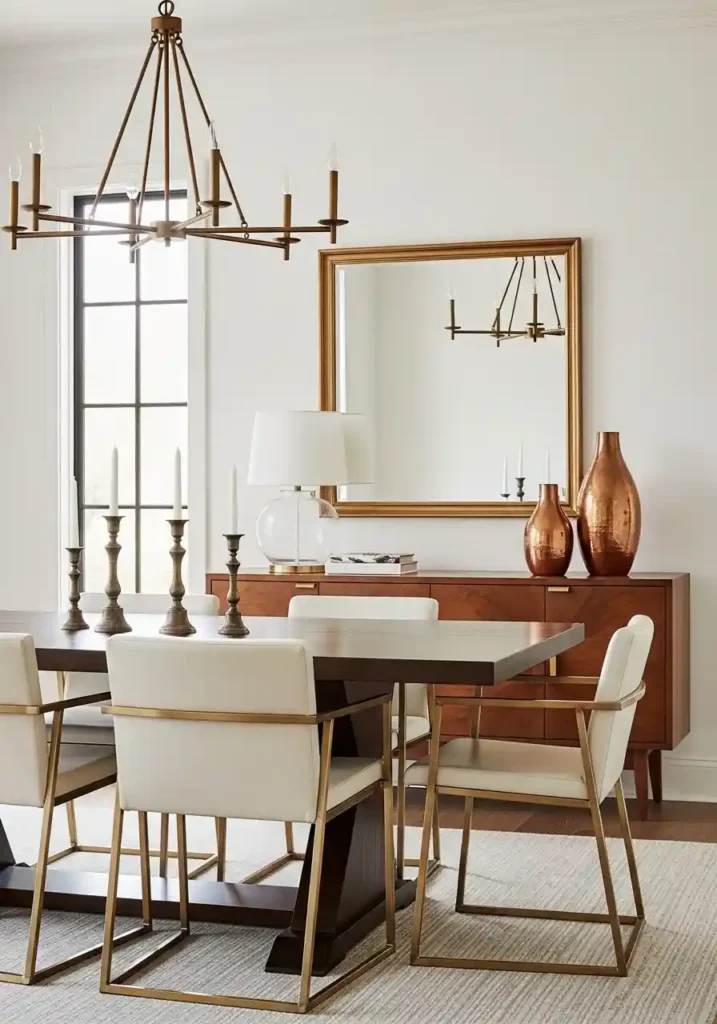
The mixed metal finish dining room — where aged brass, brushed gold, antique bronze, and warm copper coexist within the same space in a deliberately considered rather than accidentally haphazard way — creates a dining room of extraordinary material richness and genuine design sophistication. The conventional wisdom that metal finishes must match throughout a room is a rule that the most design-confident and most aesthetically intelligent interiors consistently and confidently break, because the reality is that warm metals in different finishes create a more layered, more organically beautiful, and more genuinely luxurious material story than perfectly matched metals throughout.
The key to making mixed metals work beautifully in a dining room is maintaining the warmth family throughout all the metals selected — all the different finishes should be within the warm metal family (brass, gold, bronze, copper) rather than mixing warm and cool metals (brass and chrome, gold and nickel) which creates a genuine tonal clash. Within the warm family, variation in finish (polished versus matte versus aged) creates the richness and variety that makes the material story interesting, while the consistent underlying warmth of all the metal tones creates the cohesion that makes the room feel designed rather than accidentally assembled from different sources.
22. Dining Room with a Long Farm Table for Generous Gathering
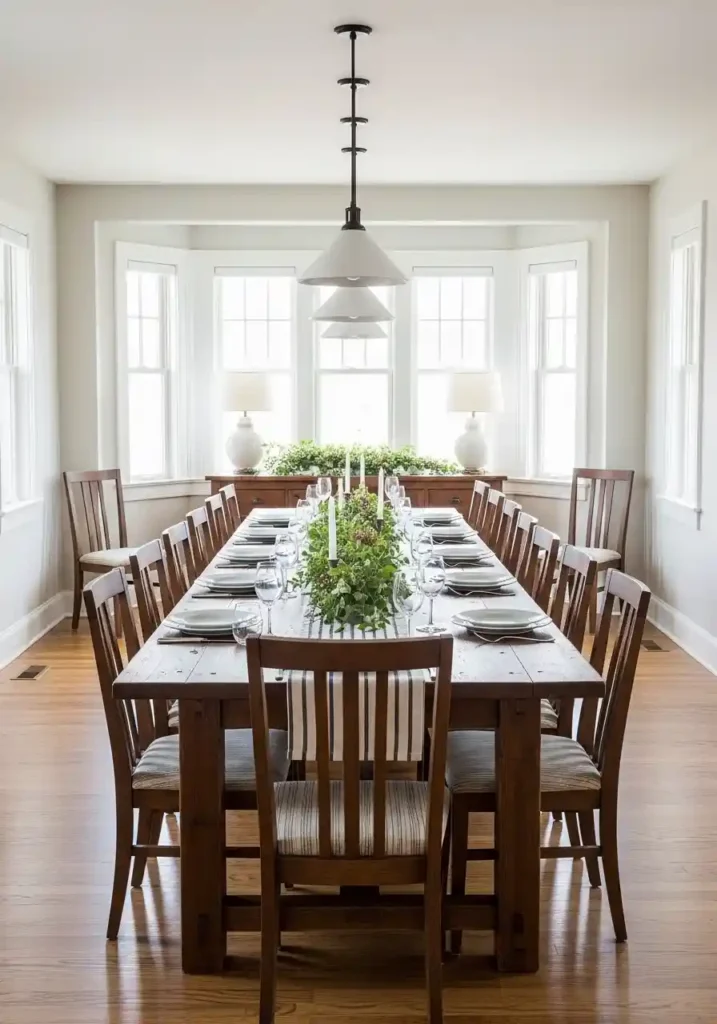
A genuinely long farm table — one that seats ten, twelve, or even more people comfortably — creates a dining room of extraordinary social generosity and sends a specific, deeply appealing message about the values of the people who live with it: that gathering matters, that feeding people matters, that the more people around the table the better, and that the dining room should be large enough and generous enough to accommodate the full abundance of a life lived in good company. A long farm table is a statement of hospitality as a fundamental value rather than an occasional courtesy.
The farm table’s modern interpretation moves away from the purely rustic farmhouse aesthetic toward something more considered and more contemporary — a farm table in aged solid oak with a carefully oiled finish, paired with a mix of upholstered linen bench seating on one side and individual chairs on the other, creates a dining arrangement of genuine warmth and modern sensibility. A row of identical simple pendant lights hung above the full length of the table at consistent heights creates an architectural ceiling element that honors the table’s length and creates the most appropriate lighting for a table designed for large, abundant, genuinely festive gatherings.
23. Dining Room with Integrated Wine Storage Display
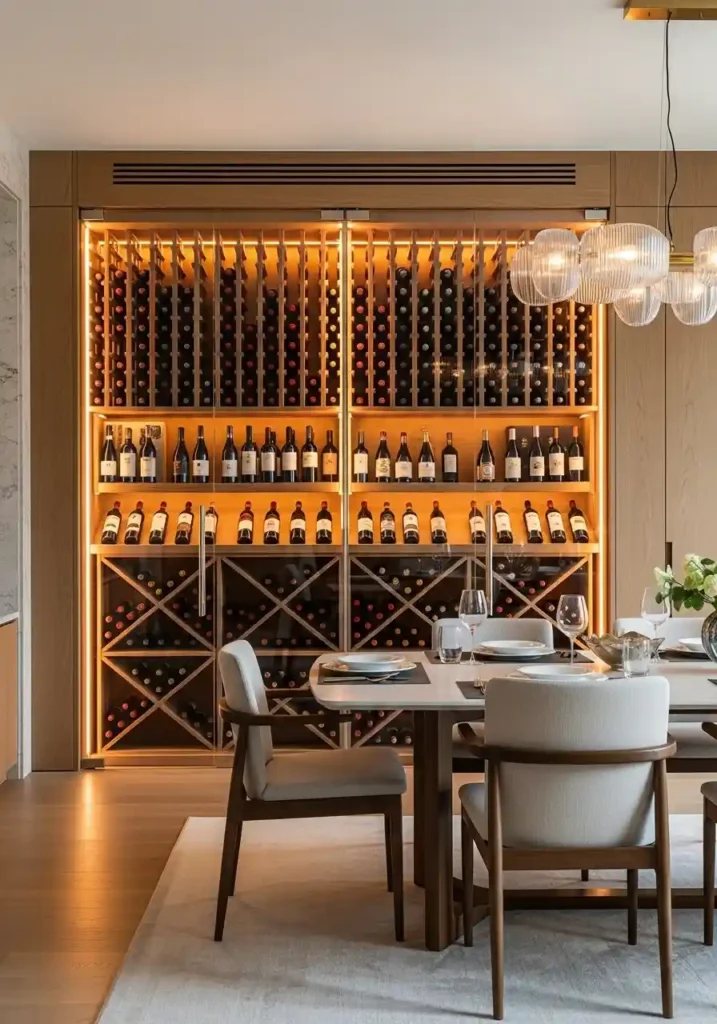
An integrated wine storage display within the dining room — a glass-fronted, temperature-controlled wine cabinet or room that houses the wine collection in a beautifully organized, warmly lit display visible from the dining table — creates a dining room feature of extraordinary visual drama and genuine functional luxury. The warm amber interior lighting of a well-designed wine display, visible through glass from the dining table, creates a glowing, jewel-box quality that adds a specific and deeply beautiful layer of atmospheric warmth to the dining experience, making every dinner feel like it is happening in a space where the pleasures of the table are taken seriously.
The wine display also creates a living, evolving element in the dining room’s visual composition — as bottles are removed and replaced, as the collection grows and changes with each season’s purchases and each cellar’s development, the display wall shifts and evolves in a way that makes the dining room feel genuinely inhabited by a person with real interests and real passions rather than designed as a static, finished composition. A wine display that begins as a small collection of a few dozen bottles and grows over years into a wall of hundreds becomes one of the dining room’s most genuinely personal and most genuinely characterful features.
24. Dining Room with Personalized Table Setting Ritual
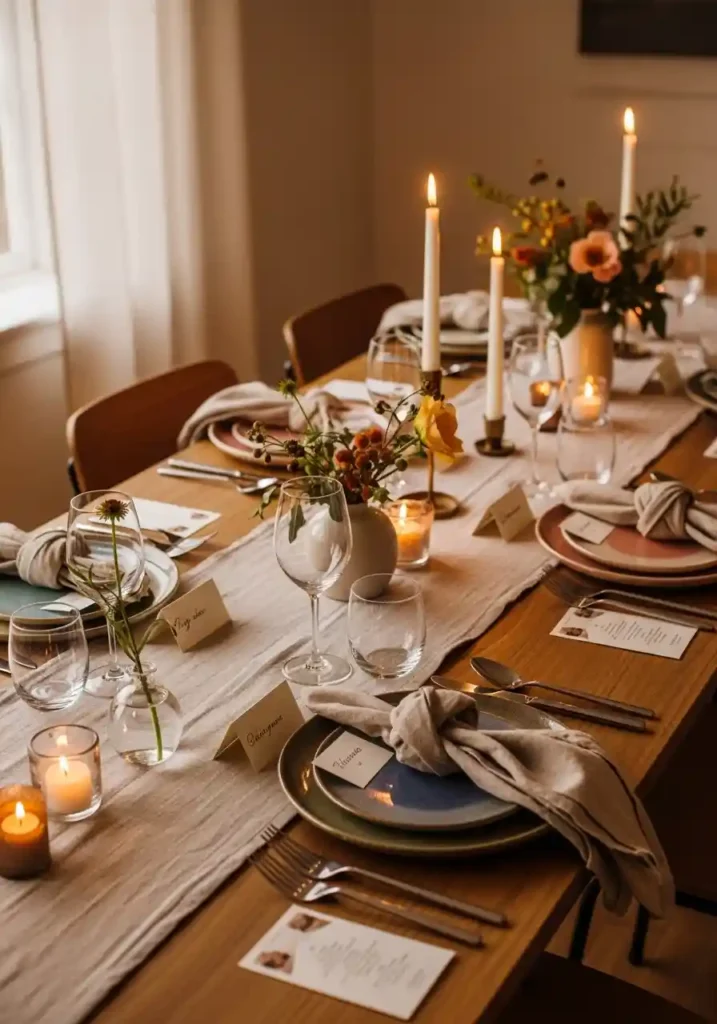
The personalized table setting — every place individually and thoughtfully composed as a small act of welcome and care for each specific guest — is the dining ritual that transforms a beautifully designed dining room from a passive aesthetic achievement into an actively generous and genuinely moving experience of hospitality. A handwritten place card, a single flower stem chosen in a color that matches a guest’s personality, a small handmade ceramic at each setting that the guest is invited to take home — these micro-gestures of personal attention create a dining experience that guests remember and describe to other people for years after the meal itself has been forgotten.
The personalized table setting is also the design element that changes most frequently in the dining room — with every meal and every set of guests, the table itself becomes a new composition that reflects the specific occasion, the specific season, and the specific people being welcomed. This capacity for reinvention makes the dining table the most creatively alive surface in the entire home, a canvas that is set and cleared and set again with new intention for every gathering. Invest in quality basics — genuine linen napkins, a set of handmade ceramics, quality glassware — and allow the seasonal botanicals, personal notes, and small thoughtful additions to make each setting genuinely individual.
Conclusion:
The modern dining room, at its best, is not about following any specific style or achieving any predetermined aesthetic standard — it is about creating a space that makes every gathering around your table feel like an occasion, every meal feel like it deserves the specific care and beauty of its setting, and every person who sits down in your dining room feel welcomed by the genuine intention and genuine warmth that a truly considered dining space communicates. Save the inspirations that make you most excited about gathering your people around a beautifully designed table, combine the ideas that speak most directly to your own vision of modern dining, and invest in creating the dining room that makes every meal in your home feel like something worth sharing.