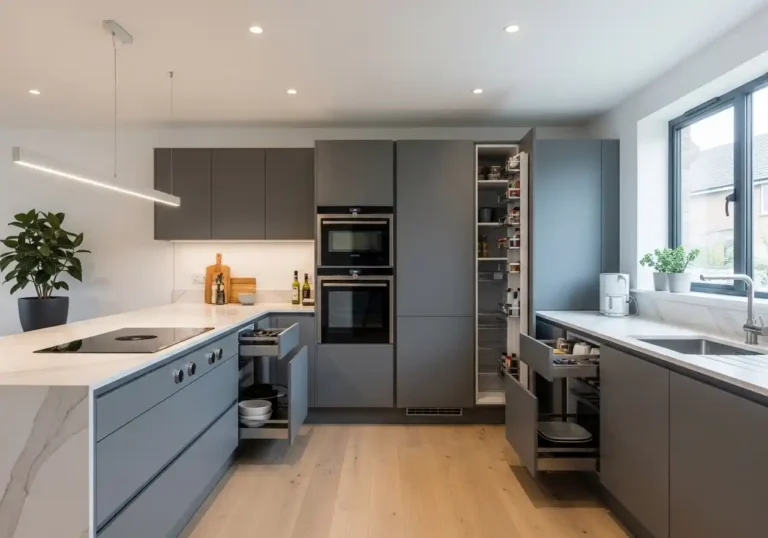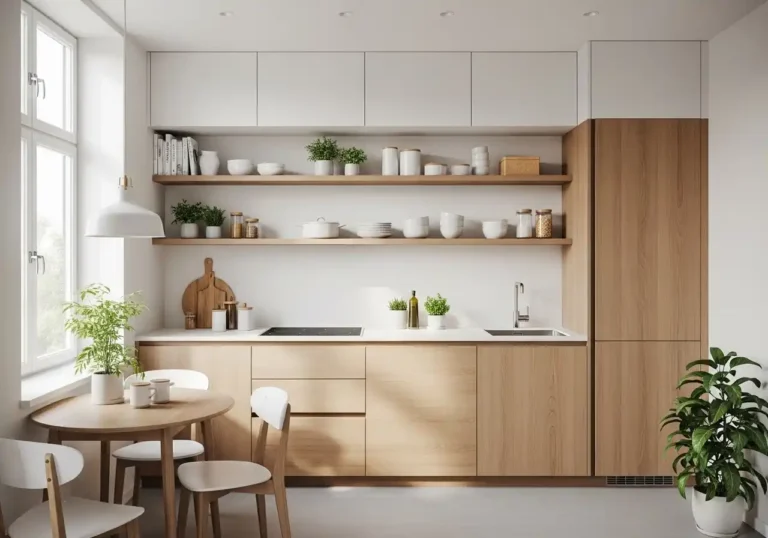
1. The Open Kitchen with a Social Island That Connects Everything
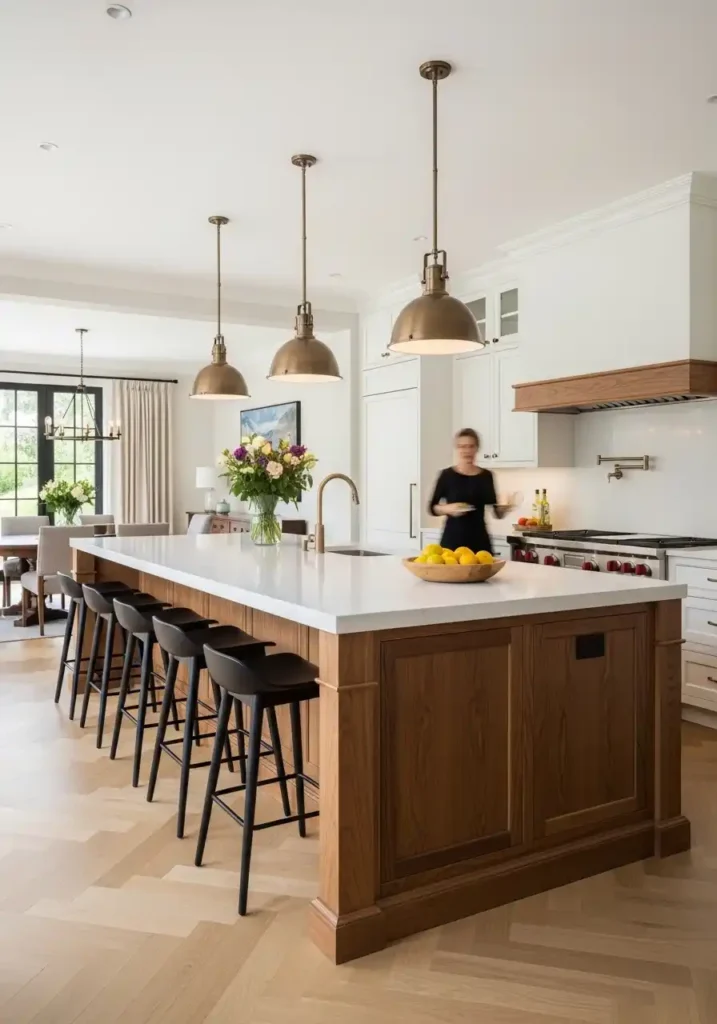
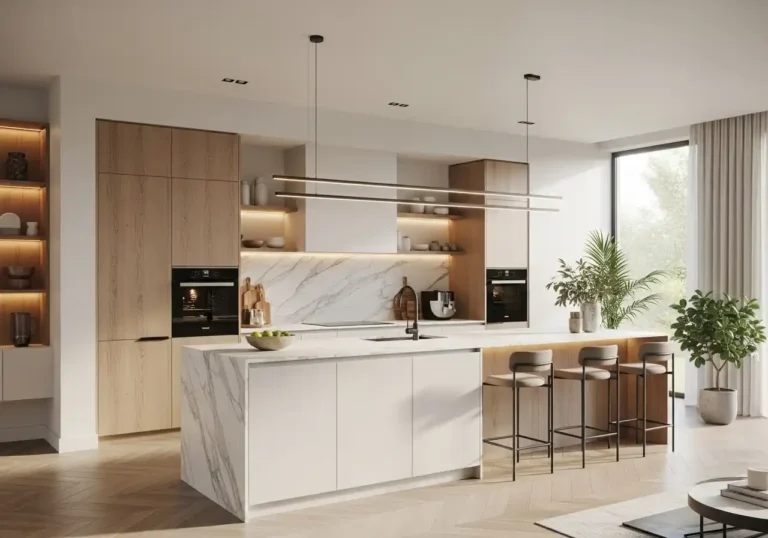
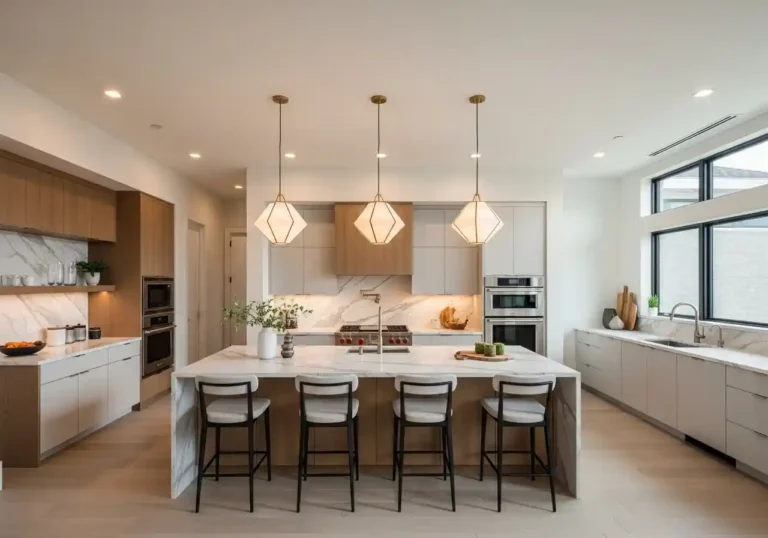
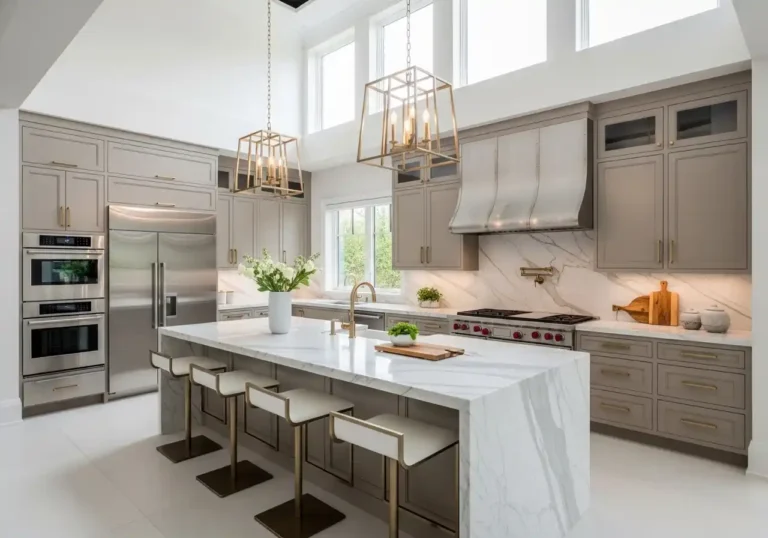
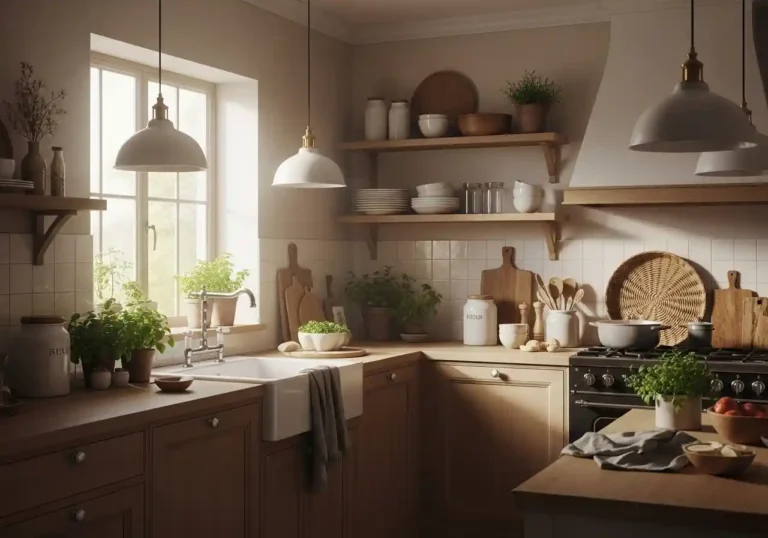
A social island at the heart of an open Kitchen Ideas Blending Style is the single design element that most completely and most joyfully transforms the act of cooking from a solitary, kitchen-isolated activity into a genuinely connected, genuinely social experience that happens simultaneously with every other aspect of the home’s daily life. The island creates a counter-height gathering point where guests perch on stools, children do homework, friends share a glass of wine, and every person in the home participates naturally in the warmth and the pleasure of the cooking happening just on the other side of the marble surface. This is not a kitchen — it is the home’s social engine.
The specific dimension of the social island that determines its success as a gathering point is the depth of the overhang on the seating side — the distance by which the countertop extends beyond the cabinet base to create knee space for the counter stools. An overhang of 35 to 40 centimeters provides genuinely comfortable seating with proper leg clearance, while an overhang of less than 25 creates an uncomfortable, hunched seating experience that discourages the casual lingering that the social island is specifically designed to encourage. Get this dimension right and the island becomes the most used, most loved, and most completely irreplaceable piece of furniture in the entire home.
2. The Open Kitchen with Seamless Indoor-Outdoor Flow
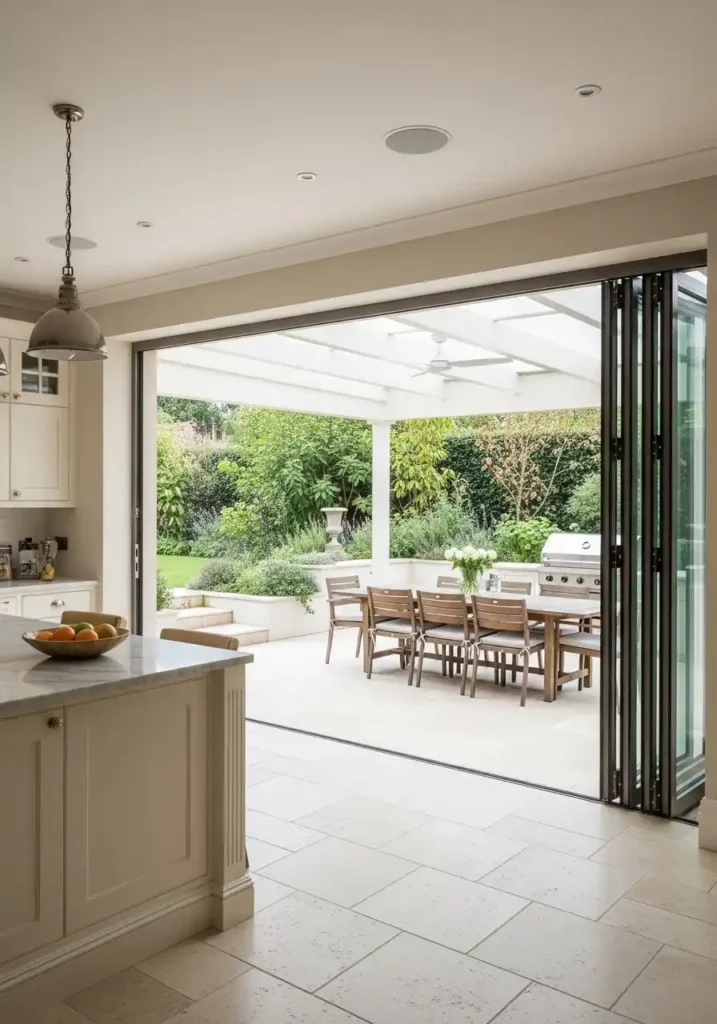
An open kitchen designed with large folding glass doors that open the entire kitchen and dining wall to an outdoor terrace or garden creates the most spatially generous, the most atmospherically extraordinary, and the most genuinely pleasurable cooking and entertaining environment available in residential design — because the dissolution of the boundary between the indoor kitchen and the outdoor living space creates a combined room of such spectacular size, such complete connection to the natural world, and such incomparable quality of natural light and natural air that every gathering within it feels like the most special, most memorable occasion regardless of its scale or formality. A summer dinner party in this space is an experience of genuine, extraordinary domestic magnificence.
The material continuity between the indoor and outdoor floor — the same limestone, the same concrete, or the same large-format tile used without interruption across the threshold — is the single design decision that most powerfully reinforces the seamless quality of the indoor-outdoor connection, because when the floor continues uninterrupted from inside to outside the folded-open doors, the eye reads the combined space as a single, continuous environment rather than as two separate spaces that happen to be connected. The threshold between indoors and outdoors becomes invisible, and the kitchen’s spatial generosity extends outward into the garden with a naturalness and a completeness that makes the combined space feel like it was always, from the beginning, intended to be one room.
3. The Open Kitchen with a Dedicated Dining Zone
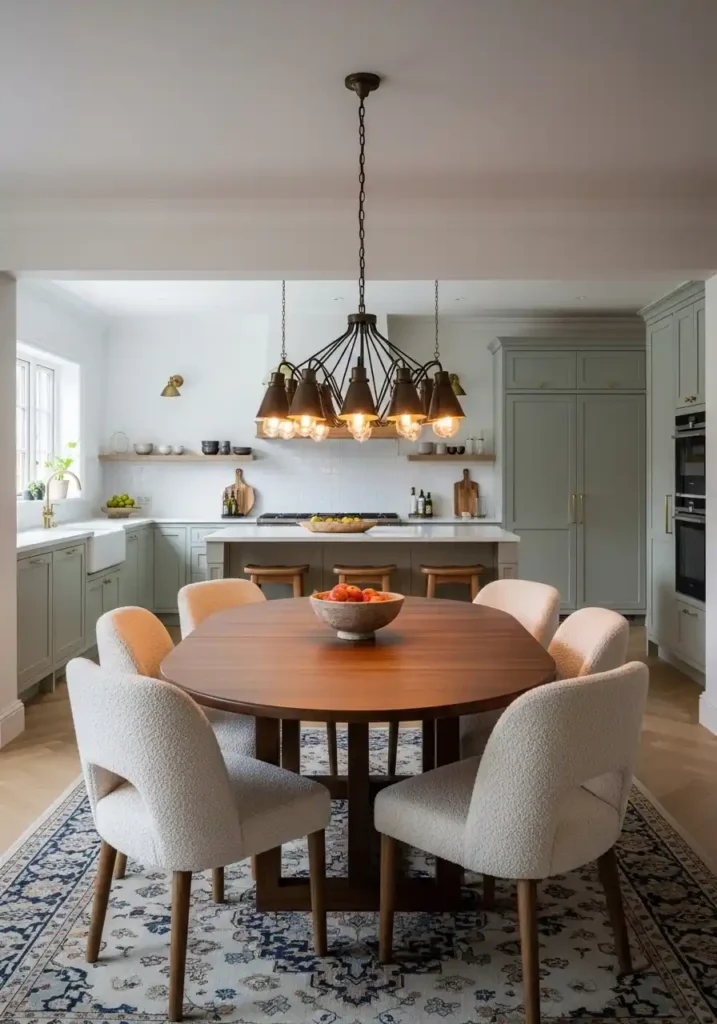
An open kitchen with a properly designed, clearly defined dining zone is the open plan arrangement that most successfully resolves the fundamental organizational challenge of the combined living space — how to give each function its own clear identity, its own sense of purpose, and its own atmospheric character while maintaining the visual connection, the social flow, and the spatial generosity that make the open plan genuinely superior to a series of separate, closed rooms. The dining zone defined by its own pendant light, its own rug, and its own furniture grouping creates a space within the open plan that feels complete and purposeful in itself while remaining fully, naturally connected to the kitchen and the living area on either side.
The pendant light hung low above the dining table is the element that most powerfully and most efficiently defines the dining zone within the open kitchen — because a light source positioned at a low height above the dining table creates a concentrated pool of warm, intimate illumination that is specific to the dining surface and that makes the zone beneath it feel clearly, atmospherically distinct from the higher-lit kitchen and living areas on either side. The pendant’s visual presence from across the open plan — its form, its material, its scale — also communicates the dining zone’s identity from a distance, allowing the eye to read the open plan’s three distinct zones at a glance and to navigate between them with complete clarity and complete confidence.
4. The Open Kitchen with Consistent Material Flow
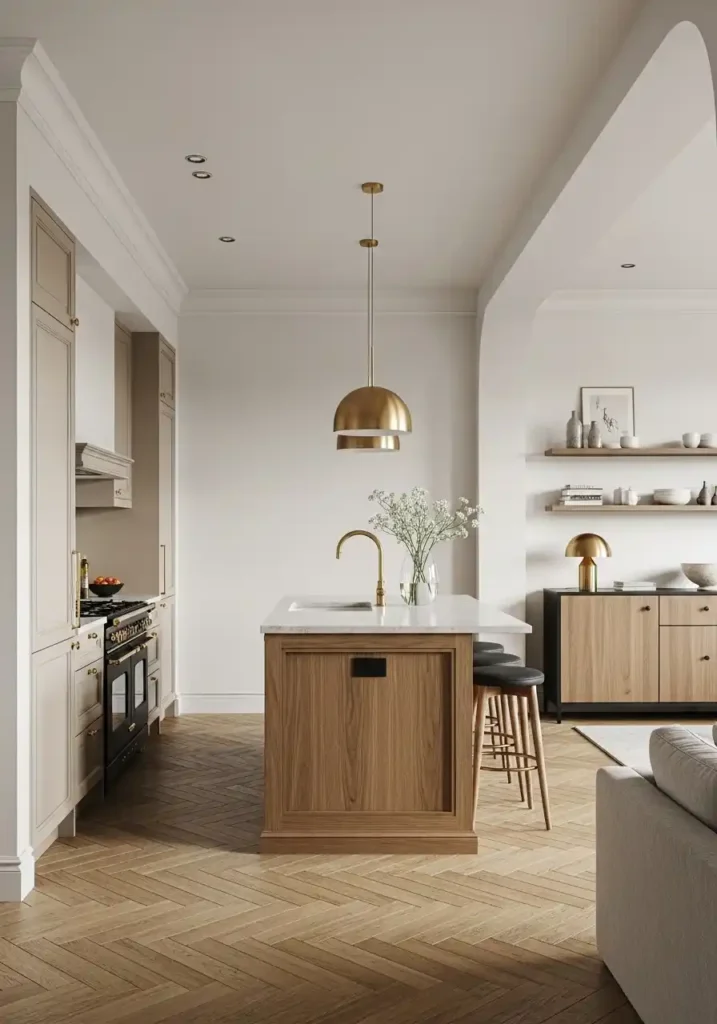
Material consistency across the entire open plan — the same floor, the same wall color, the same wood tone, and the same metal finish used continuously from the kitchen through the dining area to the living space — is the design strategy that creates the most complete, the most seamlessly beautiful, and the most architecturally resolved open kitchen environment available. When every zone of the open plan speaks the same material language, the combined space reads as a single, deliberately conceived interior rather than as three separate rooms that happen to share walls, and the visual coherence this creates produces an atmosphere of such complete, sustained, enveloping beauty that the open plan feels genuinely greater than the sum of its zones.
The discipline of material consistency across a combined open plan requires advance planning and genuine commitment — because the temptation to treat each zone separately, with its own material choices and its own design decisions, is always present and always appears reasonable in isolation, while the cumulative cost of that zone-by-zone approach is a combined space that feels visually fragmented and design-incoherent regardless of the individual quality of each zone’s decisions. The kitchen island is in the same oak as the dining table. The dining table is in the same oak as the living room shelving. The kitchen hardware is in the same brass as the dining pendant and the living room lamp. Each connection reinforces every other, and the final result is a combined open plan of breathtaking, integrated, completely resolved beauty.
5. The Open Kitchen with Smart Zone Definition Using Color
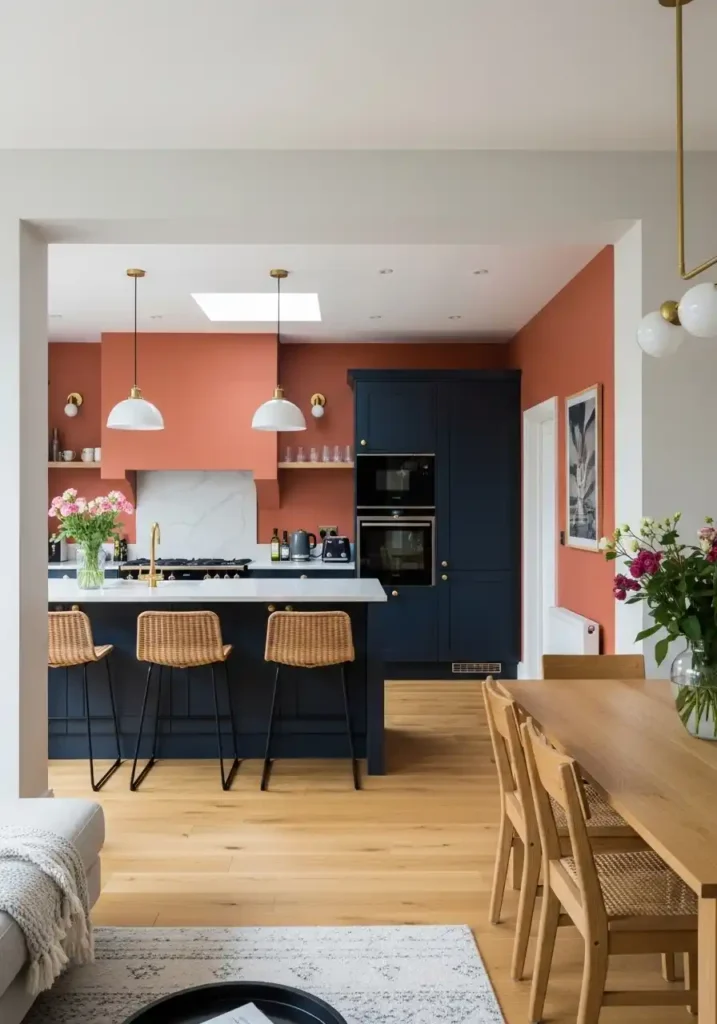
Using distinct wall colors to define different zones within an open kitchen and living space is the design technique that creates the most visually effective and the most beautifully atmospheric zone definition available without any physical partition — because color applied to the walls of a specific zone creates an immediate, unambiguous visual identity for that zone that the eye reads as clearly and as definitely as a physical wall, while maintaining the open, unobstructed spatial flow and the visual connection between zones that makes the open plan genuinely superior to a partitioned alternative. The kitchen is the navy zone. The dining area is the terracotta zone. The living area is the warm white zone. Each is distinct. All are connected.
The specific color choices for a color-zoned open kitchen must be coordinated with sufficient skill and sufficient tonal awareness that the three zone colors read as a deliberate, harmonious palette rather than as three incompatible color choices made independently and sequentially. Deep navy, warm terracotta, and neutral warm white create a trio of colors that share sufficient warmth and sufficient tonal depth to feel genuinely related — each is distinct in its character, but all three exist within the same warm, rich family of colors that the human eye instinctively perceives as intentionally combined. The consistent oak floor and brass accents flowing through all three color zones provide the material thread that ties the three distinct colors into a single, unified, beautifully resolved interior.
6. The Open Kitchen with a Showstopping Range Hood Focal Point
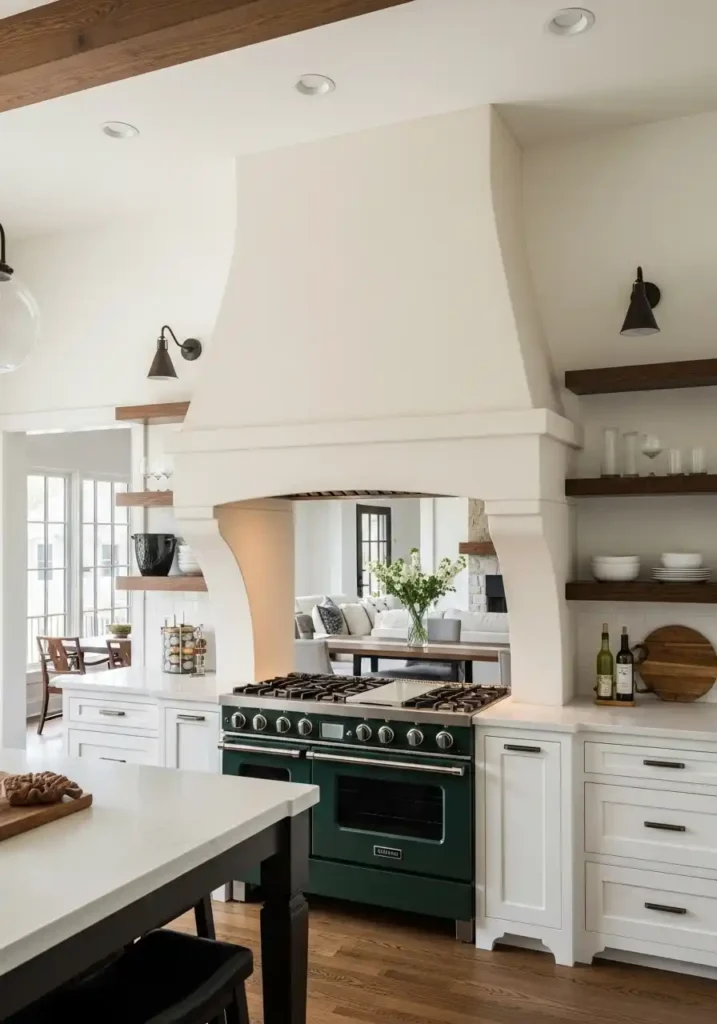
A showstopping range hood that is visible from the living and dining areas of an open kitchen is the architectural feature that most powerfully and most permanently resolves one of the open kitchen’s fundamental design challenges — the need for the kitchen’s functional cooking equipment to be not merely tolerated but genuinely, magnificently beautiful from the living and social areas that now share its space. In a closed kitchen, the range hood needs only to function. In an open kitchen visible from every corner of the combined living space, the range hood must be as beautiful, as considered, and as architecturally accomplished as a fireplace in a formal sitting room — because it is always, from every angle, in view.
The custom plaster range hood achieves this required architectural magnificence most completely and most authentically — because a hood formed from smooth, seamlessly finished plaster in a custom-designed profile becomes fully part of the kitchen’s architectural envelope rather than a separate appliance element attached to it, creating a wall composition of such sculptural confidence and such complete architectural resolution that the entire cooking wall reads as a single, intentional, magnificently designed feature. From the living area sofa twenty feet away, the plaster hood and the professional range below it create a focal point of such genuine beauty and such clear design authority that it anchors the entire open plan’s visual geography with the same certainty that a great fireplace anchors a great room.
7. The Open Kitchen with Breakfast Bar and Living Room Connection
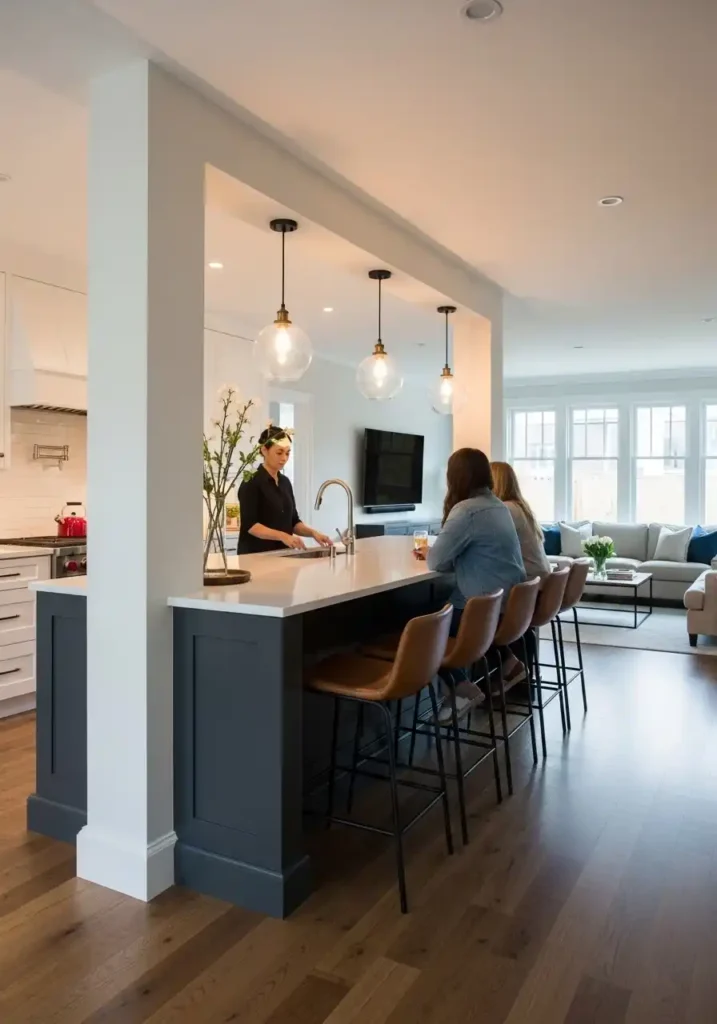
A breakfast bar peninsula connecting the kitchen to the living area is the architectural element that most naturally and most organically creates the social connection between cooking and living that is the entire point and the entire pleasure of the open kitchen — because the peninsula creates a physical gathering point at exactly the boundary between the two zones where the cook, standing in the kitchen, and the guests, seated at the bar on the living room side, face each other at a comfortable conversation height with the peninsula’s surface between them. This arrangement recreates the specific warmth and intimacy of a bar or a kitchen counter in a restaurant where the proximity of cooking and conversation creates an atmosphere of such genuine, easy sociability that every gathering feels natural and effortless.
The peninsula’s design must serve both its kitchen function — as a preparation surface extension, a transition between kitchen and living room, and a zone-defining furniture element — and its social function as a comfortable, welcoming place for guests to sit, drink, and converse with the cook. The overhang dimension for the counter stools is as critical here as it is for an island — 35 centimeters minimum for genuine comfort. The countertop material should be beautiful enough to serve as a social surface and durable enough to serve as a working counter simultaneously. The stools should be comfortable enough for extended sitting and beautiful enough to contribute positively to both the kitchen and living room aesthetics they occupy simultaneously.
8. The Open Kitchen with Floating Shelves as a Room Divider
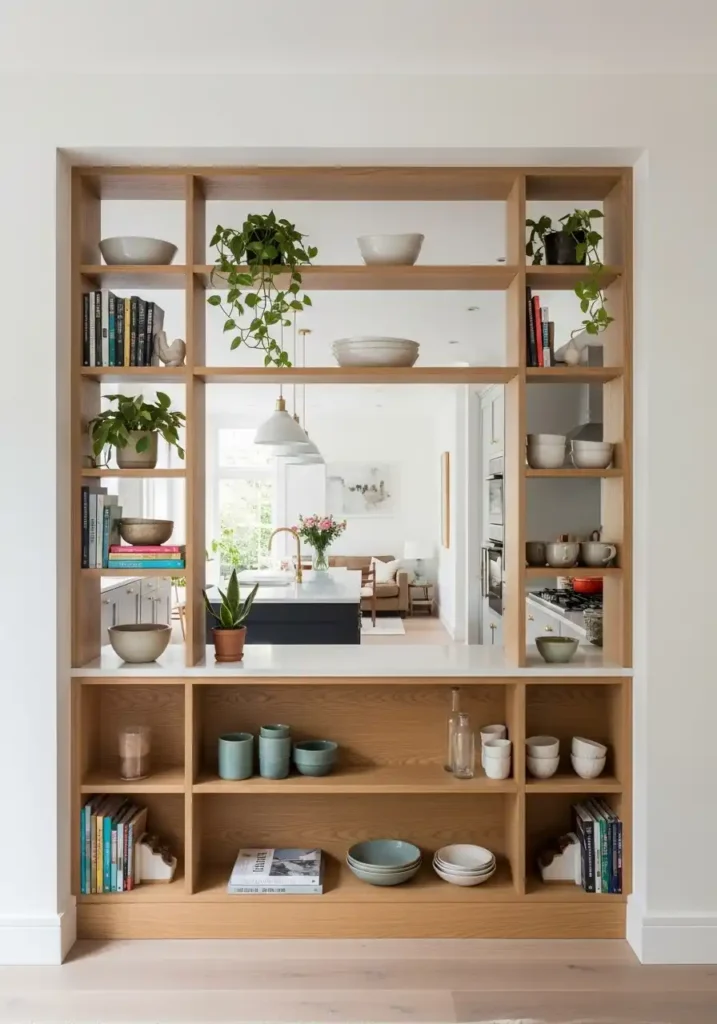
Floating shelves spanning from floor to ceiling as a semi-transparent room divider between the kitchen and the living area is the open kitchen design solution that most elegantly and most beautifully resolves the desire for some degree of zone separation within the open plan without sacrificing the visual connection, the light sharing, and the spatial generosity that make the open plan worth having in the first place. The open shelving unit creates a permeable boundary — visible, but not solid — that the eye reads as a zone transition while allowing both light and sightlines to pass freely through the displayed objects from kitchen to living room and back, maintaining the open plan’s essential quality of connected, flowing space.
The curation of objects displayed on the kitchen-to-living-room divider shelving is a design responsibility of genuine consequence — because this shelving is simultaneously visible from the kitchen, the living room, and any other position in the combined open plan space, and the objects displayed on it are always prominent, always in the field of vision, and always contributing to or detracting from the open plan’s overall aesthetic quality. Books and plants on the living room levels of the shelving, transitioning to beautiful ceramics and occasional kitchen objects on the kitchen levels, creates a gradual, natural transition of object type that reinforces the shelving’s role as a zone boundary while maintaining the visual cohesion of a single, continuous, beautifully curated display.
9. The Open Kitchen with Pendant Lights Defining Each Zone
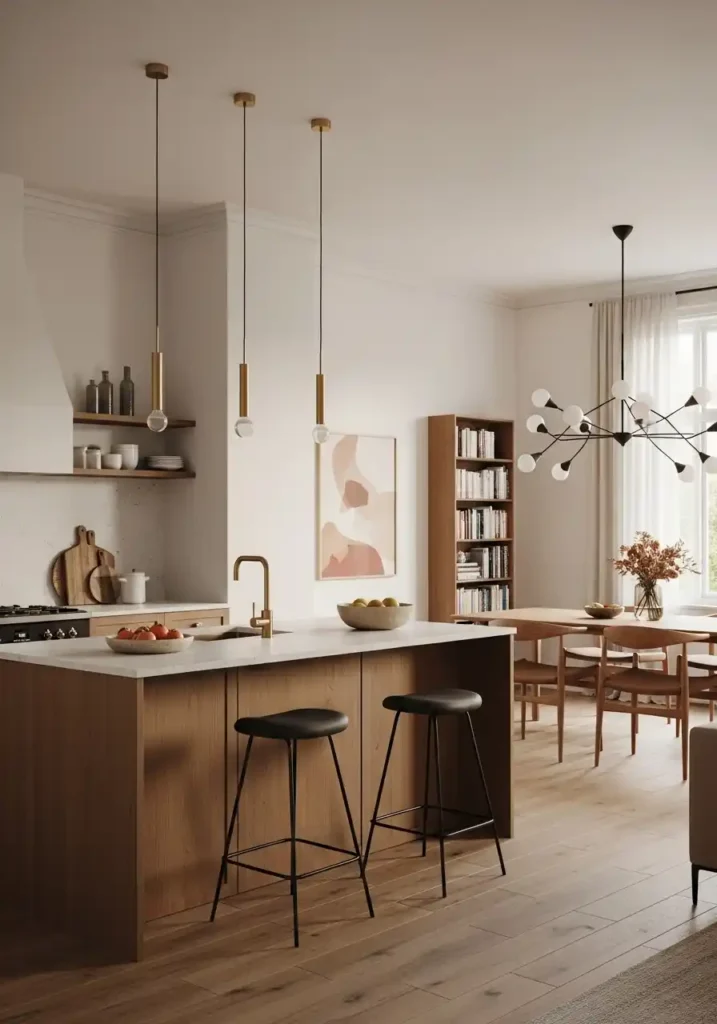
Pendant lights used deliberately as zone-defining design elements in an open kitchen and living space are the lighting strategy that most elegantly achieves both the practical illumination requirements of each functional zone and the atmospheric definition that makes each zone feel like a distinct, purposeful space within the larger open plan. Each pendant cluster or chandelier, hung at the appropriate height for its zone and chosen in a style that reflects the specific character of the function it illuminates, creates a pool of warm light that is specific to the zone beneath it, making that zone feel intimate, defined, and atmospherically complete while the areas between the pendant zones remain relatively dimmer and less defined.
The coordination between pendant styles across the open plan’s different zones is the lighting design challenge that requires the most careful judgment — because the pendants must be sufficiently varied in style and character to reinforce each zone’s distinct identity, while remaining sufficiently related in material, finish, or tonal warmth to feel like a deliberate, coordinated family of light fittings rather than a random accumulation of unrelated pieces. Three slim brass pendants in the kitchen, a sculptural brass chandelier in the dining zone, and a large paper globe pendant in the living corner — each completely different in form and scale, but all sharing the warm amber tonal family that makes them read as a considered, intentional lighting design across the complete open plan.
10. The Open Kitchen with a Built-In Banquette Dining Nook
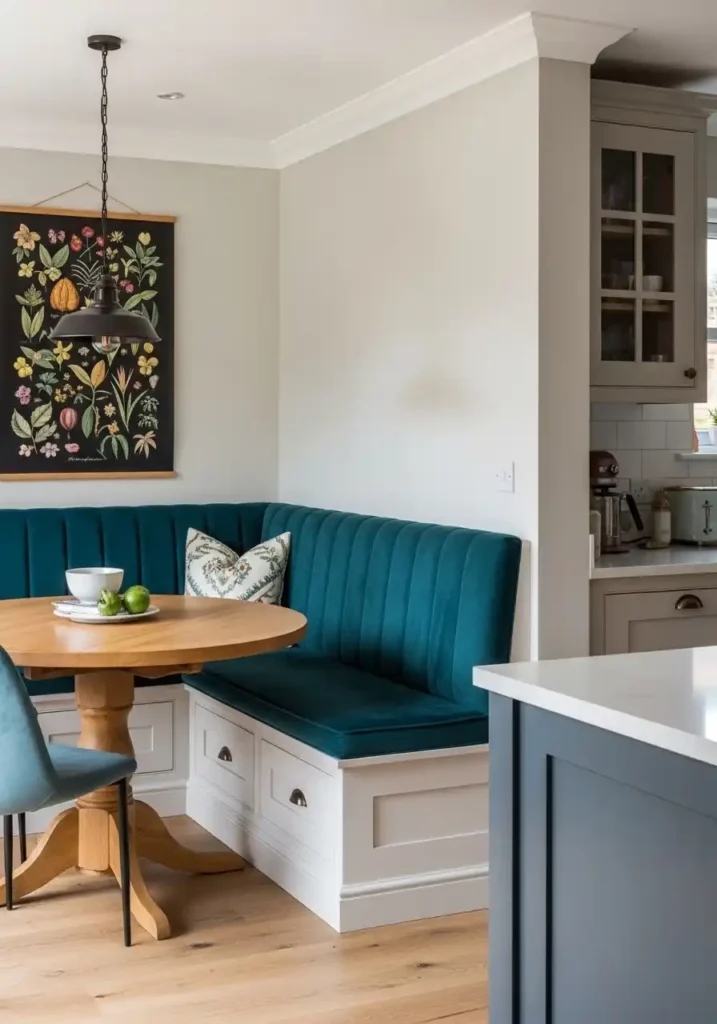
A built-in banquette dining nook positioned beside an open kitchen is the casual dining solution that creates the most genuine, the most warmly domestic, and the most completely inviting dining environment available within a combined kitchen and living space — because the banquette’s fixed, cushioned, U-shaped or L-shaped seating creates a quality of physical enclosure and comfortable containment that freestanding dining chairs arranged around a dining table simply cannot replicate. The banquette makes the dining nook feel like a destination — a specific, welcoming, beautifully comfortable place to settle in for a meal, a cup of coffee, a long conversation, or a quiet hour with a book.
The storage built into the banquette base — drawers or lift-up seat panels that provide concealed storage for table linens, placemats, candles, and kitchen extras — transforms the banquette from a beautiful seating solution into one of the open kitchen’s most practically intelligent furniture pieces, contributing significant hidden storage capacity to the combined space without any visible storage addition. The banquette’s position beside the kitchen creates a natural, easy serving relationship — food served from the kitchen directly to the adjacent nook table with the minimum possible steps — that makes informal family meals and casual entertaining in the open kitchen nook feel completely effortless.
11. The Open Kitchen with a Warm Timber and White Palette
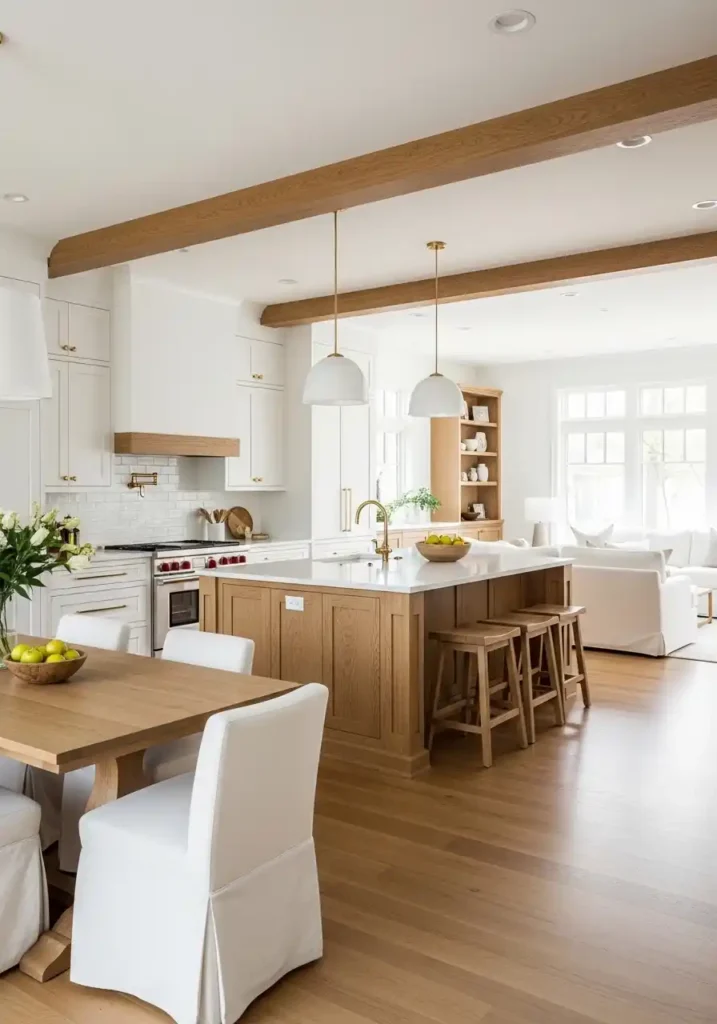
A warm timber and white palette used consistently across an open kitchen and living space is the color and material combination that most reliably, most enduringly, and most universally creates a domestic environment of genuine beauty, genuine warmth, and genuine visual calm — because the combination of crisp white and warm oak or walnut references the most natural, the most organic, and the most instinctively pleasing material contrast available: the warmth of living wood against the clarity of light and open space. This palette never dates, never tires the eye, and never fails to create a kitchen and living environment of complete, sustained, daily-renewed freshness.
The specific warm timber tone chosen for the oak elements throughout the open kitchen and living space is the material decision that most determines the combined palette’s final character and emotional warmth — because oak ranges from the very pale, almost white tones of European natural oak through the medium honey tones of American white oak to the deeper, richer golden tones of aged or UV-treated oak, and each tone creates a slightly different quality of warmth in relation to the white elements it accompanies. Medium honey oak — warm enough to create genuine material contrast with the white cabinets and white upholstery, but light enough to maintain the fresh, luminous quality that makes the timber and white palette so consistently beautiful — is the tone that most completely fulfils the combined palette’s potential.
12. The Open Kitchen with a Statement Art Wall
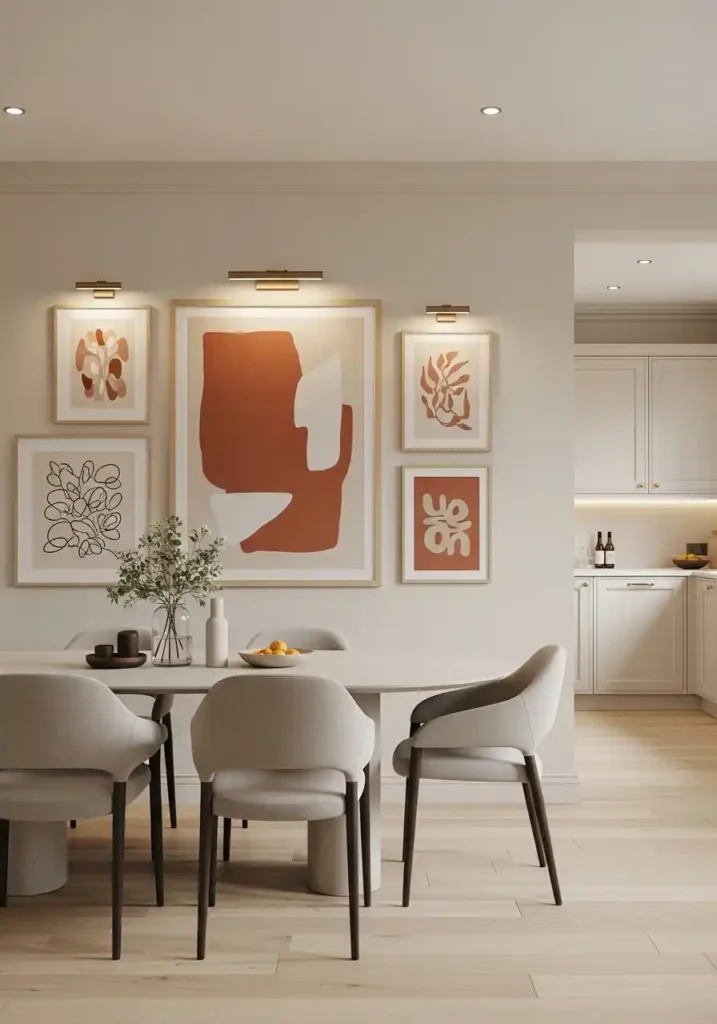
A serious, gallery-quality art wall in the dining zone of an open kitchen is the design statement that most completely elevates the combined kitchen and living space from a beautifully designed functional environment into a genuinely cultured, genuinely personally expressive home — because art displayed with genuine care, genuine knowledge, and genuine commitment to the specific quality and the specific beauty of the chosen works communicates something essential and irreplaceable about the people who live within the space and about the quality of attention they bring to the question of how beautiful daily life should be. Art in an open kitchen dining zone is not decoration. It is a statement of values.
The gallery wall’s visibility from the kitchen is the detail that makes it most genuinely function as an enriching element of the entire open plan rather than merely of the dining zone — because a cook standing at the kitchen island or working at the stove has a direct, clear sightline to the dining zone’s art wall, and the daily visual relationship between the act of cooking and the beauty of genuinely good art creates a quality of domestic aesthetic enrichment that is continuously present in the background of every cooking session, every meal preparation, and every moment of kitchen work. The art makes cooking more beautiful without doing anything except being present, visible, and genuinely worth looking at.
13. The Open Kitchen with Smart Concealed Storage
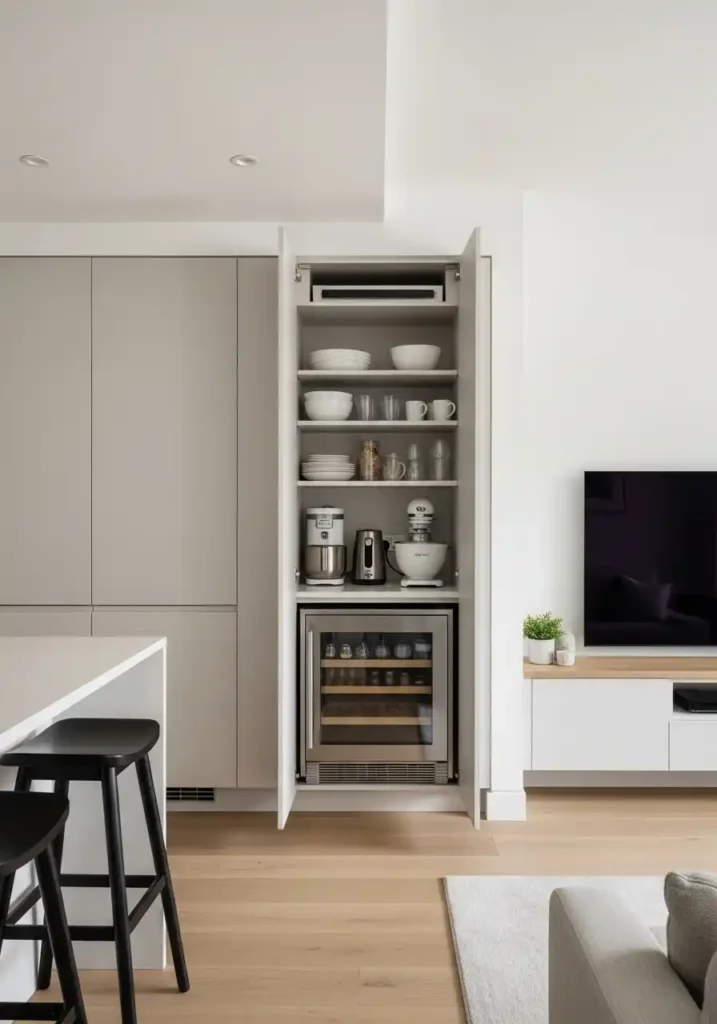
Concealed storage in an open kitchen is not merely a design preference — it is a functional necessity of the highest priority, because in a kitchen that is permanently, visually open to the living and dining areas of the home, the visual clutter that accumulates on inadequately designed kitchen storage surfaces is not contained within a closable kitchen door but displayed continuously to every person in every adjacent zone of the combined space. The open kitchen must maintain a standard of visual calm and visual organization that a closed kitchen is never required to achieve — and achieving that standard requires a level of storage concealment, storage intelligence, and storage generosity that goes significantly beyond what a conventional closed kitchen demands.
The integrated appliance that most completely transforms the open kitchen’s visual quality when properly concealed is the refrigerator — because a full-height refrigerator in its standard stainless steel or white finish is among the kitchen’s largest and most visually dominant appliances, always prominent in the open plan’s sightlines from the adjacent living and dining areas, and always either contributing positively to the kitchen’s aesthetic quality or detracting from it. An integrated refrigerator behind a full-height cabinet panel in the same finish as the surrounding kitchen cabinetry disappears completely into the cabinet run, removing the refrigerator’s visual mass from the open plan’s spatial composition entirely and creating a kitchen of such complete, resolved visual consistency that the fridge’s location becomes a minor mystery to every new visitor.
14. The Open Kitchen with a Dramatic Black Frame Window Wall
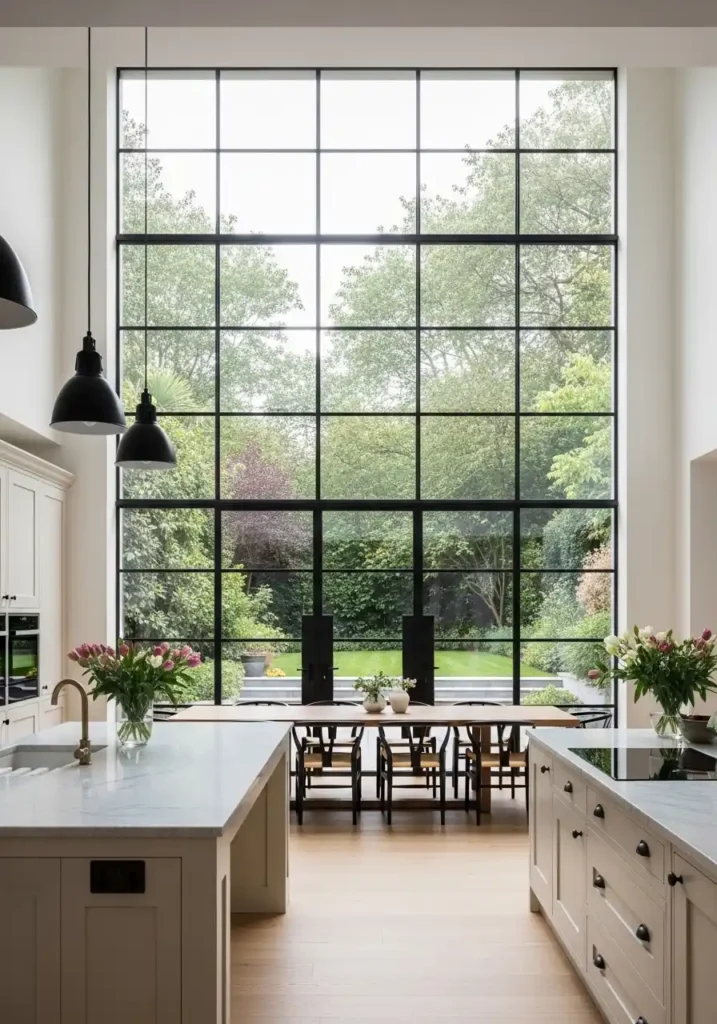
A floor-to-ceiling black steel frame window wall in an open kitchen is the architectural feature that simultaneously provides the most spectacular natural light, the most dramatic visual connection to the garden beyond, and the most graphically powerful architectural statement available in a residential kitchen — because the bold grid of black steel frames against the bright daylight beyond creates a wall of such graphic clarity and such architectural confidence that it elevates the open kitchen’s entire design quality to a level that is genuinely extraordinary. The window wall is not merely a generous source of natural light — it is a piece of architecture that makes the kitchen and dining space genuinely magnificent.
The black steel frame coordination with the kitchen’s black hardware is the design decision that ties the window wall’s graphic architectural presence into the kitchen’s overall material palette — creating a material thread of matte black that runs from the window frames through the cabinet hardware, the pendant lights, the dining chair legs, and any other black accents in the combined space in a visual connection of such complete, considered consistency that every black element in the open plan appears to belong to the same family of purposeful, confident graphic material choices. This consistency of the black accent throughout the open plan is what transforms individual design decisions into a single, unified, magnificently resolved interior.
15. The Open Kitchen with a Cozy Living Area Fireplace
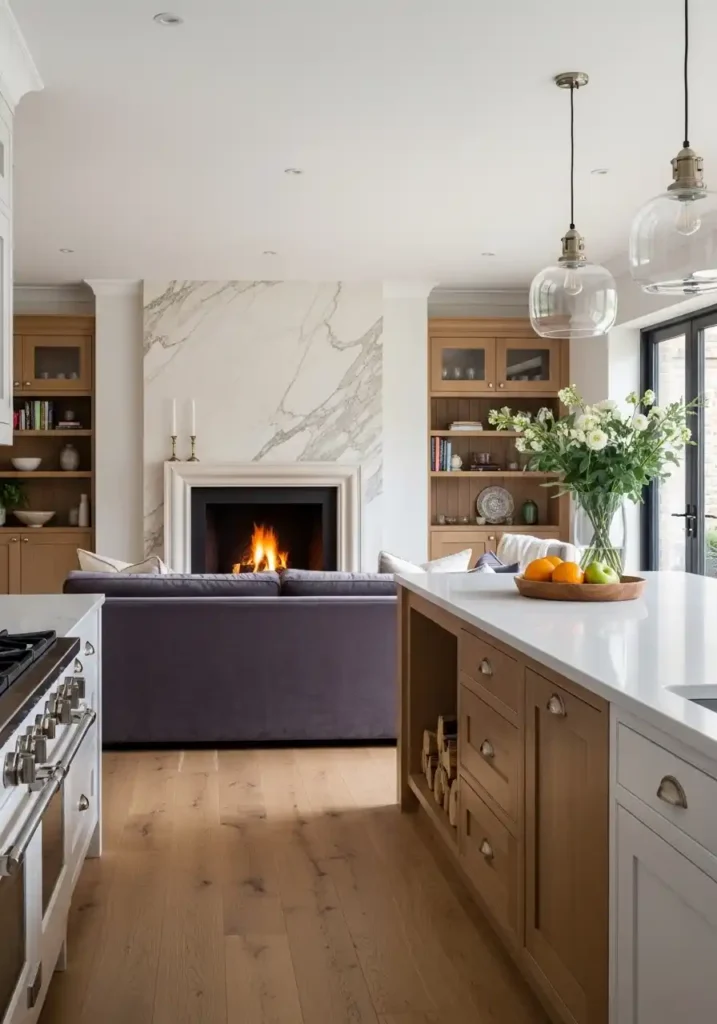
An open kitchen designed so that the cook at the island has a direct sightline to the living area’s fireplace is the open plan configuration that creates the most genuinely warm, the most atmospherically extraordinary, and the most deeply welcoming domestic environment available in residential design — because it connects the two most primal sources of domestic warmth — the cooking fire and the hearth fire — in a single, continuous spatial experience where the cook is simultaneously warming food on one fire and warming the spirit by the light and the presence of another. This is the open plan that makes staying home feel like the best possible choice on every cold evening of the year.
The fireplace visible from the kitchen island creates a quality of domestic atmosphere in the combined open plan that no other design feature of equivalent cost can approach — because a living fire provides not just warmth and light but a quality of organic, flickering, constantly moving visual presence that makes the room feel alive, inhabited, and deeply, anciently welcoming in a way that no static design feature can replicate. The cook preparing dinner with the fireplace visible and the amber flicker of its light reaching the kitchen surfaces creates a domestic scene of such complete, timeless, deeply satisfying warmth that every meal prepared in this kitchen is prepared in the company of something genuinely beautiful and genuinely nourishing beyond the food itself.
16. The Open Kitchen with Integrated Wine Storage
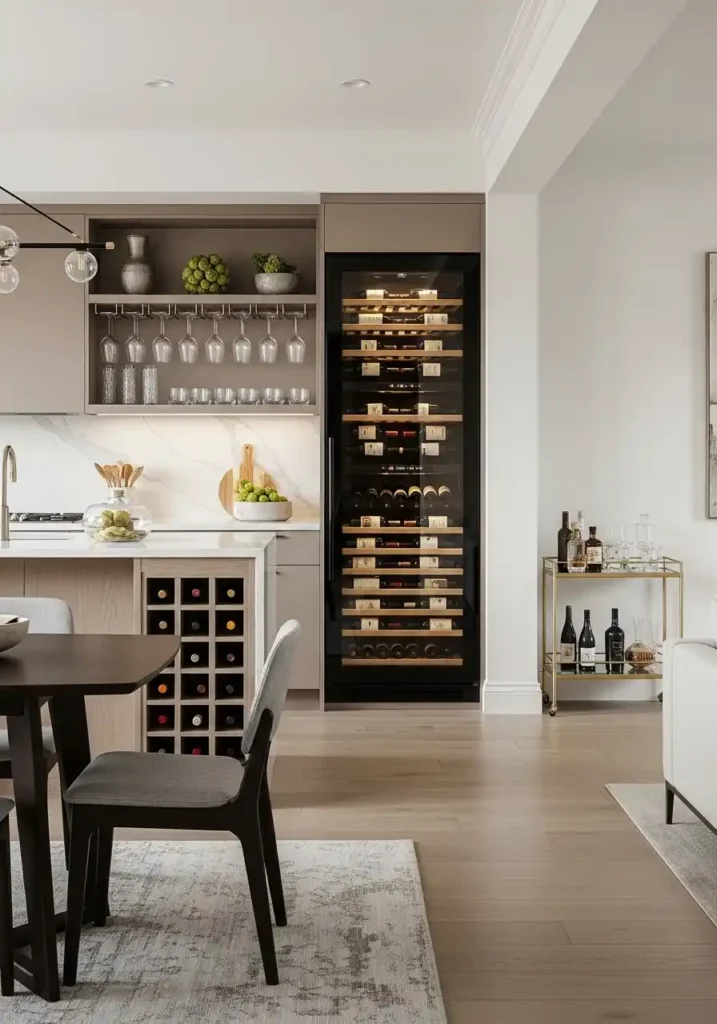
Integrated wine storage in an open kitchen is the functional provision that most completely communicates the space’s identity as a serious, genuinely well-equipped entertaining environment — because wine storage that is architecturally integrated into the kitchen’s cabinet design rather than added as a separate piece of furniture communicates that the kitchen was designed from the beginning with the specific pleasures of cooking and entertaining in mind, and that the enjoyment of wine as an integral part of the cooking and dining experience was considered a fundamental design requirement rather than an optional afterthought. This is the kitchen of someone who genuinely loves food, genuinely loves wine, and genuinely loves the pleasure of sharing both.
The temperature-controlled wine column with a glass front integrated into the kitchen’s full-height cabinet run is the most architecturally satisfying wine storage solution for an open kitchen — because the glass front displays the organized wine collection as a beautiful, constantly visible feature of the kitchen’s cabinetry while the temperature control protects the collection with the precision that serious wine storage requires. The wine column becomes a permanent, beautifully lit feature of the kitchen’s architectural composition that enriches the open plan’s visual landscape with the warm amber glow of the column’s interior lighting and the organic, curved forms of the bottle bases visible through the glass, making the kitchen beautiful and purposeful simultaneously.
17. The Open Kitchen with Biophilic Design Elements
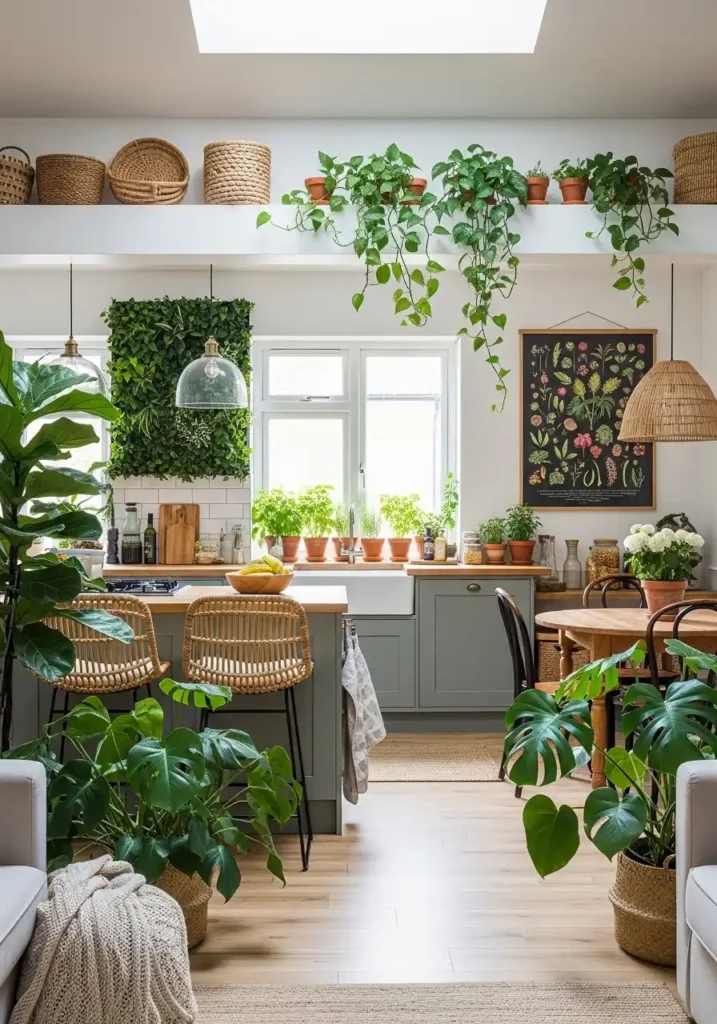
A biophilic open kitchen and living space — one designed with the specific, research-supported understanding that human beings are healthiest, happiest, and most productive when they maintain meaningful visual and sensory contact with the natural world — is the contemporary open plan design that creates the most genuinely restorative, the most physically beneficial, and the most psychologically nourishing daily domestic environment available. The combination of living plants in multiple forms, natural materials in every surface and every textile, and the specific quality of organic, irregular, living beauty that only genuinely natural elements can provide creates a kitchen and living space that is measurably better for the wellbeing of every person who spends time within it.
The layering of biophilic elements at different scales and in different positions throughout the open kitchen creates a quality of natural abundance that is far more effective than any single large plant or any single natural material used in isolation — because the human nervous system responds most completely to the natural world when it is present in multiple simultaneous registers: visually in the greenery of plants and the warm grain of wood, tactilely in the texture of rattan and linen and rough stone, olfactorily in the fragrance of fresh herbs growing on the windowsill, and aurally in the gentle movement of leaves in a breeze from an open window. Each natural element reinforces every other, building an environment of cumulative natural richness.
18. The Open Kitchen with a Long Dining Table for Entertaining
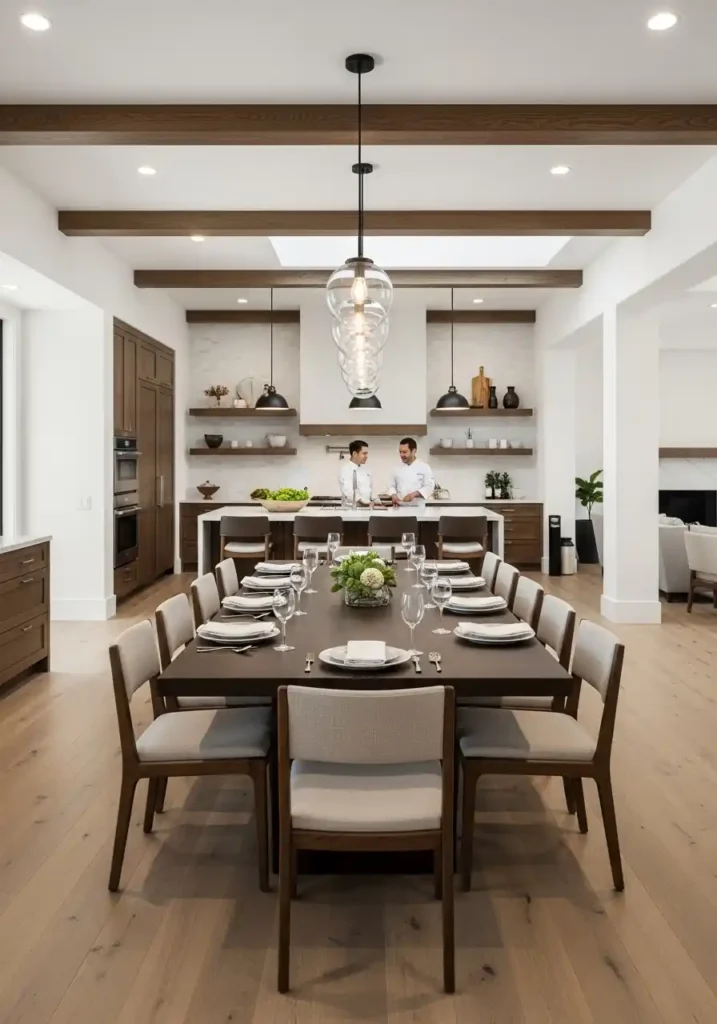
A long dining table for twelve in an open kitchen designed specifically for serious entertaining is the furniture piece that most powerfully and most unmistakably declares the space’s primary social purpose — because a table of this length accommodates the kind of gatherings that make domestic life most rich, most memorable, and most genuinely fulfilling: the large family Christmas dinner, the long summer dinner party that continues past midnight, the birthday celebration where everyone who matters is gathered in the same room at the same table at the same time. This table is not for Tuesday night family dinners — it is for the occasions that become the stories that families tell for decades.
The relationship between the long dining table and the kitchen island in an open plan designed for serious entertaining is the spatial arrangement that most directly determines the quality of the entertaining experience — and the configuration where the island and the dining table are parallel to each other, with the cook standing at the island facing the length of the dining table and all twelve of its guests, creates the most sociable, the most connected, and the most genuinely hospitable cooking-and-entertaining arrangement available. The cook is never out of the room, never missing the conversation, never isolated from the guests — they are part of the gathering from the moment the first person sits down to the moment the last course is served.
19. The Open Kitchen with a Reading Nook Corner
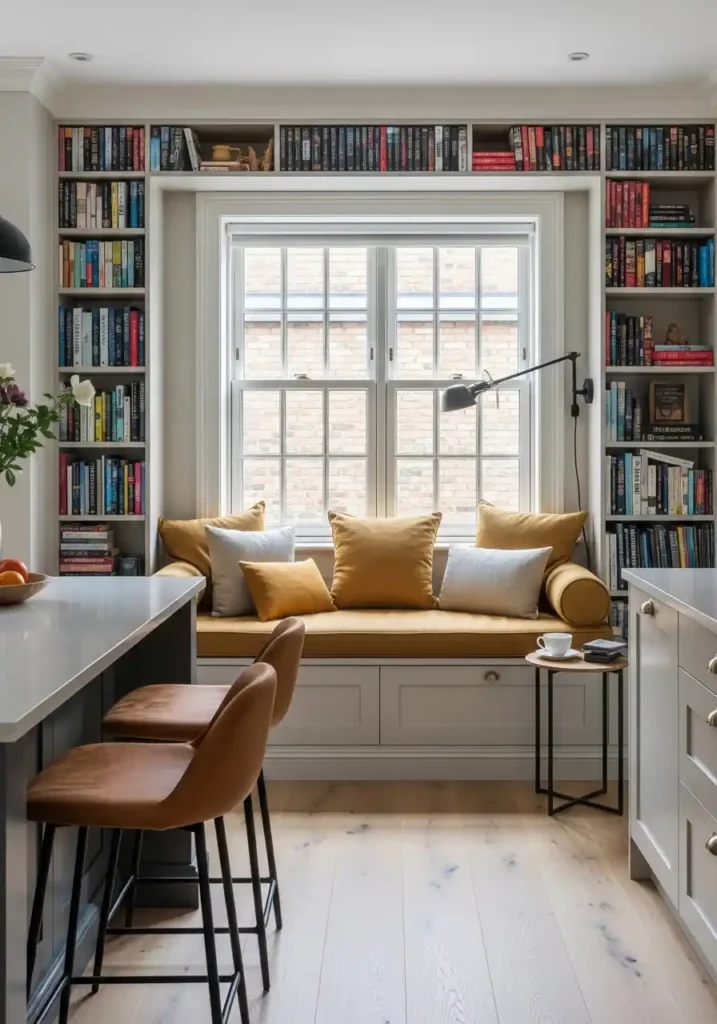
A reading nook built into a corner of the open kitchen and living space is the intimate counterpoint to the combined space’s social generosity — a small, enclosed, deeply comfortable private corner within the larger open plan where a single person can retreat into genuine quiet, genuine comfort, and genuine absorbed focus while remaining physically within the same space as the rest of the household and maintaining the visual and social connection that the open plan’s openness provides. The reading book says that the open plan understands both the pleasure of togetherness and the necessity of occasional, gentle solitude within the same space.
The built-in window seat of the reading nook is the specific furniture form that creates the most genuine, the most deeply comfortable, and the most completely inviting reading corner available — because the window seat’s fixed, cushioned surface, flanked by bookshelves and positioned beneath a window that provides natural reading light during the day and a view of the outside world beyond, creates a reading position of such complete physical comfort and such complete sensory pleasure that it becomes the most sought-after spot in the entire home on any quiet afternoon or any rainy weekend morning. The deep cushion, the abundance of books within arm’s reach, the cup of tea on the side table, and the view through the window combine to create a corner of domestic perfection.
20. The Open Kitchen with a Consistent Lighting Design
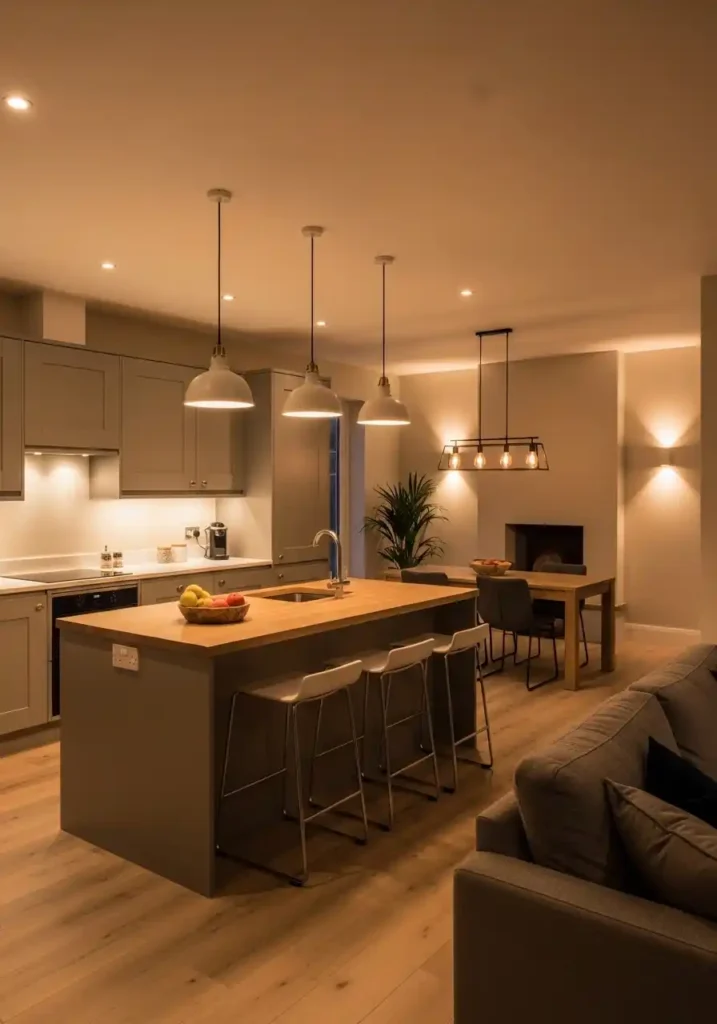
A comprehensive, consistently designed lighting scheme that treats the open kitchen and living space as a single, unified lighting environment rather than as separate zones each with their own independently specified lighting is the design investment that most completely and most durably transforms the open plan’s daily atmospheric quality — because lighting is the element that most determines how a space feels at every moment of the day, from the bright clarity of morning to the warm, layered intimacy of evening, and an open plan with a professionally considered lighting design that plans for every hour and every mood simultaneously is a dramatically, consistently more beautiful and more livable space than one where lighting was considered zone by zone without reference to the whole.
The principle that most determines the success of an open kitchen lighting design is the commitment to a single, consistent color temperature — warm white at 2700 Kelvin — for every single light source throughout every zone of the combined space. Mixing warm and cool light sources within an open plan creates a fragmented, visually incoherent lighting environment where some zones feel warm and inviting and others feel cold and institutional, and the contrast between them makes the combined space feel unresolved and uncomfortable. A single warm color temperature throughout every recessed light, every pendant, every under-cabinet strip, every floor lamp, and every wall sconce creates a completely unified, completely beautiful, completely warm and enveloping atmosphere that makes the open kitchen genuinely magnificent at every hour of the evening.
21. The Open Kitchen with a Scullery That Hides the Mess
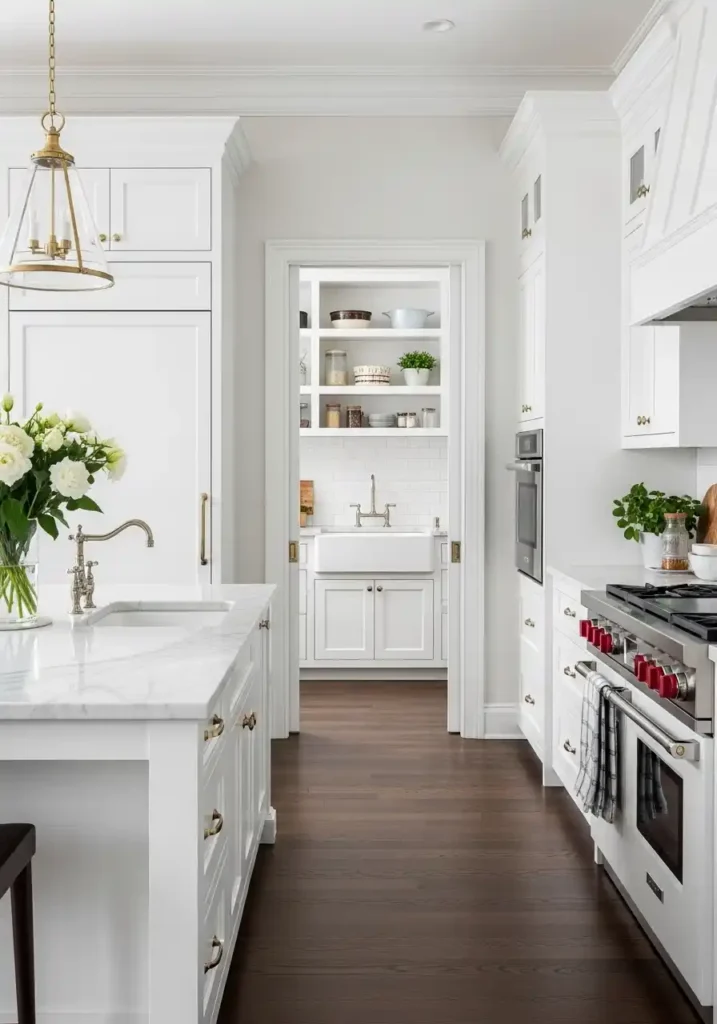
A connected scullery that takes all of the open kitchen’s working infrastructure — the second sink, the overflow storage, the cleaning supplies, the appliances in daily use but not on permanent display — out of the primary kitchen and into a dedicated, fully equipped secondary space is the kitchen design solution that most completely and most sustainably resolves the open kitchen’s fundamental challenge of maintaining visual perfection in a space that is permanently visible to the living and dining areas. Without a scullery, the open kitchen must perform two incompatible roles simultaneously: it must be functional enough for serious daily cooking and beautiful enough for permanent display. With a scullery, each role has its own proper space.
The scullery connected to an open kitchen is also the entertaining infrastructure that most significantly improves the quality of the hosting experience during large gatherings — because a kitchen where the washing up, the overflow food preparation, the recycling, and the catering chaos of a serious dinner party can be relocated entirely to the scullery and closed behind its door allows the main kitchen to remain permanently beautiful, permanently welcoming, and permanently available as a social space throughout the entire event rather than progressively deteriorating into the visual chaos that serious cooking and serious entertaining inevitably generates when it must be contained within a single, always-visible space.
22. The Complete Open Kitchen — Style and Function in Perfect Harmony
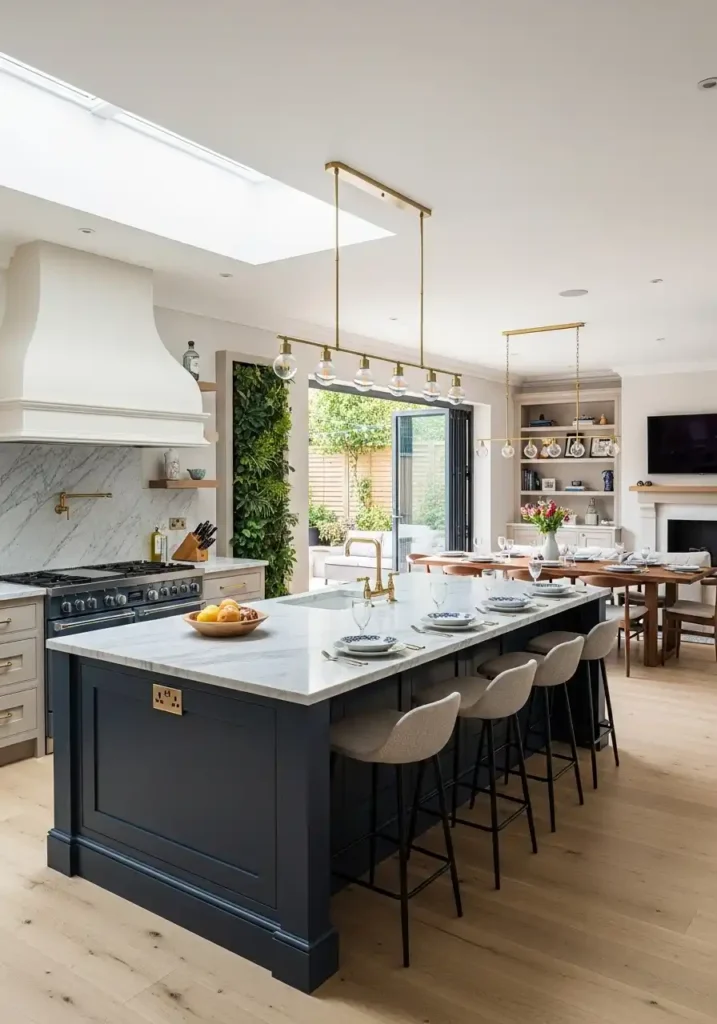
The perfectly realized open kitchen — the one that makes cooking feel like participation rather than isolation, that makes entertaining feel effortless rather than exhausting, that makes daily family life feel connected rather than fragmented, and that is genuinely, consistently, at every hour of the day as beautiful as it is functional — is the accumulated, harmonious, completely resolved result of multiple excellent design decisions working together in a state of complete, mutual reinforcement. The social island that connects the cook to every guest. The pendant lights that define each zone with warm atmospheric clarity. The consistent material palette that unifies the entire combined space. The scullery that keeps the main kitchen permanently beautiful. Each decision serves every other.
The single most important understanding that this guide offers — the understanding that transforms the open kitchen from an aspiration into a lived, daily-life-transforming reality — is that style and function in the open kitchen are not competing priorities to be balanced and compromised between but two aspects of the same single design goal: a kitchen that makes daily life more beautiful, more connected, more socially rich, and more genuinely pleasurable in every possible dimension. When an open kitchen is designed with equal intelligence and equal ambition applied to both its functional requirements and its aesthetic aspirations simultaneously, style and function cease to be two things and become one — the complete, magnificent, daily-life-transforming open kitchen that your home deserves.
Conclusion:
Open kitchens have become a favorite in modern homes because they seamlessly combine beauty, practicality, and social connection. From minimalist layouts and smart storage to statement islands and natural lighting, these 22 open kitchen ideas show how thoughtful design can transform your kitchen into the heart of your home. By blending style with everyday functionality, an open kitchen creates a space where cooking, dining, and gathering feel effortless and inviting.
Whether you prefer a contemporary look, a cozy farmhouse vibe, or a sleek modern aesthetic, the right layout, colors, and materials can help you achieve a kitchen that reflects your lifestyle. As you explore these ideas, remember that the best open kitchen design balances visual appeal with efficient workflow, ensuring your space remains both beautiful and practical.
If you’re planning a renovation or simply looking for inspiration, these open kitchen layout ideas offer creative ways to maximize space, improve flow, and elevate the overall design of your home. Start designing your dream open kitchen today and enjoy a space where style meets functionality every day.