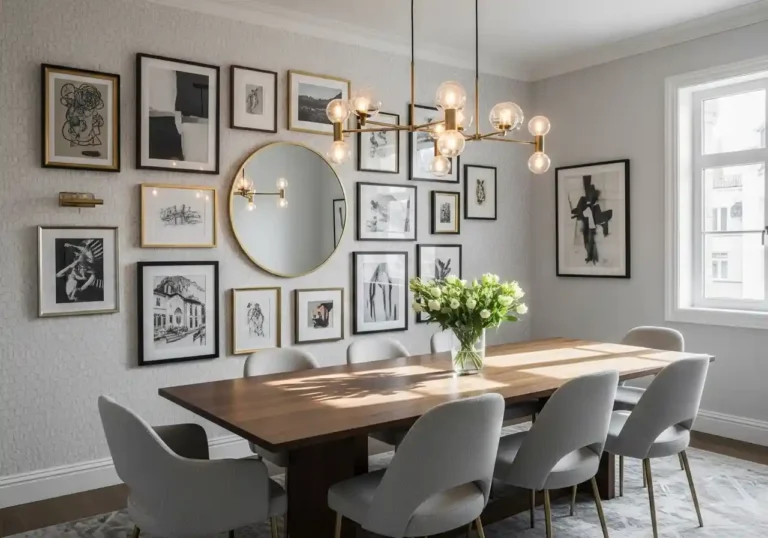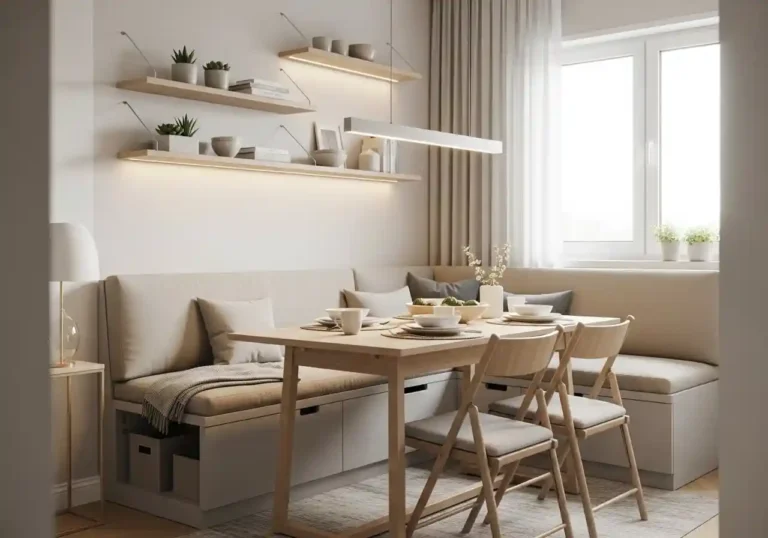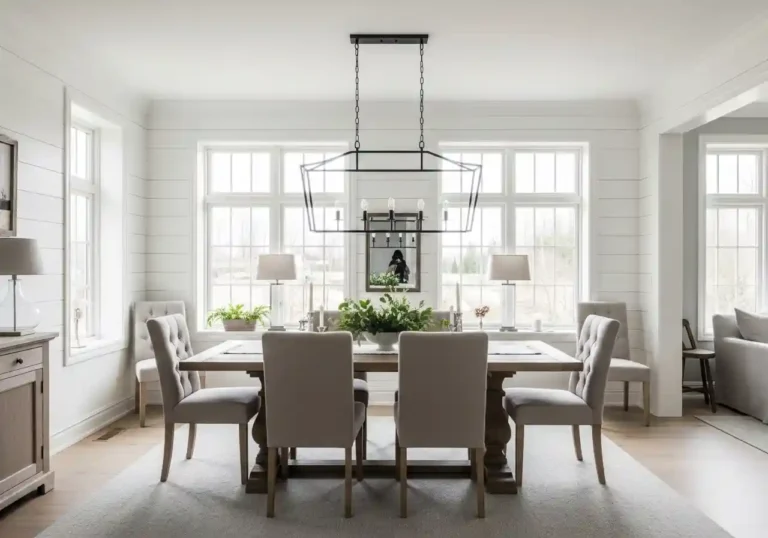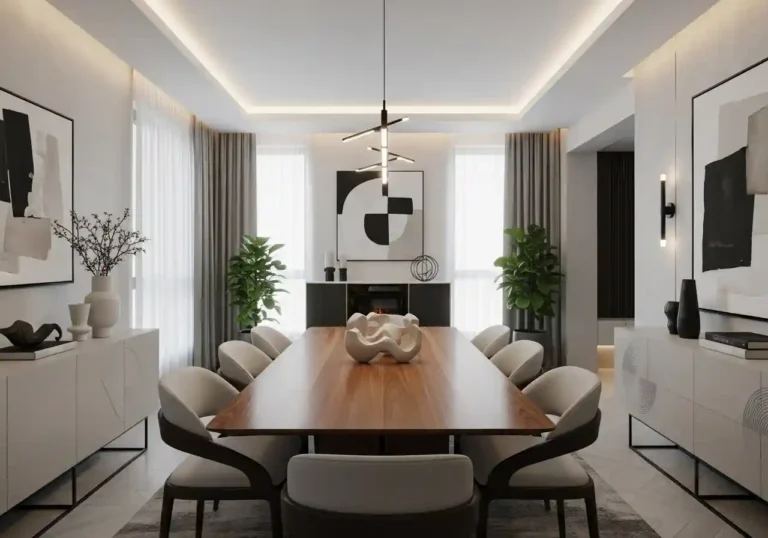
1. Sleek Minimalist Dining Room with Warm Wood Tones
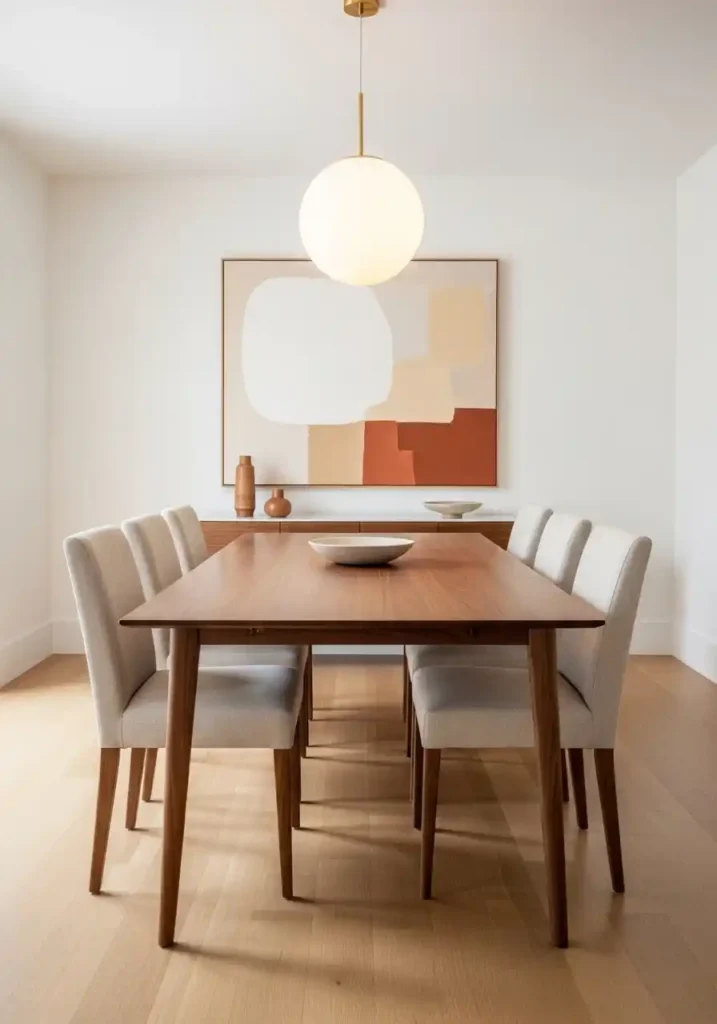
If you’ve ever walked into a Dining Room Design and felt an immediate, full-body sense of calm — where everything feels considered, nothing feels cluttered, and the space seems to breathe with a quiet confidence that makes you want to sit down and stay for hours — that is the feeling a minimalist dining room with warm wood tones delivers every single time. This isn’t minimalism as deprivation or as a cold, clinical rejection of warmth. This is minimalism as the highest possible form of editing — keeping only what is genuinely beautiful, genuinely functional, and genuinely meaningful, and allowing each chosen element to be fully seen and deeply appreciated.
The warmth of natural walnut or oak wood in a minimalist dining room does something that no amount of careful color selection or clever accessorizing can replicate — it humanizes the space, connecting the clean lines and uncluttered surfaces to the organic, natural world in a way that feels instinctively right and profoundly comfortable. A long walnut dining table with a beautiful, visible grain pattern needs almost nothing else to be the room’s complete design statement. Six chairs in warm oatmeal linen provide comfortable seating without visual competition. One large artwork, one beautiful pendant, one slim sideboard — the restraint of this room is its greatest luxury, and its warmth is its greatest gift.
2. Bold Black Dining Room with Dramatic Presence
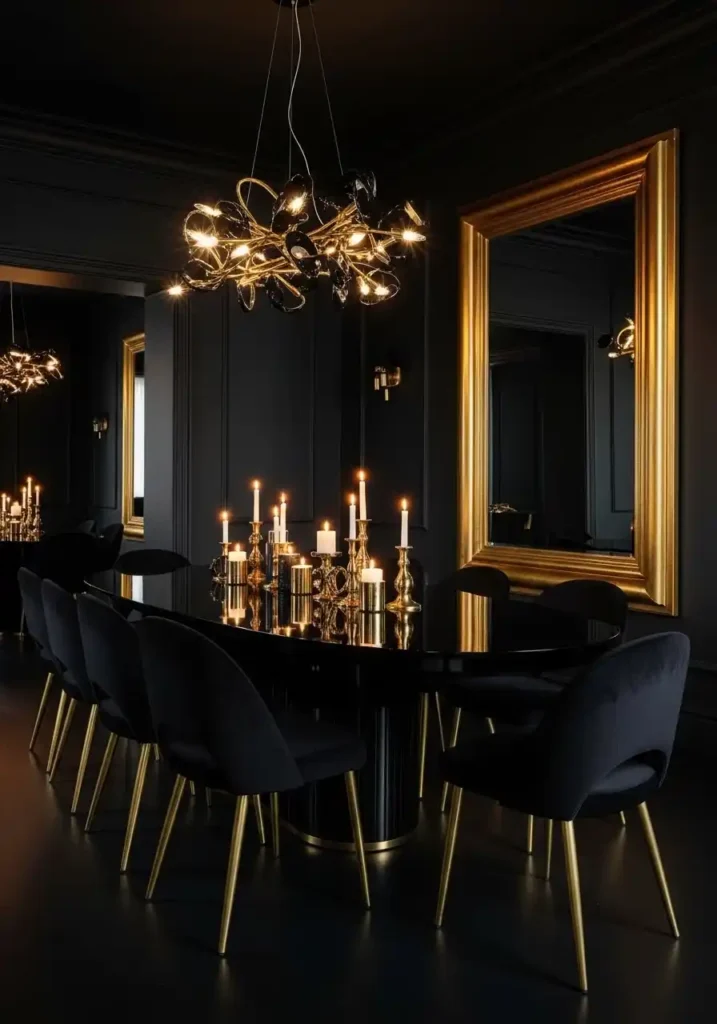
A bold black dining room is interior design’s most confident, most theatrical, and most completely committed statement — and the moment you commit to it fully and without apology, without hedging with white walls or pulling back with pale furniture, the room transforms into something genuinely extraordinary that no amount of careful safe design could ever produce. Black dining rooms are not dark and depressing — they are rich and enveloping, like the moment before a performance begins when the theatre goes dark and the anticipation becomes almost unbearable. They make every meal feel like opening night.
The gold accents that live within a black dining room do something optically spectacular — they glow with an intensity and a warmth against the matte black walls that they could never achieve in any other context, catching every candleflame and every overhead light and reflecting it back into the room in warm, dancing flickers of amber and gold. A sculptural gold chandelier above the black lacquered table creates a focal point of extraordinary drama. Gold-framed mirrors amplify the light while adding glamorous reflective depth. Black velvet chairs with gold legs combine maximum luxury with maximum visual consistency. This room doesn’t just look beautiful — it makes every person who sits at the table feel beautiful too.
3. Scandinavian Modern Dining Room with Natural Textures
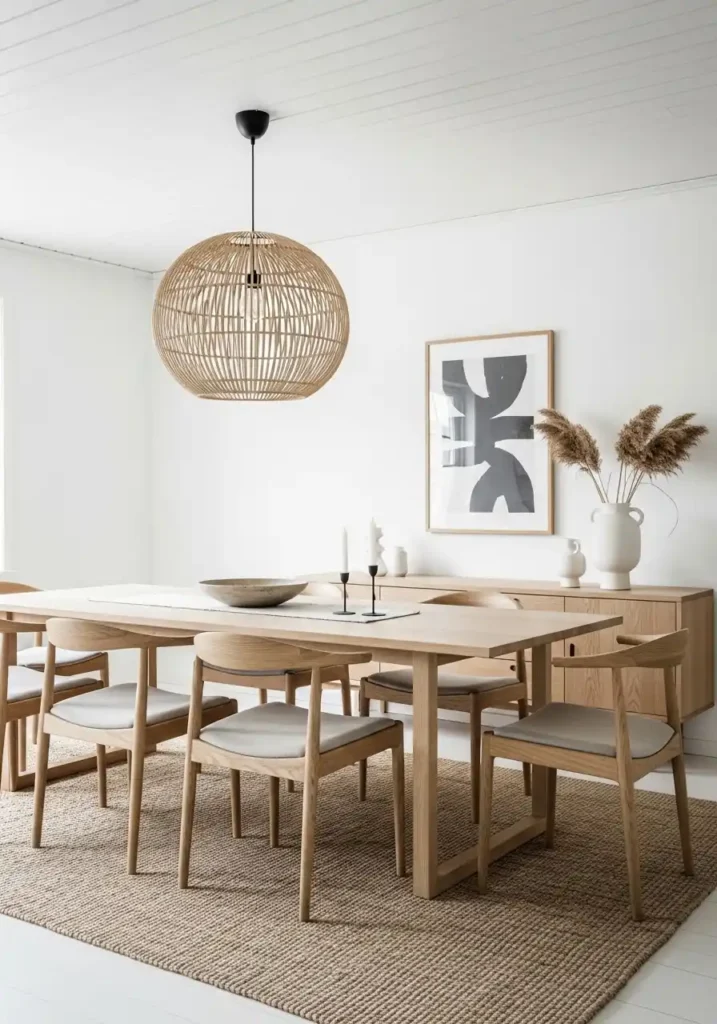
Scandinavian modern dining rooms have a quality that is genuinely difficult to articulate but immediately, powerfully felt the moment you experience one — a sense of everything being exactly right, of nothing being too much or too little, of a room that seems to exist in a state of perfect, unhurried equilibrium between beauty and function. This is the design philosophy of cultures with long dark winters who have spent centuries perfecting the art of making interior spaces feel warm, light, welcoming, and genuinely restorative — and the dining room is the space where this philosophy reaches its most beautiful and most practically meaningful expression.
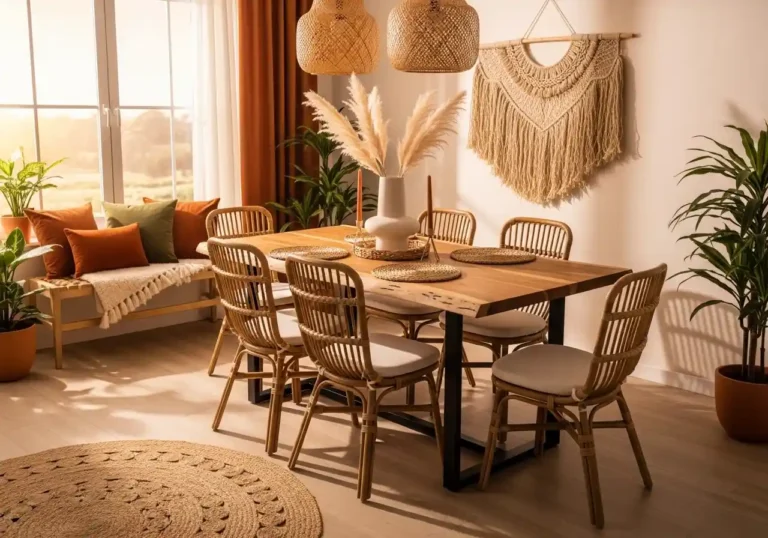
Natural textures are the Scandinavian modern dining room’s essential soul ingredient — the elements that prevent the clean lines and restrained palette from feeling cold or clinical and instead give the room the organic warmth and tactile richness that makes it genuinely inviting. A light ash wood table with visible, beautiful grain. Natural linen seat pads with a slightly rough, honest texture. A woven rattan pendant whose organic form contrasts beautifully with the room’s clean architectural lines. A jute rug that feels warm and natural underfoot. Dried pampas grass in a simple ceramic vase. Each texture contributes a distinct warmth note to the room’s quiet symphony of natural beauty.
4. Japandi Dining Room for Peaceful Modern Living
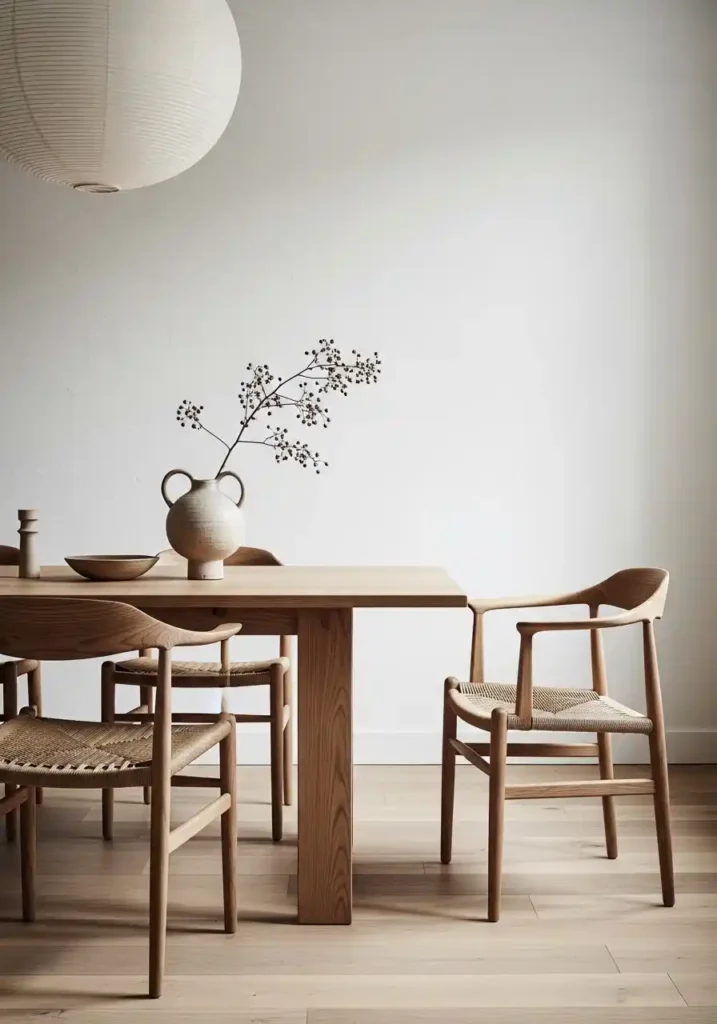
The Japandi dining room is the design concept that makes every other dining room style feel slightly too busy, slightly too loud, and slightly too effortful by comparison — because once you’ve experienced the profound, almost meditative calm of a dining space that has been designed with the combined wisdom of Japanese wabi-sabi and Scandinavian hygge, the noise of more decorated rooms is hard to go back to with real enthusiasm. This is the dining room for people who understand that the most nourishing meals happen in spaces that allow the food, the company, and the conversation to be the complete and total focus of every gathered person’s full attention.
Designing a Japandi dining room is an exercise in the most rewarding kind of restraint — the restraint that comes not from limitation but from genuine discernment, from knowing exactly what is enough and having the confidence to stop there. A simple dining table in pale ash with clean, unornamented lines. Slim chairs with woven rush seats that reference Japanese craft traditions and Scandinavian functionalism simultaneously. A single ceramic vase with one dried branch or a few stems of fresh green as the only table decoration. A paper lantern pendant that diffuses light with the most gentle, even softness imaginable. This room teaches you, at every meal, that simplicity is the most sophisticated thing of all.
5. Biophilic Dining Room with Abundant Greenery
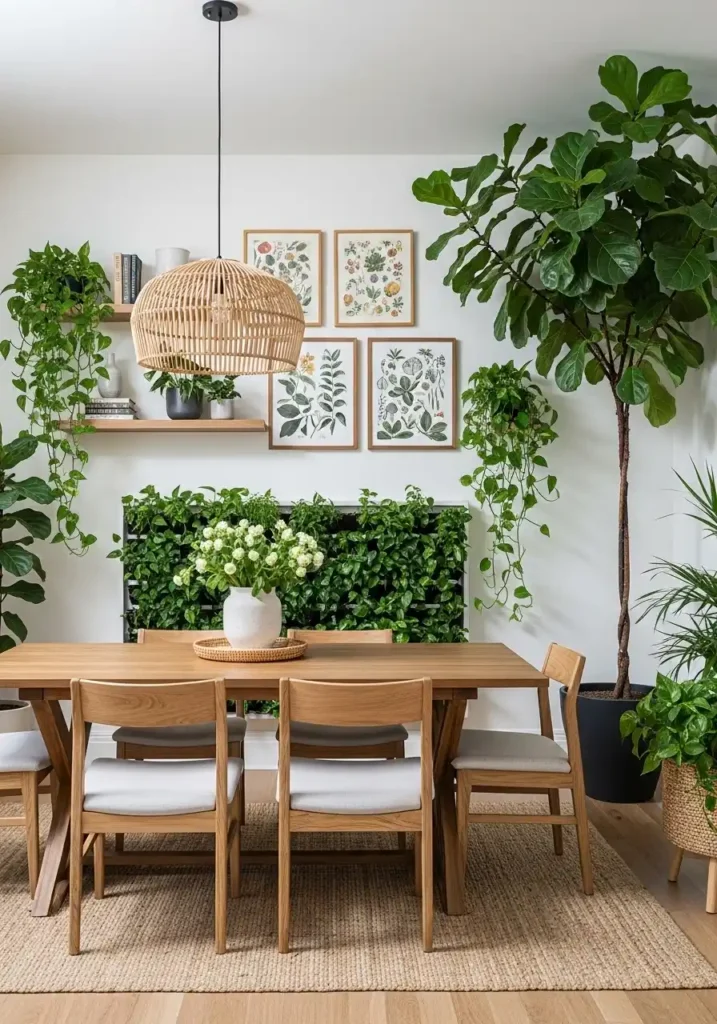
A biophilic dining room — one designed around the deliberate, generous, completely unapologetic introduction of plants, natural materials, and nature-inspired elements into every possible corner and surface of the space — creates a dining experience that is fundamentally different from any other dining room aesthetic, not just visually but physiologically. Research consistently confirms what every plant lover already knows intuitively: being surrounded by living green things during a meal improves mood, reduces stress, improves air quality, and makes the food genuinely taste better by creating an atmosphere of calm, natural abundance that is deeply aligned with our evolved human appetite for connection to the living world.
Building a biophilic dining room is one of the most joyful and most creative design projects available in home decorating — because plants are endlessly varied, endlessly beautiful, and endlessly generous in what they contribute to a room, and there is no such thing as too many in a dining room context that has been designed specifically to celebrate their presence. A statement fiddle leaf fig or monster in the corner establishes the room’s green ambition immediately and dramatically. A living herb wall panel behind the dining table is as practical as it is beautiful — fresh herbs within arm’s reach of the dining table are a cook’s and a diner’s gift. Trailing plants on shelves, botanical prints on walls, and a rattan pendant complete the immersive garden experience.
6. Curved Furniture Dining Room for Soft Sophistication
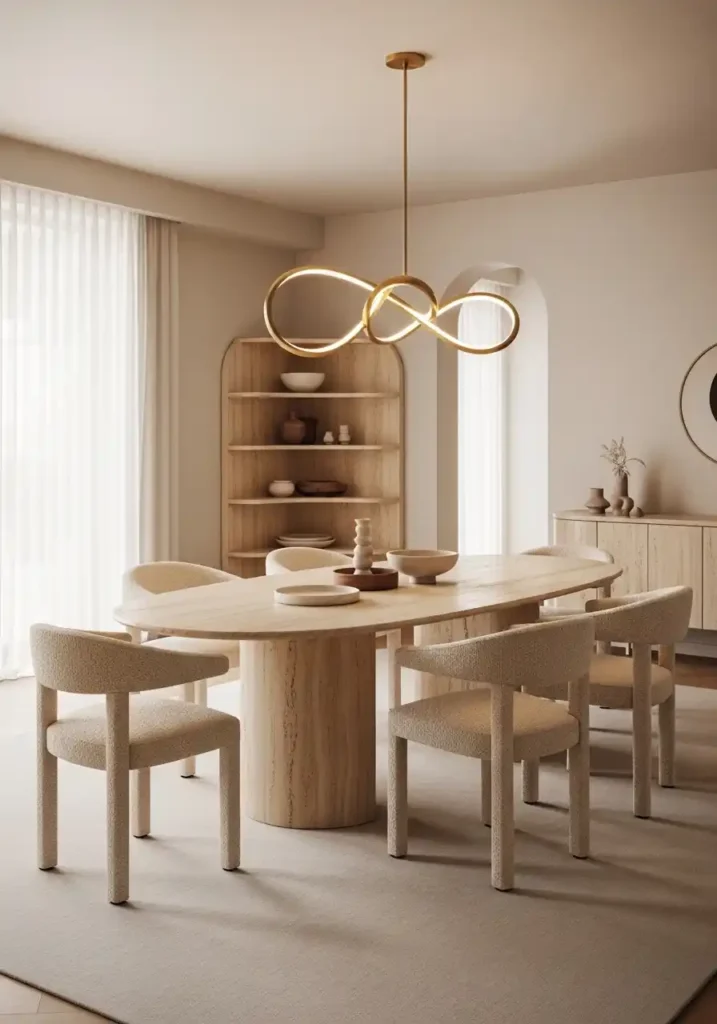
Curved furniture in a dining room is the design choice that takes a space from sleekly modern to sensuously, softly extraordinary — and the dining room is, in many ways, the perfect environment for curves to express their full expressive and atmospheric potential. Where sharp angles create precision and graphic impact, curves create flow, invitation, and a quality of gentle enclosure that makes the people gathered around a curved dining table feel held together by the room itself, drawn toward each other by the organic form of the table they share. This is dining room design that understands that meals are fundamentally social, human experiences that deserve social, human-shaped furniture.
The travertine oval dining table is the curved dining room’s defining hero piece — a material and form combination of such natural, geological beauty that it functions as the room’s most significant design statement even before a single chair, light fixture, or decorative object is added. The warm, creamy tones of travertine with its distinctive linear veining create a surface that looks genuinely extraordinary from every angle and in every light condition throughout the day. Curved-back boucle chairs in warm cream maintain the palette’s softness while adding the most beautiful tactile texture. A sculptural twisted brass pendant above the table adds vertical interest and warm metallic contrast that elevates the whole composition from beautiful to genuinely breathtaking.
7. Industrial Chic Dining Room with Urban Edge
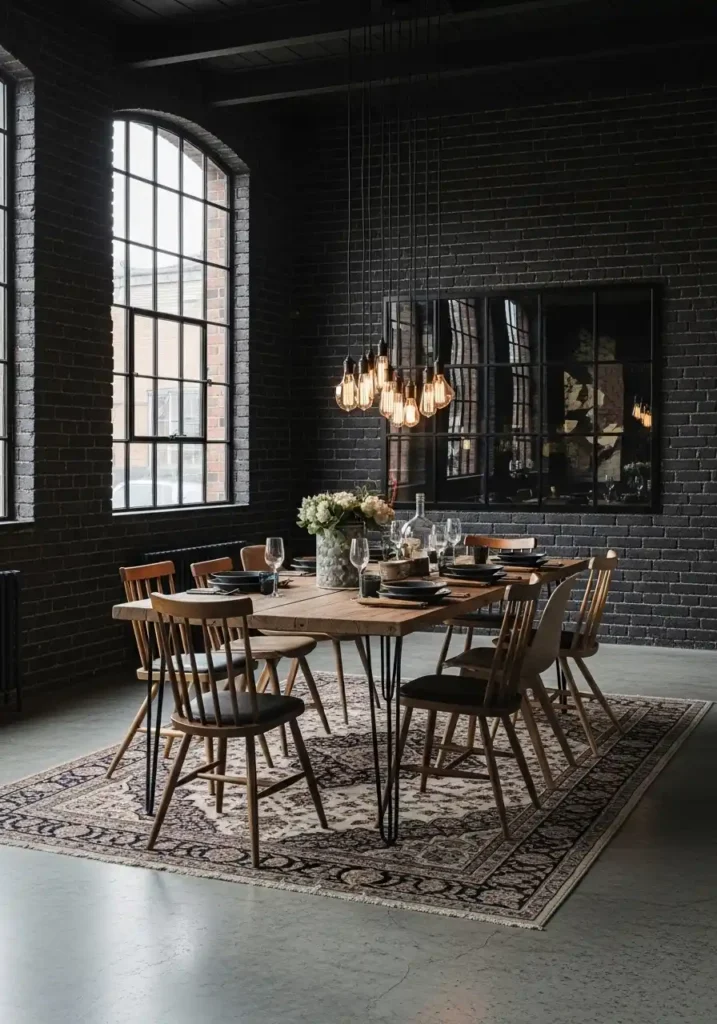
Industrial chic dining rooms occupy a design territory that is simultaneously the most raw and the most refined — spaces where exposed brick, bare steel, reclaimed wood, and visible construction details are presented not as signs of incompletion but as the primary aesthetic language of a room that has deliberately chosen honesty, character, and genuine material beauty over surface polish and decorative elaboration. The industrial dining room says something specific and confident about the aesthetic values of the people who designed it: that beauty lives in authenticity, that character is more valuable than perfection, and that a reclaimed wood table with visible history is more beautiful than a new one with none.
The textile softness that prevents an industrial dining room from feeling cold and unwelcoming is as essential as the raw materials that give it character — and the contrast between hard and soft, rough and smooth, industrial and organic is precisely where the magic of this design style happens most beautifully. A vintage Persian rug beneath the dining table brings centuries of skilled craftsmanship and rich jewel-tone color to the raw concrete floor in a juxtaposition that is both unexpected and completely, instinctively right. Mixed chairs — some vintage bentwood, some modern upholstered, some raw wood — create the eclectic, collected quality that makes industrial dining rooms feel genuinely lived-in rather than designed to look lived-in, which is an entirely different and far more appealing thing.
8. Coastal Modern Dining Room with Ocean-Inspired Calm
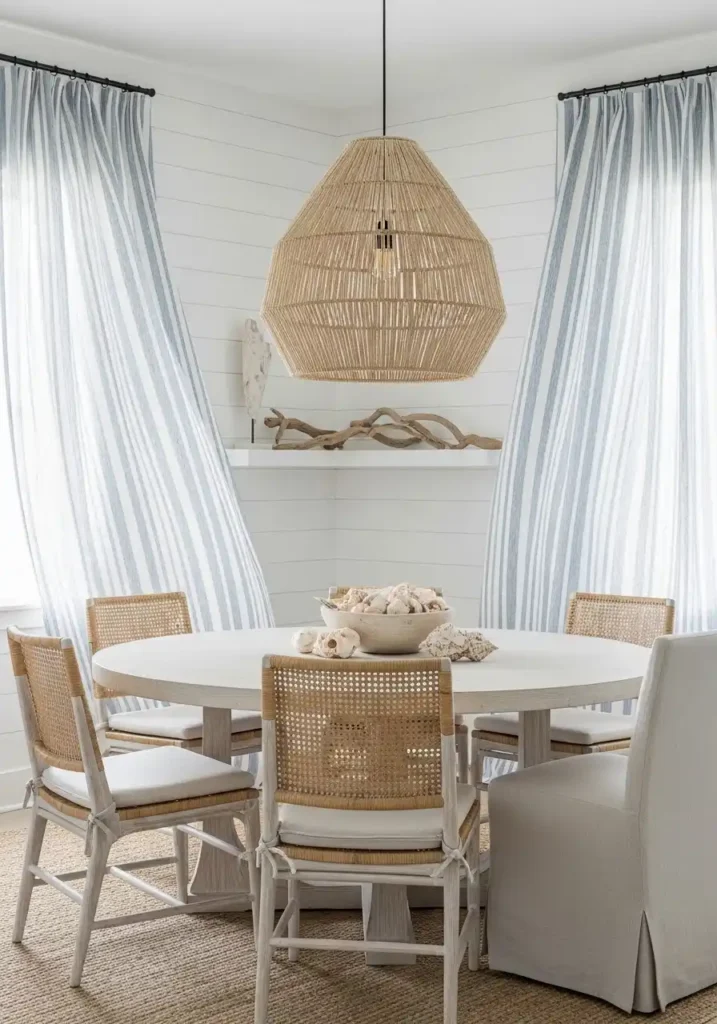
A coastal modern dining room achieves something that most other design styles can only aspire to — it makes the act of sitting down for a meal feel like a genuine escape, like stepping outside the pressures and demands of ordinary life and into a space that operates according to a different, slower, more beautiful rhythm. The whitewashed walls, the natural rattan and bleached wood, the blue and white textiles that reference the sea and sky, the organic textures of seagrass and driftwood that bring the beach inside — all of these elements combine to create an atmosphere of such relaxed, effortless beauty that every meal taken within it feels like a holiday, regardless of the day of the week or the season of the year.
The modern update to coastal dining room design is what elevates it beyond the purely decorative beach house aesthetic into something with real design sophistication and genuine contemporary relevance. Clean lines in the furniture, a restraint in the nautical references that avoids cliché, materials chosen for genuine quality rather than thematic literalness, and a sophisticated palette that includes warm sand tones, soft sage greens, and weathered wood alongside the expected blues and whites — these are the elements that make a coastal dining room feel like a beautifully designed modern home with coastal inspiration rather than a themed vacation rental. The result is a room you want to have dinner in every night of the year.
9. Maximalist Dining Room with Bold Pattern and Color
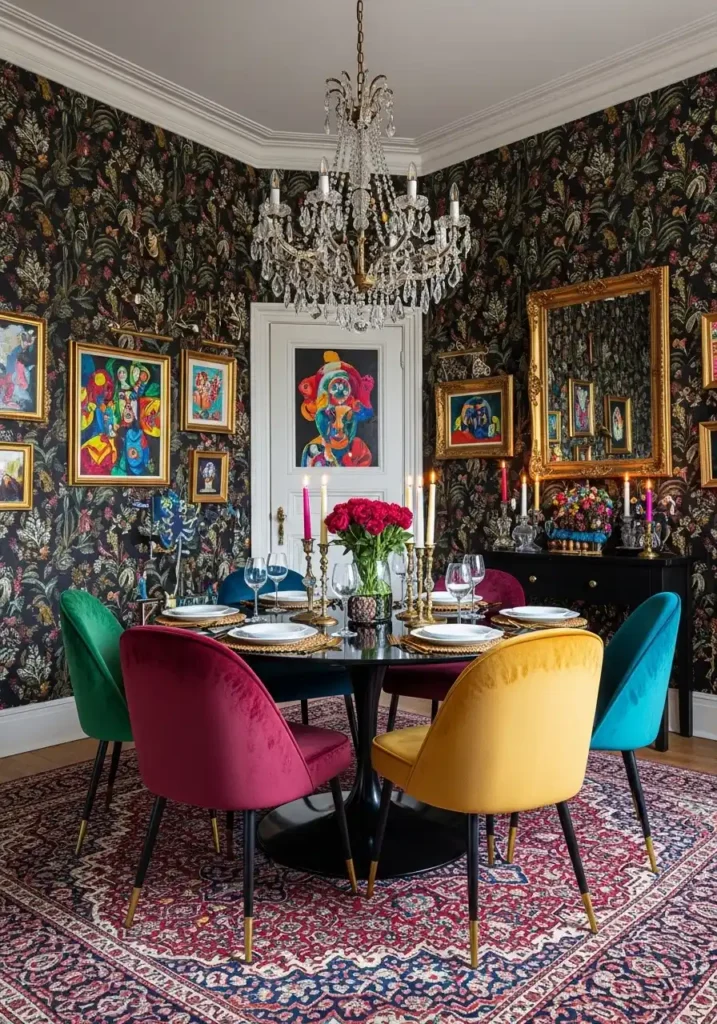
Maximalism in a dining room is interior design’s most joyful, most generous, and most completely human philosophy — the explicit, unapologetic celebration of every beautiful thing you love, displayed with confidence and abundance in the room where you gather with the people you love most to share the food you’ve prepared with care. A maximalist dining room doesn’t apologize for its richness, its color, its pattern, or its layers. It revels in them. It understands that a meal shared in surroundings of genuine abundance and beauty is a more nourishing experience than the same meal in a restrained, edited space — not in spite of the excess but because of it.
The secret to a maximalist dining room that reads as magnificently curated rather than chaotically overwhelming is the discipline of the unifying thread — the design element or palette that runs through every layer of pattern, color, and texture and ties the whole glorious abundance into a coherent, recognizable story. Jewel tones — emerald, sapphire, ruby, gold, plum, teal — are the maximalist dining room’s most natural and most beautiful color family, because they share a depth and richness that makes them harmonize with each other regardless of the specific combination in which they appear. Six velvet chairs each in a different jewel tone around a single dark table creates a composition of extraordinary vibrancy and genuine joy that makes every person seated at it feel like the guest of honor.
10. Mid-Century Modern Dining Room with Timeless Appeal
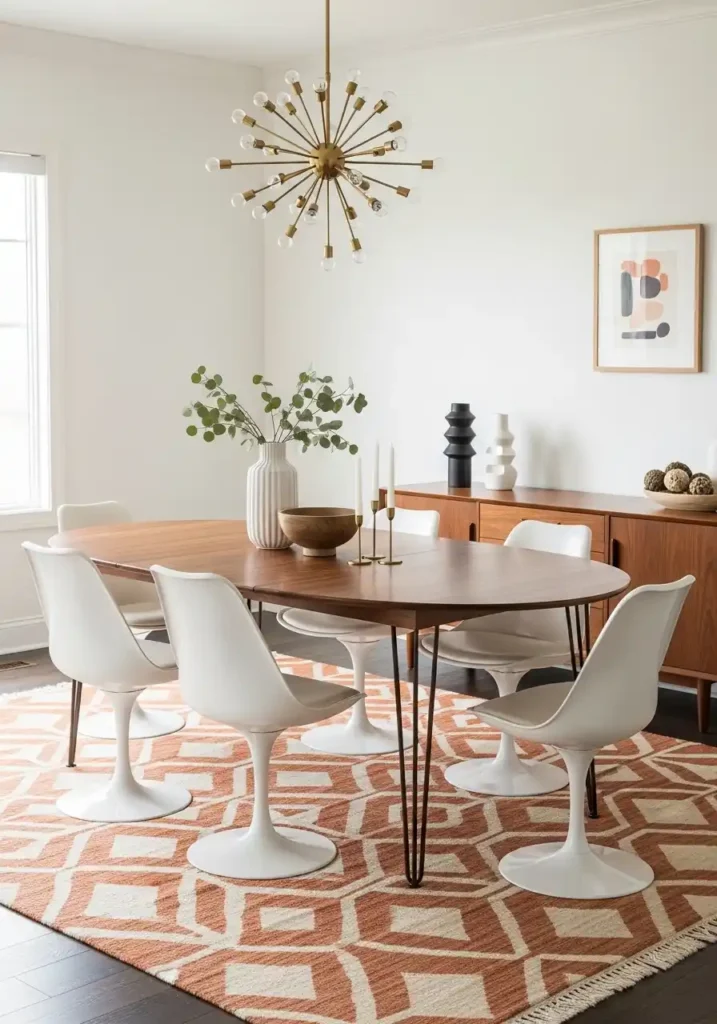
Mid-century modern is one of those extraordinarily rare design aesthetics that manages to feel equally at home in the decade it was created, in every decade since, and in every decade that is likely to follow — and the dining room is where its characteristic combination of clean lines, warm wood tones, functional elegance, and understated optimism finds its most natural and most beautiful expression. A mid-century modern dining room looks like it was designed by people who genuinely believed that beautiful, well-made things could improve daily life — and sitting down to a meal in one, with its warm walnut surfaces and sculptural brass lighting, you find yourself believing exactly the same thing.
The specific furniture pieces that define a mid-century modern dining room have achieved a kind of canonical beauty that transcends trend entirely — they are simply, permanently good designs that will never need updating or replacing with something more current because they already represent a kind of design perfection in their category. An oval walnut dining table on tapered hairpin legs achieves the most elegant balance between generous surface area and visual lightness. A Sputnik chandelier in brushed brass announces the room’s design allegiance immediately and beautifully. A walnut credenza provides storage with the period’s characteristic combination of practicality and decorative intent. Together, these pieces create a dining room of genuine, enduring, timeless sophistication.
11. Gallery-Style Dining Room with Art as the Hero
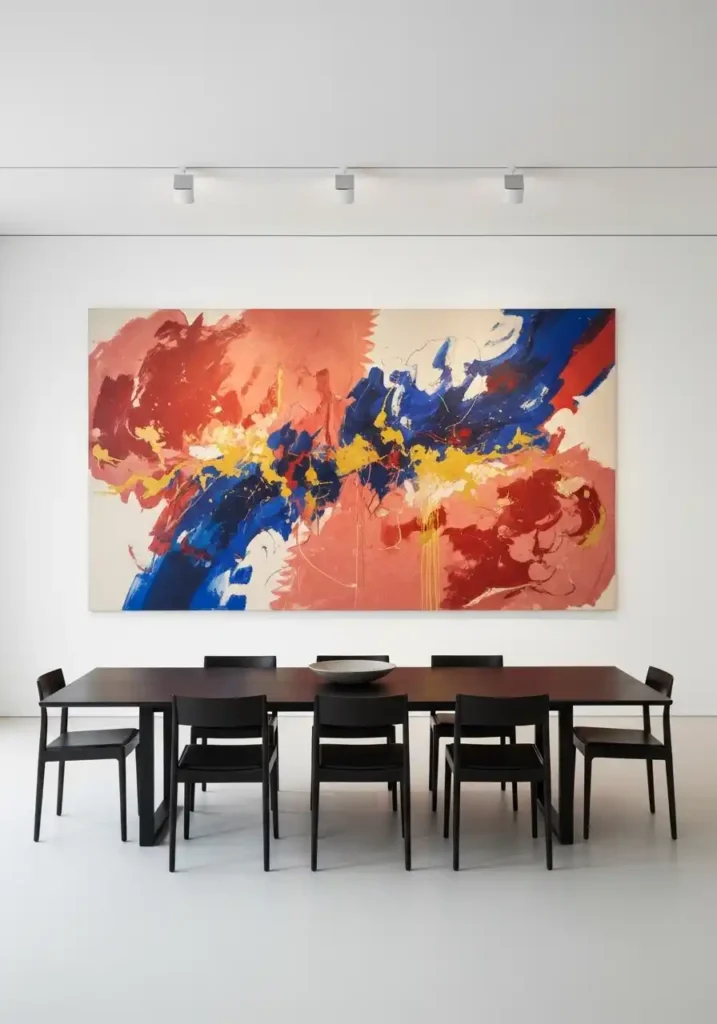
A gallery-style dining room — one where the art is not decoration but the primary design intention, where everything else is selected and positioned in service of creating the most beautiful possible context for displaying and experiencing a significant work — is the dining room concept that speaks most directly to the profound connection between great food and great art: both are the products of skill, passion, and genuine creative vision, both deserve to be appreciated in settings worthy of their quality, and both are made better by each other’s presence. A beautifully chosen painting above a dining table changes every meal eaten beneath it.
The art in a gallery-style dining room must be large — genuinely, significantly large, large enough that it fills the wall above the dining table with confidence and presence rather than floating uncomfortably in an expanse of empty wall. A painting that spans two-thirds or more of the wall’s width, with its center at approximately seated eye level when diners look up from their plates, creates the gallery experience of being in the presence of a significant work rather than merely near a decorative object. Everything else in the room — the table, the chairs, the lighting, the floor — should be simple, refined, and quiet enough that the art remains the undisputed, magnificent center of the entire dining experience.
12. Terrazzo and Tile Dining Room for Contemporary Texture
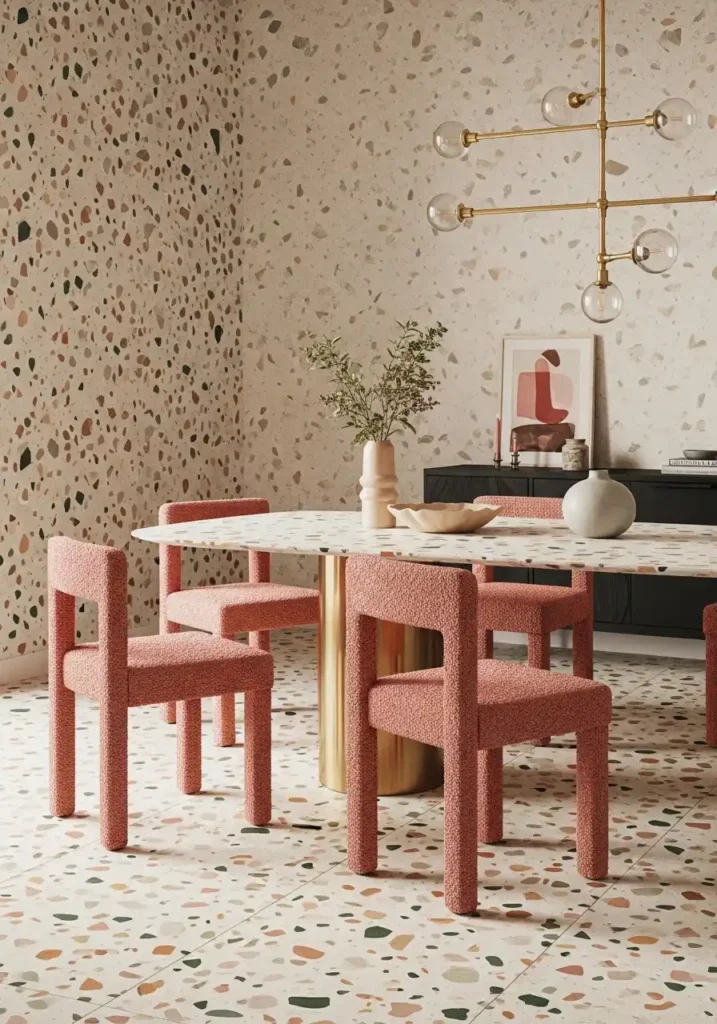
Terrazzo is the material that interior design spent several decades forgetting and has spent the last several years rediscovering with the kind of enthusiastic, slightly incredulous delight that comes from realizing you had something beautiful all along and didn’t know it. This composite material — small chips of marble, granite, quartz, and glass set in cement or resin and ground smooth — creates a surface of extraordinary speckled beauty that is simultaneously deeply nostalgic, referencing the mid-century modernist buildings where it was most gloriously deployed, and completely, freshly contemporary in a way that makes every space it inhabits feel current, considered, and genuinely exciting.
Using terrazzo as the primary material story of a modern dining room — on the floor, on the table surface, and as an accent wall finish, all in a coordinated palette — creates a spatial cohesion and material confidence that is genuinely rare and genuinely beautiful. The flecks of color within terrazzo — pink, green, gold, black, depending on the specific composition chosen — provide an organic pattern that adds visual richness to every surface without the deliberateness of wallpaper or the commitment of a bold paint color. Boucle chairs in a tone picked directly from the terrazzo’s color range complete the material harmony, and a sculptural brass chandelier adds the warm metallic note that ties the whole textural, contemporary composition together with confident elegance.
13. Moody Velvet Dining Room for Evening Glamour
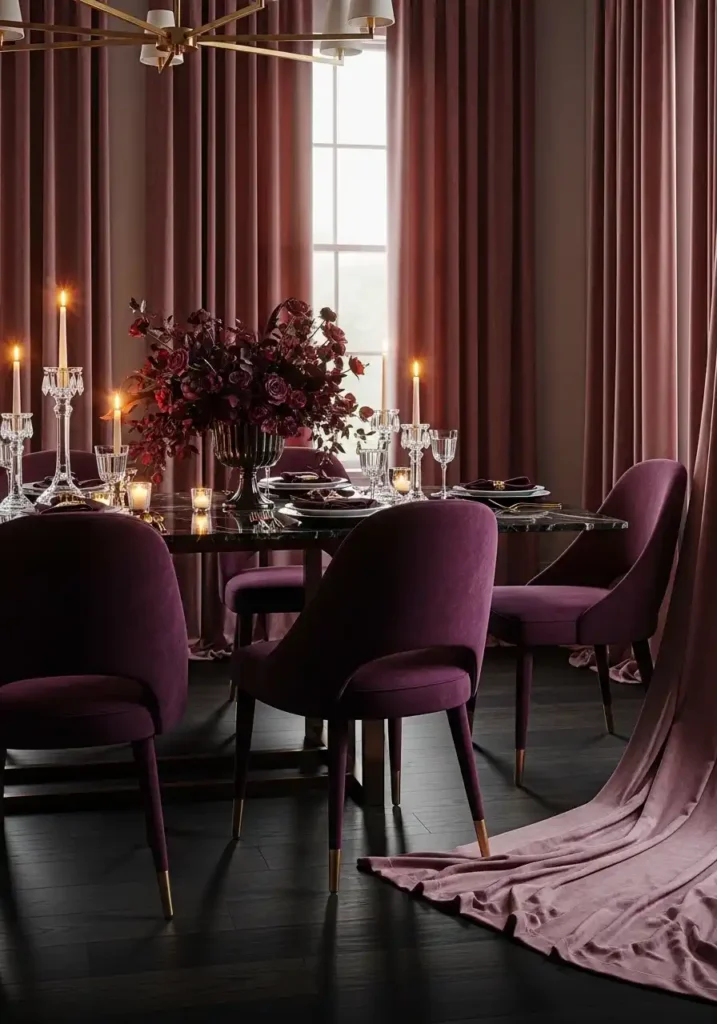
Velvet in a dining room does something to the quality of a meal that is genuinely difficult to fully articulate — it makes the experience physically more pleasurable, more indulgent, more luxurious in the most immediate and most bodily way, simply through the sensory pleasure of its texture against the skin. Sitting in a deep velvet dining chair for a long, leisurely dinner is a fundamentally different experience from sitting in a linen or cotton one — the tactile richness of the fabric communicates luxury and care at every moment, making the meal feel more like an occasion and less like the ordinary daily act of nourishing yourself that it might otherwise be.
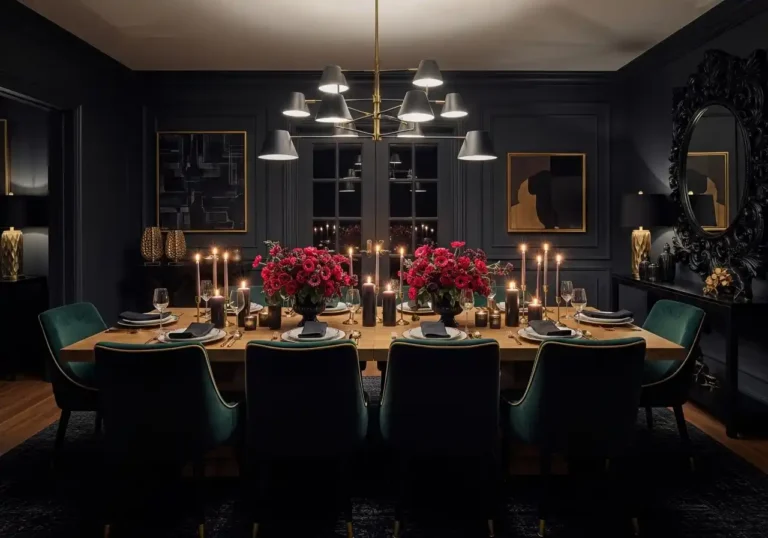
Building a moody velvet dining room requires courage and conviction — the willingness to commit to richness, depth, and a palette that prioritizes atmosphere over brightness — and the results consistently reward that courage with a room of such concentrated evening glamour that guests arrive and immediately understand that this is a home where dining is taken seriously as one of life’s great pleasures. Deep plum velvet chairs around a dark marble table. Dusty rose velvet curtains that pool generously on the floor. Crystal candleholders that multiply the warm candleflames across every reflective surface in the room. A dramatic floral arrangement in deep wine tones. This is the dining room that makes every Tuesday feel like a special occasion.
14. White and Gold Dining Room for Timeless Elegance
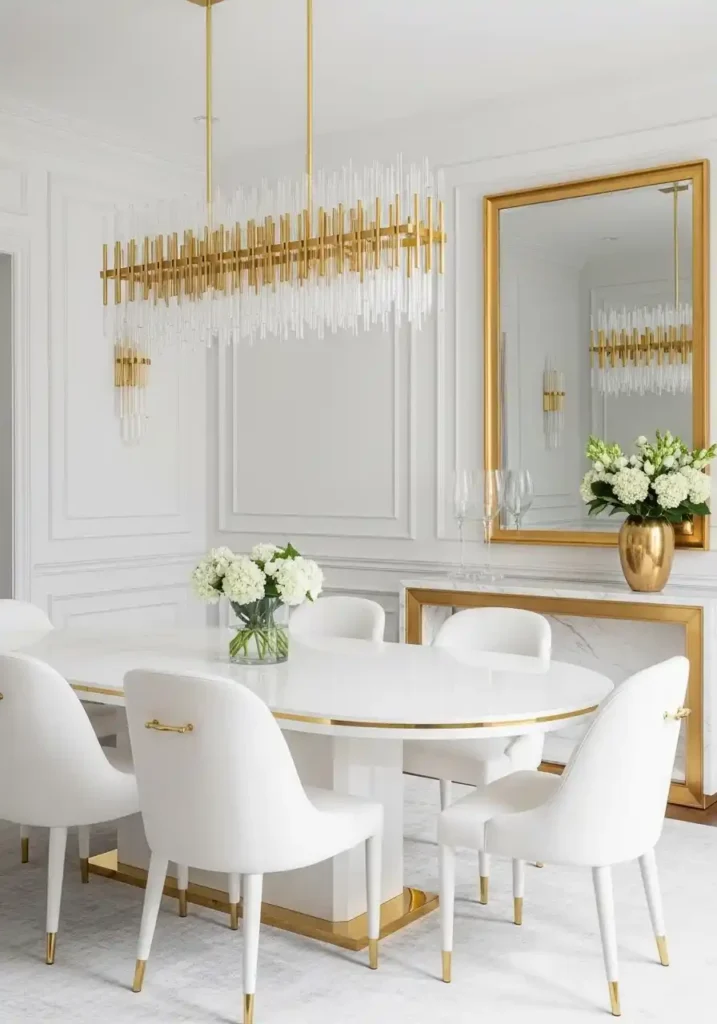
White and gold is the dining room color combination that has been synonymous with elegance, refinement, and genuine luxury in interior design for centuries — from the gilded dining rooms of Versailles to the lacquered modernist interiors of the 1960s to the contemporary dining rooms of the most beautifully designed homes being created today — and its enduring relevance across every era and every design period speaks to a fundamental truth about these two colors together: they create an atmosphere of light, warmth, and celebratory richness that is simply unmatched by any other two-color combination in the entire palette.
The modern update to white and gold dining room design is what separates it from a merely traditional or historically nostalgic interpretation and makes it feel genuinely current and genuinely exciting in a contemporary home. The key modernizing move is simplicity — choosing white and gold pieces with clean, refined lines rather than ornate, elaborate ones, and allowing the material quality and the color relationship to do all the expressive work without relying on decorative complexity. A lacquered white oval table with the simplest possible silhouette. A linear gold chandelier of pure geometric elegance. White upholstered chairs with single thin gold legs. The restraint of the forms makes the richness of the materials and the beauty of the color combination all the more powerful and all the more clearly felt.
15. Rustic Modern Dining Room with Reclaimed Wood
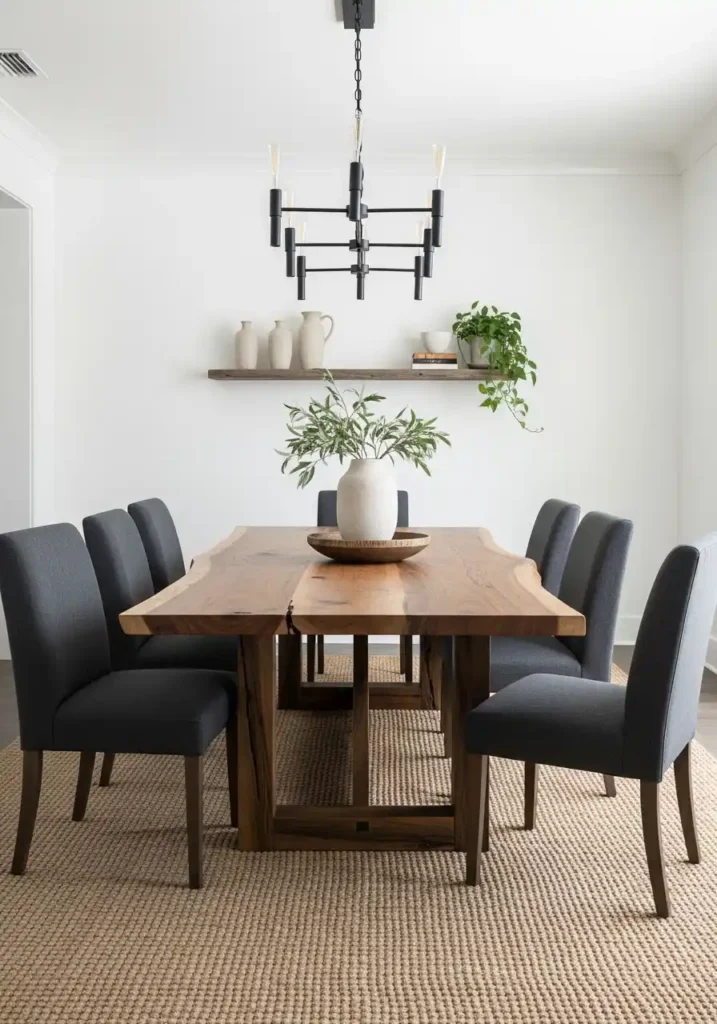
The rustic modern dining room achieves one of interior design’s most satisfying balancing acts — the marriage of genuinely old, genuinely raw, genuinely characterful materials with the clean lines, refined palette, and contemporary sensibility of modern design — and the live-edge reclaimed wood dining table is the piece around which this balance is most beautifully built and most completely expressed. A live-edge table brings more organic beauty, more genuine character, and more authentic connection to the natural world to a dining room than virtually any other single furniture piece — and when that primal, earthy beauty is surrounded by modern chairs, modern lighting, and modern walls, the contrast between old and new creates a visual tension that is electric, alive, and completely compelling.
The most successful rustic modern dining rooms are those where the modernizing elements are chosen with enough restraint and enough quality that they genuinely complement the live-edge table rather than competing with it for visual dominance. Upholstered dining chairs in a muted, sophisticated charcoal linen bring comfort and refinement without overwhelming the table’s natural authority. Black steel pendant lights reference the industrial and the modern without jarring against the warmth of the reclaimed wood. White walls provide the clearest, simplest possible backdrop that allows the table’s grain, knots, and live edge to be fully and completely seen and appreciated. This is the dining room that honors both the ancient beauty of natural material and the enduring value of good contemporary design.
16. Open-Plan Dining Room with Seamless Kitchen Flow
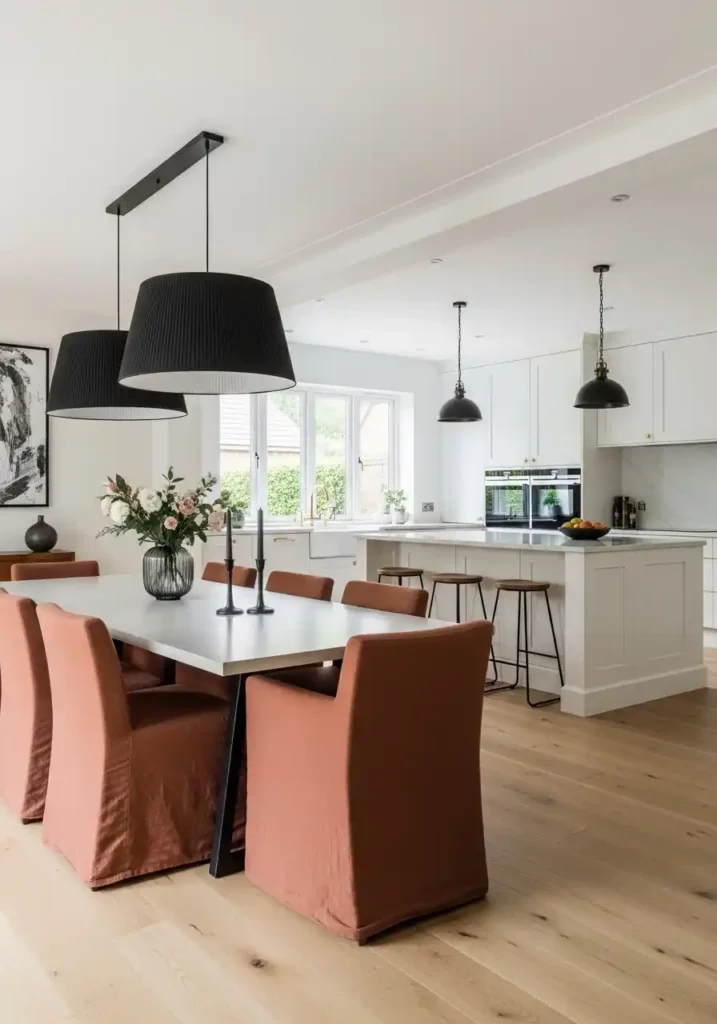
The open-plan dining room connected to a contemporary kitchen is the domestic design arrangement that has most fundamentally and most joyfully changed the way modern families experience the act of preparing and sharing food together — because it dissolves the barrier between cooking and dining that traditional domestic architecture maintained for centuries, creating a single, continuous social space where the cook is never isolated from the conversation, where children can do homework at the dining table while dinner is being prepared, and where the entire daily ritual of gathering around food becomes a shared, participatory, genuinely connective experience rather than a sequential series of solitary domestic tasks.
The design challenge of an open-plan dining room connected to a kitchen is defining each zone with sufficient clarity that each space feels purposeful and distinct while maintaining the visual and spatial continuity that makes the open-plan arrangement so socially valuable. A large pendant light positioned directly above the dining table is the single most effective zone-defining element available — it claims the vertical space above the dining area with such visual authority that the zone is immediately, unambiguously established. A rug beneath the dining table reinforces the zone definition at floor level. Consistent flooring and a shared color palette throughout both zones maintain the visual continuity that makes the combined space feel like a single, beautifully designed whole.
17. Earthy Tonal Dining Room in Clay and Warm Neutrals
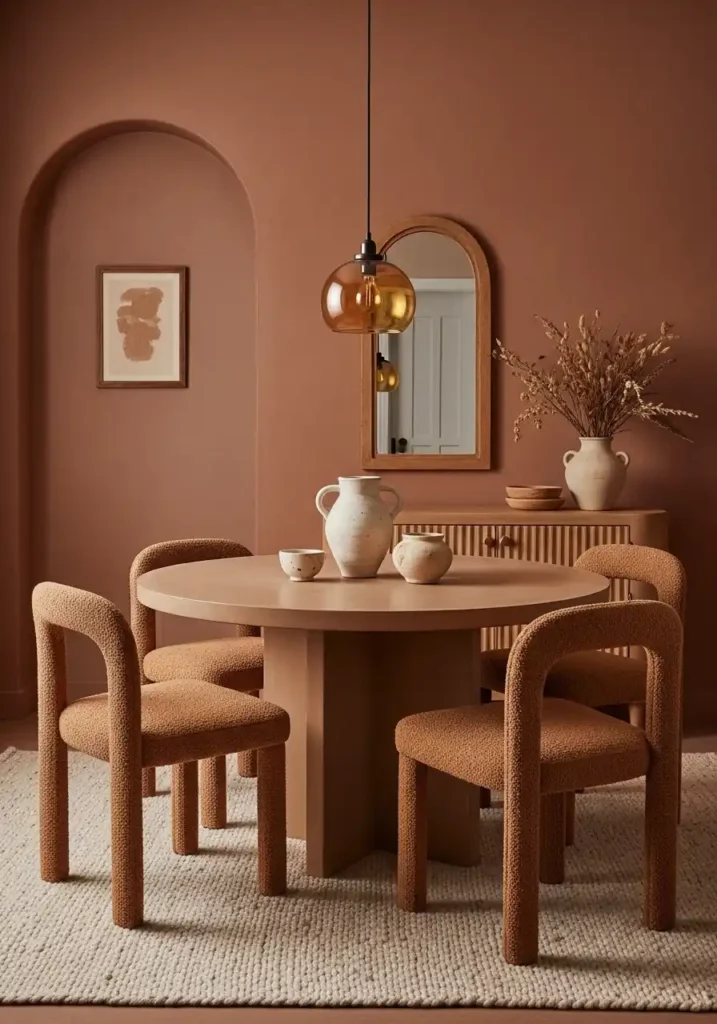
Earthy tonal dining rooms built around the warm spectrum of clay, terracotta, raw sand, and organic neutrals create the dining experience that feels most fundamentally, most physically nourishing — because these are the colors of the earth itself, the colors of unglazed pottery and sun-baked walls and the rich soil of productive land, and something in our deepest biological memory responds to them with an immediate sense of warmth, safety, and belonging that cooler, more artificial color palettes cannot generate with the same directness or the same power. An earthy tonal dining room feels like the right place to eat because it feels like the right place to be alive.
Building an earthy tonal dining room is an exercise in working with the full, rich spectrum of a single warm color family — and the variety available within that family is far broader and more interesting than most people initially imagine. Clay limewash walls in a texture that catches the morning and evening light differently create a backdrop of organic richness. A dining table in warm brushed concrete brings geological material beauty to the room’s central piece. Camel boucle chairs add the plush tactile warmth that the space needs to be genuinely inviting for extended meals. Hand-thrown ceramic vessels on the table, dried botanicals on the sideboard, and a natural undyed wool rug underfoot complete a room that feels profoundly, beautifully, completely grounded.
18. Dramatic Ceiling Feature in the Modern Dining Room
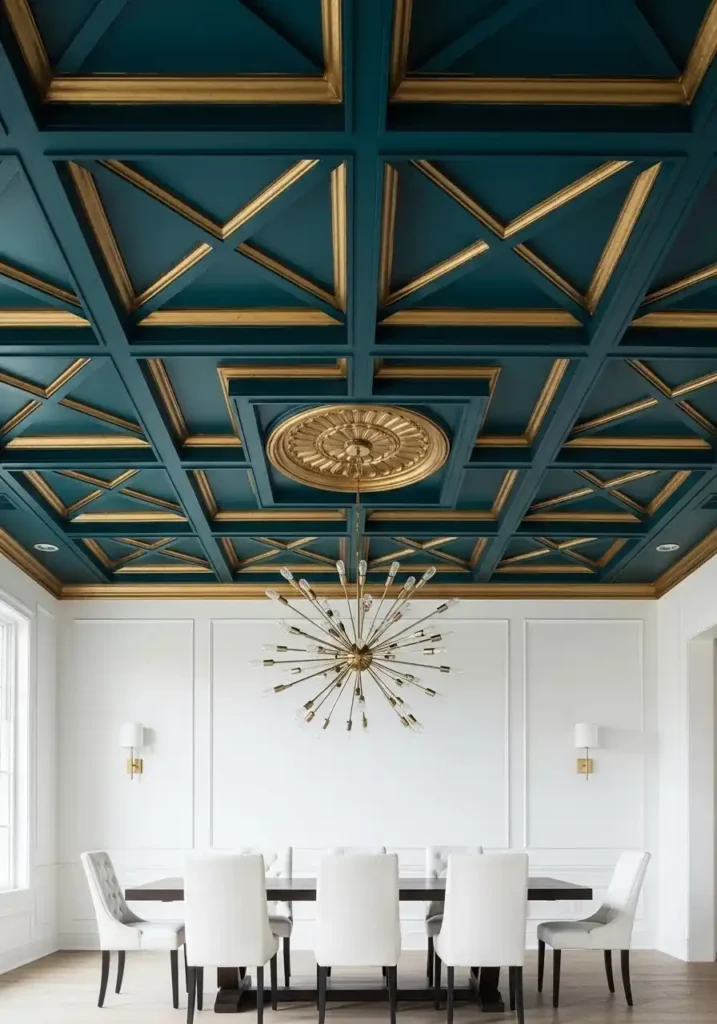
The dining room ceiling is the single most underutilized design surface in the entire home — the surface that most homeowners paint white without a second thought, that most designers treat as a neutral overhead plane rather than a genuine design opportunity, and that consistently rewards the relatively small number of people who choose to treat it with the same creative investment and decorative attention that they give to the walls and the floor below it. In a dining room specifically, where the act of looking up from your plate and across the table to your companions is a natural and constant part of the dining experience, a beautifully designed ceiling is seen and appreciated in a way that no other room in the house can match.
A coffered ceiling in a deep jewel tone — teal, navy, forest green, or rich plum — with its recessed panels and intersecting beams creating architectural three-dimensionality overhead, transforms the dining room into a room of genuine architectural distinction and grandeur that makes every meal beneath it feel like a genuinely special occasion. Gilded coffer edges that pick up the warm tones of a statement chandelier create an interplay of deep color and warm gold overhead that is nothing short of spectacular. The white walls below allow the ceiling to exist as the room’s complete and unchallenged design statement, and the simple furniture beneath it has the quiet dignity of pieces that know exactly what their role in the room is.
19. Organic Modern Dining Room with Handcrafted Elements
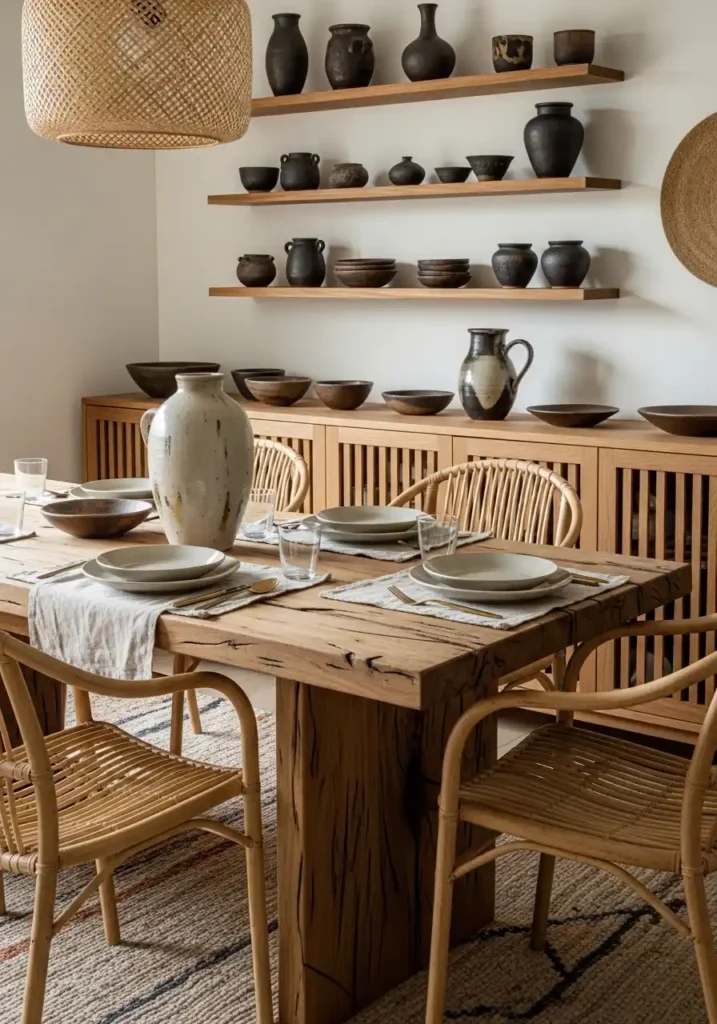
The organic modern dining room built around handcrafted elements is the dining space that celebrates the most fundamental and most profound connection between the act of making and the act of eating — because both require skill, both require time, both require genuine care and genuine presence, and both produce results that feed something deeper than the merely physical. A dining room filled with objects and surfaces that bear the visible evidence of human hands — the slight irregularities of hand-thrown pottery, the texture of hand-woven linen, the tool marks on a hand-carved table — creates an atmosphere of genuine warmth and authenticity that mass-produced interiors, however technically accomplished, can never fully replicate.
Curating an organically modern, handcraft-centered dining room is a collecting practice as much as a decorating exercise — one that rewards patience, curiosity, and a willingness to seek out makers who are doing genuinely exceptional work in their chosen material. Start with the dining table as your anchor piece: a hand-carved solid wood table with visible grain, knots, and the honest imperfections of genuine woodworking craftsmanship is the foundation on which everything else builds. A collection of hand-thrown ceramic pieces on open shelves behind the table — vessels, bowls, and plates in warm earth tones — creates a display that is simultaneously a functional dining resource and a gallery of quiet, beautiful skill. Hand-knotted wool rugs, hand-woven placemats, and organic rattan chairs complete a room of genuine, deeply felt authenticity.
20. Statement Wallpaper Dining Room for Bold Personality
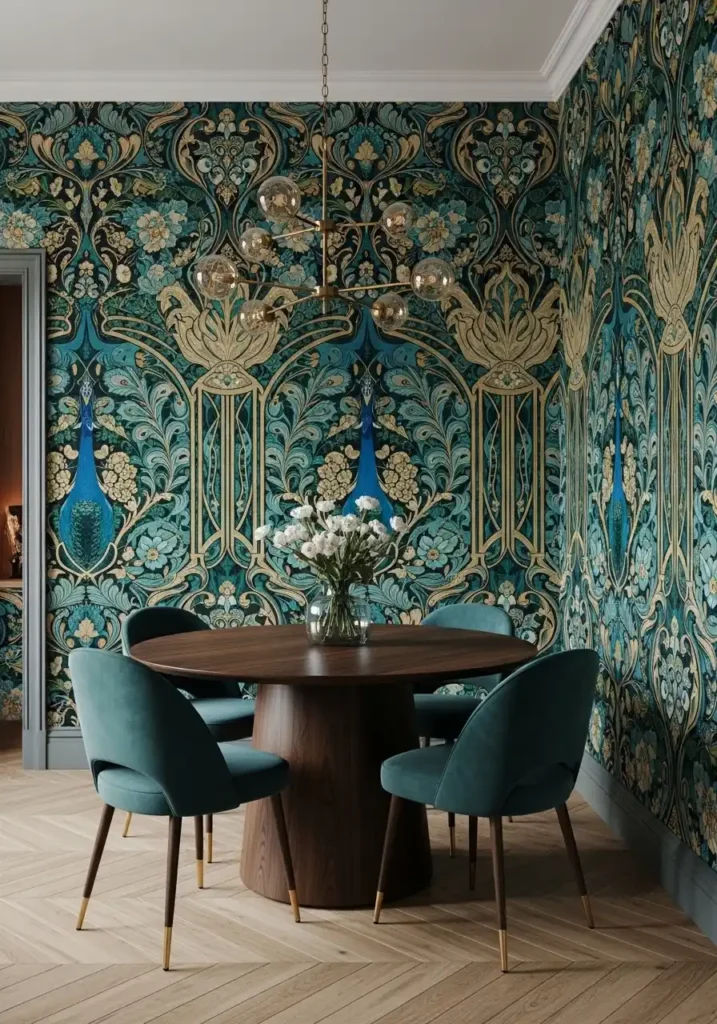
Statement wallpaper in a dining room is the design decision that communicates more about the personality, the aesthetic confidence, and the genuine love of beauty of the person who chose it than almost any other single decorating choice in the home — because choosing to cover the walls of a dining room in a bold, complex, richly detailed pattern is an act of genuine creative commitment that says: I am not here to play it safe, I am not here to choose something that offends no one, I am here to create a dining room that is magnificent, personal, and completely, joyfully mine. That confidence is irresistibly appealing.
The Art Nouveau wallpaper dining room achieves a specific and extraordinary quality of immersive beauty that few other wallpaper styles can match — because Art Nouveau design is inherently, profoundly concerned with the beauty of the natural world, with the flowing lines of plants and the iridescent colors of birds and the organic complexity of living things, and a dining room wrapped in that visual world is a dining room that feels like eating within a beautiful, inhabited garden at the peak of its most extravagant flowering. Deep teal and gold is the color combination that makes Art Nouveau wallpaper most spectacularly beautiful — the depth of the teal creating the perfect backdrop against which the gold botanical and peacock forms glow with maximum warmth and maximum visual drama.
21. Mixed Materials Dining Room for Layered Sophistication
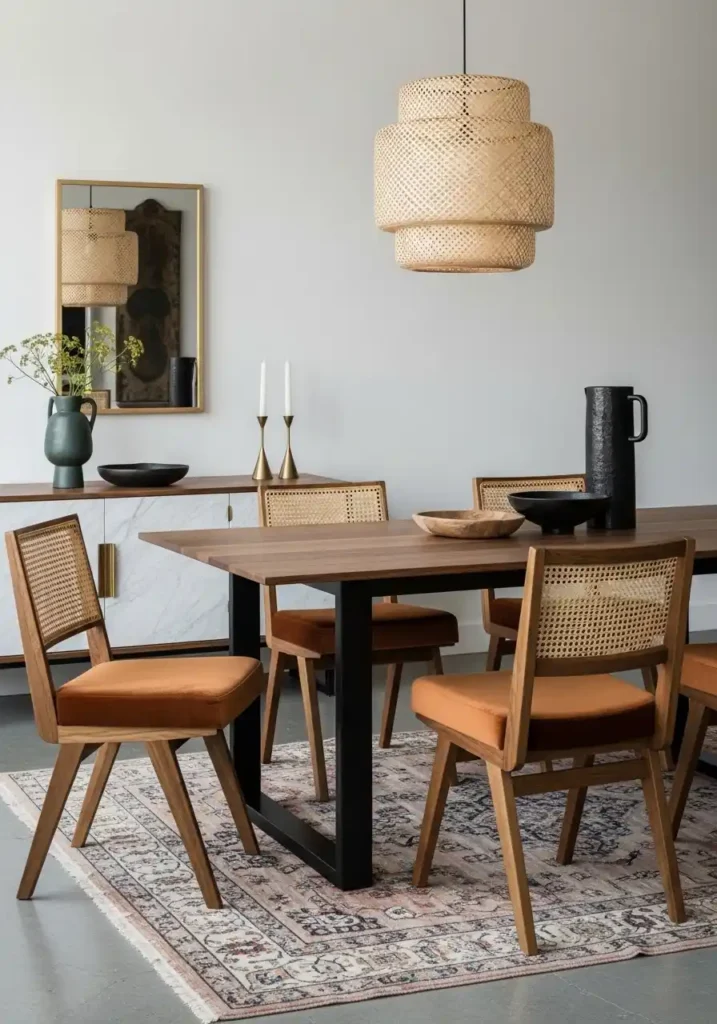
Mixed materials dining rooms are the design equivalent of a perfectly composed musical chord — where the beauty is not in any single element but in the relationship between multiple elements, each contributing its distinct quality and character to a whole that is richer, more complex, and more deeply satisfying than any single material used alone could achieve. When steel meets walnut, when marble meets rattan, when velvet meets cane, when concrete meets a vintage rug, the contrasts and correspondences between materials create a visual and tactile richness that fills a dining room with genuine depth and genuine interest in a way that single-material rooms, however beautifully executed, simply cannot replicate.
The discipline that separates a beautifully curated mixed materials dining room from one that feels incoherent and random is the limiting of the total number of materials to a carefully considered selection and ensuring that each material shares at least one quality — a color family, a warmth level, a surface finish — with at least one other material in the room, creating a web of relationships that connects all the different elements into a cohesive whole. Warm walnut wood connects to warm rattan. Cool black steel connects to cool marble. Warm rust velvet connects to warm walnuts. Cool concrete connects to cool steel. Every connection you build into the room’s material palette strengthens the sense of designed intention that elevates a dining room from a collection of furniture to a genuine interior composition.
22. Luxurious Dining Room with Marble and Brass
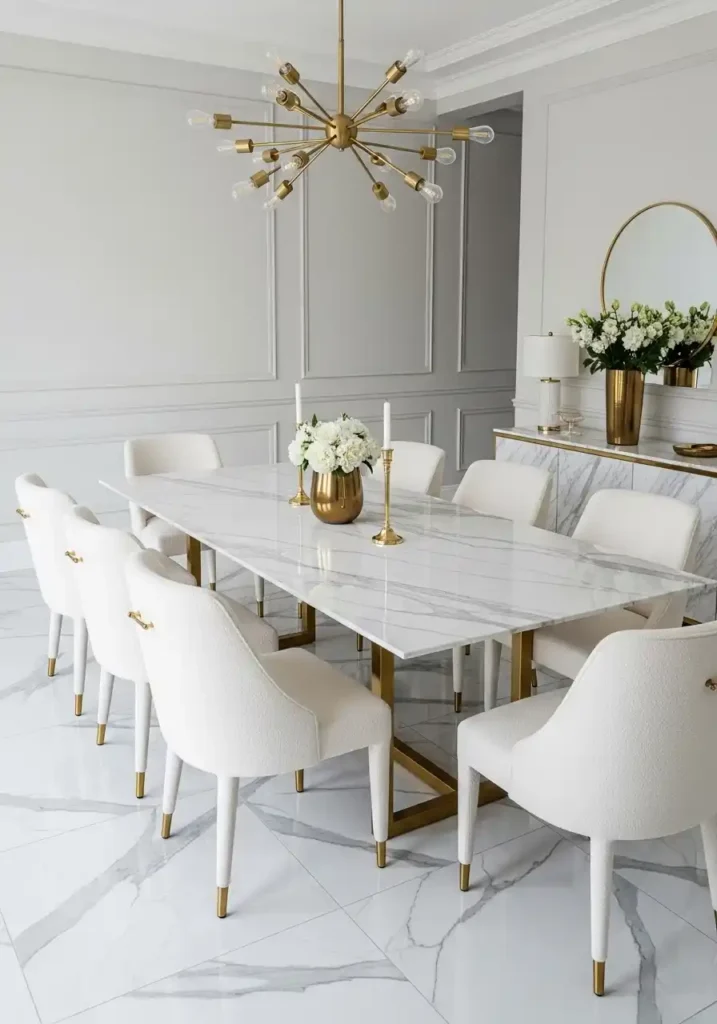
Marble and brass in a dining room is the material pairing that makes luxury look effortless — that creates an atmosphere of genuine, unapologetic opulence without ever feeling ostentatious or overdone, because the cool geological beauty of the marble and the warm handcrafted quality of the brass balance each other with a precision and harmony that feels completely natural, as though these two materials were always intended to be used together and simply waited centuries to find each other in the dining rooms of people with the taste and the courage to bring them properly together. This is the room that makes every meal feel like a special occasion, not because of what is being served but because of where it is being served.
The key to a marble and brass dining room that feels genuinely luxurious rather than merely expensive is the quality and selection of the specific marble and the specific brass finish used throughout the room. White Carrara marble — with its fine gray veining, its cool luminosity, and its association with centuries of the finest European sculpture and architecture — brings a purity and refinement to the dining table surface that no other stone quite matches. Warm satin brass — not the bright, high-gloss brass of the 1980s but the muted, warm, slightly aged finish of genuinely good contemporary metalwork — provides the most beautiful possible material complement to the marble’s cool, pale surface. Together, they create a dining room of quiet, confident, enduring magnificence.
23. Bohemian Modern Dining Room with Global Influences
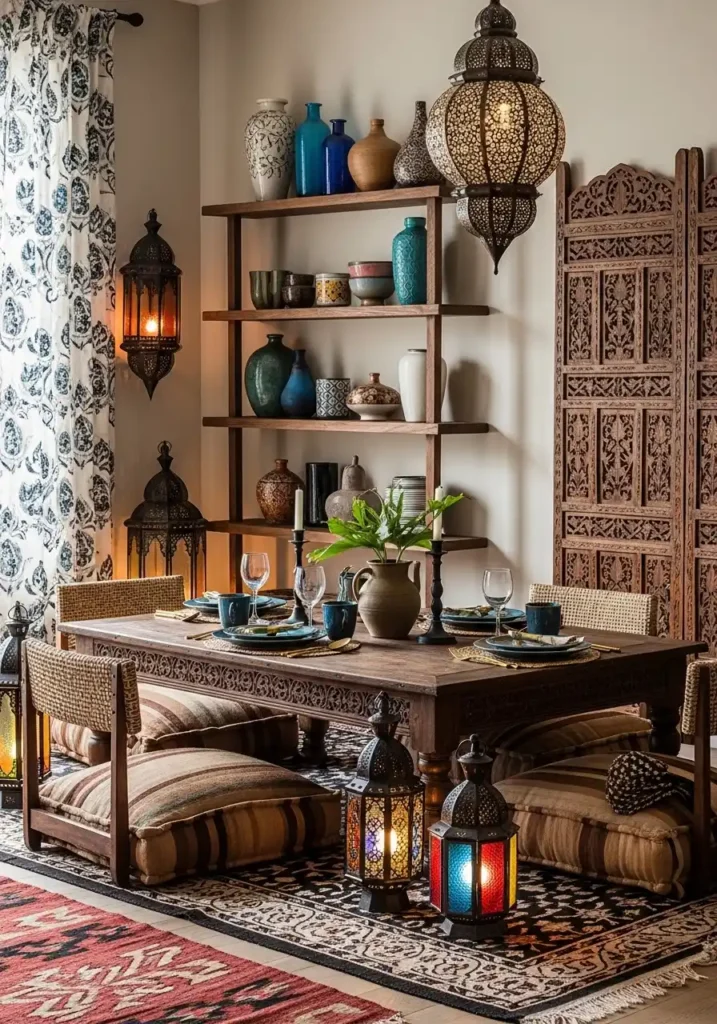
A bohemian modern dining room with global influences is the dining space that belongs to people who have been somewhere, who have seen something, who have returned with not just memories but objects of genuine beauty and genuine meaning that they want to live with every day and share with every person who sits at their table. This is the dining room that reflects a life fully lived and a world enthusiastically explored — where a Turkish kilim rug, a collection of Moroccan lanterns, an Indian block-print textile, and a carved wooden screen from Southeast Asia coexist in the same space with the naturalness and rightness of objects that were always meant to share a room.
The modern element in a bohemian globally inspired dining room is what gives the abundance of cultural references its coherence and its contemporary relevance — preventing the room from feeling like a bazaar and making it feel instead like the home of someone with genuine design intelligence and genuine curatorial skill. A clean-lined low dining table in dark carved wood provides the anchor around which all the global textiles, lanterns, ceramics, and screens can orbit without becoming visually overwhelming. Consistent warm lighting — the patterned glow of Moroccan lanterns, the warm flicker of candles — unifies the space tonally and atmospherically. The global objects are the room’s content; the modern restraint in their arrangement is its form.
24. The Perfect Modern Dining Room — Every Element in Harmony
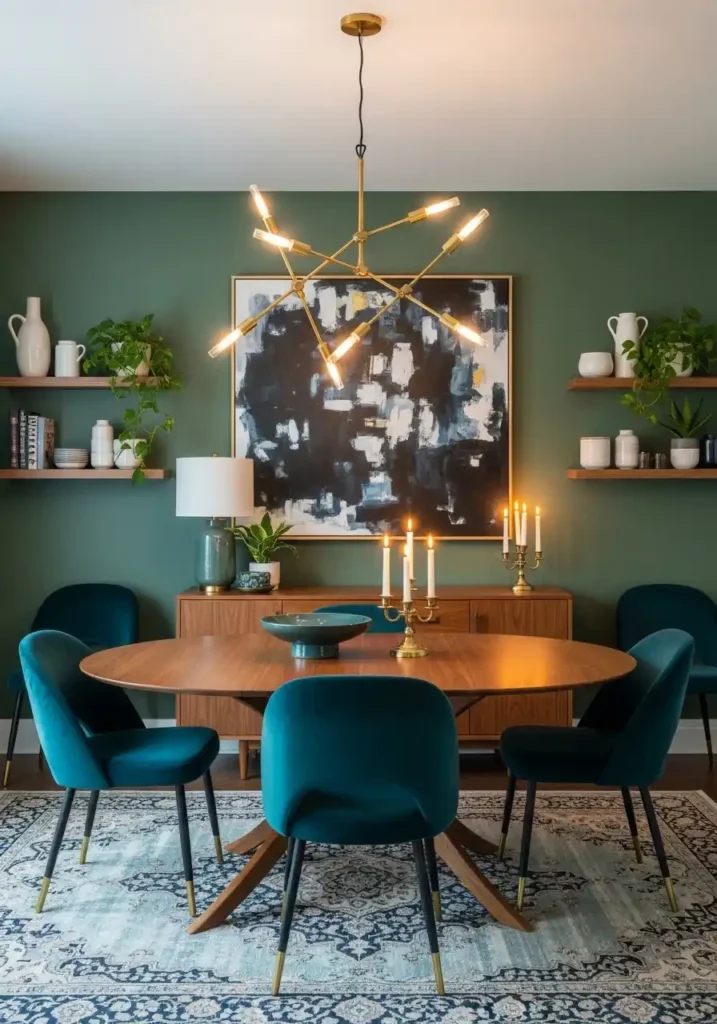
The perfect modern dining room — the one that makes you stop scrolling immediately, that makes you save the image to seven different Pinterest boards, that makes you want to clear everything out of your current dining room and start completely afresh — is never the product of a single brilliant idea. It is the accumulated result of multiple thoughtful decisions, each one made with genuine care and genuine conviction, each one building on and strengthening every other, until the whole composition achieves a state of complete, harmonious, mutually reinforcing beauty where nothing could be added, nothing removed, and nothing exchanged without diminishing the extraordinary whole that all the parts have created together.
The invitation that this guide offers — and it is the most exciting invitation in all of home design — is to take the ideas that have genuinely moved you throughout these twenty-four dining room inspirations and begin building your own perfect modern dining room one brave, beautiful decision at a time. Start with the element that excites you most, whether that is the walnut table, the velvet chairs, the limewash wall, the sculptural chandelier, or the layered candlelight — and let that first confident choice lead naturally and joyfully to every subsequent one. Your perfect modern dining room already exists in your imagination. This guide is simply the beginning of the beautiful, deeply satisfying process of bringing it fully, magnificently to life.
Conclusion:
Incorporating the right dining room design can completely transform the way you experience meals, gatherings, and everyday moments at home. From sleek minimalist layouts to warm, rustic-inspired spaces, these 24 dining room design inspirations for modern homes show that style and functionality can go hand in hand. By choosing the right furniture, lighting, color palettes, and décor elements, you can create a dining area that reflects your personality while enhancing comfort and practicality.
Whether you prefer a contemporary dining room, minimalist dining space, or luxury modern dining design, the key is to balance aesthetics with usability. Thoughtful details like statement lighting, stylish dining tables, and cohesive color schemes can instantly elevate the ambiance of your dining area.
As modern homes continue to evolve, dining rooms are becoming more versatile—serving not just as a place to eat, but also as a space for conversation, celebration, and connection. Use these modern dining room ideas and inspirations as a guide to design a space that feels inviting, elegant, and perfectly suited to your lifestyle.