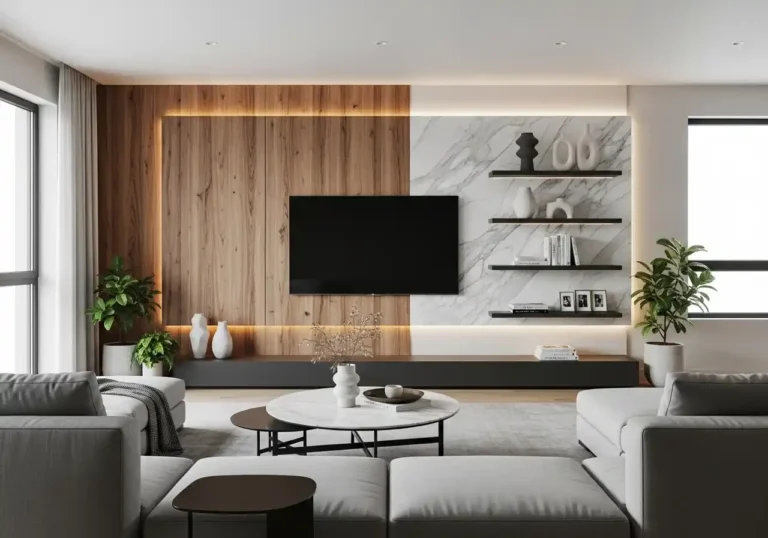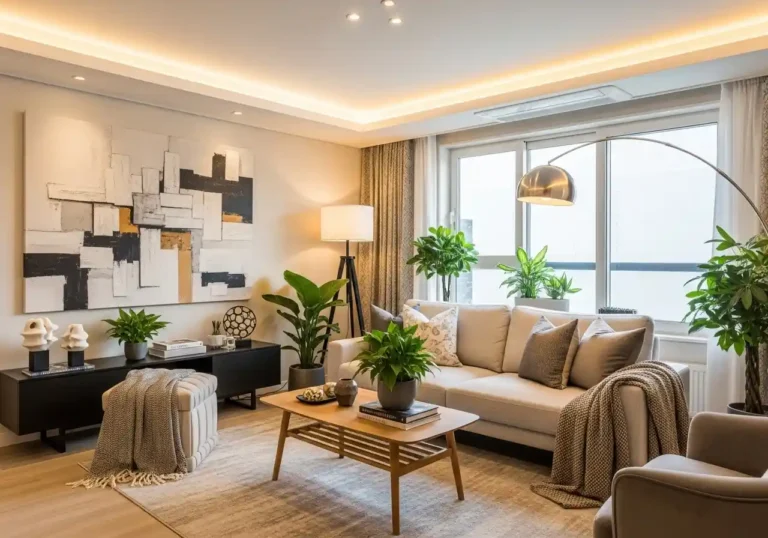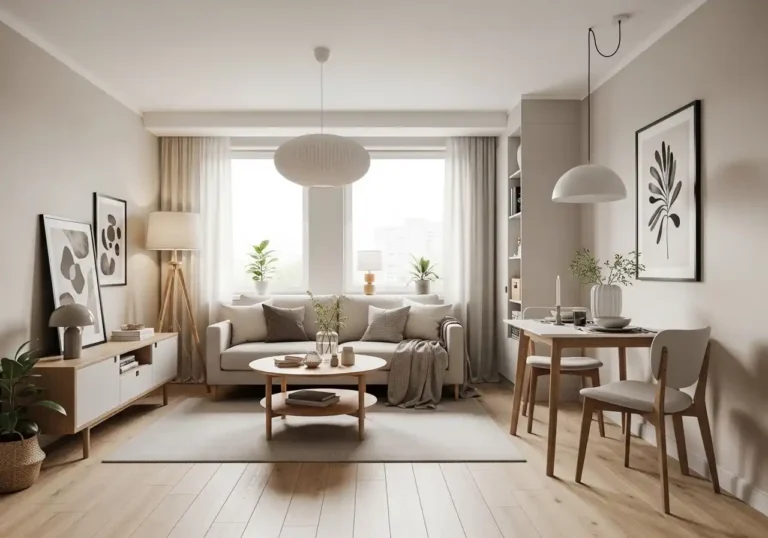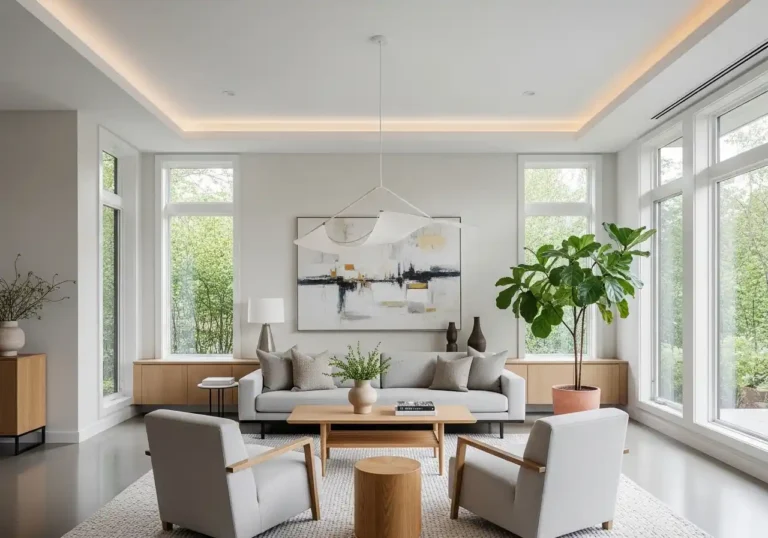
1. Use a Light Color Palette to Visually Expand Your Space
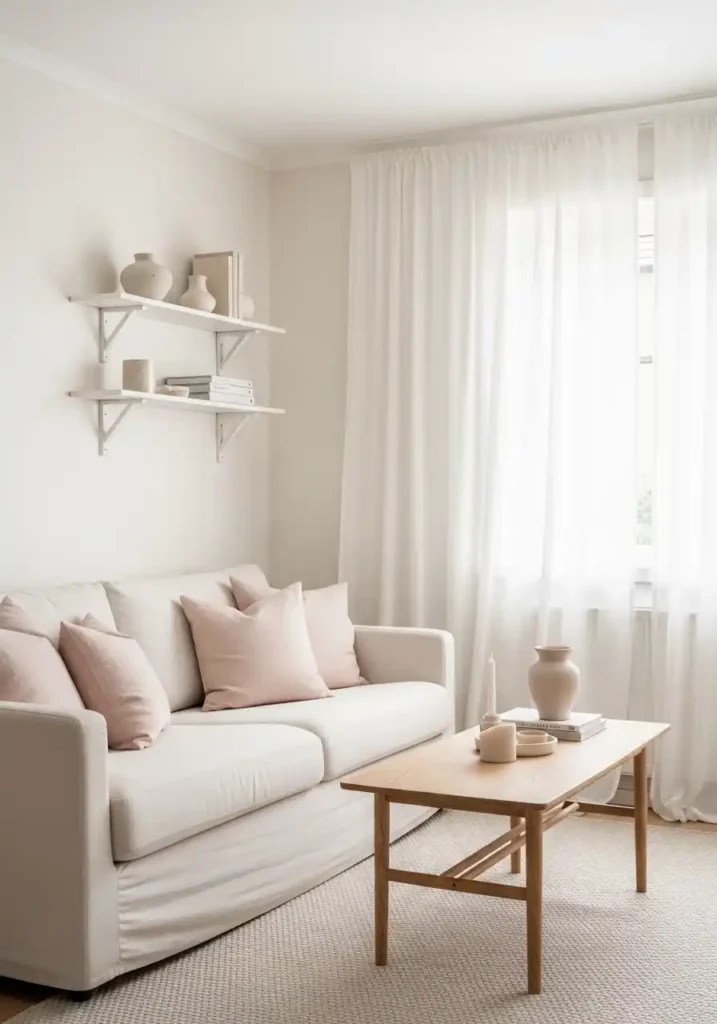
If there is one single design decision that makes a Small Living Room Ideas feel significantly bigger without changing a single structural element, it is committing wholeheartedly to a light, warm color palette from floor to ceiling. Light colors — soft whites, warm creams, pale blushes, and gentle greiges — reflect natural and artificial light around the room in a way that dark colors absorb and hold it, creating a brightness and openness that genuinely tricks the eye into perceiving more space than is actually there. It’s not a design trick — it’s literally how light physics works in your favor.
The beauty of a light palette in a small living room is how much creative freedom it actually gives you within its gentle constraints. Vary your whites and creams deliberately — warm ivory walls against a slightly cooler cream sofa against a natural linen rug creates visual depth and interest without introducing color that would visually shrink the space. Layer textures generously: a ribbed cushion, a waffle-weave throw, a smooth marble side table, and a rough jute rug all read as different within the same family of tones. Keep window treatments sheer so every possible photon of natural light enters freely and works its magic all day long.
2. Choose a Sofa with Exposed Legs to Create Visual Breathing Room
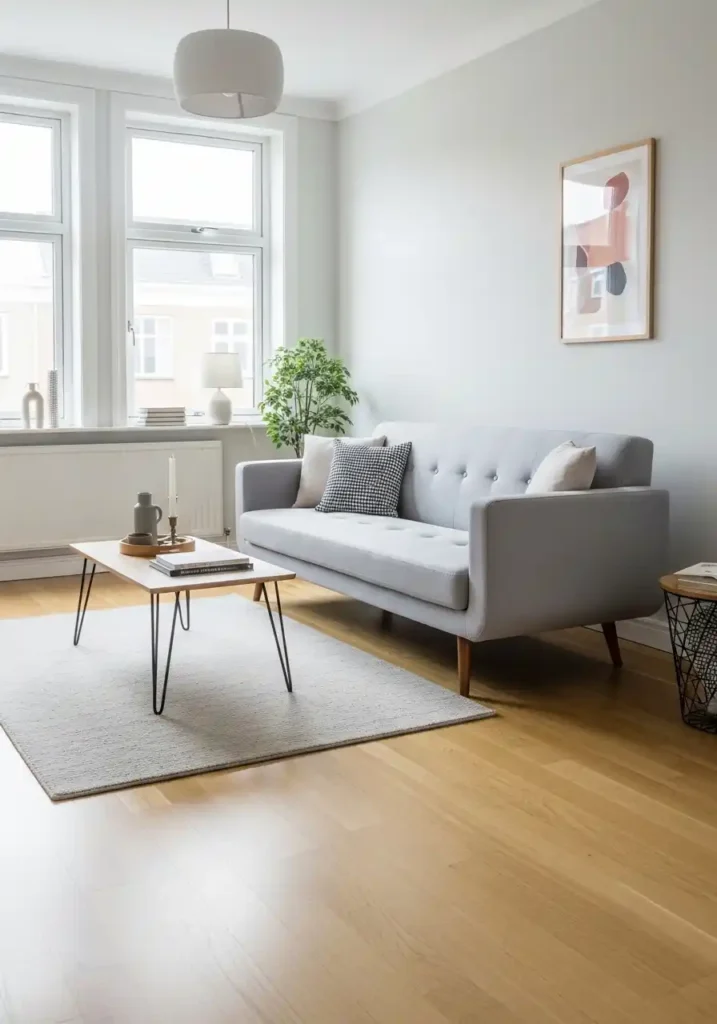
One of the most underestimated small living room secrets that professional interior designers use constantly is choosing furniture with exposed legs rather than pieces that sit directly on the floor. When you can see the floor running continuously beneath your sofa, armchairs, and side tables, your eye reads the room as more open and more spacious because the floor plane feels uninterrupted. A sofa that sits directly on the floor creates a visual barrier that stops the eye and makes the room feel more filled and more cramped, even when the actual footprint of both sofas is identical.
The most beautiful furniture pieces for achieving this effect are those with slender, tapered legs in natural wood tones — mid-century modern designs are particularly brilliant for this because their entire aesthetic is built around this elegant, elevated approach. Choose a sofa with legs in walnut or oak that position the seat height correctly while allowing at least five to six inches of visible floor beneath the base. Apply the same principle to your coffee table — hairpin legs on a marble or wood top are both incredibly stylish and visually weightless. Armchairs on slim legs, side tables on delicate frames, and even your TV unit elevated on thin legs all contribute cumulatively to a room that breathes.
3. Install Floor-to-Ceiling Curtains to Make Walls Feel Taller
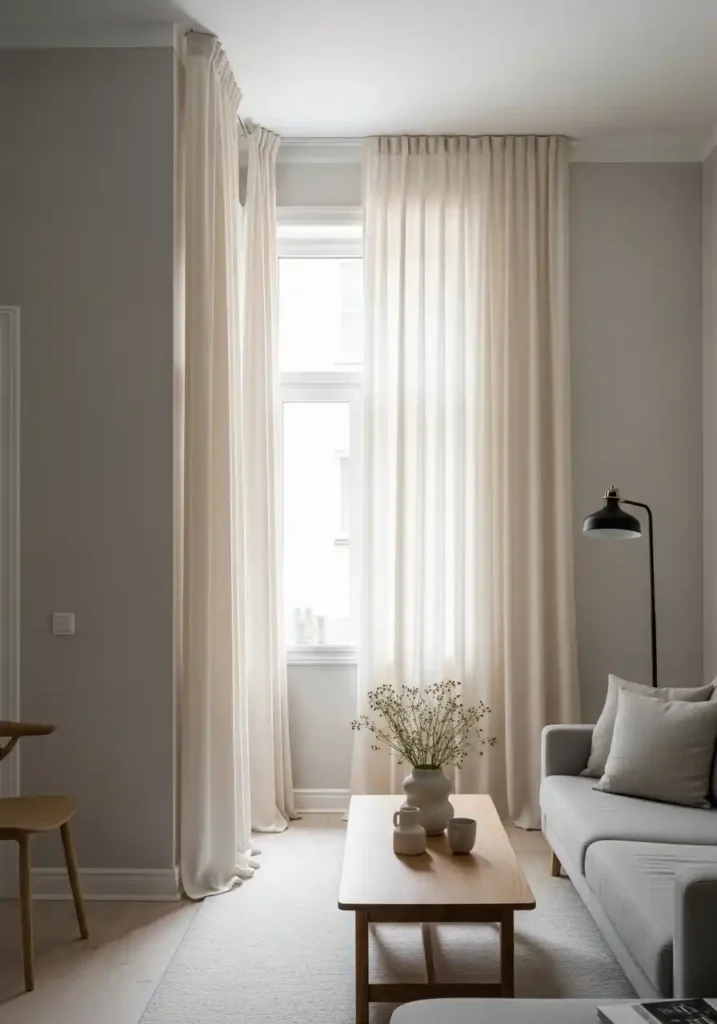
Here is a curtain secret that interior designers charge good money to share with their clients: always, always hang your curtains as close to the ceiling as possible — never at the top of the window frame where most people instinctively place them. When curtain rods are mounted just an inch or two below the ceiling and the curtains fall dramatically all the way to the floor, the eye follows that vertical line upward and reads the ceiling as significantly higher than it actually is. In a small living room where ceiling height is everything, this is a completely free visual upgrade that transforms the entire sense of the space.
Beyond the height illusion, floor-length curtains in a small living room add a softness, a luxury, and a sense of occasion that shorter curtains simply cannot provide. Choose fabrics that are light and slightly sheer — a natural linen or a soft cotton voile in warm white or ivory allows diffused light to glow through beautifully while still providing privacy when needed. Make your curtain panels wide enough to extend well beyond the window frame on each side so that when open, they stack entirely off the glass, maximizing every precious inch of natural light entering the room. This one change — hanging curtains correctly — consistently ranks as one of the most impactful small room transformations possible.
4. Pick a Loveseat Instead of a Full Sofa
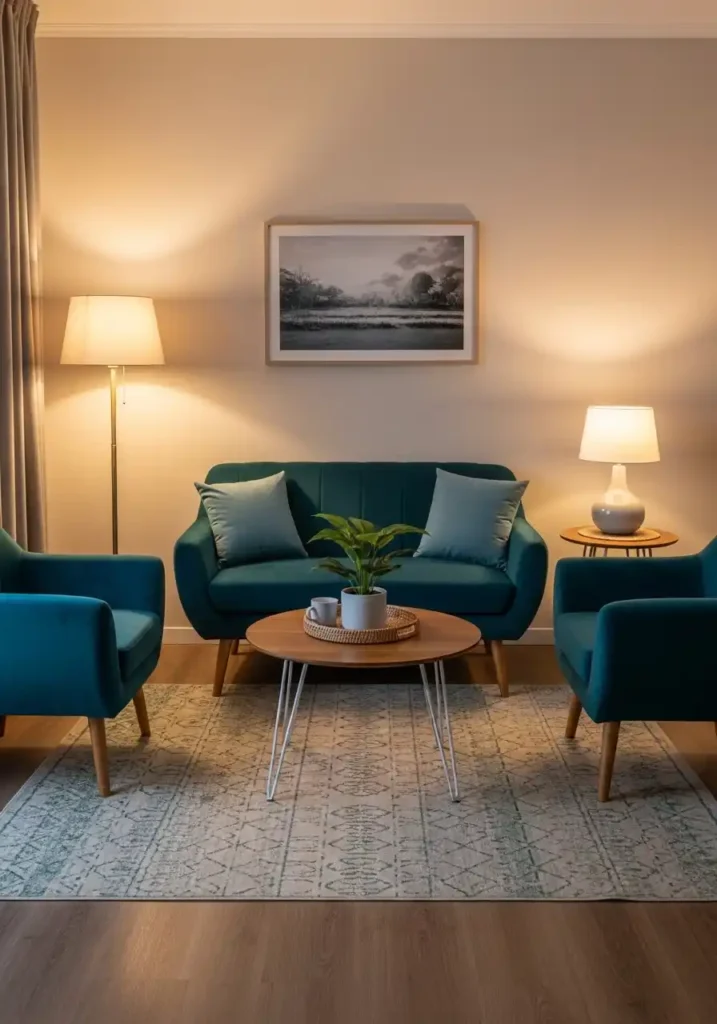
The single most common small living room mistake people make is forcing a full-size three-seat sofa into a space that genuinely cannot accommodate it comfortably — and then spending years navigating around furniture that crowds every pathway and makes the room feel perpetually overwhelming and tight. Choosing a loveseat instead of a standard sofa is not a compromise or a sacrifice; it’s a smart, design-savvy decision that opens up a world of possibilities in a compact living room. A well-chosen loveseat can be every bit as comfortable, every bit as stylish, and far more suited to the actual scale of your space.
The design freedom that choosing a loveseat unlocks is genuinely exciting. With the floor space reclaimed from an oversized sofa, you can create a more dynamic, more interesting seating arrangement than a single large sofa ever allows. Pair your loveseat with two beautiful accent chairs positioned across from it, creating a conversational grouping that feels intentional and welcoming rather than cramped. Add a small round coffee table in the center — round tables work brilliantly in small rooms because they have no sharp corners to navigate around — and suddenly you have a living room that looks like it was designed by someone who truly understood the space they were working with.
5. Use Mirrors Strategically to Double Your Visual Space
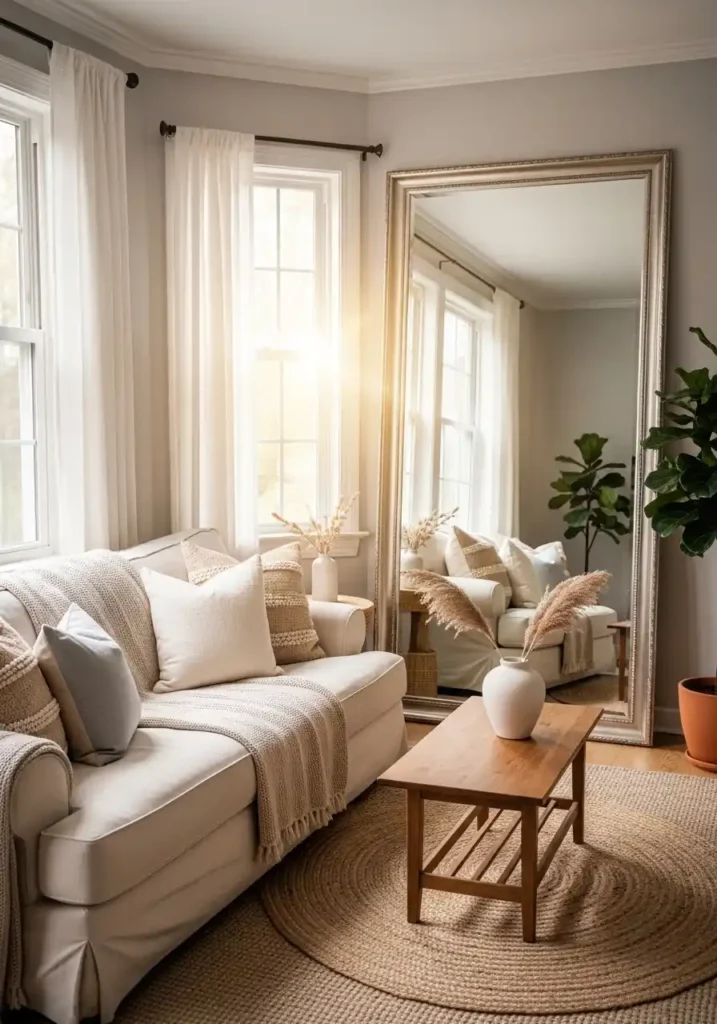
Mirrors are the small living room designer’s single most powerful tool — and most people use them timidly when they should be using them boldly, strategically, and with complete confidence. A large mirror placed directly opposite a window doesn’t just reflect the view — it literally creates the visual impression of a second window in the room, doubling the perceived sources of natural light and making the space feel like it opens outward in a direction it physically cannot. The room appears to extend beyond its walls, and that illusion of depth is one of the most effective spatial tricks available to anyone working with limited square footage.
The key to using mirrors effectively in a small living room is thinking about placement before you think about style. Position your largest mirror on the wall that directly faces your primary light source — whether that’s a window, a glass door, or a particularly bright corner — and watch what happens to the room’s brightness and perceived depth. A large floor-length mirror leaning against a wall reads as more casual and contemporary than a wall-hung piece, and it can be repositioned easily as you evolve your room’s layout. A gallery of smaller mirrors grouped together creates a similar light-bouncing effect with an artistic, eclectic quality. Either approach transforms a dark, compressed space into something that genuinely surprises you.
6. Mount Your TV on the Wall to Free Up Floor Space
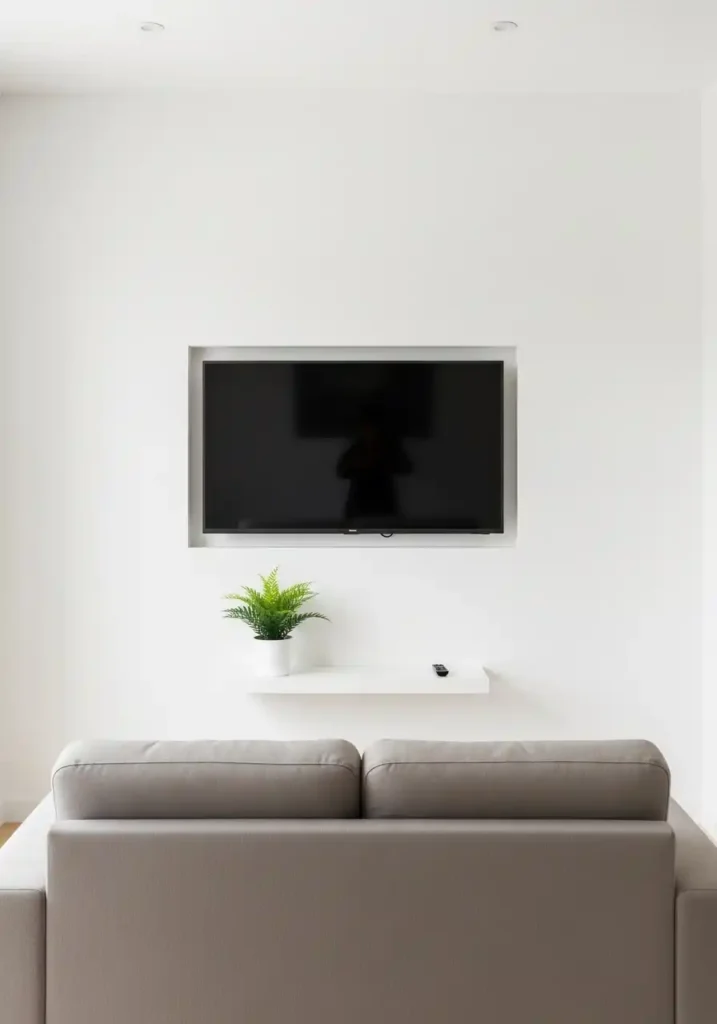
A TV stand or media unit is often the single largest piece of furniture in a small living room after the sofa — and it’s one of the most liberating design decisions you can make to simply eliminate it entirely by mounting your television directly to the wall. Wall-mounted TVs free up the entire floor plane that a media console would otherwise occupy, which in a small room can represent a genuinely significant amount of precious square footage. Beyond the spatial benefit, a flush wall-mounted TV with concealed cables has an incredibly clean, contemporary look that makes a small room feel intentionally and professionally designed.
The practical considerations of wall-mounting your TV are worth addressing properly because a beautifully mounted TV with cables trailing visibly down the wall immediately loses most of its spatial and aesthetic benefit. Invest the time and small cost of either routing cables within the wall cavity using a cable management kit, or using a slim surface-mounted cable channel that can be painted to match the wall and virtually disappears from view. Below the mounted TV, resist the temptation to place a console unit — a single slim floating shelf that holds only the absolute essentials maintains the open, uncluttered floor plane that was the whole point of mounting the TV in the first place.
7. Invest in a Nesting Coffee Table Set
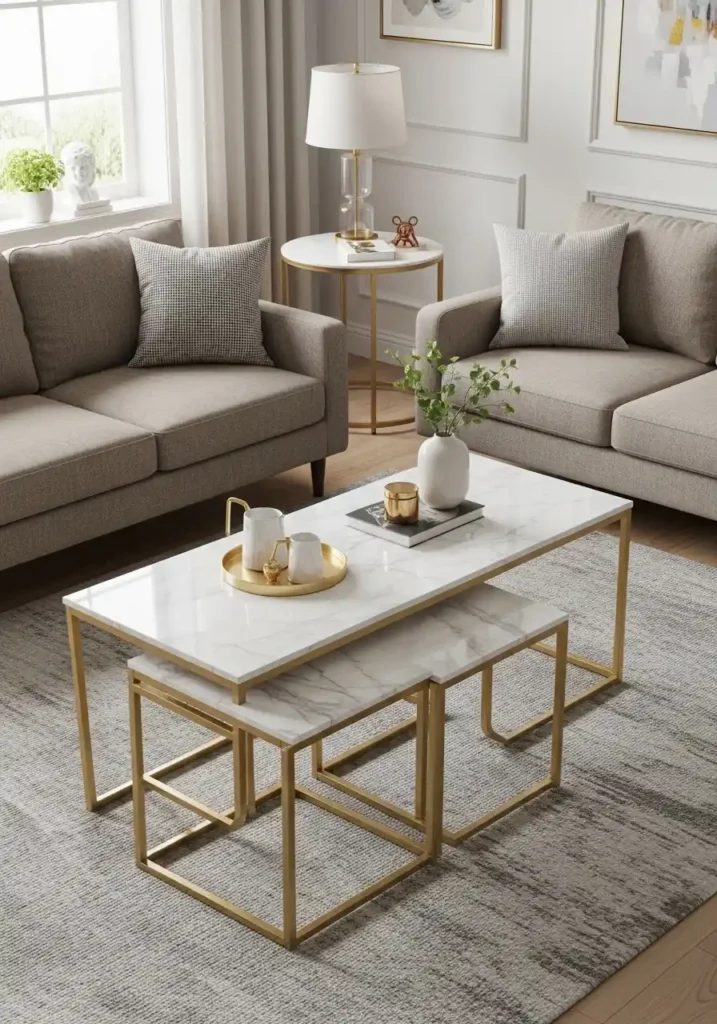
The standard coffee table — typically a large, fixed rectangle that occupies the center of every living room regardless of whether the full surface is needed at any given moment — is one of the most space-inefficient pieces of furniture in existence when you’re working with a small room. A nesting coffee table set is the genius alternative that gives you all the surface area you need when entertaining or working from the sofa, and then consolidates back into a compact, stylish footprint for everyday use. It’s furniture that genuinely adapts to your life rather than forcing your life to navigate around it.
Beautiful nesting tables are available in a remarkable range of materials and styles that suit every possible interior aesthetic. For a contemporary room, a set of round tables in marble with slender brass legs adds genuine luxury and elegance at a much smaller visual scale than a traditional coffee table. For a Scandinavian-inspired space, nesting tables in light ash wood with clean geometric forms feel perfectly at home. For an industrial aesthetic, a set of circular tables in concrete and blackened steel makes a strong statement. The key in every case is choosing tables that are genuinely beautiful individually, so that when the smaller tables emerge from beneath the larger one, the room looks deliberately styled rather than like furniture is multiplying unexpectedly.
8. Use Vertical Wall Space for Storage and Display
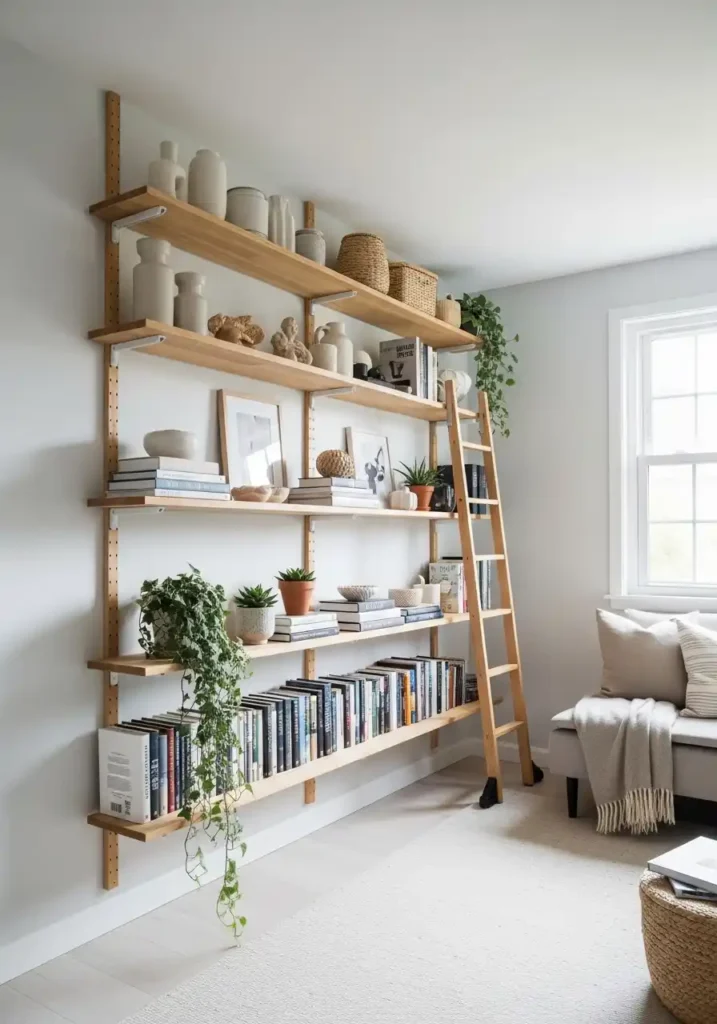
In a small living room, the floor is your most precious and limited resource — which means that every storage and display that can be lifted off the floor and moved onto the walls is a win of enormous proportions. Vertical wall storage using floating shelves mounted from just above head height all the way up to the ceiling accomplishes two things simultaneously: it provides abundant storage and display space that costs you zero floor area, and it draws the eye upward in a way that makes the ceiling feel higher and the room feel taller. It’s one of those rare design solutions where function and spatial illusion work together in perfect harmony.
The styling of vertical wall shelves in a small living room requires a conscious balance between storage utility and visual breathing room. Resist the temptation to fill every single inch of every shelf — overcrowded shelves in a small room add to the visual noise that makes compact spaces feel overwhelming. Use higher shelves for less-accessed storage items in attractive baskets or boxes that look organized and intentional. Reserve the shelves at eye level and just above for your most beautiful books, plants, and decorative objects, styled with deliberate empty space between groupings. The resulting shelving arrangement provides genuine storage capacity while contributing to the room’s aesthetic rather than undermining it.
9. Choose a Round Coffee Table to Improve Flow
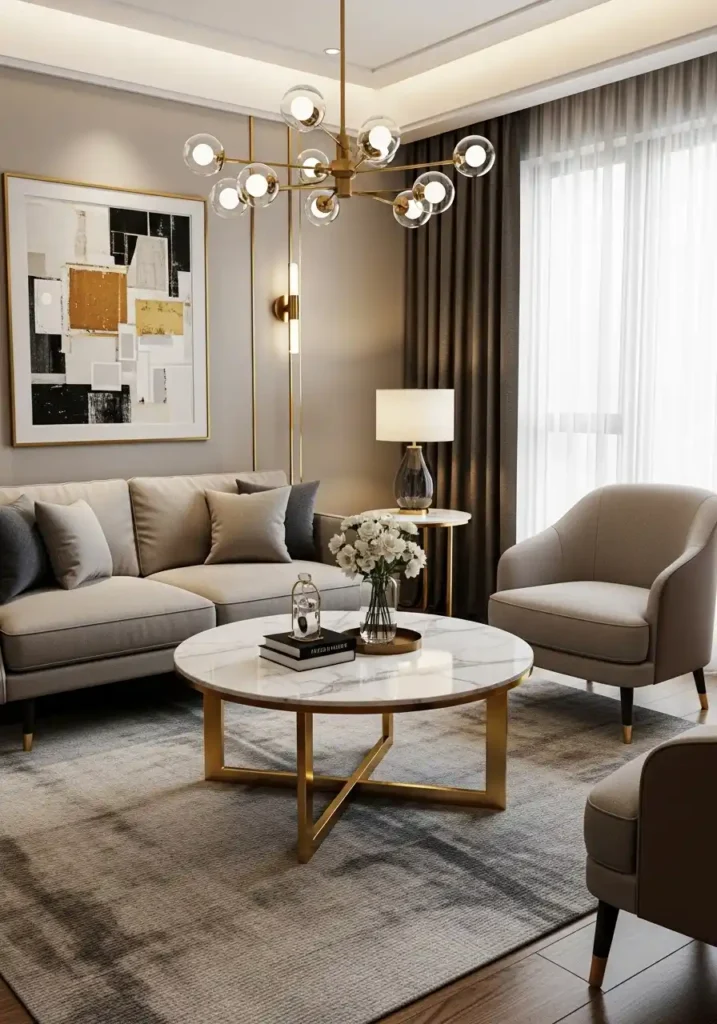
Sharp corners are the enemy of small living rooms — not because they’re aesthetically unpleasant, but because they physically require more clearance to navigate around comfortably, and in a tight space, every inch of circulation pathway matters enormously to how the room actually feels to move through and live in. A round coffee table solves this problem beautifully and completely: with no corners to catch your shins or require extra navigation clearance, a circular table allows seating to be arranged more closely and circulation to flow more naturally throughout the room. The result is a space that feels easier, more relaxed, and more genuinely livable.
The design benefits of a round coffee table extend well beyond its practical spatial advantages. Circular forms introduce a softness and organic quality into living rooms that tend to be dominated by the straight lines and right angles of walls, sofas, and shelving units — and that contrast between round and straight creates a visual dynamism that makes a small room feel more considered and more interesting. Choose a round coffee table in a material that adds richness and character: a genuine marble top with a brass or painted steel base, a solid wood circle in a warm natural finish, or a glass top on a sculptural geometric base all bring beauty to the center of the room while keeping the visual weight light and the floor plane as open as possible.
10. Use a Sofa Table Behind Your Sofa for Extra Surface Space
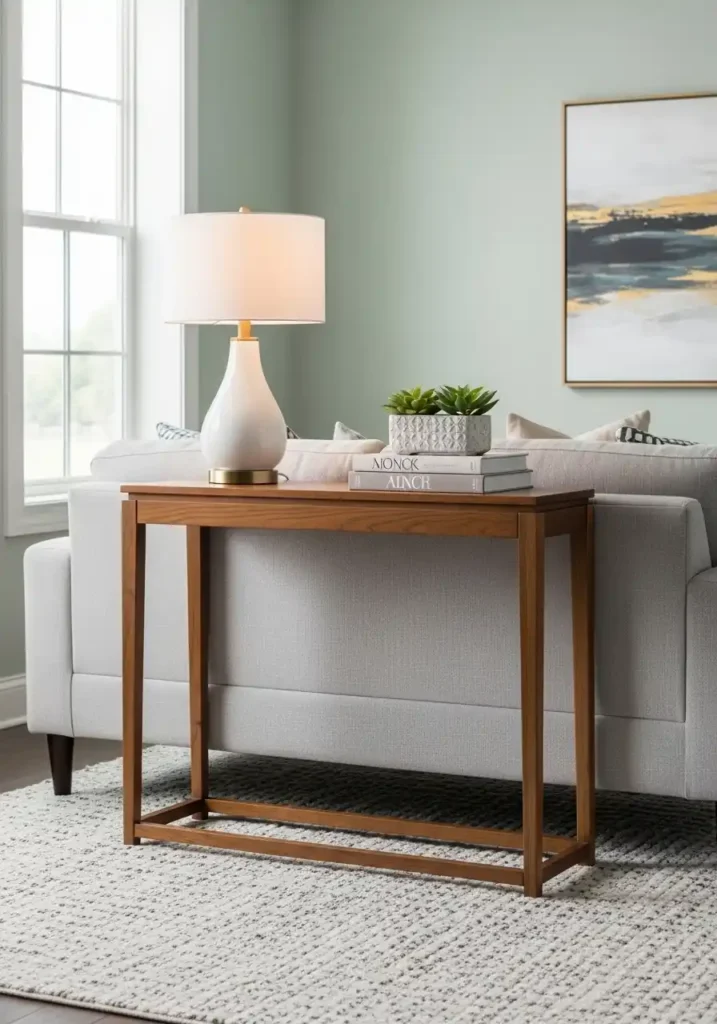
Floating your sofa away from the wall — which is the correct way to arrange furniture in almost every living room, regardless of size — creates a gap between the sofa back and the wall that can feel awkward and wasted in a small space. The sofa table, a slim console table positioned directly behind the sofa, is the elegant solution that transforms this potentially awkward gap into one of the most useful and beautiful spots in the entire room. A console table requires virtually no additional floor footprint beyond what the sofa already occupies, yet it provides an entire extra surface for lamps, plants, books, and display objects that would otherwise need to be accommodated elsewhere.
The right sofa table for a small living room is one that is genuinely slim — no deeper than twelve to fourteen inches — and at a height that sits just at or slightly below the top of your sofa’s back. This proportion ensures the table reads as a cohesive part of the sofa arrangement rather than an awkward afterthought positioned behind it. Style your sofa table with a tall table lamp on one end that casts warm light across the whole seating area, a small plant or trailing vine that softens the arrangement, and a small stack of beautiful books or a sculptural object in the center. This single addition makes a small living room feel layered, designed, and significantly more spatially sophisticated than it did before.
11. Go Monochromatic to Create Seamless Visual Flow
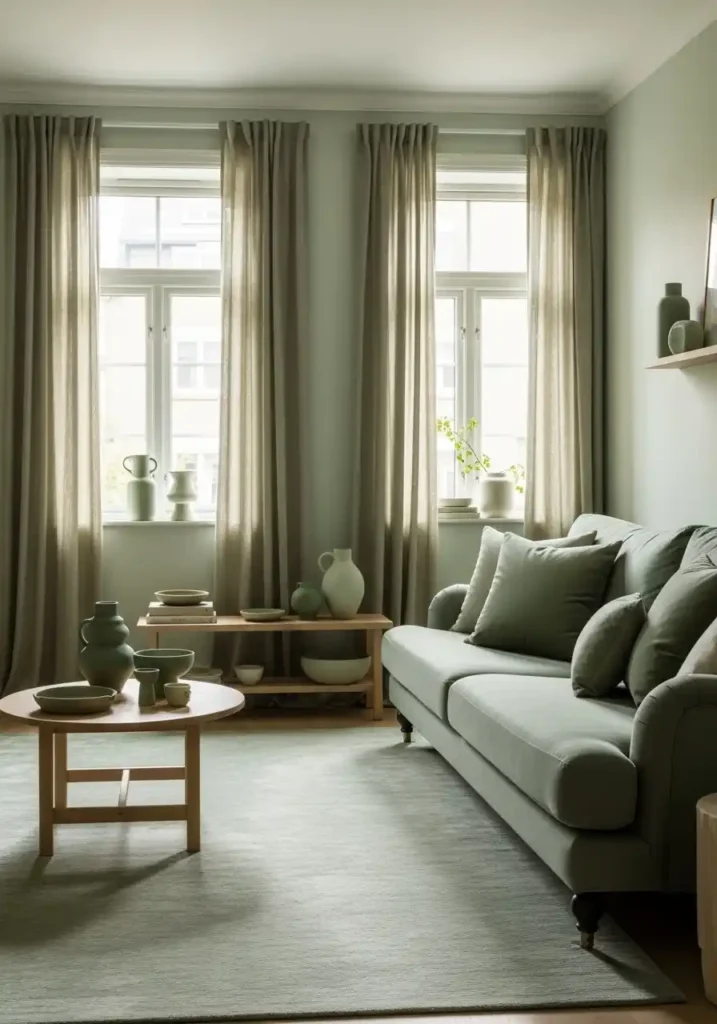
Color contrast — the visual tension between different colors in a room — is one of the primary reasons small living rooms feel even smaller than they actually are. Every time your eye encounters a significant color change as it scans the room, it registers a visual boundary, and the cumulative effect of many such boundaries in a compact space is a room that feels chopped up, busy, and compressed. A monochromatic color scheme eliminates those visual boundaries by wrapping the room in tonal variations of a single color, allowing the eye to travel continuously and uninterrupted across walls, furniture, and floor — creating a sense of seamless, flowing space that makes the room feel significantly larger.
The most successful monochromatic small living rooms work with warm, mid-tone colors that are rich enough to create interesting tonal variation but not so dark that they absorb light and compress the space. Warm sage green is having an extraordinary moment right now and works beautifully for this approach: sage walls, a sage sofa in slightly different texture, deeper sage velvet cushions, lighter sage linen curtains, and a sage-toned rug create a room wrapped entirely in one harmonious, deeply beautiful color family. Layer in natural materials — wood, rattan, ceramic — in their own natural tones to add warmth and contrast without breaking the monochromatic spell. The result is a room of surprising sophistication and apparent spaciousness.
12. Install Built-In Window Seat with Hidden Storage
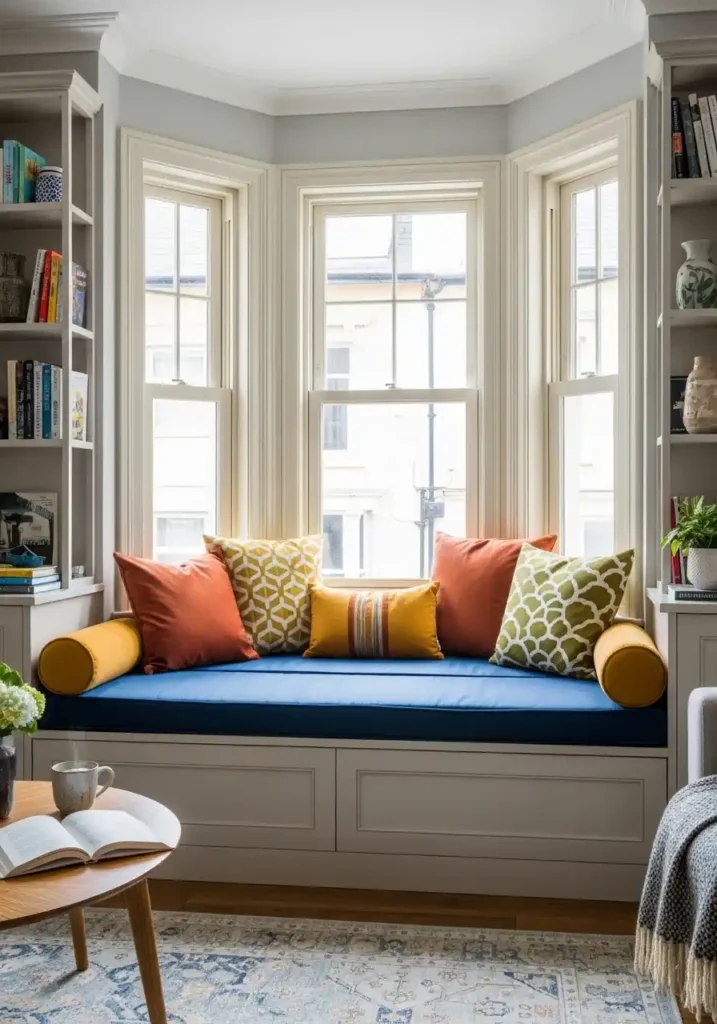
If your small living room has a bay window, an alcove, or any kind of architectural recess, you are sitting on a design opportunity of genuine magnitude — and a built-in window seat with hidden storage is the way to unlock it completely. A window seat transforms dead architectural space that typically does nothing beyond existing into the most beloved, most used, and most photographed spot in the entire home. It provides seating, it provides the best natural light in the room, it creates the coziest reading nook imaginable, and with a lift-up seat lid concealing deep storage below, it solves a small home’s storage challenges beautifully and invisibly.
The details that make a window seat truly special are worth investing in properly. Have the seat upholstered in a durable, beautiful fabric — a cotton canvas, a woven texture, or a performance velvet in a color that either complements or beautifully contrasts your sofa. The seat cushion should be generously thick — at least four to five inches of good foam — so it’s genuinely comfortable to sit on for extended periods rather than just for occasional perching. Build shallow bookshelves into the alcoves on either side of the window seat to create a reading nook that has everything you need within arm’s reach. Add three to five generous throw cushions for back support and softness. This spot will immediately become where everyone wants to sit.
13. Choose Furniture with Built-In Storage
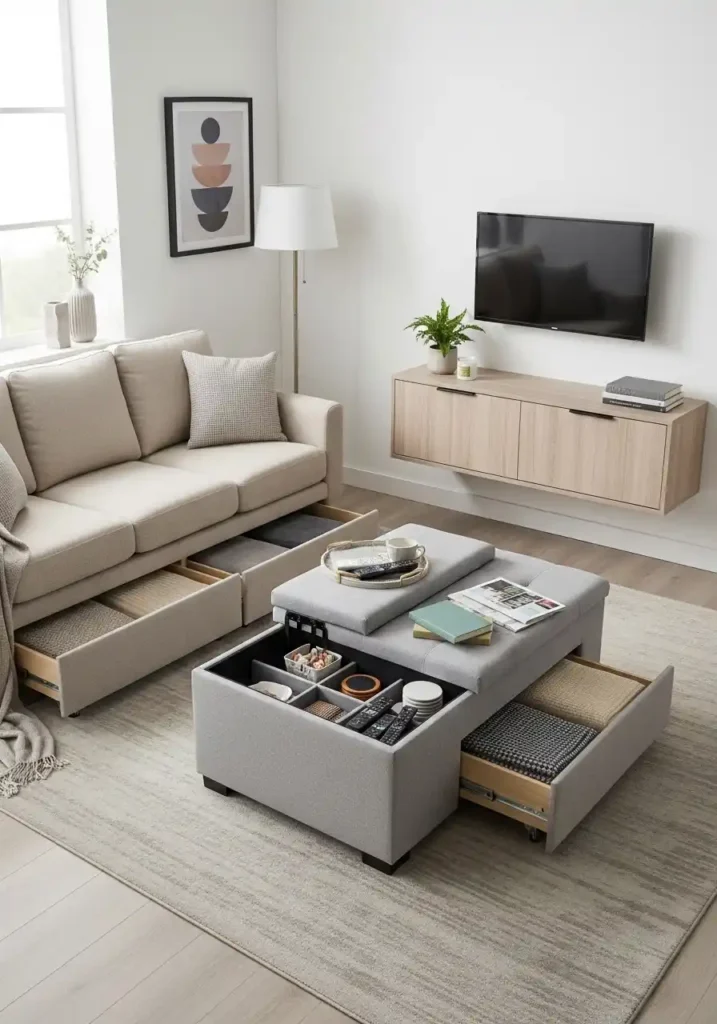
In a small living room, every piece of furniture that occupies floor space needs to justify its presence by working as hard as it possibly can — and furniture with built-in storage is the most efficient way to ensure that every square inch of your room is contributing to both the function and the aesthetic of the space simultaneously. Storage ottomans, sofas with under-seat drawers, coffee tables with shelving or lift-top compartments, and media units with closed cabinet storage are all furniture pieces that pull double duty beautifully, meaning you need fewer total pieces in the room to meet your living and storage needs.
The most transformative storage furniture choice in a small living room is almost universally the storage ottoman used in place of a traditional coffee table. A large, firm ottoman with a tray on top provides the coffee table surface you need for drinks and books, adds a comfortable footrest and occasional extra seating for guests, and conceals an interior storage compartment large enough for throw blankets, gaming controllers, children’s toys, or any other living room clutter that would otherwise need its own dedicated home. Choose an ottoman upholstered in a durable, beautiful fabric that coordinates with your sofa and add a tray in marble, wood, or brass on top to style it as a proper coffee table surface.
14. Hang Artwork High to Draw Eyes Upward
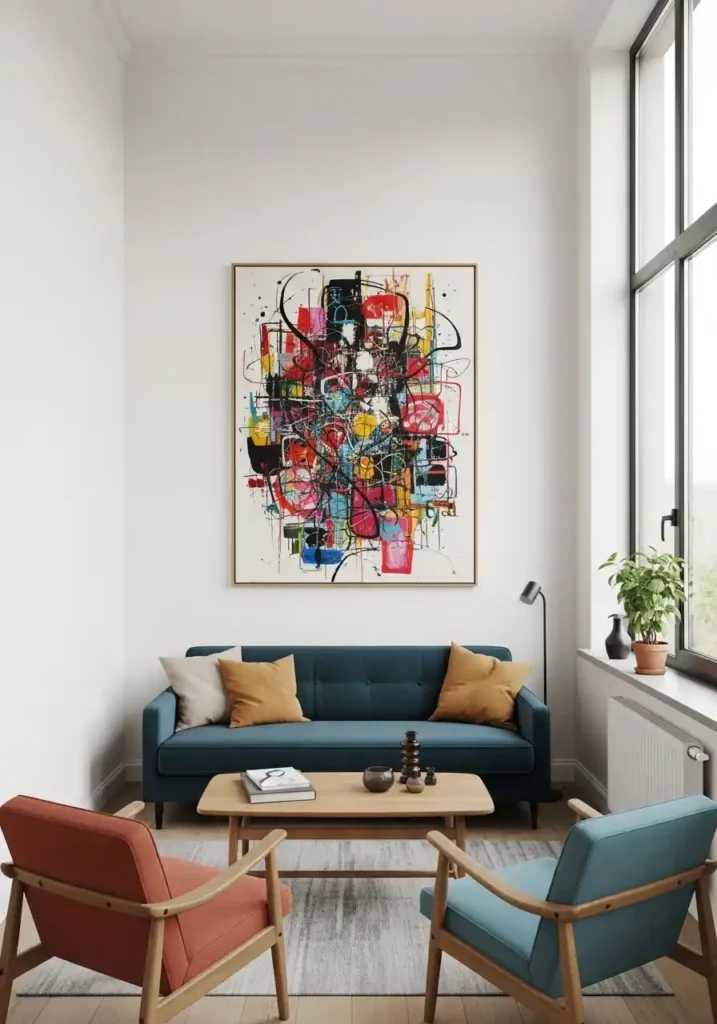
Most people hang art too low in their living rooms — positioned at standard eye level in a way that anchors the room’s visual weight in the middle and lower zones of the wall, subtly emphasizing the horizontal rather than the vertical. In a small living room where creating a sense of height is one of your primary spatial goals, hanging artwork deliberately higher than feels immediately comfortable — closer to the ceiling than to the top of your sofa — draws the eye upward along the wall and creates a perception of greater ceiling height and vertical spaciousness that works in your favor every single time you use it.
The practical magic of high-hung artwork in a small room is that it shifts where the room’s visual weight sits, redistributing it into the upper zone of the wall and creating a more airy, gallery-like atmosphere at the living space level below. Choose one large piece rather than a collection of smaller pieces for the most impactful spatial effect — a single large canvas or print hung high and confidently creates a stronger vertical pull than several smaller works hung at conventional height. Keep the wall below the artwork largely clear of furniture and décor so the eye can travel freely upward from the floor to the artwork without interruption. The effect is a room that feels taller, grander, and more spaciously elegant than its square footage suggests.
15. Use a Transparent Acrylic or Glass Coffee Table
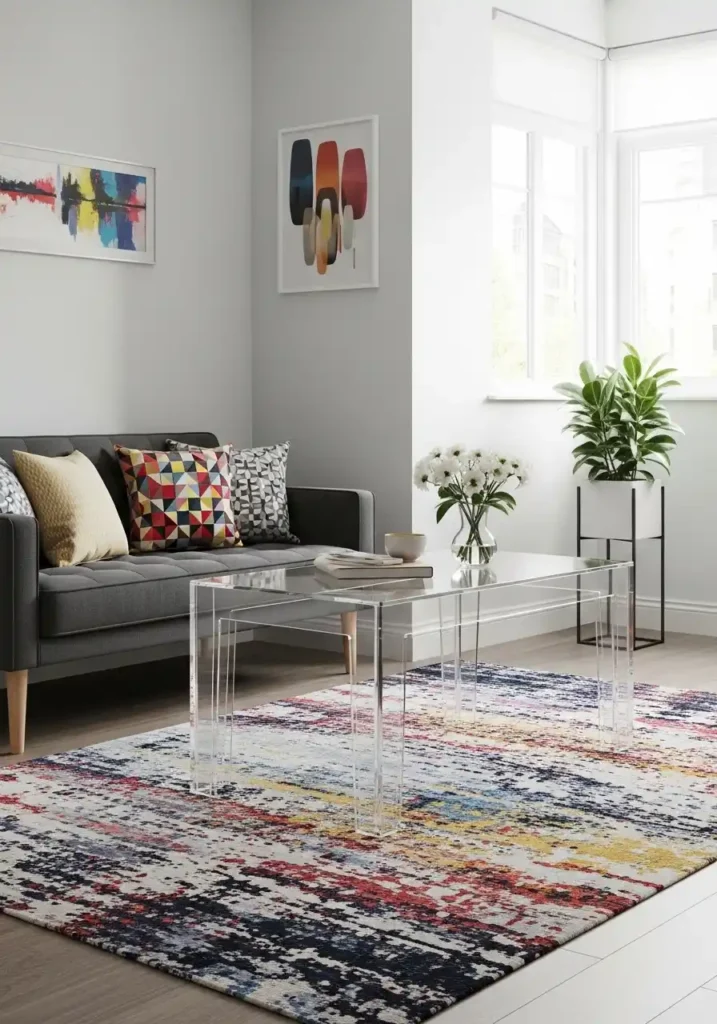
The transparent coffee table — whether crafted in clear acrylic, ghost resin, or tempered glass — is one of the most consistently effective small living room design tools because it provides all the functional surface area of a traditional coffee table while contributing virtually zero visual weight to the room. When your eye scans the living room, it passes right through a transparent table as though it barely exists, allowing the floor plane and the rug beneath it to read as uninterrupted and continuous. The result is a room that feels more open, more spacious, and less filled with furniture than the exact same room with a solid coffee table of identical dimensions.
Ghost acrylic coffee tables have become enormously popular and widely available in recent years, making this spatial design trick more accessible than ever before. The most beautiful versions are those crafted from thick, clear acrylic in simple geometric or organic sculptural forms — a rectangle, a cylinder, or a gently curved organic shape all work beautifully and add a contemporary sculptural quality to the room that is genuinely stylish rather than just spatially clever. Paired with a beautifully patterned area rug — Moroccan, geometric, botanical, or abstract — the transparent table becomes a window that frames and showcases the rug design below it, turning the floor itself into a piece of art that the whole room revolves around.
16. Create Zones with a Rug to Define the Living Area
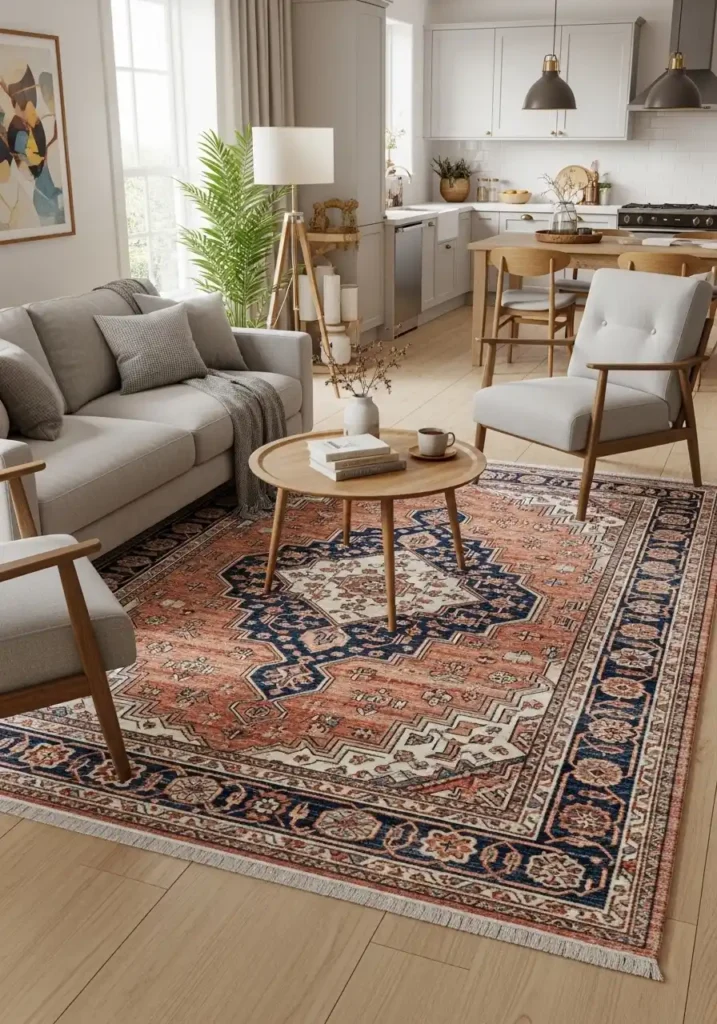
In a small open-plan living space — or a compact room that flows into a kitchen or dining area — one of the most common design challenges is creating a sense of defined, cozy intimacy for the living room zone without physically dividing the space with walls or partitions. An area rug is the most elegant, most effective, and most flexible solution to this challenge that exists in interior design. A well-chosen, correctly sized rug placed beneath the living room furniture arrangement creates an immediate visual boundary that defines the zone, anchors the furniture grouping, and gives the seating area its own distinct sense of place and purpose within the larger space.
Correct rug sizing is the single most important decision in this approach — and the most common mistake is choosing a rug that is too small, which creates a postage stamp effect where the rug sits only under the coffee table and the furniture arrangement floats disconnectedly around it. For a living room seating arrangement, the rug should be large enough that at least the front legs of every seating piece — sofa, armchairs, loveseat — rest on it. This grounds the entire furniture grouping on the rug and creates the sense of a cohesive, contained living zone. Choose a pattern or texture that adds warmth and visual interest from above — a Moroccan diamond pattern, a subtle geometric weave, or a plush textured pile all work beautifully.
17. Embrace Dual-Purpose Furniture — The Ottoman That Does Everything
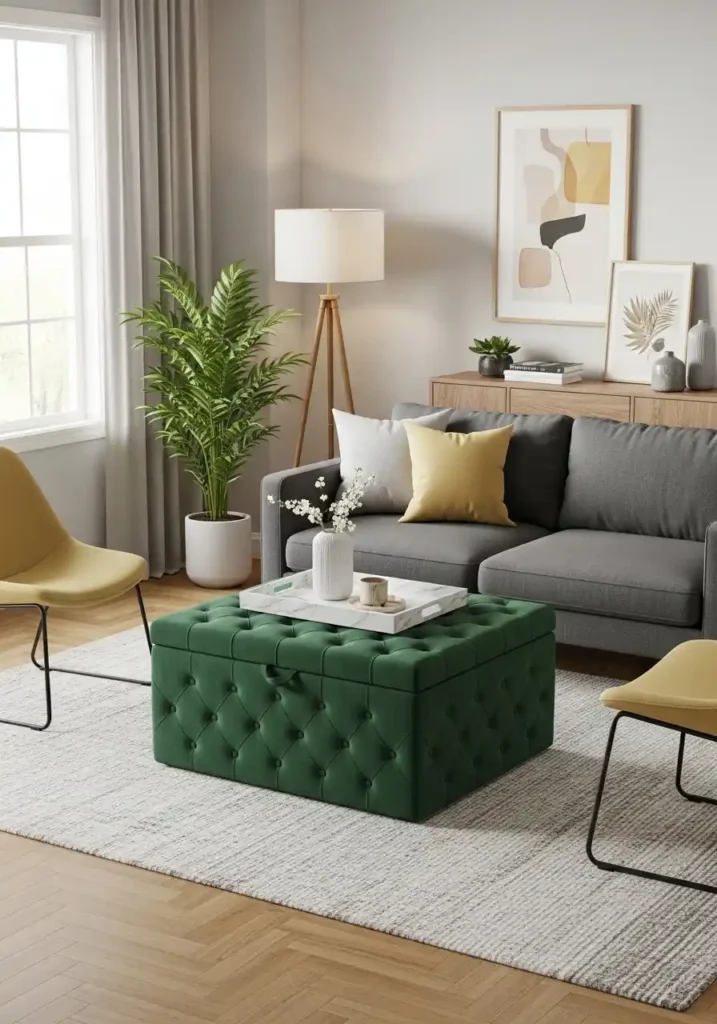
The humble ottoman is the most versatile, hardest-working, and frankly most underappreciated piece of furniture in the entire world of small space design — and most people use it exclusively as a footrest, which is genuinely like using a Swiss Army knife only to open bottles. A properly chosen large ottoman placed at the center of your living room seating arrangement is simultaneously a coffee table when topped with a tray, an extra seat for guests when the sofa is full, a comfortable footrest during movie nights, a play surface for children, and a hidden storage compartment for everything you need to keep accessible but not visible. Nothing else in your living room does five jobs at once.
Choosing the right ottoman for this role in a small living room means thinking carefully about both scale and structure. The ottoman must be firm enough to function as a proper coffee table surface when a tray is placed on it — a very soft, squishy ottoman will wobble a tray of drinks dangerously and feel unstable as additional seating. Choose a size that fills the center of your seating arrangement appropriately — generally around the same footprint as a coffee table would occupy in that arrangement — and make sure the height sits comfortably relative to your sofa’s seat height. Upholster it in something durable and beautiful: a performance velvet, a woven cotton canvas, or a leather are all excellent choices that stand up to daily multi-purpose use with grace.
18. Go Vertical with Tall Narrow Bookshelves
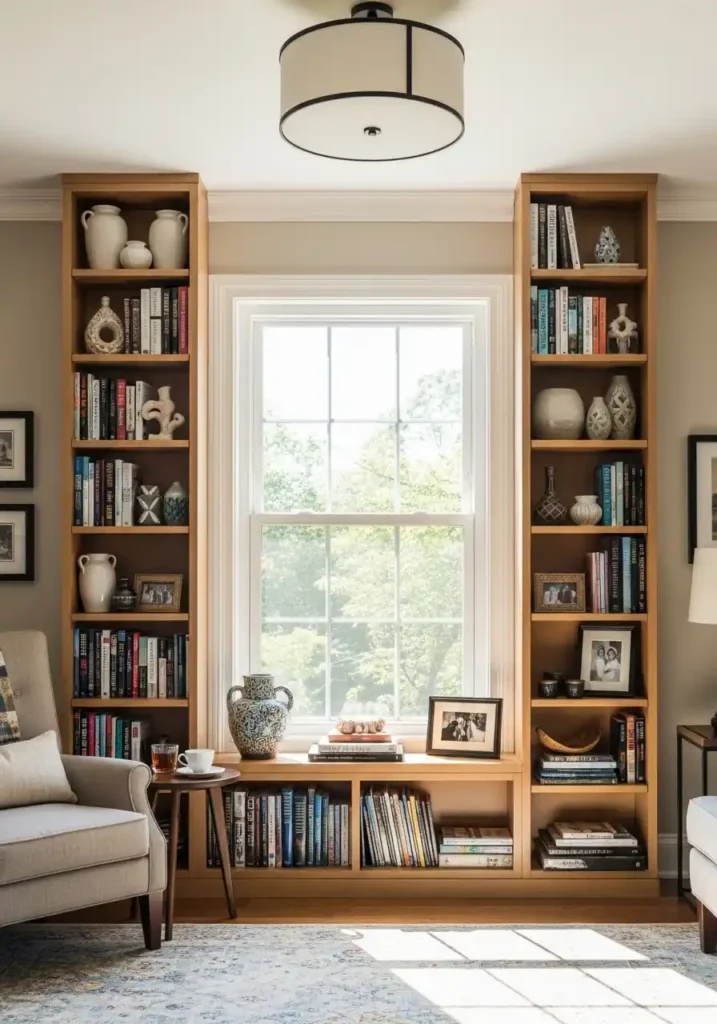
When floor space is at a premium and storage needs are real and pressing, the solution is almost always to build upward rather than outward — and tall, narrow bookshelves that reach confidently toward the ceiling are one of the most beautiful and practical expressions of this principle in a living room context. A bookshelf that stops at shoulder height is using only half of the vertical potential of your wall and providing significantly less storage than one that continues upward. A shelf that reaches to within a foot of the ceiling, by contrast, is exploiting every available inch of the wall plane while simultaneously creating the kind of dramatic vertical architectural presence that makes ceilings feel higher and rooms feel grander.
Flanking a window with two matching tall narrow bookshelves is one of the most transformative small living room moves available to you — it frames the window as a beautiful architectural feature, creates a sense of built-in permanence and intentionality, and provides abundant storage and display space on both sides without blocking any natural light. Style the shelves with a considered mix of books, plants at varying heights, decorative objects, and — critically — some deliberate empty space to allow the eye to rest between the fuller sections. If the upper shelves are difficult to access regularly, use attractive baskets or boxes to store less frequently needed items there, keeping the easily reached lower shelves for books and beautiful objects you interact with daily.
19. Paint Your Ceiling the Same Color as Your Walls
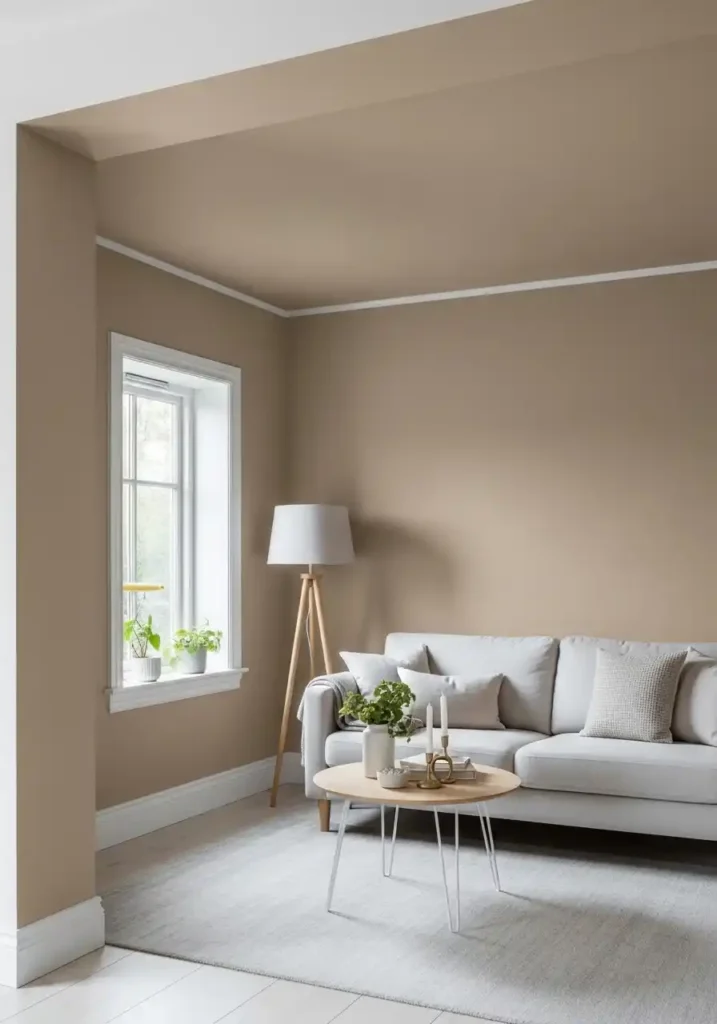
Painting your ceiling white when your walls are colored is the default choice that most people make without ever questioning it — and in a small living room, it’s a choice that actually works against you spatially. A white ceiling above colored walls creates a strong horizontal contrast line where the wall meets the ceiling, and that line visually emphasizes the ceiling height by drawing attention to it in a way that makes low ceilings feel even lower. Painting the ceiling the same color as the walls removes that contrast line completely, dissolving the visual boundary between wall and ceiling and creating an enveloping, cocooning effect that paradoxically makes small rooms feel more spacious and more intentionally designed.
The rooms where this ceiling-color technique is most dramatically effective are those with warm, medium-depth tones — a warm greige, a soft sage green, a dusty blush, or a warm taupe all look extraordinary when wrapped continuously from wall to ceiling without interruption. The room transforms from a box with a ceiling into something more like a beautiful shell or cocoon, and the psychological effect of that shift is genuinely remarkable. Keep your furniture in lighter tones to provide contrast against the wrapped color, and maintain white or very light trim on doors and window frames — that contrast reinforces the room’s architectural structure while allowing the wall-ceiling color continuity to work its spatial magic freely.
20. Use a Slim Console Instead of a Bulky Media Unit
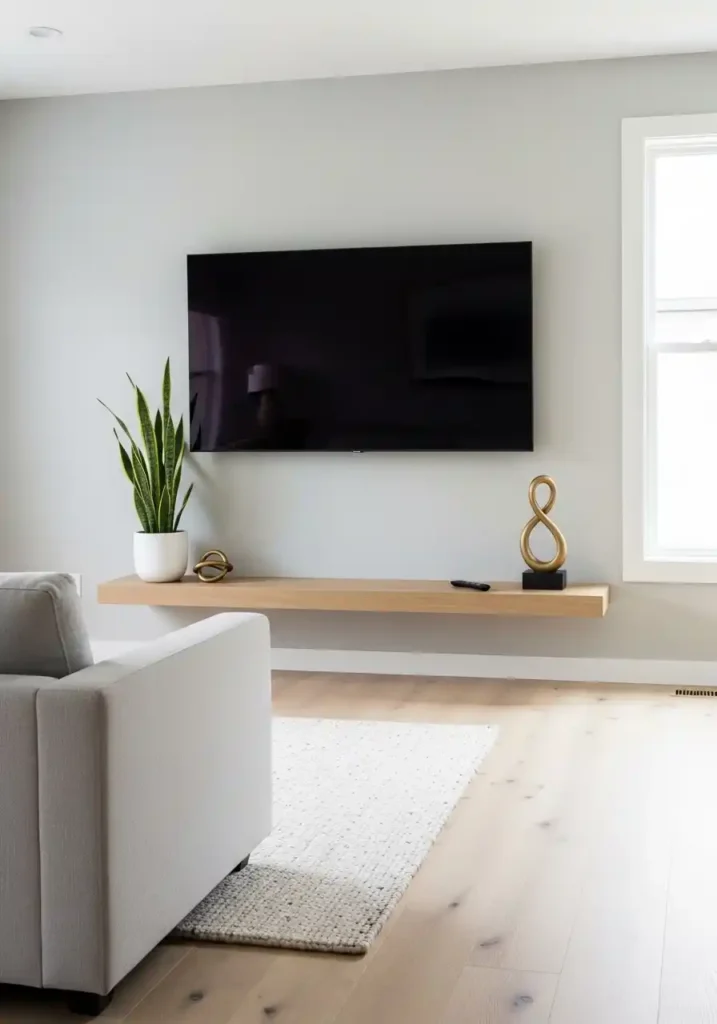
The media unit or TV console is one of the largest and most floor-space-consuming pieces of furniture in most living rooms — and in a small space, a bulky entertainment center with deep cabinets, wide surfaces, and imposing visual mass can dominate the entire room in a way that leaves every other element feeling cramped and crowded around it. Replacing a standard media unit with a genuinely slim, minimal console table is one of the most impactful size-reducing moves you can make in a small living room, eliminating potentially twelve to eighteen inches of depth from the room’s most dominant furniture piece while maintaining a stylish and functional surface below your wall-mounted TV.
The best slim consoles for small living rooms are those with the most refined, minimal profiles possible — legs that are slender rather than blocky, tops that are genuinely narrow, and no additional storage elements that add visual bulk. A sleek console in natural oak with hairpin legs, a slim marble slab on simple black steel supports, or a minimal lacquered console in a tone that blends with the wall behind it are all excellent options that feel deliberately minimal rather than merely insufficient. Style the console surface with restraint: one small plant, one sculptural object, and the TV remote is genuinely all it needs. The floor space reclaimed and the visual lightness gained are both immediately and dramatically apparent.
21. Add a Large Statement Mirror to Fake a Second Room
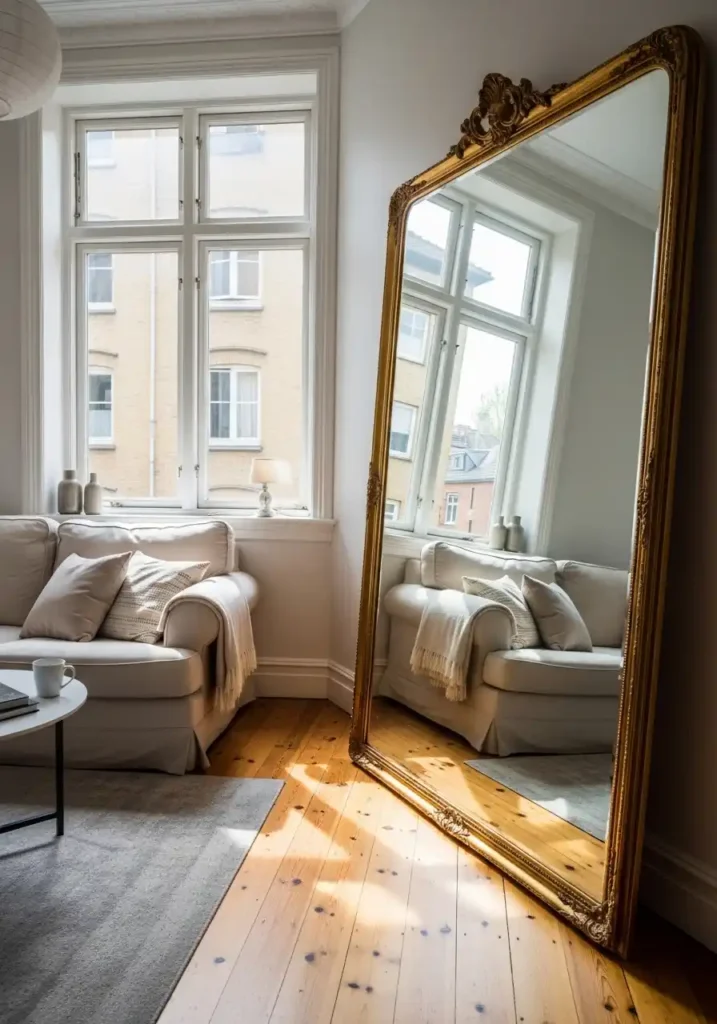
We touched on mirrors earlier, but this idea deserves its own full moment — because using one single, deliberately oversized mirror as a primary design statement in a small living room is so transformative that it genuinely needs to be experienced to be believed. Not a decorative accent mirror, not a small round mirror above the mantel, but a truly large mirror — floor-to-ceiling or at minimum five feet tall — positioned on the wall directly opposite your main window. What happens in that room is architectural magic: the reflected image creates a perfect visual double of the space, convincing the eye that the room extends equally far in both directions. Your small living room suddenly feels like it has a twin.
The frame you choose for this statement mirror determines which design direction your small room takes, which makes it a genuinely exciting decision with real aesthetic impact. A heavily ornate antique gold frame turns the mirror into a piece of baroque decorative art that adds glamour and historical richness to the room. A minimal flat black frame turns it into a graphic architectural element with a clean, contemporary edge. A frameless full-length mirror reads as pure architecture — almost like an opening rather than an object — and creates the most convincing illusion of the space extending beyond the wall. Lean it rather than mounting it for a casual, intentional look that reads as deliberately styled rather than simply hung.
22. Edit Ruthlessly — Less is Always More in a Small Space
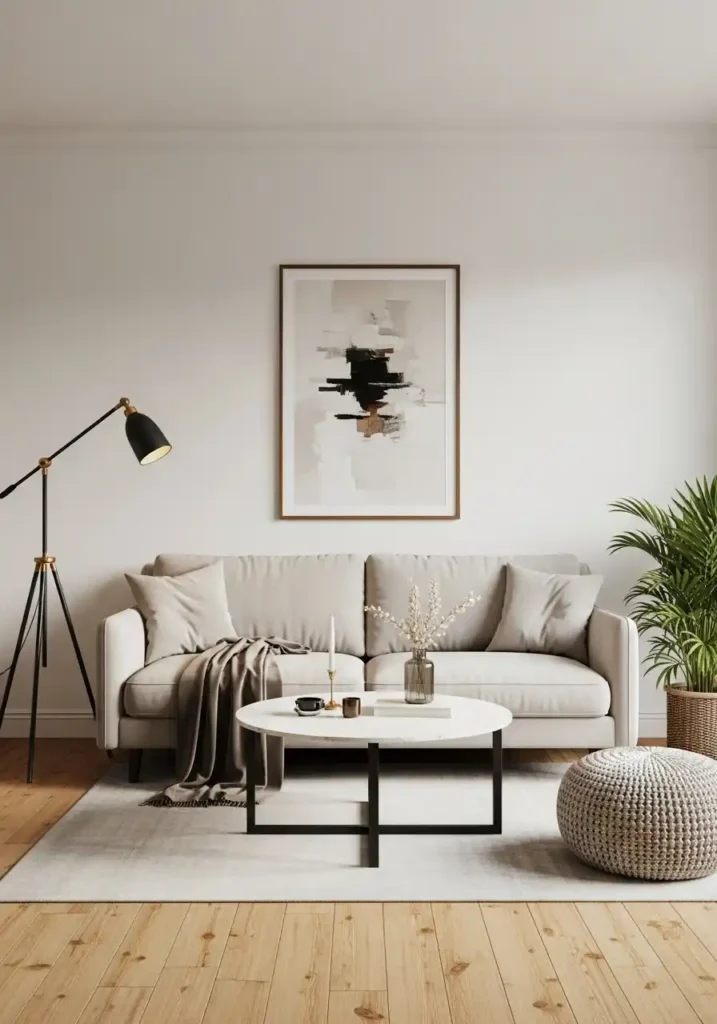
The final and arguably most important idea in this entire guide is also the simplest, the most challenging, and the one that underpins every other small living room strategy: editing. In a small living room, the enemy of space, the enemy of calm, and the enemy of beauty is almost always too much — too much furniture, too many accessories, too many colors, too many patterns, too many things competing for attention in a room that simply doesn’t have the square footage to accommodate them all without feeling overwhelmed. The most beautiful small living rooms in the world are defined as much by what their owners had the courage to remove as by what they chose to keep.
Editing your small living room ruthlessly begins with standing in the room and asking one honest question about every single item in it: is this piece genuinely beautiful, genuinely functional, or genuinely meaningful to me? If a piece cannot answer yes to at least one of those three criteria convincingly, it has no place in a small room where every square inch is precious and every object contributes to how the space feels. Remove furniture pieces one by one and live with the result for a few days before adding anything back — you will almost always discover that the room you love the most is the one with less in it than you ever thought you could be comfortable with. Empty space in a small room is not wasted space. It is the space that makes everything else beautiful.
Conclusion:
Designing a small living room doesn’t mean sacrificing comfort or style. With the right layout, smart storage solutions, multifunctional furniture, and thoughtful décor choices, even the most compact spaces can feel open, organized, and inviting. From using vertical storage and light color palettes to incorporating mirrors and space-saving furniture, these small living room ideas prove that every inch of space can be used effectively.
The key is to focus on functionality while maintaining a cohesive design that reflects your personal style. By applying these space-saving living room tips, you can transform a cramped area into a stylish, practical, and comfortable place to relax and entertain.
Whether you’re decorating a tiny apartment or refreshing a compact family room, these small living room design ideas will help you make the most of your space while creating a room that feels bigger, brighter, and beautifully organized.